
Valdres, Norway: Mountain Farms, Local Food and Life Between the Valleys and Peaks
Valdres is a mountain region in Eastern Norway known for traditional summer farms, stave churches, local food and varied outdoor activities. Visitors can hike peaks such as Bitihorn, cycle the Mjølkevegen, ski at Beitostølen or Filefjell and stay in mountain lodges surrounded by lakes, farms and highland scenery.
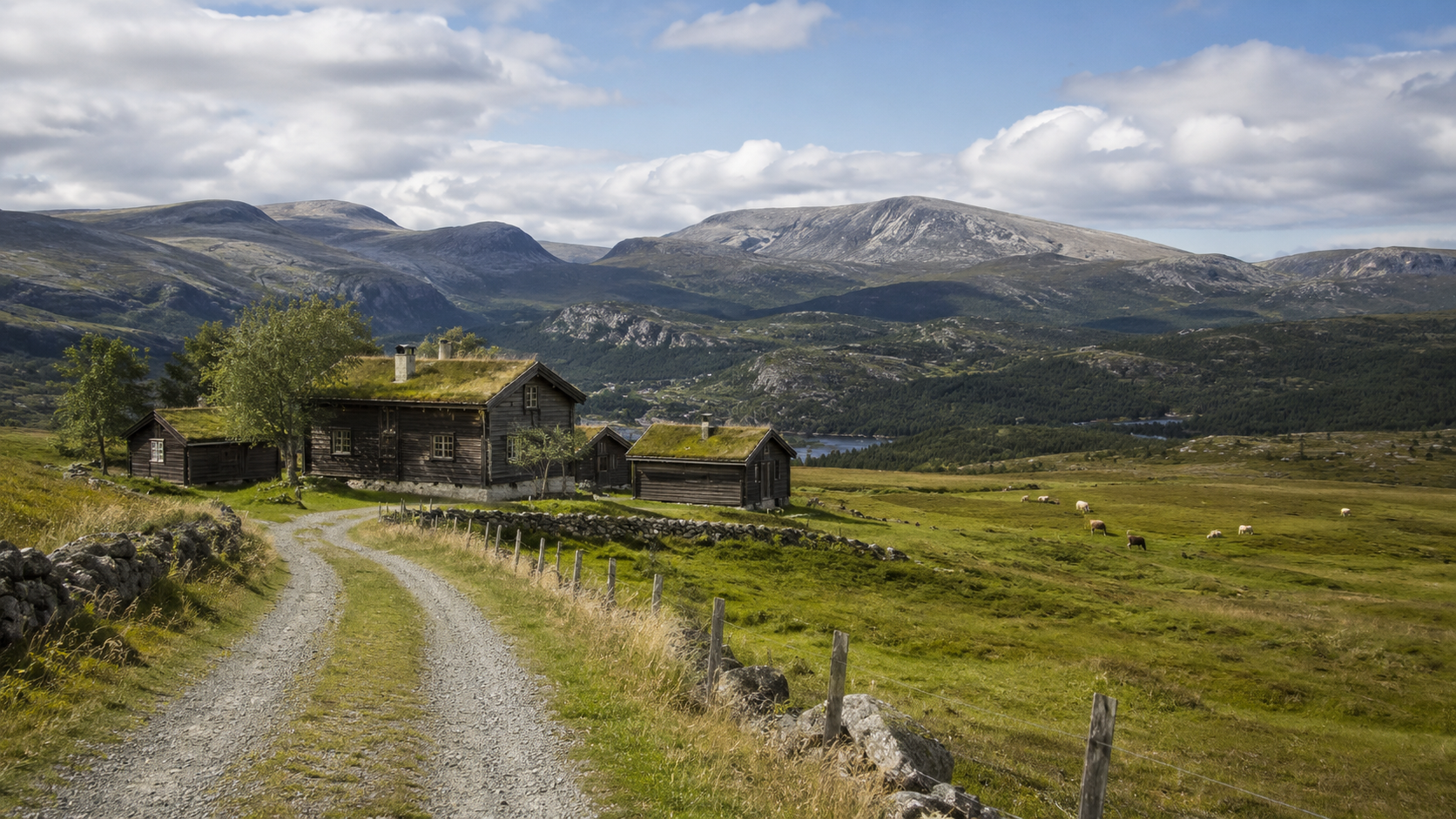
Valdres does not have one famous viewpoint or natural attraction that defines the entire region. Instead, its character comes from the way farms, villages, lakes and mountain landscapes fit together.
In the lower parts of Valdres, roads follow green valleys past fields, forests and long, narrow lakes. Further north, the landscape gradually rises towards Beitostølen, Valdresflye and the mountains of Jotunheimen. Traditional wooden farm buildings still stand beside modern homes, livestock graze on hillsides and mountain pastures, and old routes continue across areas people have travelled through for centuries.
This is not Mountain Norway at its most dramatic. For towering peaks, narrow ridges and demanding high-altitude hikes, Jotunheimen naturally attracts more attention. Valdres offers something broader. It is a place where visitors can hike a mountain in the morning, see a medieval stave church in the afternoon and spend the night at a traditional mountain lodge, a farm or even a yoga hotel.
Valdres is also a region I know personally. My family has a simple cabin here without running water or electricity, and my understanding of the area has been shaped as much by quiet days at the cabin as by its better-known attractions. Life here is often connected to ordinary routines: collecting water, heating the cabin, walking along old gravel roads and listening to animals grazing nearby. It is a different experience from staying at a large ski resort or passing through the area on the way to somewhere else.
This guide explores both sides of Valdres. It covers the region’s living summer-farm culture, traditional food, stave churches and historic communities, as well as specific hikes, ski areas, scenic roads and some of the most interesting places to stay.
Where Is Valdres?
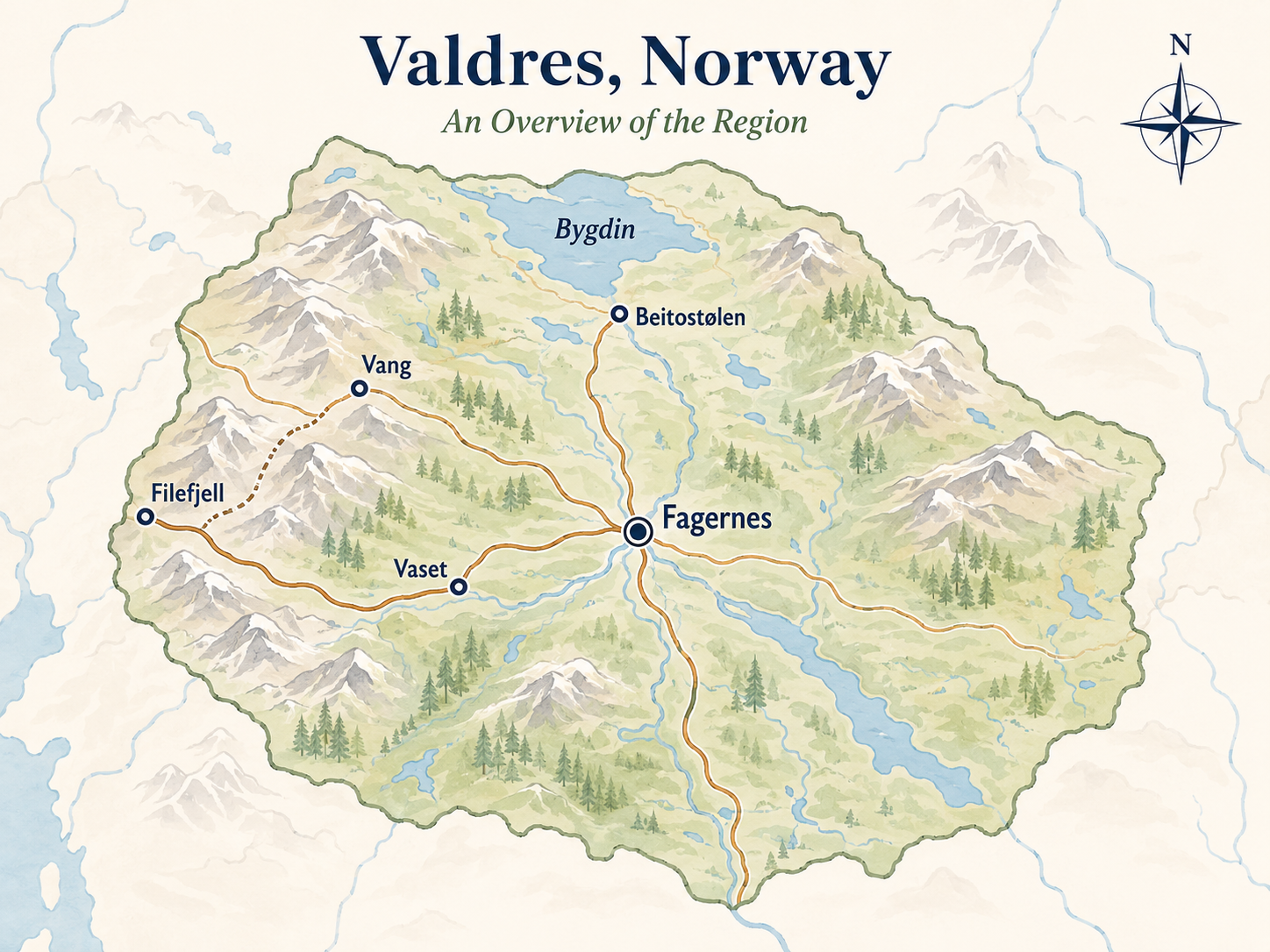
Valdres is an inland region in Eastern Norway, located between the Oslo area and the high mountains that lead towards Western Norway. It covers approximately 5,400 square kilometres and stretches from the lower, greener landscapes of Begnadalen in the south to the edge of Jotunheimen in the north.
Although Valdres is often discussed as one destination, it is not a single town or compact resort area. The region consists of six municipalities:
Nord-Aurdal
Sør-Aurdal
Etnedal
Vestre Slidre
Øystre Slidre
Vang
Fagernes is the main regional centre and the place where visitors will find the largest concentration of shops, services and transport connections. From there, the landscape and atmosphere change considerably depending on which direction you travel.
To the northeast, the road climbs through Øystre Slidre towards Beitostølen, Bygdin and Valdresflye. This is the part of Valdres most closely associated with hiking, skiing and access to Jotunheimen.
Further west, Vang and Filefjell offer a quieter and more rugged mountain landscape. The main E16 road continues through this area towards Lærdal and the western fjords, following a corridor that has connected Eastern and Western Norway for generations.
Vestre Slidre includes areas such as Vaset and the Panoramavegen, where lakes, summer farms, cycling routes and mountain pastures are central to the landscape. It is also where you will find Nøsen Yoga og Fjellhotell, which continues to operate as both a retreat centre and a hotel for independent guests.
The southern parts of Valdres are lower, greener and more wooded. Around Aurdal, Begnadalen and Etnedal, the region feels less like exposed high mountain country and more like the rural Norwegian interior, with forests, farms, lakes and smaller communities.
This variety is one of the reasons Valdres deserves more than a brief stop on a road trip. Driving through the region from south to north is almost like watching the Norwegian landscape change in stages, from cultivated valleys to open mountain plateaus.
Is Valdres Part of Jotunheimen?
Valdres and Jotunheimen overlap geographically, but they are not the same destination.
Jotunheimen is a mountain area and national park known for many of Norway’s highest peaks, dramatic valleys and famous hikes such as Besseggen. Valdres is a larger cultural and geographical region that extends from the valleys in the south to the mountains along the edge of Jotunheimen in the north.
This distinction matters when planning a trip.
A holiday focused entirely on Jotunheimen will usually revolve around hiking, mountain lodges and high-altitude scenery. A journey through Valdres can include some of those same experiences, particularly around Beitostølen, Bygdin and Valdresflye, but it can also include working farms, historic churches, local food, village life, cycling and gentler outdoor activities.
Beitostølen is one of the best-known bases on the Valdres side of Jotunheimen. From here, visitors can reach mountain walks such as Bitihorn and travel towards Bygdin, Gjende and the Valdresflye scenic route. However, Beitostølen represents only one part of the region. Staying exclusively there would give a very different impression of Valdres from staying near Vaset, Fagernes, Vang or Filefjell.
Why Valdres Feels Different
Much of the appeal of Valdres comes from the transition between cultivated land and wilderness.
The mountains are always present, but they do not completely overwhelm the human landscape. Farms, roads and settlements extend far into the higher country, while livestock continue to shape the open pastures. Small wooden buildings appear beside gravel roads, and old farmsteads sit below ridges that can be reached on foot within a few hours.
This makes Valdres feel inhabited rather than untouched. Its landscapes have been used for farming, grazing, hunting, fishing, travel and trade over long periods. Even areas that appear quiet and remote often contain traces of this history.
Valdres also has an unusually strong concentration of cultural sites. Six of Norway’s surviving stave churches are found in the region, alongside Valdres Folk Museum, historic roads and a large number of active summer mountain farms. The region’s official tourism organisation states that Valdres has more operating summer farms than anywhere else in Northern Europe, with some still welcoming visitors during the grazing season.
At the same time, Valdres is not preserved as an open-air museum. The towns and villages are home to ordinary communities, and farming remains part of the working landscape. Beitostølen has developed into a year-round resort, while other parts of the region have retained a much quieter atmosphere. Modern hotels, holiday cabins and ski centres exist alongside old farm buildings, mountain dairies and traditional family-run lodges.
That mixture is what gives Valdres its identity. It is not simply a softer alternative to Jotunheimen, nor is it only somewhere to pass through between Oslo and the fjords. It is one of the best regions in Norway for understanding how mountain nature, farming traditions and local culture have developed alongside one another.
The Different Areas of Valdres
Valdres is large enough that choosing the right base can significantly change the experience of a visit.
Fagernes and Nord-Aurdal
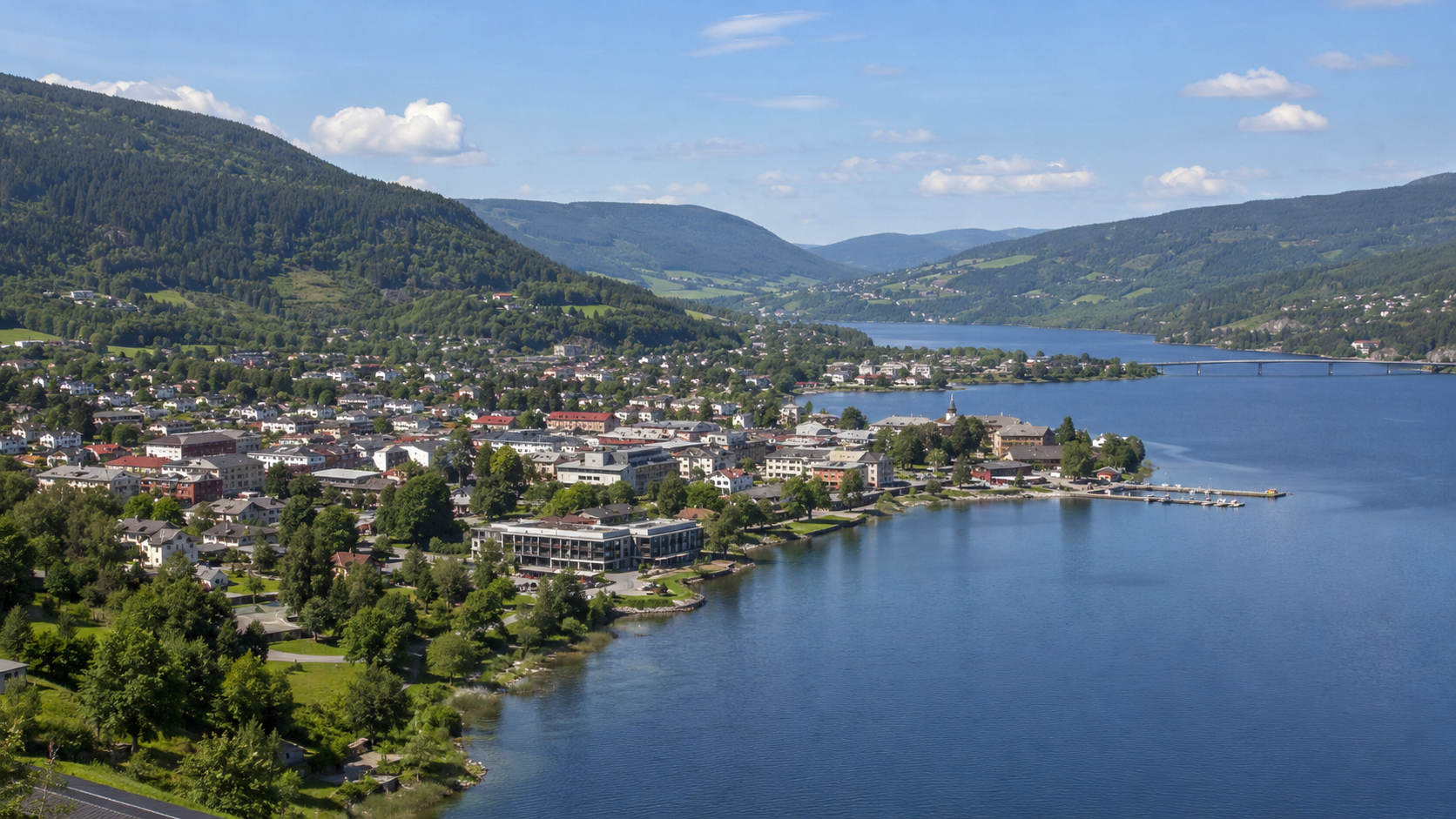
Fagernes is the practical centre of Valdres. It is a useful base for visitors who want access to shops, restaurants and transport while remaining within driving distance of many cultural attractions.
Valdres Folk Museum is located just outside the town centre on a peninsula beside Strandefjorden. It is one of Norway’s largest open-air museums and provides an introduction to traditional buildings, farming practices, folk costumes, music and everyday life in the region.
Fagernes itself is not the most atmospheric mountain village in Valdres, but it is convenient. It works particularly well as a first stop or as a base for travellers exploring several parts of the region by car.
Nearby Aurdal has a ski centre and mountain accommodation, making this part of Valdres suitable for visitors who want easier access from Oslo without travelling all the way north to Beitostølen or Filefjell.
Beitostølen and Øystre Slidre
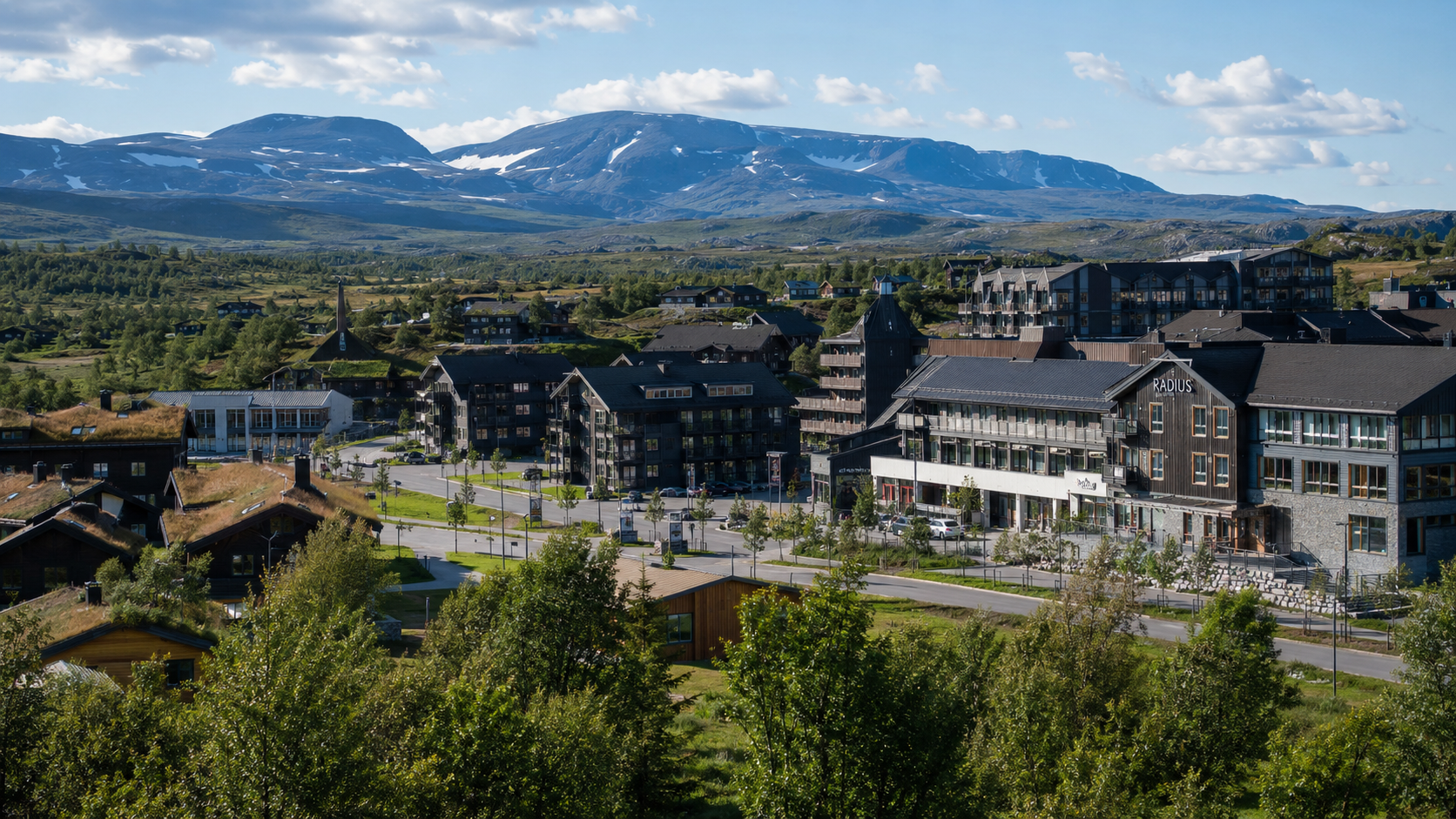
Beitostølen is the most developed mountain resort in Valdres. It has hotels, apartments, restaurants, ski facilities and organised activities throughout the year.
Its main advantage is location. Beitostølen sits close to the transition between the traditional Valdres landscape and the higher mountains of Jotunheimen. Bitihorn, Bygdin and Valdresflye are all within easy reach, while Besseggen can be accessed by continuing towards Gjendesheim.
Beitostølen is a sensible choice for travellers who want convenience, activities and mountain access. It is less suitable for those looking for an isolated or particularly traditional village, as its character is strongly shaped by tourism and second homes.
Vaset and Vestre Slidre
Vaset offers a quieter form of mountain tourism. The area is known for its lakes, summer farms, cycling routes, cross-country skiing and gently rolling mountain landscape.
This is one of the best parts of Valdres for experiencing the connection between outdoor life and the traditional farming landscape. Gravel roads pass through areas of active summer grazing, and several routes are suitable for cycling and less demanding walks.
The Mjølkevegen cycling route passes through this broader landscape and has become one of the region’s best-known outdoor experiences. Unlike a conventional mountain-bike trail, it follows roads through farm country, summer pastures and mountain communities.
Vestre Slidre is also home to Nøsen Yoga og Fjellhotell. It offers organised retreats, yoga classes, vegetarian meals and ordinary hotel stays in a quiet mountain setting. Guests who are not attending a retreat can still stay independently and join available drop-in activities.
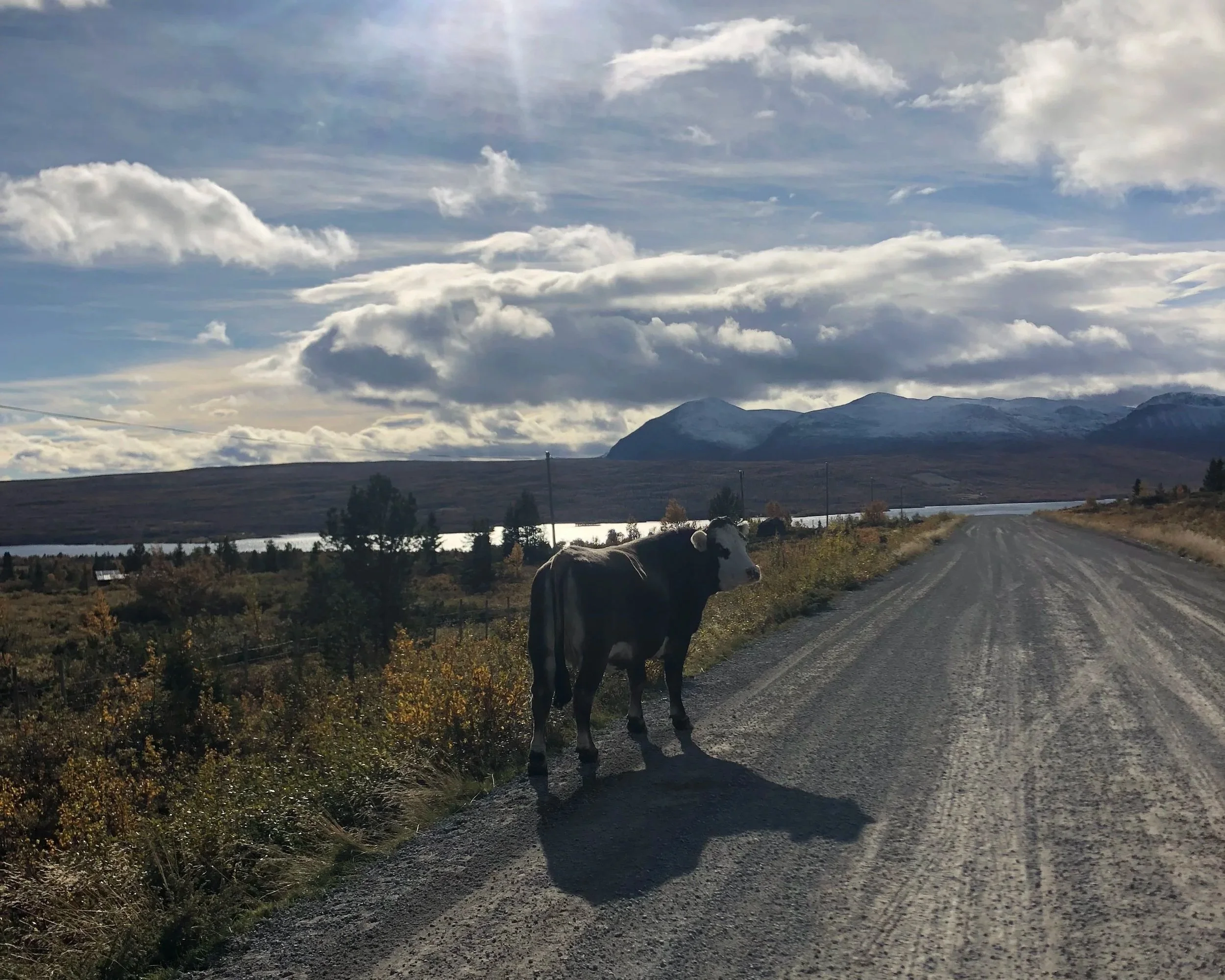
Vang, Tyin and Filefjell
Vang lies in the northwestern part of Valdres and has some of the region’s most powerful scenery. Mountains rise steeply around Vangsmjøse, and the landscape becomes increasingly rugged towards Tyin and Filefjell.
This part of Valdres is particularly good for hiking, climbing, fishing, skiing and scenic drives. It is also closely connected to the historical routes between Eastern and Western Norway. The restored King’s Road across Filefjell, known as Kongevegen, allows visitors to walk sections of one of the most important old travel routes across the mountains.
Vang feels less like a resort and more like a collection of farms and small communities spread through a dramatic landscape. It is one of the best areas for travellers who want mountain access without staying in the busier environment of Beitostølen.
Southern Valdres and Etnedal
The southern part of Valdres receives less attention from international visitors. Its landscapes are more wooded, and the mountains are lower and softer than those around Vang and Jotunheimen.
This does not make the area less interesting. It offers quiet roads, lakes, fishing, forest walks and a more everyday view of rural inland Norway. Reinli and Hedalen also have two of the region’s six stave churches, connecting the southern valleys to the wider cultural history of Valdres.
Travellers arriving from Oslo will normally enter Valdres through these lower landscapes before continuing towards Fagernes and the mountains. Rather than viewing this section only as part of the journey, it can be worth slowing down and seeing how gradually the region changes.
Who Is Valdres Best For?
Valdres will appeal most to travellers who want more than a single dramatic attraction.
It is particularly well suited to people who enjoy:
combining hiking with culture and history
staying at mountain lodges, farms or smaller independent hotels
scenic drives without following the busiest fjord routes
cycling on quiet roads and through traditional farming landscapes
cross-country skiing and smaller alpine ski areas
local food and agricultural traditions
slower journeys through several villages and landscapes
It can also work well for families because not every outdoor experience requires a difficult mountain hike. Short walks, farm visits, museums, swimming, cycling, fishing and accessible ski areas make it possible to build a varied trip.
Visitors seeking only Norway’s most dramatic scenery may prefer to concentrate on Jotunheimen or the western fjords. Those who want to understand how people have lived alongside the mountains, however, will find much more depth in Valdres than its relatively quiet international profile suggests.
Valdres and Norway’s Living Summer-Farm Culture
One of the most distinctive features of Valdres is its strong summer-farm tradition. Known in Norwegian as stølsdrift or seterdrift, this was the practice of moving livestock from the main farm in the valley to higher mountain pastures during the summer.
The purpose was practical. Grass and hay closer to the permanent farm had to be preserved for winter, while the uncultivated mountain pastures provided fresh grazing during the warmer months. Cows, goats and other animals were therefore taken higher into the mountains, where members of the household would live and work for part of the summer.
A støl was not simply a holiday cabin in the mountains. It was a working part of the farm, usually consisting of modest wooden buildings used for accommodation, milking, food production and storage. Milk had to be processed close to where the animals grazed, leading to the production of butter, cheese, sour cream and other foods that could be stored or transported back to the main farm.
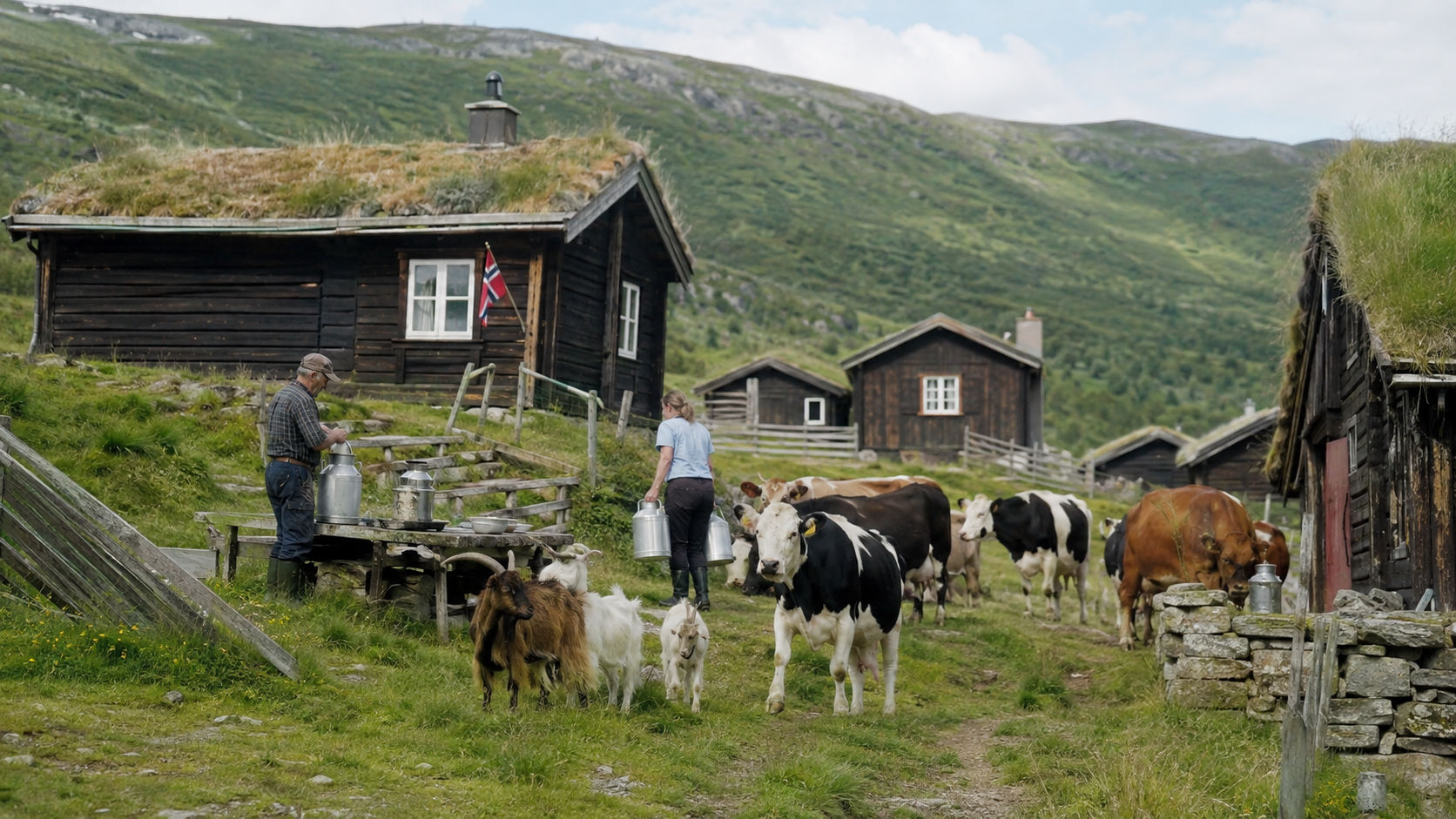
This seasonal movement between valley farms and mountain pastures shaped both the culture and the physical landscape of Valdres. Open grazing areas, small wooden buildings, narrow roads and clusters of summer farms remain visible across the region today.
Mountain-farm culture in Norway and Sweden was added to UNESCO’s Representative List of the Intangible Cultural Heritage of Humanity in 2024. In Valdres, the tradition is particularly visible because the region still has a high concentration of operating summer farms. Some welcome visitors during the grazing season, while others continue primarily as working agricultural sites.
What Is the Difference Between a Farm and a Støl?
A traditional farm in Valdres often consisted of several buildings rather than one large farmhouse and barn. Different structures were used for sleeping, cooking, storing grain, keeping livestock and protecting food and equipment.
The permanent farm was usually located lower in the valley, where families lived for most of the year and where fields could be cultivated. The støl belonged to the same agricultural system but was positioned higher in the landscape, closer to summer grazing.
Some farms had more than one seasonal site at different elevations. Animals could be moved gradually between lower and higher pastures as the snow disappeared and vegetation developed through the summer.
The people who stayed at the summer farm had demanding daily routines. Animals had to be gathered and milked, dairy products prepared, buildings maintained and food produced with relatively simple equipment. Life on the støl is sometimes presented today as peaceful and romantic, but historically it was an essential part of the household economy and involved long working days.
That history is important when visiting these places. The wooden buildings and grass-covered roofs are attractive, but they were constructed for practical reasons rather than to create a picturesque mountain setting.
Visiting a Summer Farm in Valdres
Several summer farms in Valdres offer opportunities to see animals, learn about traditional food production or buy products directly from the farm. The exact visitor programme and opening periods vary, and many are only accessible during part of the summer.
Sparstadstølen in Vang is one example of a farm where the owners maintain the site because of their interest in farming traditions, nature and local culture. Strandmo Stølsysteri is another working summer-farm producer associated with traditional dairy products.
A visit may include seeing cows or goats at pasture, looking inside the older farm buildings or tasting products made from summer milk. Some farms serve simple meals or sell butter, cheese, sour cream and baked goods.
The experience is usually quieter and less structured than visiting a large attraction. These are often small, seasonal businesses and, in some cases, still working farms. Visitors should therefore check current opening times and respect private buildings, livestock and farm operations.
Even without entering a particular farm, it is possible to experience the summer-farm landscape by driving, walking or cycling through areas such as Vaset, Vestre Slidre, Øystre Slidre and Vang. The Mjølkevegen cycling route is especially closely connected to this landscape, passing mountain pastures, lakes, farm roads and traditional accommodation.
Traditional Farm Buildings in Valdres
The historic farms of Valdres were made up of buildings with different purposes, often arranged around a farmyard known as a tun.
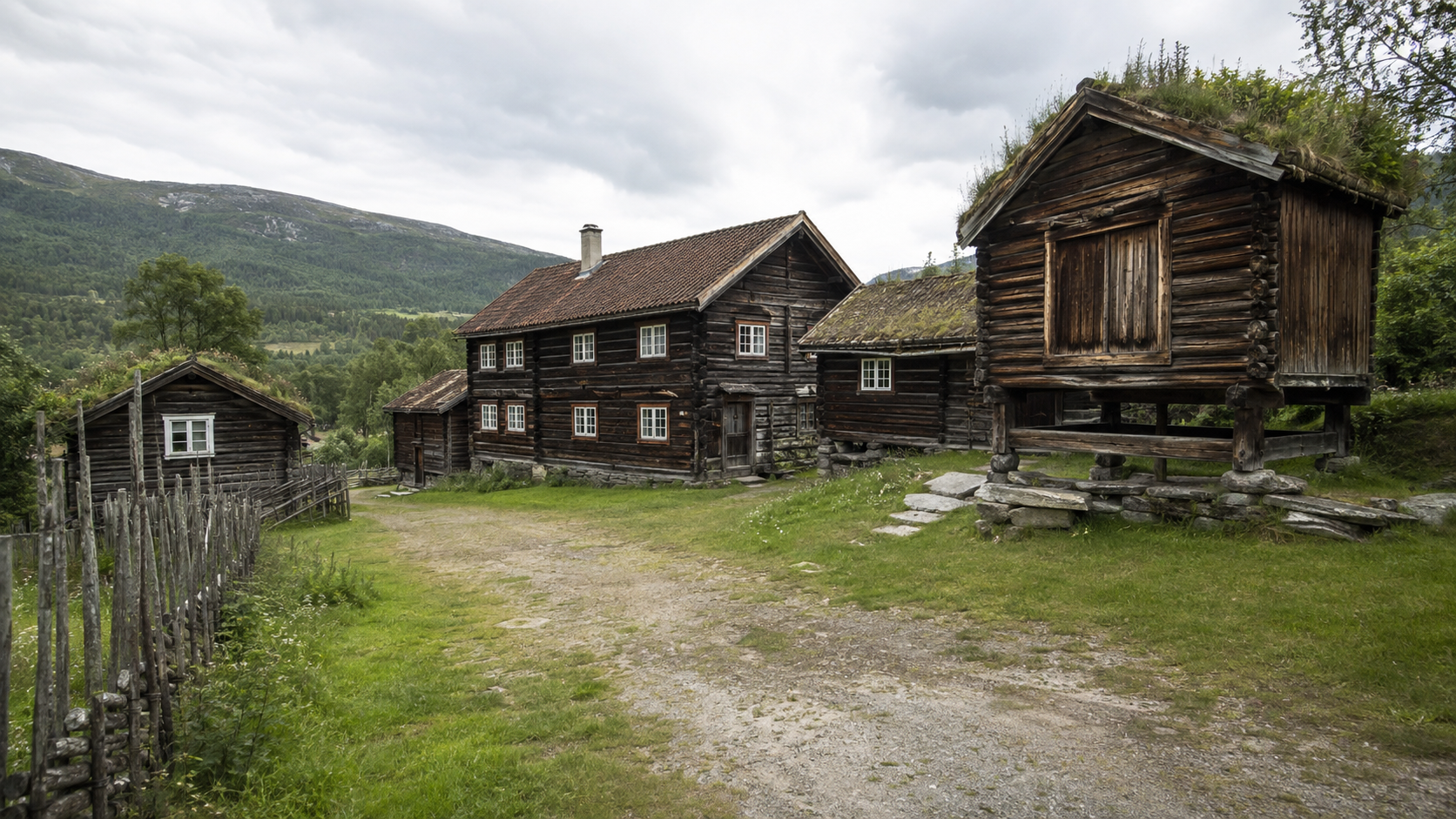
Traditional farmyards in Valdres often consisted of several log buildings gathered around a central yard, with a stabbur used for storage.
One of the most recognisable is the stabbur, a raised wooden storehouse traditionally used for food, grain, clothing and valuable possessions. The building was lifted above the ground on supports, helping to protect its contents from moisture and animals.
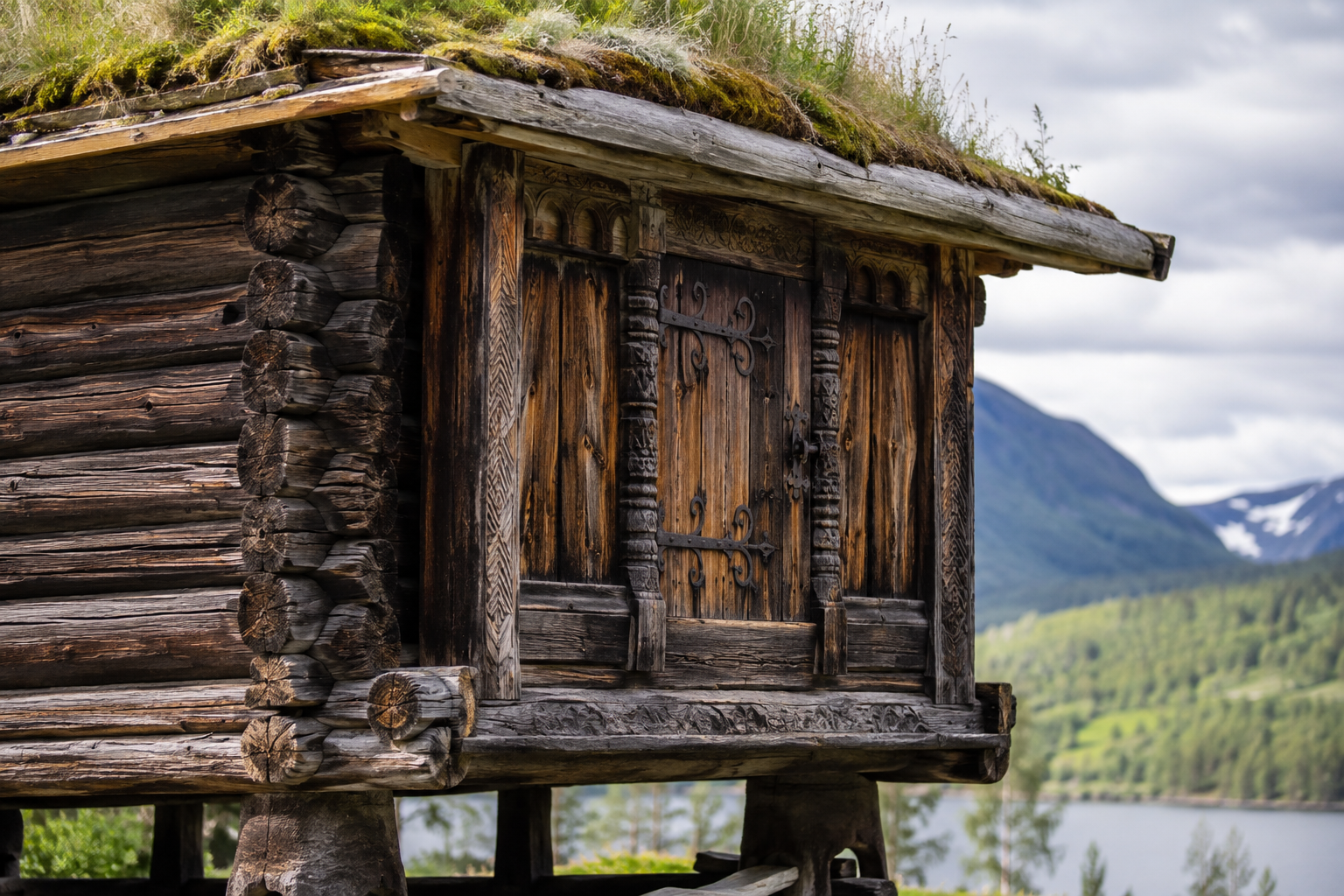
A traditional stabbur, raised above the ground to protect stored food, grain and valuable belongings from moisture and animals.
Other buildings could include separate houses for cooking, sleeping, storing hay, keeping livestock or preparing food. Many were constructed from interlocking timber logs, a technique well suited to the materials available and the cold inland climate.
Grass and turf roofs were also practical. Layers of birch bark helped make the roof watertight, while turf held the bark in place and provided insulation. Although turf roofs are now strongly associated with Norwegian visual identity, they developed from available materials and local building knowledge.
Older buildings were often preserved because farms continued to use them, even after newer homes and barns were built. This is why modern houses, agricultural machinery and centuries-old wooden structures can still stand within the same farmyard.
Visitors can see historic examples across Valdres, but Valdres Folk Museum provides the clearest introduction to the different building types and their uses.
Valdres Folk Museum
Valdres Folk Museum is located on Storøya beside Fagernes and is one of Norway’s largest open-air museums. Its collection includes historic buildings, objects and exhibitions connected to domestic life, agriculture, traditional clothing, crafts and music.
Buildings from different parts of the region have been moved to the museum and arranged in historical farm environments. This allows visitors to see how homes, storage buildings, workshops and agricultural structures related to one another.
The museum is especially useful at the beginning of a journey through Valdres. After learning what the buildings were used for, it becomes easier to recognise similar structures beside roads and on working farms elsewhere in the region.
Its exhibitions also provide context for customs that cannot be understood through architecture alone. Clothing, tools, musical instruments and household objects show how people adapted to the climate, available resources and seasonal rhythms of the area.
Because the museum covers such a broad range of subjects, it should not be treated as only a wet-weather alternative. It is one of the best places to begin understanding why Valdres developed such a distinct regional identity.
Traditional Food from Valdres
Food traditions in Valdres were shaped by farming, freshwater fishing, animal grazing and the need to preserve food through long winters.
The region is most famous for rakfisk, but its food culture also includes cured meat, sausages, dairy products, sour-cream dishes, trout, game and food produced from animals that graze in mountain pastures.
Several products from Valdres have protected geographical status, including Rakfisk fra Valdres, Kurv frå Valdres and Setersmør or Stølssmør. This protection connects the products to the region, their production methods and established local traditions.
Rakfisk
Rakfisk is trout that has been salted and matured in an oxygen-poor environment. It has a strong aroma and a soft but firm texture, with the flavour becoming more pronounced depending on how long it has matured.
The preservation method has a long history in the inland mountain valleys of southern Norway. In a region without direct access to the sea, freshwater fish provided an important source of food, while fermentation made it possible to preserve the catch for later use.
Rakfisk from Valdres is normally served cold rather than cooked. Common accompaniments include boiled potatoes, lefse, flatbread, sour cream, red onion and butter. The fish is sold in different levels of maturity, ranging from relatively mild to strongly matured.
Although rakfisk is available across Norway, Valdres remains its best-known production region. Several family farms produce protected Rakfisk fra Valdres, and some have farm shops where visitors can buy fish and other local products.
Noraker Gård, located beside the E16 north of Aurdal, has produced rakfisk over several generations and operates a farm shop and café. Hande Gard in Vestre Slidre also produces rakfisk and cured meat and can serve traditional food to visitors by arrangement.
The Norwegian Rakfisk Festival is held in Fagernes during the first weekend of November. The event celebrates the season’s production with tastings, judging, food stalls and entertainment. It is one of the largest and most visible expressions of Valdres food culture, although the atmosphere is very different from the quieter farm visits available during the rest of the year.
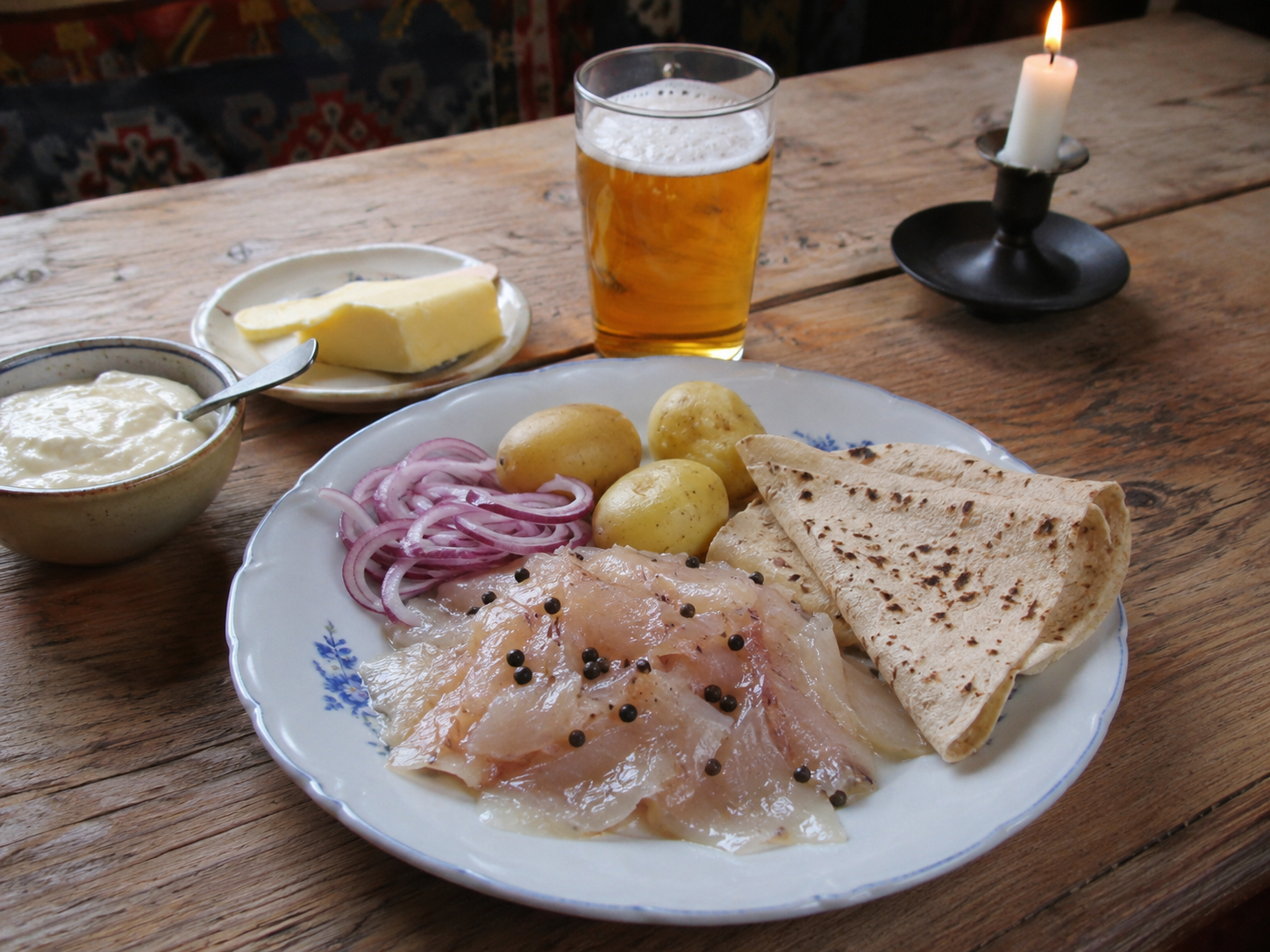
Rakfisk is traditionally served cold with boiled potatoes, lefse, sour cream, red onion and butter.
Kurv frå Valdres
Kurv is the local name for a cured sausage traditionally produced in Valdres. It may be made with beef, lamb, game or a combination of meats and is seasoned, dried and preserved.
Like other forms of cured meat, kurv reflects the historical need to make use of an animal over a long period rather than consuming the meat immediately. It is generally sliced thinly and served as part of a cold meal, with bread, flatbread or other cured products.
Kurv frå Valdres has protected geographical status and remains an important part of the region’s food identity.
Butter, Cheese and Sour-Cream Dishes
Dairy production was central to life on the summer farms. Fresh milk could not be kept for long, so it was transformed into products such as butter, cheese and sour cream.
Setersmør or stølssmør is butter made from cream produced while animals graze on mountain pastures. It is still made seasonally at some farms in Valdres and may be sold directly from the producer or through small local outlets.
Rømmegrøt, a rich porridge made with sour cream, flour and milk, is another food closely associated with traditional celebrations, summer farms and rural hospitality. It is usually served with sugar, cinnamon and melted butter, and may be accompanied by cured meat.
Visitors should not expect every restaurant in Valdres to serve a complete menu of traditional dishes throughout the year. Local products are often seasonal, and some of the most interesting food experiences are found at farms, mountain lodges and smaller shops rather than conventional restaurants.
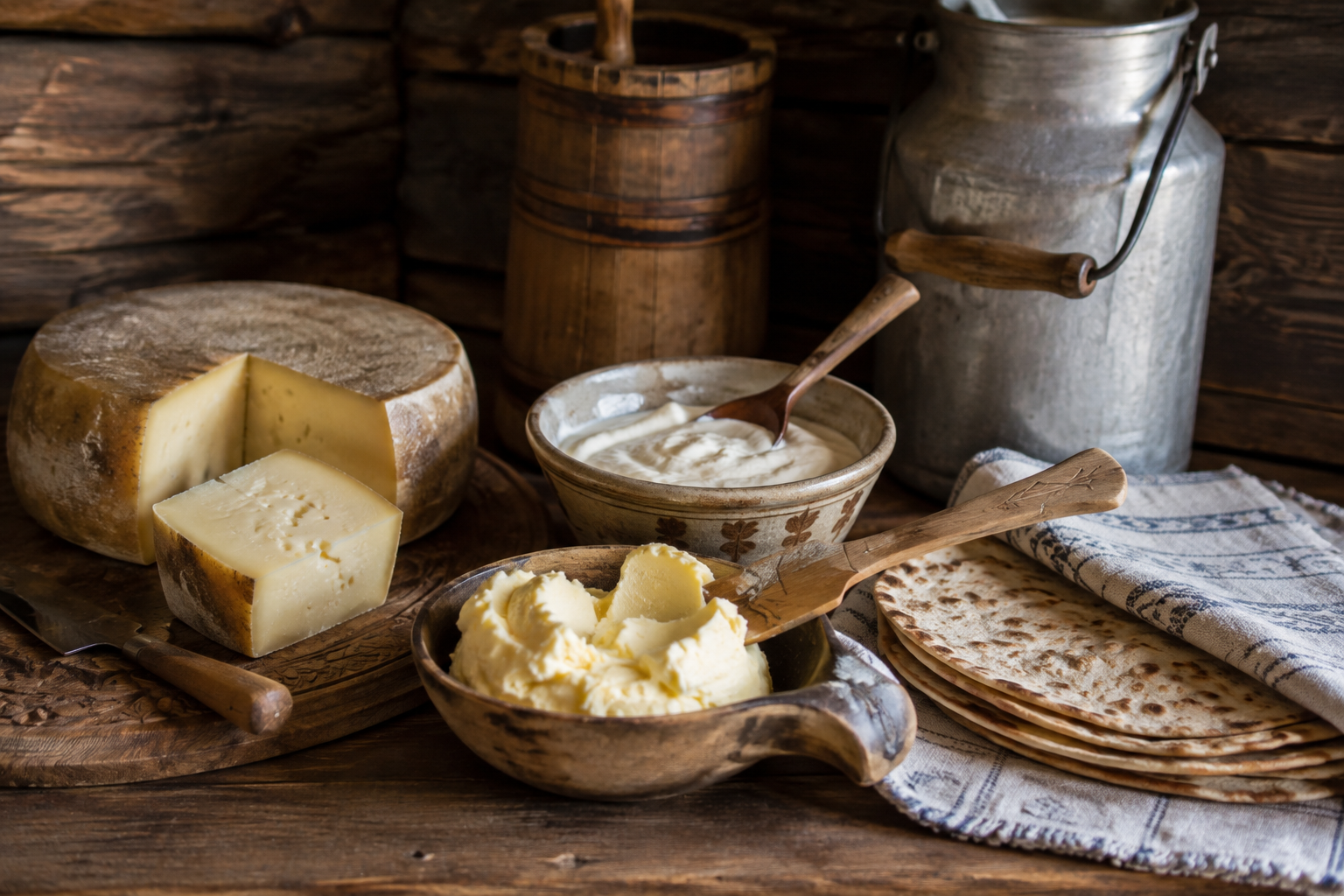
Cheese, butter and sour cream were traditionally produced from fresh milk at the summer farms, where dairy products had to be prepared close to the mountain pastures.
The Stave Churches of Valdres
Valdres has six of Norway’s 28 surviving medieval stave churches: Hedalen, Reinli, Hegge, Lomen, Høre and Øye. The region also contains medieval stone churches, church ruins and other religious heritage sites.
Stave churches were built using a timber construction system in which upright load-bearing posts, or staves, formed part of the structure. They developed during the medieval period after Christianity became established in Norway, combining European church forms with local woodworking traditions.
The six churches in Valdres are not identical. They have different histories, alterations and settings, and some retain more of their medieval character than others. Together, however, they make Valdres one of the most important regions in Norway for visitors interested in stave-church architecture.
Hedalen Stave Church
Hedalen Stave Church stands in the wooded southern part of Valdres and may be the oldest surviving stave church in the region. Its relatively remote setting gives it a very different atmosphere from churches located closer to the main roads and larger villages.
The church is closely associated with local legends and contains medieval furnishings and religious objects. It is a natural cultural stop for travellers exploring Sør-Aurdal, Vassfaret or the quieter southern valleys.
Reinli Stave Church
Reinli is also situated in Sør-Aurdal and stands on a hillside overlooking the surrounding landscape. The church has a distinctive external gallery and a compact form that makes it one of the most visually memorable churches in Valdres.
Hedalen and Reinli can be visited together, but travellers should allow enough time for the smaller roads and avoid treating them as quick roadside stops.
Hegge Stave Church
Hegge Stave Church lies in Øystre Slidre, not far from the route towards Beitostølen. It continues to function as a parish church and is one of the easiest stave churches to include in a wider journey through northern Valdres.
Its location also illustrates that the stave churches are not isolated museum pieces. Several remain active buildings connected to local religious and community life.
Lomen Stave Church
Lomen Stave Church stands above Slidrefjorden in Vestre Slidre. Its setting among farms, fields and views across the valley makes it especially relevant to the wider cultural landscape described in this article.
The church was replaced as the main local church in the early twentieth century, helping preserve the older building with much of its historical atmosphere intact. An original medieval portal associated with Lomen is held at Valdres Folk Museum.
Høre Stave Church
Høre Stave Church is located in Vang and is linked to both medieval history and stories about travel through the region. According to a local tradition, timber for the church was connected to events surrounding King Sverre’s passage through Valdres in 1177.
Whether visitors are primarily interested in architecture or not, Høre is worth including because it sits within one of the most beautiful farming and mountain landscapes in northern Valdres.
Øye Stave Church
Øye Stave Church has an unusual history. The original medieval church was dismantled, and parts of it were later discovered beneath the floor of a newer church. The stave church seen today was reconstructed using surviving medieval material.
It is located near the western end of Vangsmjøse, surrounded by the steeper mountains of Vang. This makes Øye easy to combine with a journey towards Tyin, Filefjell or the King’s Road. The church exhibition also includes archaeological objects connected to the area.
Planning a Stave-Church Route
It is possible to see all six stave churches during a longer road trip through Valdres, but trying to visit them all in one day would leave little time to appreciate either the buildings or the landscapes between them.
A more natural approach is to group them geographically.
Hedalen and Reinli can be visited while exploring southern Valdres. Hegge lies close to the route between Fagernes and Beitostølen. Lomen can be combined with Vaset, Slidrefjorden or a journey through Vestre Slidre, while Høre and Øye fit naturally into a day around Vang and Filefjell.
Opening arrangements vary and several churches have limited public access outside the main summer season. Visitors may still view the exteriors and churchyards, but current opening times should be checked before planning a journey around interior visits.
Folk Music and Dance in Valdres
Valdres has a particularly strong folk-music tradition. Local music was developed and passed between generations through playing, singing and dancing rather than through formal written notation alone.
Both the ordinary violin and the Hardanger fiddle have been used in the wider region, with different styles and repertoires connected to particular communities and performers. Traditional tunes were played for dances, weddings and other gatherings, and individual musicians could become closely associated with particular compositions or playing techniques.
Valdres Folk Music Archive holds approximately 16,000 individual recordings of music and song, preserving material that might otherwise have disappeared. The archive forms part of the broader museum and cultural work carried out in the region.
Folk music in Valdres is not limited to historical demonstrations. Musicians, dancers, instrument makers and cultural organisations continue to perform and develop the tradition. Concerts, workshops and events take place throughout the year, while the museum sometimes includes music and storytelling in its visitor programme.
For travellers unfamiliar with Norwegian folk music, a live performance can provide a different understanding of regional identity than reading about it in an exhibition. The music is closely connected to movement, social gatherings and the landscapes in which it developed.
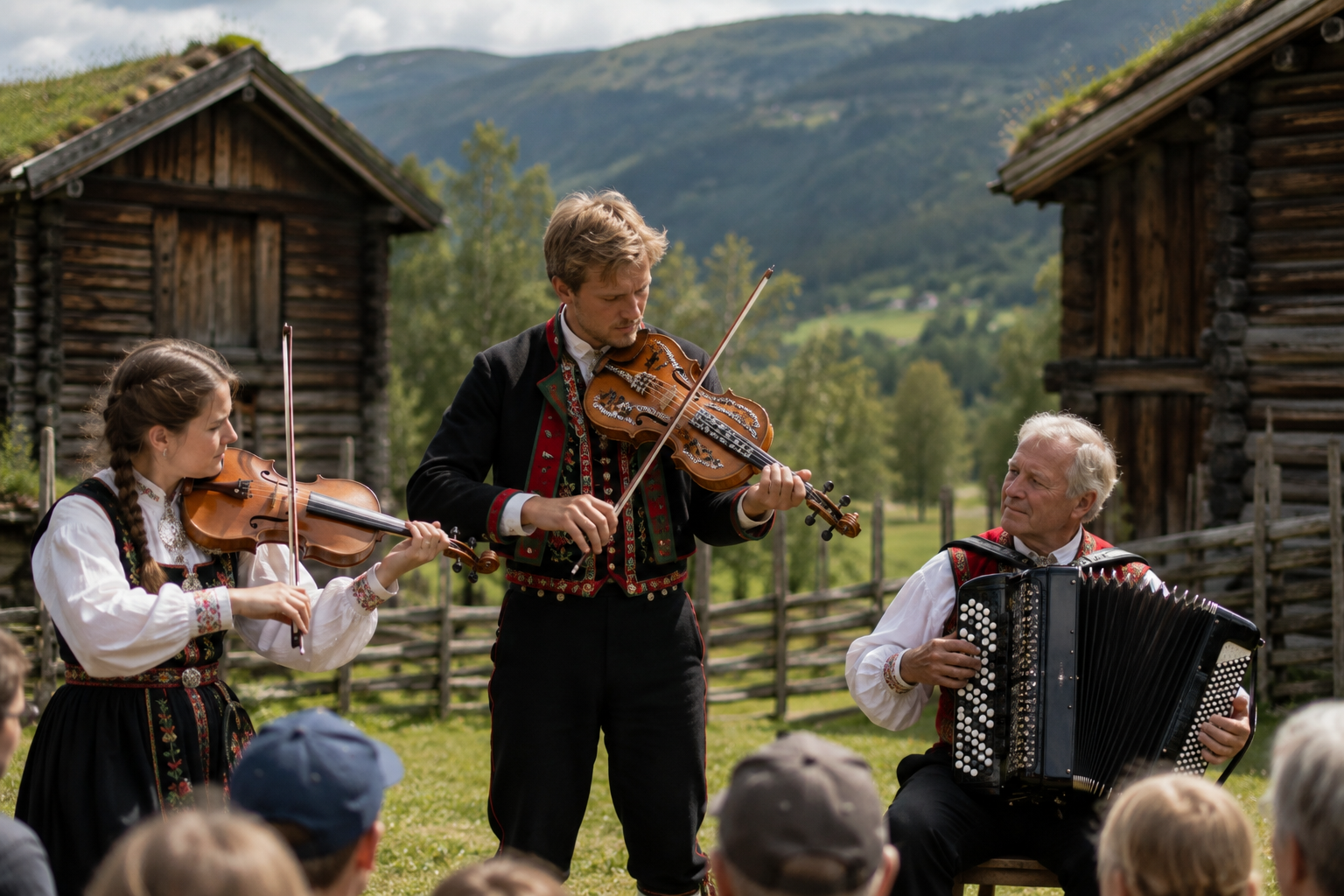
Folk music remains an important part of Valdres culture, with fiddle traditions, regional costumes and live performances still passed between generations.
Bunad, Craft and Regional Identity
A bunad is a Norwegian festive costume connected to a particular region or local tradition. Valdres has several costume traditions, with differences in embroidery, colour, fabric, jewellery and design.
These costumes are worn at events such as Constitution Day, confirmations, weddings and major family celebrations. Although some elements draw on older rural clothing, today’s bunads are carefully developed cultural garments rather than everyday historical clothing preserved without change.
The Norwegian Institute of Bunad and Folk Costume is part of Valdresmusea, reflecting the region’s importance in the study and documentation of Norwegian clothing traditions.
Textile work, woodcarving, instrument making and other crafts also form part of the cultural history of Valdres. These skills were useful as well as decorative. Clothing, tools, furniture and buildings all had to be made, repaired and adapted locally.
The result is a regional identity that remains visible across several parts of everyday culture. It can be heard in dialect and music, seen in architecture and clothing, and tasted in foods whose production remains connected to local farms and landscapes.
Valdres as a Living Cultural Region
The cultural appeal of Valdres does not come from a single perfectly preserved village. It comes from the fact that many traditions remain spread across a living region.
A medieval church may stand beside a modern road. A centuries-old storehouse may remain in the yard of an active farm. Animals still graze on mountain pastures, while visitors cycle past on the Mjølkevegen. Traditional food is produced for modern shops and restaurants, and folk music continues to be performed rather than existing only in museum archives.
Not every part of Valdres feels historic, and the region should not be romanticised as a place untouched by modern life. Fagernes has ordinary shops and services, Beitostølen is heavily shaped by tourism, and many traditional farm communities now include large areas of holiday homes.
Even so, the relationship between the landscape and the people who have used it remains easier to see here than in many more famous Norwegian destinations. Valdres is not only somewhere to admire mountains. It is a place where the cultural history of Mountain Norway remains present in buildings, food, work, music and seasonal traditions.
The Best Hikes in Valdres
Hiking in Valdres is not limited to exposed ridges and demanding routes in Jotunheimen. The region has everything from short walks through forest and farming landscapes to historic trails, accessible mountain summits and full-day hikes above 2,000 metres.
This variety makes Valdres suitable for travellers who want to experience the mountains without spending every day on a strenuous hike. A journey can combine one higher summit with gentler walks around summer farms, lakes and old travel routes.
Conditions vary considerably across the region. A path near Fagernes or Vaset may be green and dry while snow remains on the higher mountains around Valdresflye. Even in summer, hikers should carry warm clothing, waterproof layers, food and a map or reliable navigation tool.
Bitihorn
At 1,607 metres above sea level, Bitihorn is one of the most recognisable mountains in Valdres. Its steep profile rises above the road between Beitostølen and Bygdin, making it a landmark for travellers approaching Jotunheimen from the south.
The usual route begins beside County Road 51 near Båtskaret. It climbs steadily over increasingly rocky terrain and finishes with a broad view across Valdres, Lake Bygdin and the mountains of Jotunheimen.
Bitihorn is a good choice for hikers who want the experience of reaching a proper mountain summit without committing to one of Jotunheimen’s longest routes. The path is relatively direct, but the ascent is sustained and the upper section is exposed to wind and rapidly changing weather.
There is no technical climbing on the standard route under normal summer conditions, but sturdy footwear is recommended. Snow may remain early in the season, and visibility can change quickly near the summit.
Synshorn and Fagerdalen
Synshorn rises above the eastern end of Lake Bygdin and offers one of the most rewarding viewpoints in the area. From the higher ground, hikers can look across Bygdin towards Bitihorn and the surrounding mountains.
The summit walk can be completed on its own or combined with a route through Fagerdalen. The combined walk provides more variety, passing mountain vegetation, streams and a small lake before joining a marked trail descending towards Bygdin.
One point on the route can easily be mistaken for the summit because it already provides an impressive view. The true summit lies slightly further along the ridge. This is worth knowing before turning back.
Synshorn is less famous than Bitihorn but can be equally rewarding, particularly for visitors staying at Bygdin. The terrain still requires suitable footwear and care in wet or windy weather.
A guided via ferrata also operates on Synshorn, but this is a separate activity from the normal hiking route and requires appropriate equipment and instruction.
Rasletinden
Rasletinden reaches 2,105 metres and is often considered one of Norway’s more approachable mountains above 2,000 metres. Its starting point is high on Valdresflye, reducing the total amount of climbing compared with many other 2,000-metre summits.
That does not make it a casual walk. Rasletinden is a long high-mountain hike through exposed and rocky terrain. The route begins near Flye 1389 and passes into Steindalen before continuing towards the eastern summit and the main peak.
There is little shelter on the upper mountain, and the route can become difficult to follow in fog. Snowfields may remain well into summer, while wind and low temperatures are possible even when the valleys are warm.
Rasletinden is best suited to experienced hikers who are comfortable navigating in the mountains. Those without sufficient experience should consider joining a guided hike or choosing Bitihorn or Synshorn instead.
Mugnetinden
Mugnetinden, often also written as Mugnetind, rises to 1,739 metres in Vang. It is one of the most distinctive summits in western Valdres and provides wide views towards Vangsmjøse, Filefjell, Jotunheimen and the surrounding mountain communities.
The hike feels quieter and less resort-oriented than many routes near Beitostølen. Much of its appeal comes from its setting, with farms and lakes below and more rugged mountains rising towards the west.
The summit route involves a substantial ascent and sections of uneven, rocky terrain. It should be treated as a proper mountain hike, although it does not require technical climbing in normal summer conditions.
Mugnetinden is a particularly good choice for travellers staying in Vang or around Tyin and Filefjell. It also demonstrates that some of the best hiking in Valdres lies beyond the better-known trailheads around Valdresflye. The summit is included among the region’s recommended hiking routes.
Spåtind
Spåtind is the highest summit in the Synnfjell area and the municipality of Etnedal. Compared with the sharper mountains in northern Valdres, the surrounding landscape is gentler and more open.
The walk is suitable for visitors who want a mountain summit without the roughest high-alpine terrain. On clear days, the top offers broad views across forests, valleys and distant mountain ranges.
Spåtind also gives travellers a reason to explore southern Valdres rather than heading directly towards Beitostølen. It is one of the easier summits included in Valdres’ recommended hiking selection.
Espelifjellet
Espelifjellet is a short and accessible walk in Etnedal. It is a useful option for families, less experienced hikers or travellers who want a viewpoint without spending most of the day in the mountains.
The route provides a view over Etnedal and shows a softer side of Valdres, where wooded valleys and farmland are more prominent than exposed peaks. Valdres lists it among its easiest recommended hikes.
It can be combined with a drive through southern Valdres or used as a gentle activity between longer hiking days.
Knausehøgda and the Walking Trails Around Beitostølen
Not every walk around Beitostølen requires a car or a full day. Several marked trails begin close to the resort and lead through birch woodland, open ground and lower mountain terrain.
Knausehøgda is one of the most useful options for visitors who want a moderate walk directly from Beitostølen. The route gives views towards mountains including Bitihorn and Mugnetinden without entering the more exposed terrain around Valdresflye.
These local trails are suitable for arrival days, uncertain weather or travellers combining hiking with other activities. They can also be preferable for families who find the summit routes too demanding.
The disadvantage is that the first and final parts of some walks remain close to developed areas and holiday cabins. Travellers seeking solitude should continue towards Bygdin, Vang, Vaset or Filefjell.
Walking the King’s Road Across Filefjell
The King’s Road across Filefjell, known as Kongevegen over Filefjell, offers a very different walking experience from climbing a mountain summit.
The restored route follows parts of the historic road constructed between Eastern and Western Norway in the late eighteenth century. The complete walking route extends for approximately 110 kilometres from the inland landscape of Valdres, across Filefjell and towards the inner Sognefjord.
Most visitors walk individual stages rather than completing the entire route. This makes Kongevegen suitable for both short cultural walks and multi-day journeys.
The landscape changes significantly along the way. Sections pass farms, old bridges, forest, open mountains and traces of previous roads. On the western side of Filefjell, the terrain begins descending towards the narrower valleys leading to Lærdal.
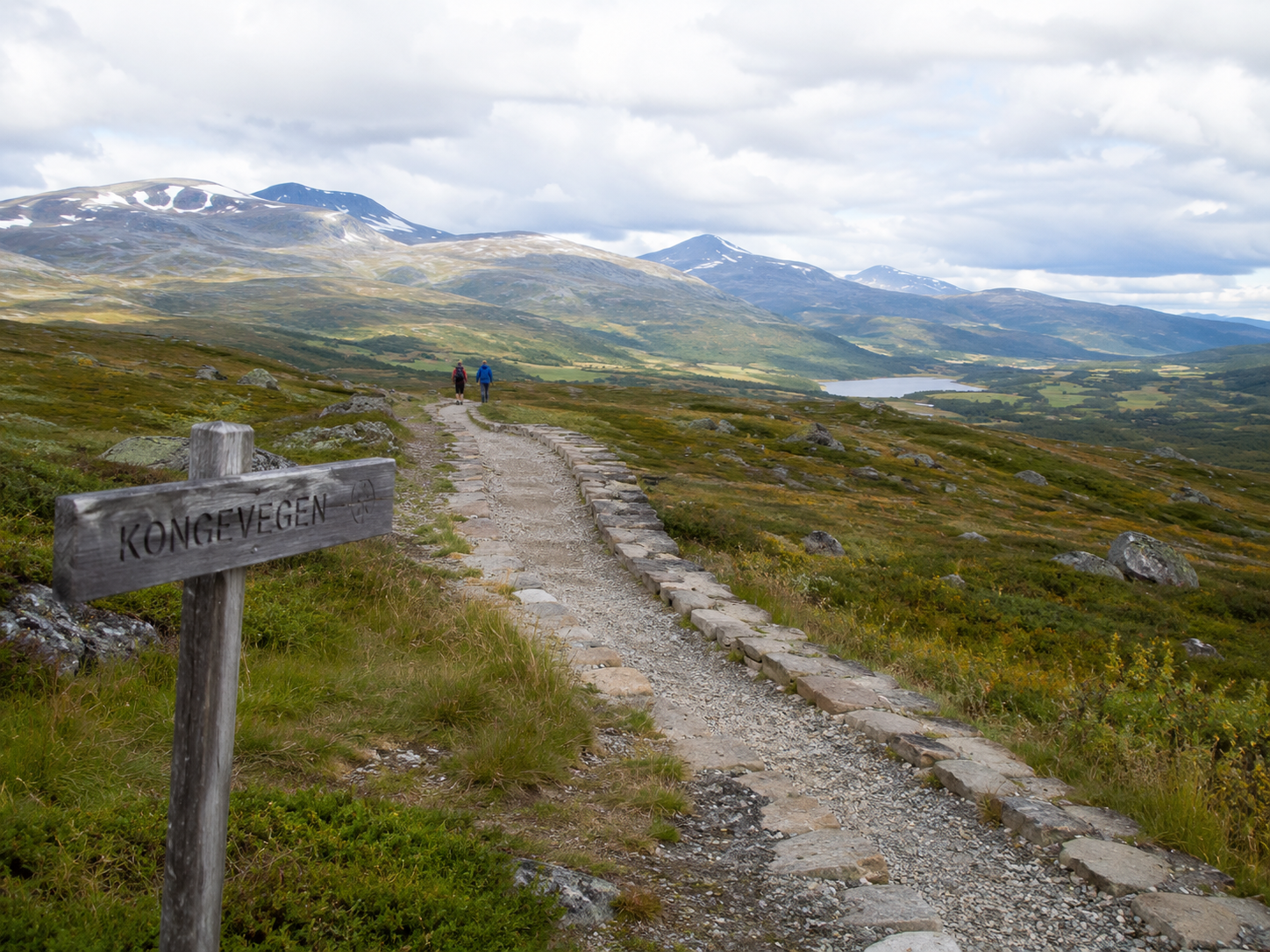
The King’s Road across Filefjell follows parts of the historic route that once connected Eastern and Western Norway through the mountains.
Vindhellavegen
Vindhellavegen is the most photographed section of Kongevegen. Its tight bends curve down a steep hillside close to Borgund Stave Church.
Although this section lies west of Valdres in Lærdal, it is often included in journeys based around Filefjell. It is visually impressive but represents only one small part of the historic route.
Kyrkjestølen to Maristova
The section between Kyrkjestølen and Maristova crosses the Filefjell mountain area and gives a clearer sense of the old journey between east and west. It combines open scenery with cultural history and can be walked as a day stage.
During parts of July and August, a seasonal bus has operated along sections of the King’s Road, helping hikers return to their starting point. The schedule should always be checked for the current year before planning a one-way walk.
Kvamskleiva
Kvamskleiva is a restored section near Vang that once formed part of the difficult journey through the valley. It follows the hillside above the modern E16 and gives views towards Vangsmjøse.
This is a good choice for travellers who want a shorter walk combining scenery and history without committing to a full day in the high mountains.
Kongevegen is especially valuable within a Valdres itinerary because it demonstrates how people moved through the landscape before modern roads. It connects farms, churches and mountain communities rather than leading only towards a summit.
Stølsruta: Hiking Through the Summer-Farm Landscape
Stølsruta is the hiking route that best represents the cultural identity of Valdres.
The route leads through Nord-Aurdal, Vestre Slidre and Vang, generally at elevations of approximately 800 to 1,000 metres. It passes areas of summer farms, grazing land, lakes, traditional paths and small mountain communities.
Unlike a conventional high-mountain route, its main purpose is not to reach a dramatic summit. The appeal lies in moving slowly through a landscape shaped by livestock and seasonal farming.
The complete route is intended as a multi-day hike, with accommodation available at selected farms, mountain lodges or cabins along or near the way. Individual sections can also be walked as day trips.
Stølsruta is particularly suitable for travellers interested in:
traditional farms and agricultural landscapes
local food and smaller accommodation providers
moderate walking rather than exposed ridges
Norwegian cultural history
quieter routes away from the busiest areas of Jotunheimen
The route is not completely flat or effortless. Distances between accommodation can be substantial, and weather still matters at this elevation. However, the terrain is generally less severe than the high peaks north of Bygdin.
For this article, Stølsruta is as important as Bitihorn or Besseggen. It expresses what makes Valdres different from a destination focused entirely on dramatic mountain scenery.
Can You Hike Besseggen from Valdres?
Besseggen lies in Jotunheimen rather than within the central Valdres landscape, but Beitostølen is commonly used as a base for reaching Gjendesheim.
The hike is famous for its narrow ridge and the view down towards the differently coloured lakes Gjende and Bessvatnet. It is also significantly longer and more demanding than many visitors expect.
Transport must be planned carefully because most hikers use the boat on Lake Gjende for part of the journey. Boat departures can sell out during the busiest summer periods, and the hike should not be attempted in poor visibility or unsuitable weather.
Besseggen can therefore be included in a longer stay in Valdres, but it should not define the whole region. Bitihorn, Synshorn, Mugnetinden, Stølsruta and Kongevegen provide experiences that are more directly connected to Valdres itself.
Hiking Without a Car
A car provides the greatest flexibility in Valdres, but some mountain walks can be reached by bus during the main travel season.
The route over Valdresflye connects Beitostølen with Bygdin, Gjendesheim and destinations further north. Depending on the seasonal timetable, it may provide access to walks including Bitihorn, Synshorn, Rasletinden and routes between Valdresflye and Bygdin.
Bus services are less frequent outside the summer season, and some routes do not operate every day. Travellers should plan both the outward and return journey before beginning a hike.
Staying at Beitostølen or Bygdin makes car-free hiking easier than staying in more remote parts of Vang, Vaset or southern Valdres.
Cycling in Valdres
Valdres is one of the strongest cycling regions in Norway for travellers who prefer quiet roads and varied landscapes to technical mountain-bike trails.
Gravel roads connect farms, summer pastures, lakes and mountain accommodation. Many routes remain open to local traffic, but they are generally quieter than the main highways.
Cycling is particularly rewarding around Vaset, Stølsvidda, Tisleidalen, Golsfjellet and the areas between Vestre Slidre and Vang. These landscapes are open enough to provide long views while remaining less exposed than the highest mountain roads.
Both conventional bikes and electric bikes can be used, although long climbs, loose gravel and changing weather should be considered when selecting a route.
Mjølkevegen
Mjølkevegen is the best-known cycling route through the Valdres mountain landscape. The complete route links Vinstra and Gol, crossing large areas of summer pasture and mountain country along the way.
Current route descriptions place the full journey at approximately 230 kilometres, although shorter versions and connected variations may be presented with slightly different total distances. The route is designed so that cyclists can complete either the full journey or selected stages.
The landscape includes:
working summer farms
mountain lakes
gravel roads
open grazing land
sections close to Jotunheimen
mountain lodges and smaller accommodation providers
The name means “the Milk Route” and reflects its connection to the summer-farm landscape. It should not, however, be mistaken for an entirely gentle family trail. Some sections contain long climbs and steep descents.
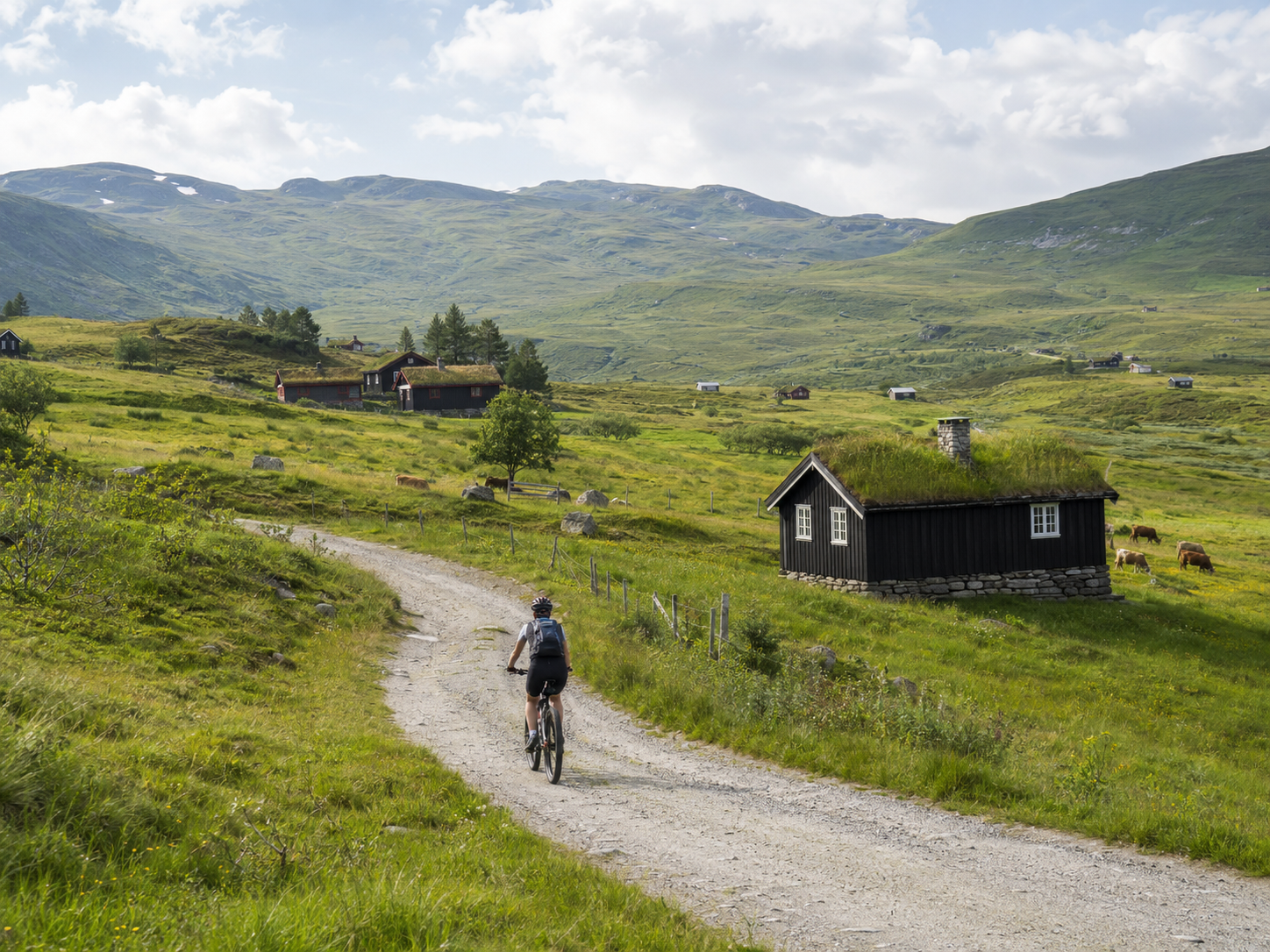
Mjølkevegen leads cyclists through Valdres’ summer-farm landscape, following quiet gravel roads between mountain pastures, lakes and traditional farm buildings.
Easier Sections of Mjølkevegen
For families and leisure cyclists, the areas around Vaset, Stølsvidda, Tisleidalen and Golsfjellet are among the most approachable. It is possible to create shorter circuits or ride only between selected accommodation points.
The terrain remains rolling, but it is generally friendlier than the northern and western stages.
Moderate Sections
The route between Espedalen and Beitostølen passes through attractive mountain terrain and is recommended for cyclists with some experience. Part of the journey near Bygdin uses County Road 51, which can carry heavier traffic during the main summer season.
The More Demanding Sections
The section between Beitostølen and Vaset includes the ascent over Slettefjellet, where the route reaches approximately 1,315 metres. The climb is long, and there are additional steep sections between Ryfoss and Syndin.
These stages require a reasonable level of fitness, suitable brakes and confidence on gravel descents. An electric bike can reduce the effort of the climbs but does not remove the need for careful handling.
When to Cycle Mjølkevegen
The lower and southern sections may become rideable towards the end of May, depending on the spring. The complete route generally cannot be cycled until the road across Slettefjellet opens, often around the middle of June.
Snow, wet gravel and road damage can affect conditions, so current information should be checked before setting out early in the season. Most of the route follows private roads that can also be used by motor vehicles.
For a first cycling journey in Valdres, a two- or three-day route around Vaset and Stølsvidda may provide a better experience than attempting the entire Mjølkevegen.
Other Cycling Areas
Vaset and Stølsvidda
Vaset is one of the best bases for recreational cycling. Gravel roads lead between lakes, cabins, working summer farms and open grazing areas.
The terrain allows visitors to create day trips of different lengths, and several routes connect with Mjølkevegen. This is a good area for travellers who want to combine cycling with swimming, fishing or a farm visit.
Tisleidalen
Tisleidalen has a mixture of forest and open mountain terrain. The roads are generally quieter than those around Beitostølen, and the landscape works well for less hurried day rides.
Vang and Slettefjellet
Cycling around Vang is more demanding because of the steeper landscape. The reward is a combination of dramatic mountain views, traditional farms and quieter roads.
The Slettefjellet road provides a memorable crossing but involves a substantial climb. Weather can also change quickly at the highest point.
Trail Cycling
Valdres has developed purpose-built and natural mountain-bike trails in several areas. Beitostølen offers accessible trails and bike facilities, while other options exist around Vaset and Aurdal.
Trail conditions, difficulty and permitted use should be checked locally. Riders should not assume that every hiking path is open or appropriate for mountain bikes.
Fishing in Valdres
Fishing has been part of life in Valdres for generations. The region contains numerous lakes, rivers, streams and mountain waters with trout, char and perch.
Visitors can fish from the bank, use boats where permitted or try fly fishing in selected rivers and shallower lakes. Local rules differ between waters, and most fishing requires a permit in addition to the national rules that apply to freshwater fishing.
Slidrefjorden
Slidrefjorden is one of the best-known fishing lakes in the region and is associated with good-quality trout. It is accessible from several places in Vestre Slidre and can be combined with a stay around Vaset or Slidre.
Vasetvatnet
Vasetvatnet is relatively shallow and is suitable for fishing from both the shore and a boat. Its characteristics also make it popular for fly fishing. Trout are the main target species.
Tisleia
The River Tisleia is one of the most recognised fly-fishing rivers in the broader Valdres area. Different stretches may have separate regulations, and not all sections are included within the same regional fishing permit.
Anglers should check which permit covers the exact area they intend to use.
Busuvatnet
Busuvatnet in Sør-Aurdal is known for char fishing and provides another reason to explore the quieter southern part of Valdres.
The River Etna
The River Etna offers trout fishing through parts of Etnedal. It suits visitors who prefer river fishing and a wooded valley environment rather than the larger mountain lakes.
A regional Fisking i Valdres permit covers many, but not all, participating waters. Restrictions can differ by season, species, equipment and location, so purchasing a general permit does not remove the need to read the local rules.
Swimming, Canoeing and Life Around the Lakes
Valdres is often presented as a mountain destination, but its lakes are equally important to the summer landscape.
On warm days, smaller lakes around Vaset, Tisleidalen and the lower valleys can be suitable for swimming. Water temperatures remain cool, particularly in high mountain areas, and there are rarely lifeguards or developed beach facilities.
Canoes, kayaks and rowing boats can be rented at selected accommodation providers and activity centres. Paddling offers a quieter alternative to hiking and is particularly suitable for families or travellers staying beside the same lake for several days.
Visitors should wear life jackets and be aware that wind can rise quickly on larger lakes. Bygdin, Tyin and Vangsmjøse can become rough and cold and should not be treated like sheltered recreational ponds.
Lake Bygdin also has a seasonal passenger boat, M/B Bitihorn, which connects locations along the lake. The boat can be used as part of a hiking journey or simply as a way to experience the mountain landscape from the water. Its timetable is seasonal and should be booked or checked in advance.
Horse Riding and Farm Activities
Horse riding is available through selected farms and activity providers in Valdres. Depending on the operator, experiences may range from short introductory rides to longer trips through forest and mountain terrain.
Farm visits can also include meeting animals, seeing traditional buildings or learning about food production. These activities are often seasonal and arranged by small businesses, so they should not be approached with the expectation of daily opening hours.
Families should check age limits and whether activities must be reserved beforehand.
Climbing and Via Ferrata
The steeper mountains of northern Valdres provide opportunities for climbing and guided via ferrata.
The Synshorn Via Ferrata near Bygdin is one of the best-known organised climbing experiences. Participants follow a protected route using cables and fixed equipment, accompanied by an instructor or according to the operator’s requirements.
This is not the same as the ordinary hiking route to Synshorn. It requires a head for heights, safety equipment and advance booking.
Guided climbing and mountain activities are also available around Beitostølen, Tyin and Filefjell. Providers including Beito Aktiv and Tyin Aktiv offer selected outdoor experiences in the region.
Scenic Drives and Short Stops
Not every visitor to Valdres wants to spend each day hiking or cycling. Several roads provide access to the mountain landscape with opportunities for short stops and easier walks.
The Norwegian Scenic Route Across Valdresflye
The road across Valdresflye is one of Norway’s designated scenic routes. It climbs from the area around Bygdin to an open plateau before descending towards Gjende and the valleys north of Jotunheimen.
The route passes trailheads for Bitihorn, Synshorn, Rasletinden and other walks. Rest areas and viewpoints provide access to the scenery for travellers who are not completing a longer hike.
The mountain section is normally closed during winter. Opening dates vary with snow and weather, and temporary closures can also occur after the road has opened for the season.
Panoramavegen
Panoramavegen connects areas around Vaset and the wider summer-farm landscape. It is less dramatic than Valdresflye but more closely connected to the farms, lakes and grazing land that define central Valdres.
This route is particularly attractive for travellers who want a slow drive with opportunities to stop for walks, food or photographs rather than a high-mountain crossing.
Slettefjellvegen
The road across Slettefjellet connects areas around Beitostølen and Vang. It passes through open mountain terrain and forms part of Mjølkevegen.
The road is seasonal, narrow in places and partly unpaved. It should be driven slowly, with consideration for cyclists, livestock and oncoming traffic.
Choosing the Right Summer Activity
The best outdoor experience in Valdres depends less on finding the region’s single most famous attraction and more on matching the activity to the traveller.
For a first mountain summit, Bitihorn provides an achievable but rewarding challenge. Synshorn offers excellent views from a quieter setting, while Rasletinden is better suited to experienced hikers who want to reach a 2,000-metre peak.
Kongevegen is the strongest choice for travellers interested in history, and Stølsruta is the best expression of Valdres’ summer-farm landscape. Around Vaset, cycling and fishing can be combined with shorter walks and relaxed days beside the lakes.
This range is one of Valdres’ main strengths. Visitors do not need to choose between culture and outdoor life. The roads, trails, farms, lakes and mountains are all part of the same landscape.
Valdres in Winter
Winter changes Valdres from a landscape of farms, gravel roads and mountain pastures into one of Norway’s most varied skiing regions.
The season is not the same everywhere. Lower areas around Fagernes, Aurdal and southern Valdres generally have milder conditions than the higher landscapes around Beitostølen, Bygdin, Tyin and Filefjell. Snow can arrive early in the mountains and remain well into spring, while conditions further down the valleys are less predictable.
Valdres is particularly strong as a winter destination because visitors do not have to choose between alpine skiing and cross-country skiing. Large trail networks, smaller family ski centres, higher and more demanding slopes, mountain lodges and ski-touring terrain are spread across the region.
Beitostølen is the most developed winter destination, but it is not the only place worth considering. Vaset, Aurdal, Tyin-Filefjell and several smaller mountain communities provide quieter alternatives with their own character.
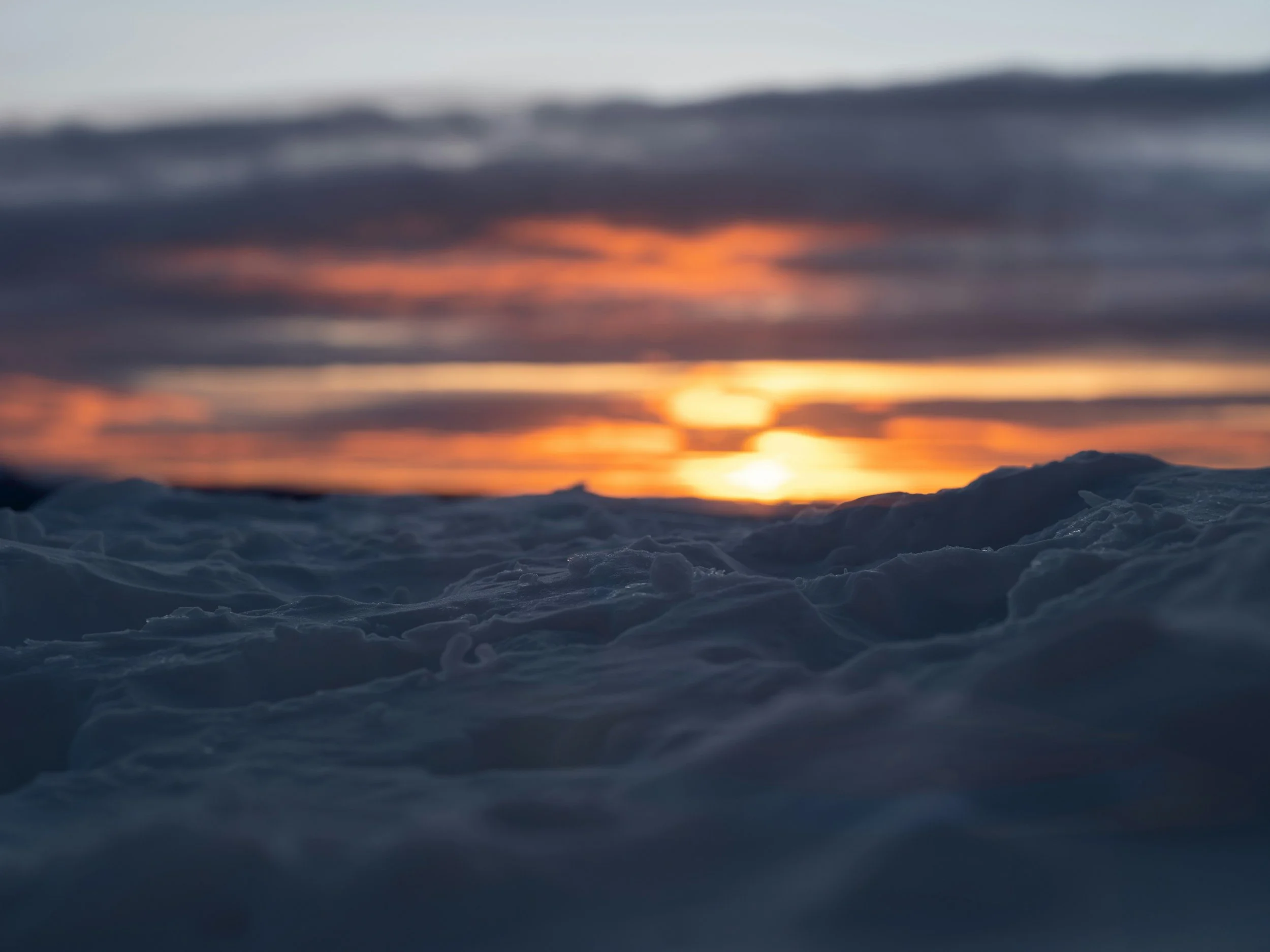
Where to Ski in Valdres
The best ski area depends on whether the priority is convenience, challenging slopes, cross-country trails, family skiing or access to the high mountains.
Beitostølen Skisenter
Beitostølen Skisenter is the most convenient alpine area in Valdres for families, beginners and mixed groups.
The slopes are located close to the centre of Beitostølen, making it possible to stay within walking distance of lifts, ski hire, restaurants and other services. This is particularly useful for travellers who do not want to drive between their accommodation and the ski area each day.
The terrain is generally more approachable than at nearby Raudalen. Ski school, equipment rental and areas suitable for younger children make it the most straightforward choice for a first family ski holiday in Valdres.
Beitostølen is also one of the easiest destinations to reach without a car. Direct buses operate between Oslo, Fagernes and Beitostølen, although timetables and frequencies vary seasonally.
The resort atmosphere will not appeal to everyone. Beitostølen contains a large number of holiday apartments and modern tourism facilities and feels more developed than the farming and mountain communities elsewhere in Valdres.
Raudalen Alpin
Raudalen lies a short distance from central Beitostølen and provides steeper and more demanding alpine terrain.
It is better suited to confident skiers who find the main Beitostølen slopes too gentle. The two areas together allow groups with different levels of experience to stay in the same destination while choosing different slopes during the day.
Raudalen also has terrain associated with off-piste skiing, but conditions beyond prepared slopes should never be treated casually. Snow stability, visibility and local restrictions must be assessed, and inexperienced visitors should use a qualified guide.
Beitostølen and Raudalen are presented together as the two alpine skiing areas serving the Beitostølen destination.
Tyin-Filefjell Ski Centre
Tyin-Filefjell is one of the best choices for visitors who want a higher, more mountain-oriented ski environment.
Its elevation generally provides reliable snow and a longer winter season than some of the lower ski centres. The landscape feels more open and rugged, with views towards the mountains of Jotunheimen.
Tyin-Filefjell offers prepared alpine slopes, but the wider area is also associated with cross-country skiing, backcountry routes and ski touring. This makes it more appealing to experienced outdoor travellers than to visitors looking only for resort entertainment.
Accommodation and services are more dispersed than in Beitostølen. A car is therefore useful, particularly for travellers who want to explore different trailheads and mountain areas.
Valdres Alpinsenter in Aurdal
Valdres Alpinsenter in Aurdal is a practical option for travellers entering the region from Oslo.
Its location further south means that visitors do not have to travel as far into the mountains as they would for Beitostølen or Tyin-Filefjell. The centre serves both families and more experienced skiers and is surrounded by cabins and mountain accommodation.
Aurdal works particularly well for a shorter ski break. It is also a good base for travellers who want to combine skiing with Fagernes, Valdres Folk Museum or the lower parts of the region.
The atmosphere is quieter and less resort-like than Beitostølen, although it also offers fewer restaurants and services within immediate walking distance.
Vaset Skiheiser
Vaset Skiheiser is a smaller alpine centre suited to families and visitors who prefer a quieter setting.
The slopes are not intended to compete with Norway’s largest ski resorts. Their advantage is accessibility and the opportunity to combine a few hours of alpine skiing with the extensive cross-country network around Vaset.
This is a good choice for families staying in a cabin or at a mountain lodge who do not need a large number of lifts and restaurants. It is also less overwhelming for children and beginners than a busy resort.
Vaset is included among the alpine skiing centres available across Valdres.
Stavadalen
Stavadalen lies in Sør-Aurdal and is another smaller ski area that shows how widely winter activities are spread across Valdres.
It is most relevant to visitors staying in southern Valdres or to families looking for a local ski hill rather than a full resort. It should not be chosen for a long holiday based entirely around alpine skiing, but it can be a useful part of a more varied winter stay.
A regional multi-centre ski pass has included Aurdal, Beitostølen, Raudalen, Tyin-Filefjell, Stavadalen and Vaset, although participating centres and conditions should be checked for the current season before purchase.
Cross-Country Skiing in Valdres
Cross-country skiing is central to winter life in Valdres. In many areas, the trail network is more extensive and more important than the alpine slopes.
Prepared tracks cross forests, frozen mountain landscapes, holiday-cabin areas and former summer pastures. Some routes are short and sheltered, while others lead into exposed high-mountain terrain.
Visitors should distinguish between prepared cross-country tracks and marked backcountry ski routes. A groomed circuit close to a village requires different equipment and experience from a route across Valdresflye or into Jotunheimen.
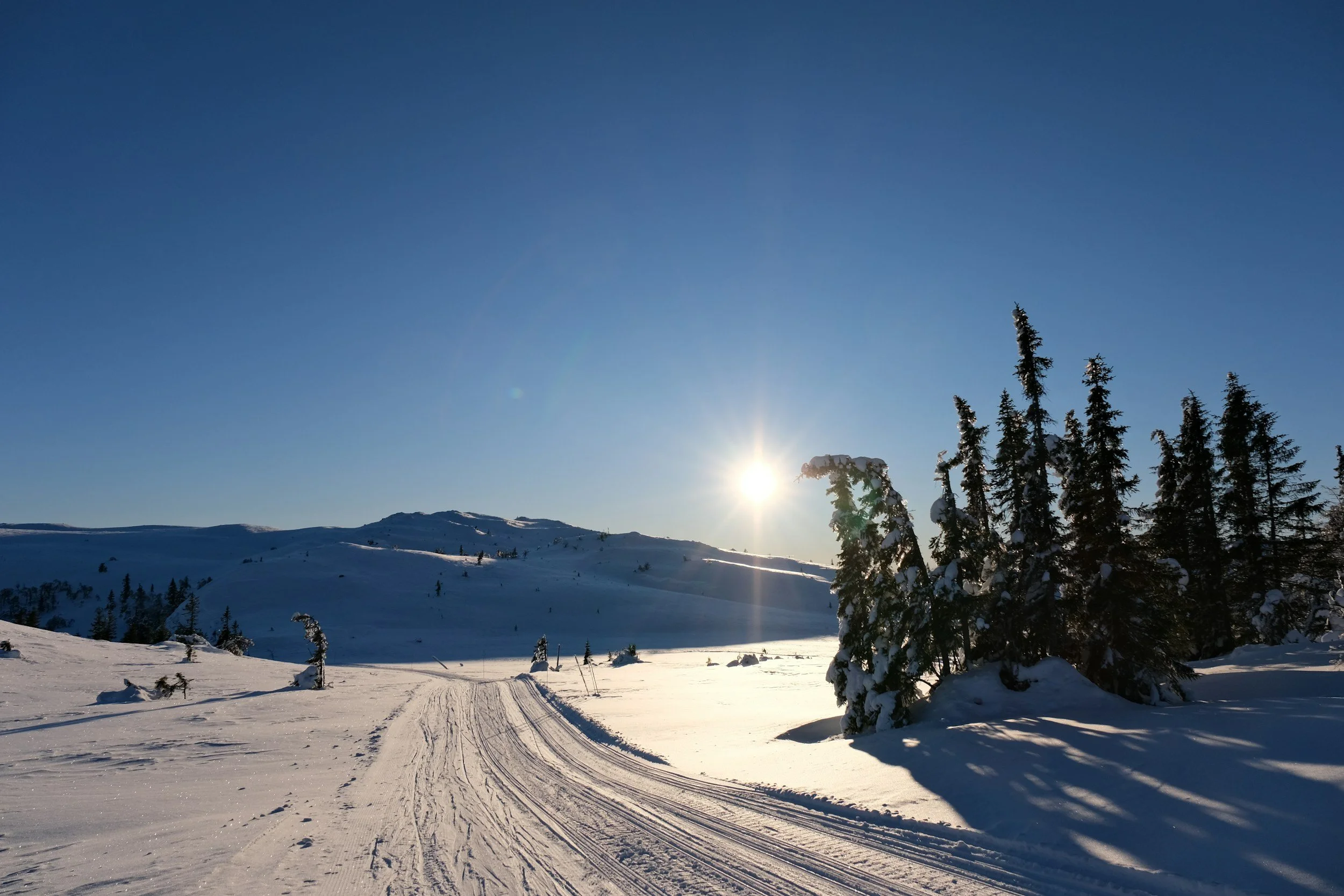
Beitostølen
Beitostølen is one of Norway’s best-known cross-country skiing destinations. It has competition facilities, prepared trails and connections extending into the surrounding mountain landscape.
The destination hosts professional skiing and biathlon events, but the trail system is not limited to athletes. Recreational skiers can choose shorter circuits and gentler routes close to the village.
Beitostølen is the easiest option for travellers who want cross-country lessons, rental equipment and clearly accessible trails without needing detailed local knowledge.
More experienced skiers can travel further into the mountains, but conditions become more exposed away from the central trail network.
Vaset
Vaset is one of the strongest alternatives to Beitostølen for a traditional cross-country holiday.
The area has approximately 120 kilometres of groomed trails when the full system is operating. The network passes through forest, cabin areas and open mountain terrain and is maintained by local grooming teams.
Vaset suits visitors who want to stay in a cabin or mountain lodge and ski directly into a large trail system. It is usually quieter than Beitostølen and has a more traditional mountain-holiday atmosphere.
The trails connect with surrounding areas, allowing experienced skiers to complete longer journeys rather than repeating the same short circuits.
Aurdal and Danebu
The mountain areas above Aurdal contain an extensive network of prepared trails. Danebu is a particularly attractive base because it combines mountain accommodation with immediate access to winter landscapes.
This area is suitable for both shorter outings and longer tours. Its location in southern Valdres also makes it easier to reach from Oslo than the northern high-mountain destinations.
Aurdal is a good compromise for travellers who want both alpine and cross-country skiing without staying in a busy resort.
Tyin and Filefjell
Tyin-Filefjell provides a more exposed and high-mountain form of cross-country skiing.
Prepared trails exist around the main settlements and accommodation areas, while marked routes extend into more remote terrain. The wider destination is promoted for cross-country skiing as well as alpine and backcountry activities.
Weather conditions can be severe. Wind, drifting snow and poor visibility may transform a route that appears simple on a map. Visitors should obtain local advice before entering the higher mountains.
Bygdin and Jotunheimen
Bygdin Høifieldshotel opens during part of the winter and spring season and provides access to marked backcountry ski routes into Jotunheimen. Routes may lead towards Torfinnsbu, Yksendalsbu, Gjendesheim and across Valdresflye when conditions and seasonal marking permit.
These are not ordinary prepared trails close to a resort. They require mountain skis, suitable clothing, navigation skills and the ability to respond to changing weather.
For capable skiers, spring journeys from Bygdin can be among the most memorable winter experiences in the region. For beginners, the groomed networks around Beitostølen, Vaset or Aurdal are far more appropriate.
Ski Touring and Backcountry Skiing
The mountains around Tyin, Filefjell, Valdresflye and northern Valdres provide many possibilities for ski touring.
Some routes lead to relatively accessible summits, while others involve avalanche terrain, steep slopes and long approaches. Stølsnøse in the Tyin area is presented as one of the shorter and more accessible ski tours, with views towards Jotunheimen.
Easy in this context does not mean risk-free. Avalanche conditions can change rapidly, and anyone entering uncontrolled terrain must carry appropriate rescue equipment and know how to use it.
Travellers without local knowledge should book a qualified guide. This is especially important when visibility is poor, the snowpack is unstable or the intended route enters steep terrain.
Snow kiting also takes place on exposed mountain plateaus, but it depends heavily on wind and weather and should be undertaken through an experienced provider.
Other Winter Activities
Visitors do not have to ski every day to enjoy winter in Valdres.
Depending on location and current availability, activities may include:
dog sledding
snowshoeing
sledging
horse-drawn sleigh rides
ice fishing
winter walking
sauna and cold-water experiences
indoor swimming and wellbeing facilities
yoga and organised retreats
Many of these are offered by small seasonal providers and must be booked in advance. Availability can vary from one winter to the next.
Snowshoeing is especially useful for travellers who want to experience a snowy landscape without learning to ski. However, snowshoes do not make it safe to enter avalanche terrain or cross exposed mountains in bad weather.
Beautiful and Characterful Places to Stay in Valdres
Valdres has many ordinary hotels, cabins and apartments, but the most memorable accommodation often reflects the surrounding landscape.
Traditional mountain hotels, family-run lodges, farm accommodation and smaller boutique properties provide a stronger sense of place than standard resort apartments. Many Valdres accommodation businesses remain small and family operated, with some passed between generations.
Nøsen Yoga og Fjellhotell
Nøsen Yoga og Fjellhotell is one of the most distinctive places to stay in Valdres.
Located in the mountains of Vestre Slidre, it operates as both a retreat centre and a hotel. Guests can attend organised yoga, movement and wellbeing programmes, but the hotel also accepts independent stays outside the retreat format.
The atmosphere is different from a conventional luxury spa hotel. Nøsen places greater emphasis on community, movement, yoga, nature and vegetarian food than on polished resort facilities.
It is best suited to travellers who appreciate:
yoga and meditation
vegetarian meals
a social retreat atmosphere
simple access to nature
organised courses and festivals
a quieter alternative to a ski resort
The hotel continues to run retreats and events in 2026, confirming that the yoga-hotel identity you remember is still active.
Nøsen may not suit guests who expect a conventional boutique hotel with unrestricted restaurant service, nightlife and formal spa treatments. It should be chosen because of its particular philosophy and programme.
Bygdin Høifieldshotel
Bygdin Høifieldshotel is one of the classic mountain hotels of the region.
It stands beside Lake Bygdin, close to the edge of Jotunheimen and the scenic road across Valdresflye. The hotel remains family-run and offers direct access to hiking in summer and marked ski routes during its winter and spring season.
Bygdin is particularly well placed for:
Bitihorn and Synshorn
boat journeys on Lake Bygdin
hiking and skiing in Jotunheimen
the Valdresflye scenic route
travellers seeking traditional mountain-hotel character
The building and atmosphere are more historic than luxurious. Guests should choose it for location, food, mountain culture and shared hotel life rather than modern resort facilities.
Because the road across Valdresflye closes during winter, seasonal road access must be checked carefully. Bygdin is still accessible from the Valdres side during its open periods, but it cannot be treated as a year-round through-route towards Gjendesheim.
Danebu Kongsgaard
Danebu Kongsgaard is located in the mountains above Aurdal and combines the atmosphere of a smaller mountain lodge with a more carefully designed boutique style.
Its position makes it particularly convenient for cross-country skiing, hiking and access to Valdres Alpinsenter. The hotel is listed among the characterful mountain hotels operating in Valdres.
Danebu suits couples and adults who want a quieter, more polished stay than a large ski resort. It may also appeal to travellers interested in food and comfortable shared spaces.
The location is relatively isolated, so guests should expect to spend evenings at the hotel rather than walking into a village with several restaurants.
Gomobu Fjellstue
Gomobu is a family-run mountain lodge at Vaset. It sits close to the summer-farm landscape, cycling routes and the extensive winter trail network.
This is one of the strongest accommodation choices for visitors who want the traditional Valdres combination of mountain life, local food and outdoor activity.
Gomobu works well for:
cross-country skiing
cycling around Vaset and Stølsvidda
shorter hikes and lake activities
families and multigenerational groups
travellers who prefer a mountain lodge to a modern hotel
Meals are mainly organised around resident guests, although visitors may sometimes book lunch or dinner in advance.
Herangtunet Boutique Hotel
Herangtunet offers a more romantic and design-oriented experience than the traditional mountain lodges.
The hotel is set within a quiet forest environment in Øystre Slidre, with individually styled rooms and a strong emphasis on atmosphere. It is suited to couples and travellers who want privacy and distinctive interiors while remaining within driving distance of Beitostølen and other parts of northern Valdres.
Herangtunet is not positioned directly beside an alpine lift or major trail network. A car is useful, and the hotel is better viewed as a peaceful base than as a ski-in, ski-out property.
Tyinholmen Høyfjellstuer
Tyinholmen lies near Lake Tyin in a remote mountain environment at the edge of Jotunheimen.
It is a strong choice for experienced outdoor travellers who want immediate access to hiking, fishing and mountain skiing rather than village facilities. The property is included among the mountain lodges serving the Valdres and Jotunheimen area.
The experience is closely tied to the landscape and the lodge itself. Visitors should not expect shops, nightlife or a wide selection of nearby restaurants.
Vasetstølen
Vasetstølen places visitors directly within the summer-farm landscape around Vaset. In winter, the same area becomes a large cross-country destination. It is highlighted among Valdres’ distinctive places to stay for this combination of summer farming and winter skiing.
This is a suitable option for travellers who want a relatively simple and traditional mountain base rather than a formal hotel.
Fondsbu
Fondsbu lies at Eidsbugarden at the western end of Lake Bygdin and is one of the most celebrated mountain lodges connected to Jotunheimen.
It is reached seasonally by road from the Tyin side or by boat across Bygdin during the summer timetable. Fondsbu suits hikers who want to continue directly into Jotunheimen and travellers who enjoy the communal culture of Norwegian mountain lodges.
It is not a practical base for exploring all of Valdres. Its remote setting is the main reason to stay there.
Fagernes and Beitostølen Hotels
Fagernes and Beitostølen also contain more conventional hotels and apartment accommodation.
Fagernes is best for transport, shopping and central access to several parts of Valdres. Beitostølen is best for travellers who want restaurants, ski facilities, organised activities and mountain transport close at hand.
These locations may be more practical than the characterful properties above, especially for short visits or car-free journeys. They are less distinctive, but convenience can matter more than atmosphere when the itinerary includes several activities.
Choosing the Best Base in Valdres
No single base is ideal for the entire region.
Valdres covers a large area, and roads between the southern valleys, Vaset, Beitostølen and Filefjell can take longer than the map initially suggests. Travellers should choose accommodation based on their main interests rather than trying to see everything from one hotel.
Stay in Fagernes for Convenience
Fagernes is best for:
public transport connections
Valdres Folk Museum
shops and everyday services
access to both northern and southern Valdres
a short first visit without a remote mountain stay
It is less suitable for travellers who want to step directly from their accommodation into high-mountain terrain.
Stay at Beitostølen for Activities
Beitostølen is best for:
alpine and cross-country skiing
guided activities
equipment rental
restaurants and shops
car-free access from Oslo
hiking around Bitihorn, Bygdin and Valdresflye
It is not the best choice for visitors seeking the quietest or most traditional side of Valdres.
Stay at Vaset for the Cultural Landscape
Vaset is best for:
summer farms
cycling and Mjølkevegen
cross-country skiing
lakes and gentler walking
mountain-lodge accommodation
a quieter family holiday
A car is strongly recommended.
Stay in Vang or Filefjell for Rugged Mountains
Vang and Filefjell are best for:
Kongevegen
Mugnetinden and other mountain hikes
ski touring and backcountry skiing
dramatic scenery
travellers continuing towards Lærdal or the western fjords
quieter mountain communities
Services are spread out, and distances between attractions can be substantial.
Stay at Bygdin for Jotunheimen Access
Bygdin is best for:
Bitihorn and Synshorn
Lake Bygdin
traditional mountain-hotel atmosphere
hiking and backcountry skiing
travellers whose main priority is the edge of Jotunheimen
It is seasonal and too remote to serve as the only base for a broad tour of Valdres.
Stay at Nøsen for Yoga and Retreat Life
Nøsen is best for:
yoga and meditation
organised retreats
vegetarian food
a community atmosphere
travellers who want their accommodation to be the main experience
It is less appropriate for visitors who plan to spend every day driving between the major attractions of Valdres.
When Is the Best Time to Visit Valdres?
The best period depends on the type of trip.
Late June to August
This is the main season for:
hiking
open mountain roads
summer farms
stave-church interiors
cycling
fishing
boat journeys on Lake Bygdin
the widest range of visitor activities
Valdresflye, Slettefjellvegen and other seasonal roads are most likely to be open, although exact dates depend on snow and weather.
July is the busiest month, particularly around Beitostølen, Bygdin and well-known hiking routes.
September and Early October
Autumn brings clearer colours, cooler air and fewer visitors.
This is a beautiful time for lower and moderate mountain walks, but services begin to close and snow may arrive early in the higher mountains. Boat timetables, visitor farms and church-opening periods are usually more limited than in midsummer.
The season is excellent for travellers who value quiet landscapes and do not need a full programme of organised activities.
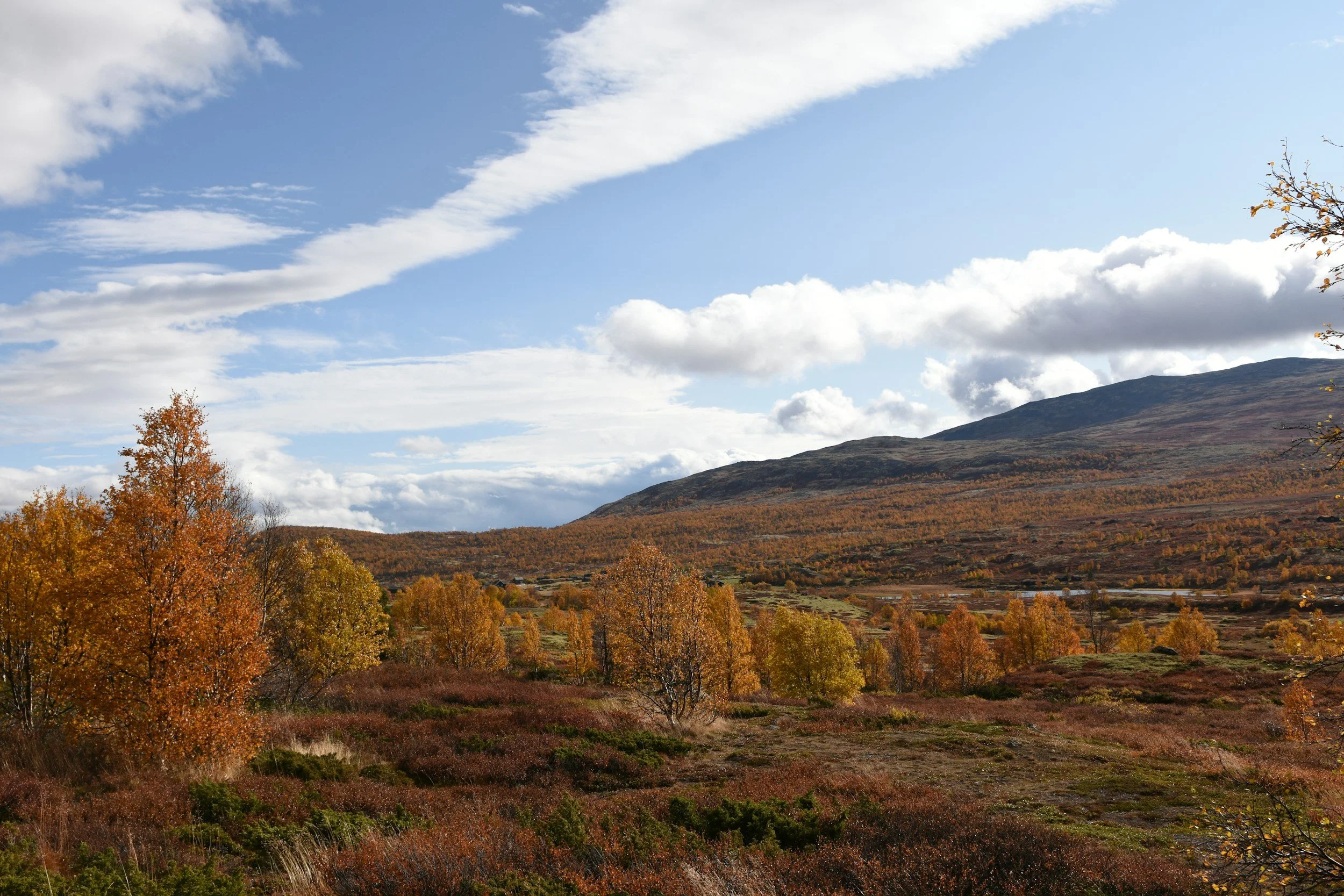
November
November is particularly associated with rakfisk and the Norwegian Rakfisk Festival in Fagernes.
The landscape is between autumn and winter. Snow conditions may be unreliable in lower areas, while darkness increases quickly. This is a cultural and food-focused period rather than the best month for a general outdoor holiday.
December to March
This is the main winter period for alpine and cross-country skiing.
December has limited daylight, while February and March generally provide longer days and better conditions for spending extended periods outdoors. Snow reliability is usually strongest in the higher parts of the region.
The Christmas and winter-holiday periods can be busy, especially at Beitostølen and in popular cabin areas.
March and April
Late winter and early spring can be the best time for mountain skiing.
Days are longer, snow remains in the high country and mountain lodges begin operating their spring programmes. Conditions can still be severe, and Easter is one of the busiest periods in Norwegian mountain destinations.
How to Get to Valdres
Valdres is accessible from Oslo, Bergen and several surrounding regions, but it does not have a functioning passenger railway.
By Car from Oslo
The main driving route from Oslo follows the E16 through Hønefoss and north into Valdres.
Approximate driving times depend on traffic, weather and the final destination, but travellers should allow roughly:
around three hours to Fagernes
approximately three and a half to four hours to Beitostølen
longer for Vang, Tyin and Filefjell
Winter journeys can take considerably longer. Snow, ice, congestion and difficult visibility must be expected, especially during weekends and holiday periods.
By Car from Bergen
The E16 connects Bergen with Valdres through Voss, the Lærdal area and Filefjell.
This route is open as an important year-round road, although mountain weather may still create difficult conditions. It enters Valdres from the west through Vang and continues towards Fagernes.
The journey is long enough that travellers should not plan too many stops or activities on the same day.
By Bus
Valdresekspressen operates regular services between Oslo, Fagernes and Beitostølen. Some services continue towards Årdal via Tyinkrysset, while summer and autumn connections may extend towards Gjendesheim.
Fagernes functions as the main public-transport hub within the region. Local and regional services are operated through Innlandstrafikk, including routes towards Beitostølen and, seasonally, Gjendesheim.
Bus travel is realistic for a stay centred on Fagernes or Beitostølen. It is more difficult for visitors planning to explore farms, smaller churches, Vaset, remote hiking routes and dispersed accommodation.
By Train
There is no active passenger railway into Valdres.
Travellers may take a train to a surrounding station and continue by bus, but this is rarely more convenient than taking the direct coach from Oslo. The exact combination depends on the starting point and current timetable.
By Air
The former airport at Fagernes does not offer ordinary scheduled passenger services.
For most international travellers, Oslo Airport is the most practical arrival point. From there, the journey continues by rental car or public transport through Oslo.
Travelling Around Valdres
A car provides the greatest freedom.
Many of the region’s defining attractions are dispersed across rural areas with limited public transport. This includes several stave churches, summer farms, trailheads, fishing waters and smaller accommodation providers.
Travellers should remember that:
mountain roads may be narrow
livestock can stand on or beside the road
some routes are unpaved
winter conditions require appropriate tyres and experience
scenic roads may close seasonally
driving times can be longer than expected
County Road 51 across Valdresflye is normally closed during winter. Slettefjellvegen and several smaller mountain roads are also seasonal.
Drivers should check current road conditions rather than relying only on the route displayed by a navigation app.
How Many Days Do You Need in Valdres?
One day is enough for a brief introduction, but it is not enough to understand the region.
One Day
A one-day visit could include:
Fagernes and Valdres Folk Museum
one stave church
a scenic drive through part of the region
lunch featuring local ingredients
This works best as part of a longer road trip.
Two or Three Days
Two or three days allow visitors to combine:
one cultural day
one mountain hike or cycling experience
a farm, food producer or historic road
a characterful mountain hotel
This is the minimum length I would recommend for a trip focused specifically on Valdres.
Four or Five Days
Four or five days make it possible to see more than one part of the region without spending the entire trip in the car.
Visitors could combine Fagernes, Vaset, Beitostølen and Vang, or stay in two different areas. This length also allows flexibility if the mountain weather is poor.
One Week
A week is suitable for travellers who want a slower holiday with several hikes, cycling, fishing, skiing or days at a mountain lodge.
It is also long enough to divide the stay between central Valdres and the higher mountains near Jotunheimen or Filefjell.
A Three-Day Summer Itinerary
Day One: Fagernes and Valdres Culture
Begin at Valdres Folk Museum to understand the traditional buildings, music, clothing and farming history of the region.
Continue through Vestre Slidre and visit Lomen Stave Church if the opening arrangements suit the day. Stop at a local producer, farm shop or café and spend the night around Vaset, Nøsen or Fagernes.
Day Two: Summer Farms and the Mountain Landscape
Explore the roads and summer-farm landscape around Vaset and Stølsvidda.
Choose between a shorter section of Mjølkevegen, a walk through the grazing landscape or a visit to a farm that welcomes visitors. Continue to Beitostølen or Bygdin in the evening.
Day Three: A Mountain Hike
Choose Bitihorn or Synshorn for a moderate mountain day.
Travellers who prefer a gentler experience can drive across Valdresflye, stop at viewpoints and complete a shorter walk near Bygdin. Return through Beitostølen or continue north towards Jotunheimen.
A Five-Day Cultural and Mountain Itinerary
Day One: Southern Valdres
Enter the region through Sør-Aurdal and visit Hedalen or Reinli Stave Church.
Continue towards Fagernes and stay locally.
Day Two: Fagernes and Vestre Slidre
Visit Valdres Folk Museum before driving through Slidre and the summer-farm landscape.
Stop at Lomen Stave Church and continue towards Vaset or Nøsen.
Day Three: Cycling or Stølsruta
Spend the day cycling part of Mjølkevegen, walking a section of Stølsruta or exploring the lakes and farm roads around Vaset.
Stay for a second night or continue to Beitostølen.
Day Four: Bygdin and Valdresflye
Hike Bitihorn or Synshorn, take the seasonal boat on Lake Bygdin or drive the scenic route across Valdresflye.
Spend the night at Bygdin, Beitostølen or in Vang.
Day Five: Vang and Kongevegen
Visit Høre or Øye Stave Church and walk a section of Kongevegen.
Continue across Filefjell towards Lærdal, or return east through Valdres.
A Three-Day Winter Itinerary
Day One: Arrival and Cross-Country Skiing
Travel to Beitostølen, Vaset or Aurdal and begin with a shorter groomed trail.
This gives visitors time to rent equipment and become familiar with the snow conditions before attempting a longer route.
Day Two: Alpine Skiing
Spend the day at Beitostølen Skisenter, Raudalen, Tyin-Filefjell, Valdres Alpinsenter or Vaset, depending on the chosen base and level of experience.
Return to the accommodation for dinner, sauna, yoga or a quiet evening.
Day Three: A Longer Winter Experience
Choose a longer cross-country tour, snowshoe walk or guided mountain activity.
Experienced skiers staying near Tyin or Bygdin may choose a backcountry route, but only when equipment, weather, avalanche conditions and experience are appropriate.
Is Valdres Worth Visiting?
Valdres is worth visiting for travellers who want to see more of Norway than its most famous fjords and viewpoints.
The region does not depend on one attraction. Its appeal comes from the relationship between farms, lakes, villages and mountains. A visitor can walk through a medieval churchyard, buy food from a working farm, cycle through summer pastures and climb a mountain within the same journey.
It is also a destination that rewards time. A quick drive through the E16 corridor reveals only part of the landscape. Staying for several days makes it possible to see the differences between southern Valdres, the summer-farm areas around Vaset, the resort environment of Beitostølen and the steeper mountains of Vang and Filefjell.
Valdres will not replace Jotunheimen for travellers whose only goal is to climb Norway’s highest peaks. Nor will it replace the western fjords for visitors seeking sheer cliffs and dramatic waterfalls.
What it offers is a more complete view of life in Mountain Norway. Nature is not separated from culture here. The walking routes, farm buildings, foods, churches and ski traditions all developed within the same landscape.
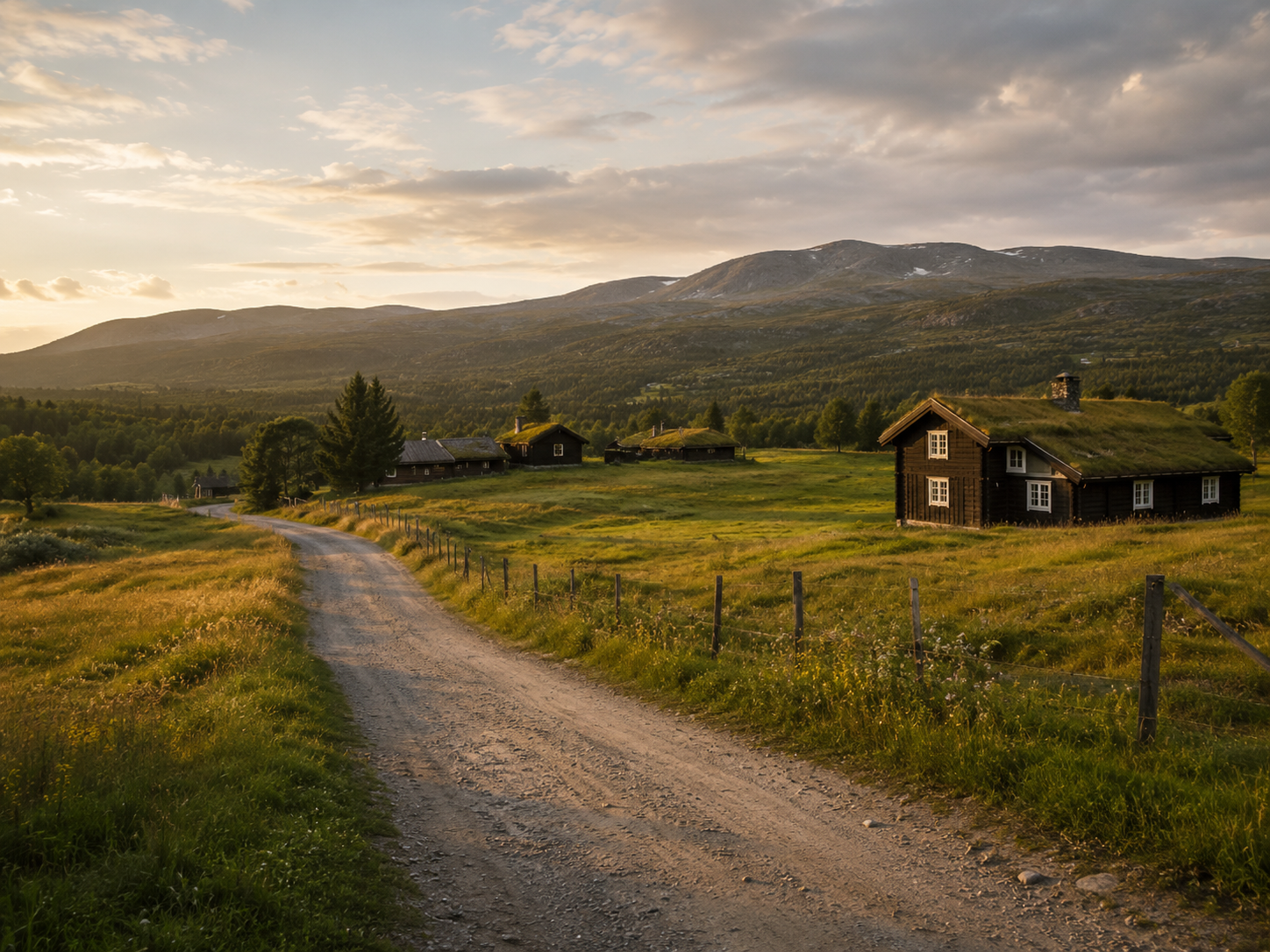
Final Words
Valdres is often crossed rather than explored.
Travellers follow the roads towards Jotunheimen, Bergen or the western fjords without realising that the valleys and mountain communities around them form one of Norway’s most distinctive cultural regions.
The landscape may appear quiet, but it contains centuries of movement and work. Livestock still graze in the mountains. Medieval churches remain part of local communities. Old roads can be followed on foot, while former summer-farm routes now carry hikers and cyclists through the same open pastures.
At the same time, Valdres is not trapped in the past. Beitostølen has become a modern resort, local producers sell traditional food to new markets, and places such as Nøsen have given the Norwegian mountain-hotel tradition a different identity through yoga, movement and retreat life.
That combination is what makes Valdres worth more than a short stop. It is a place to hike, ski and spend time outdoors, but it is also somewhere to understand how people have lived with the mountains rather than simply looking at them.
More articles about Norway:
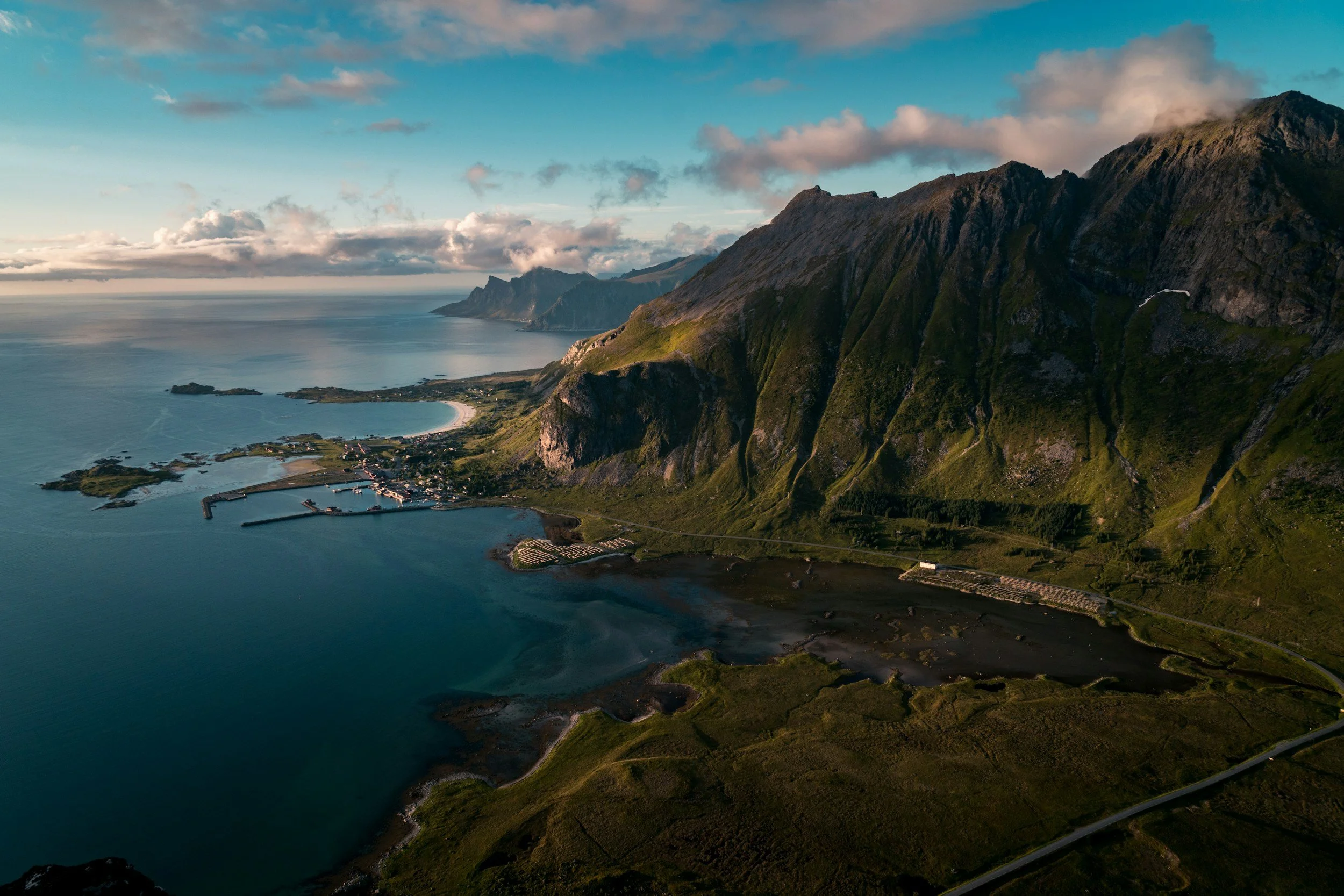
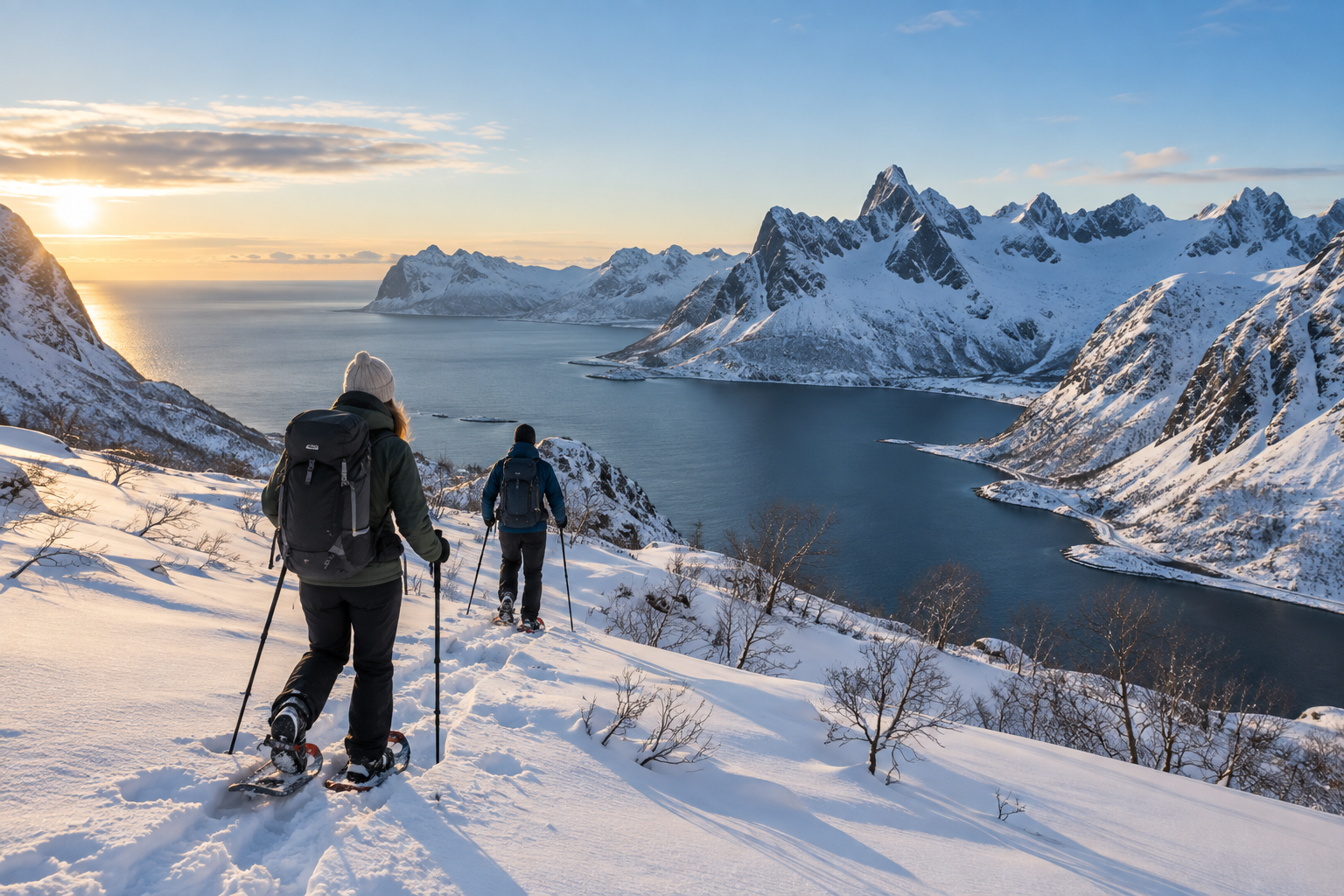
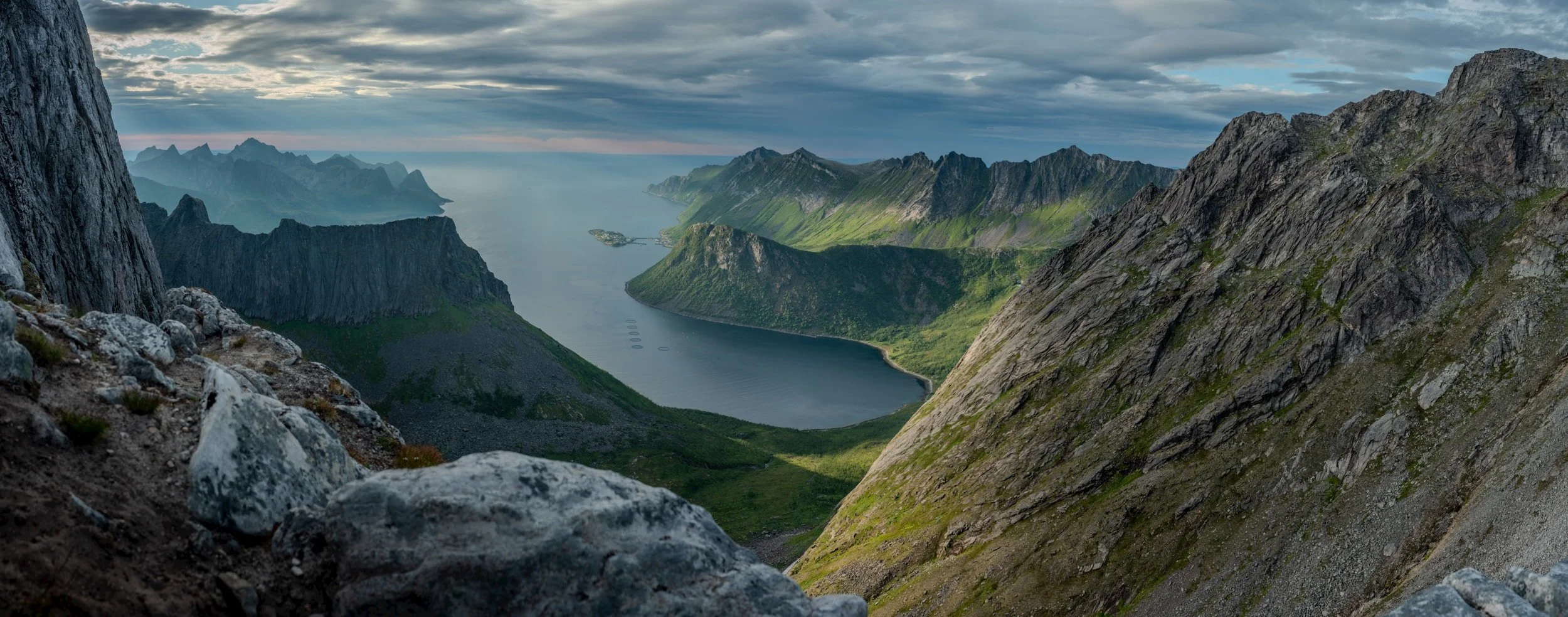
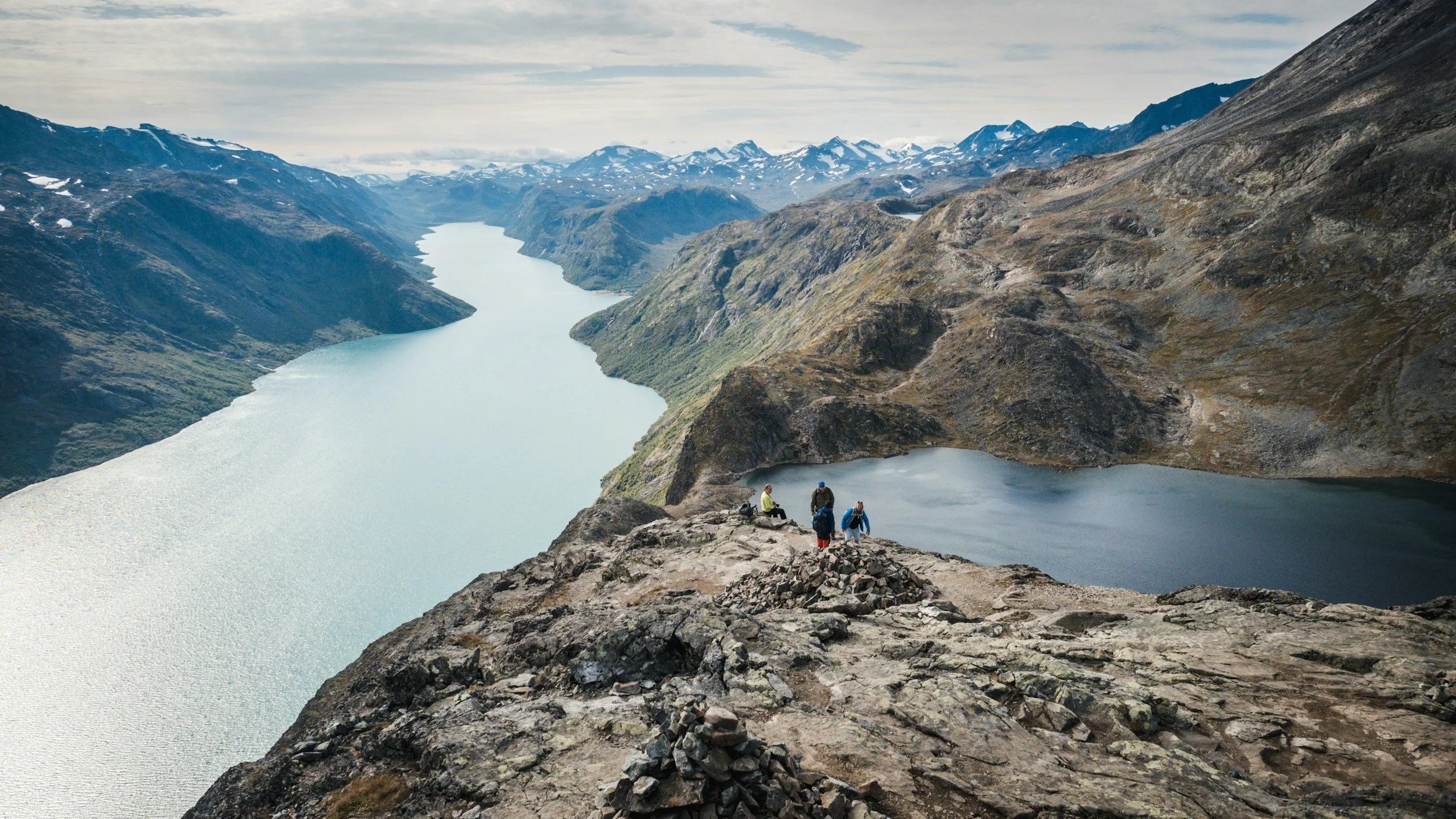
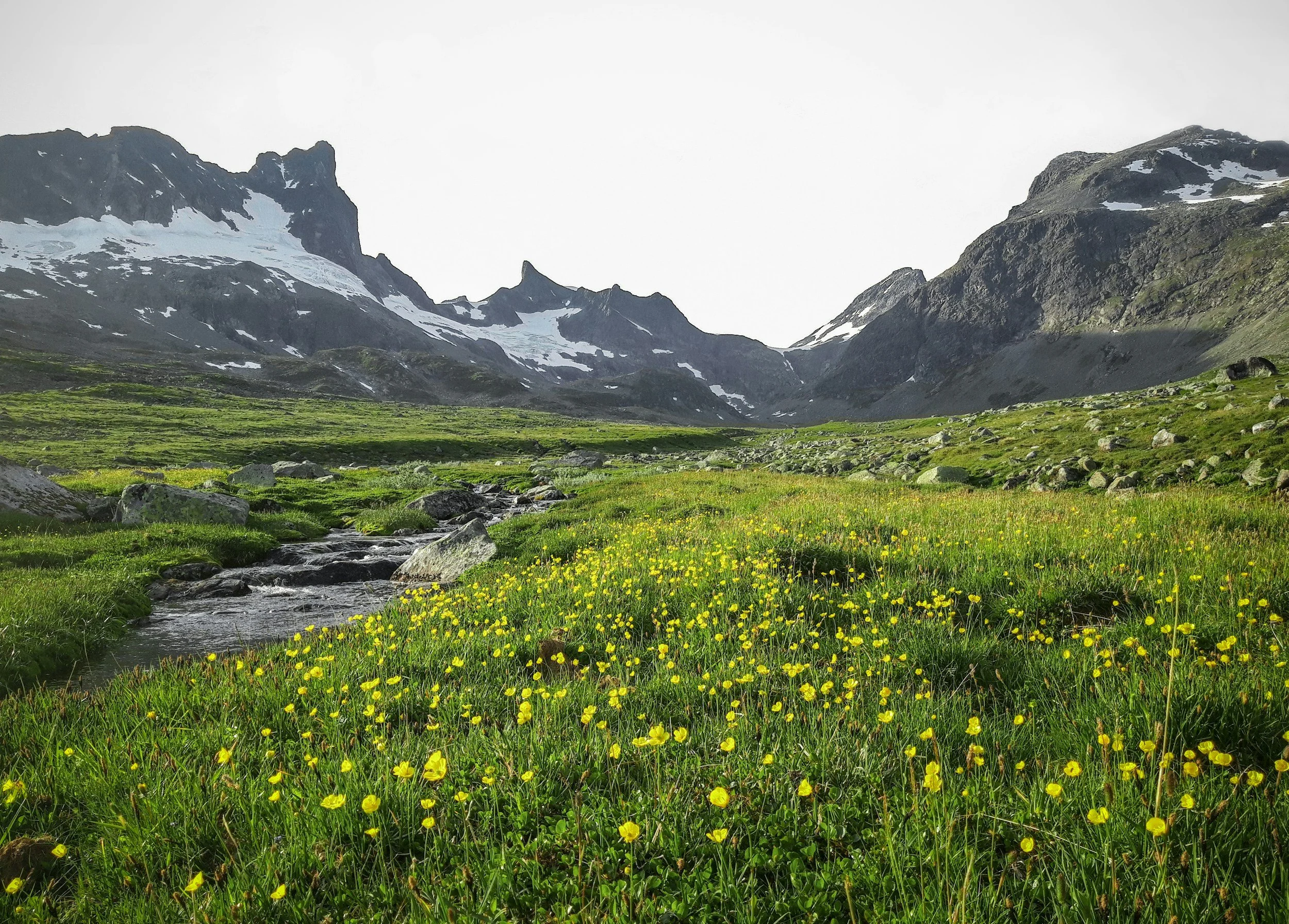
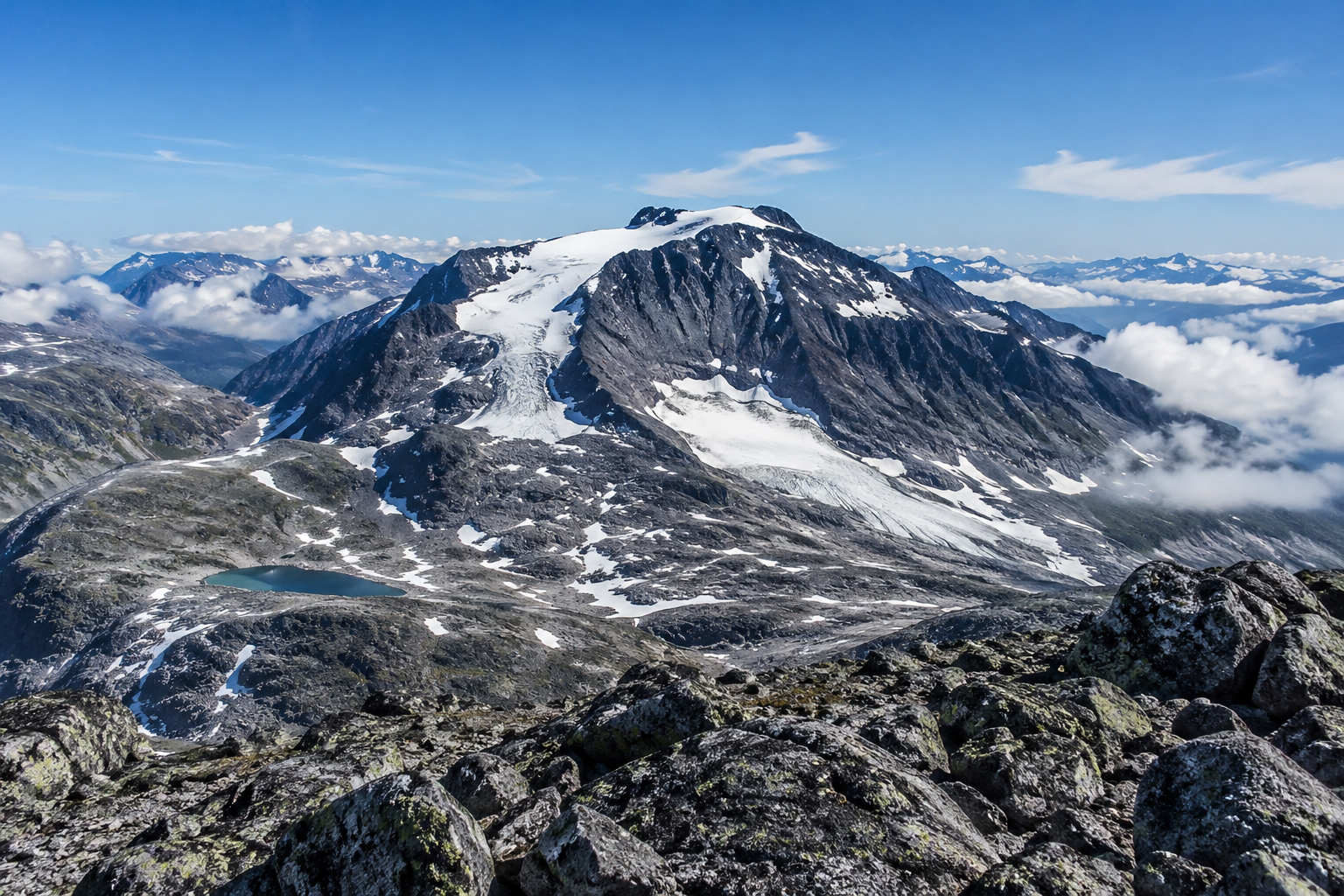
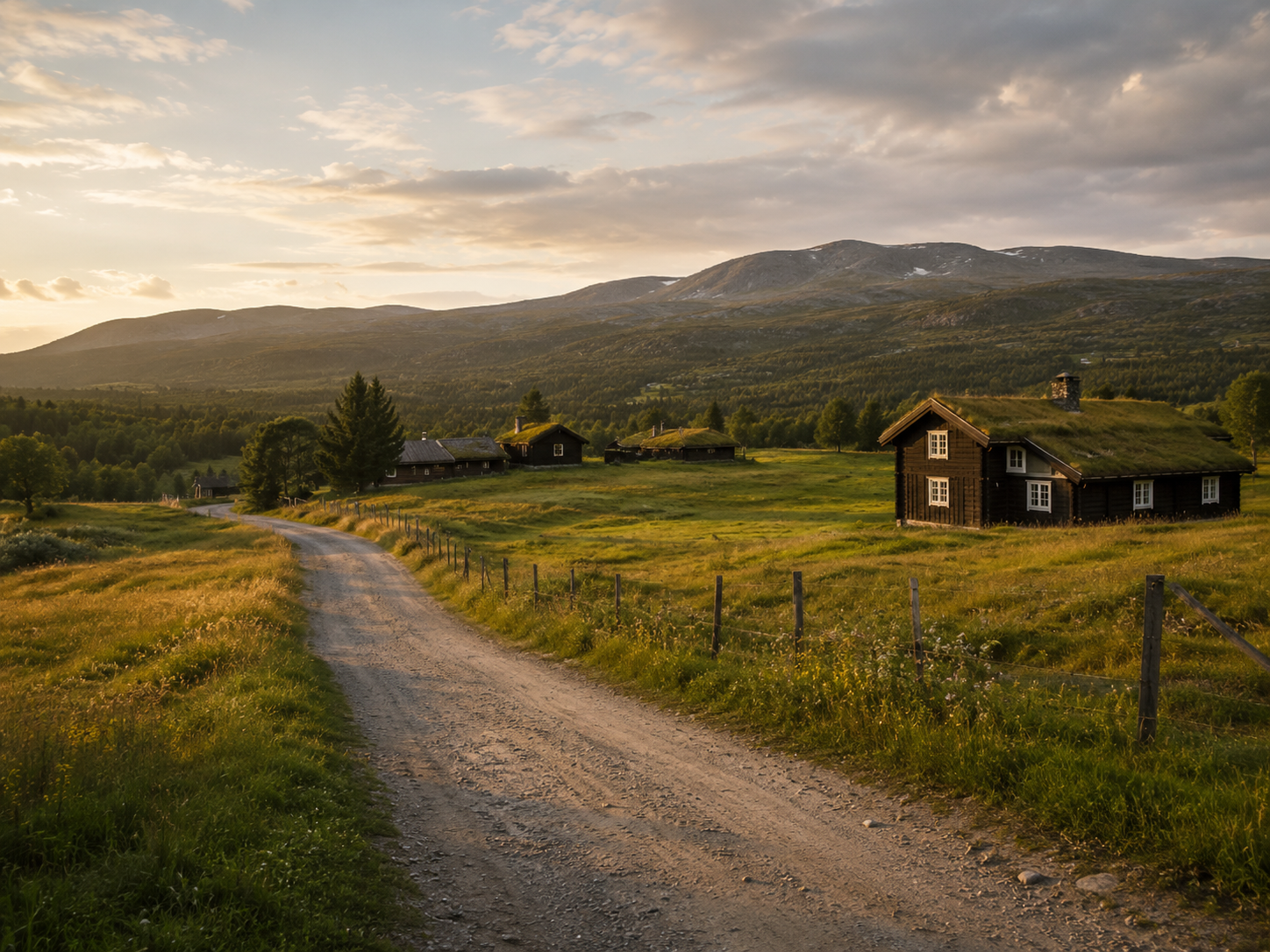
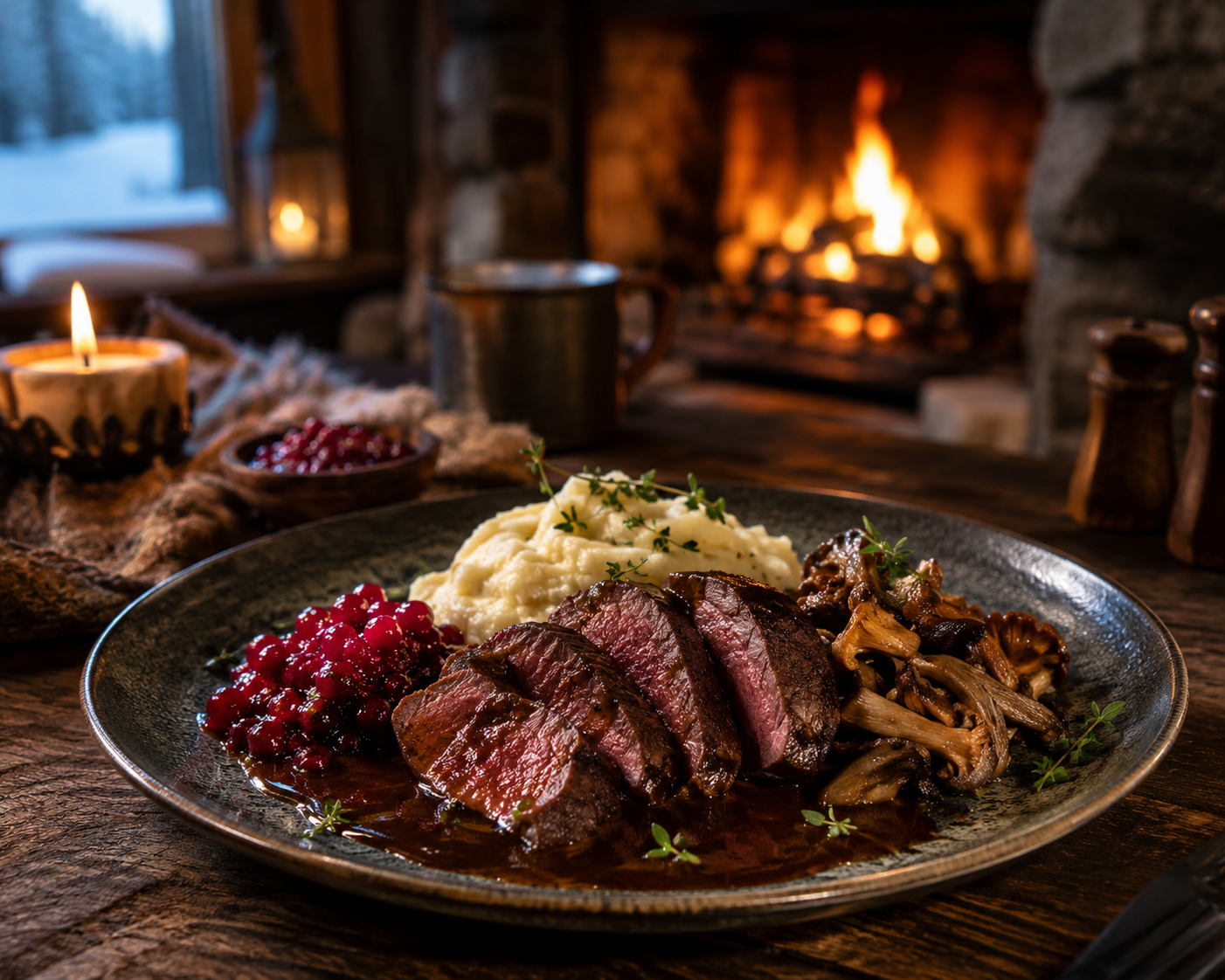
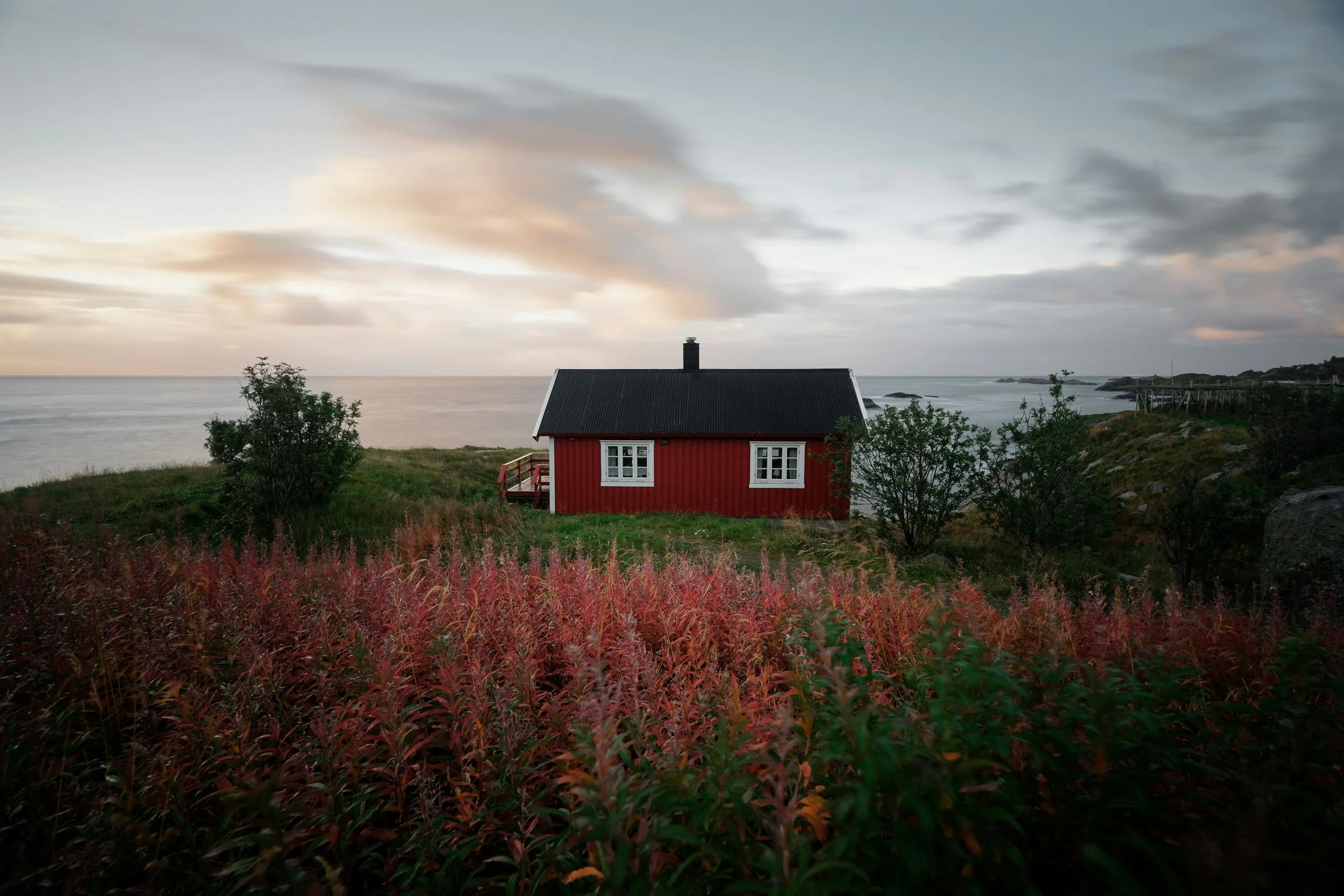

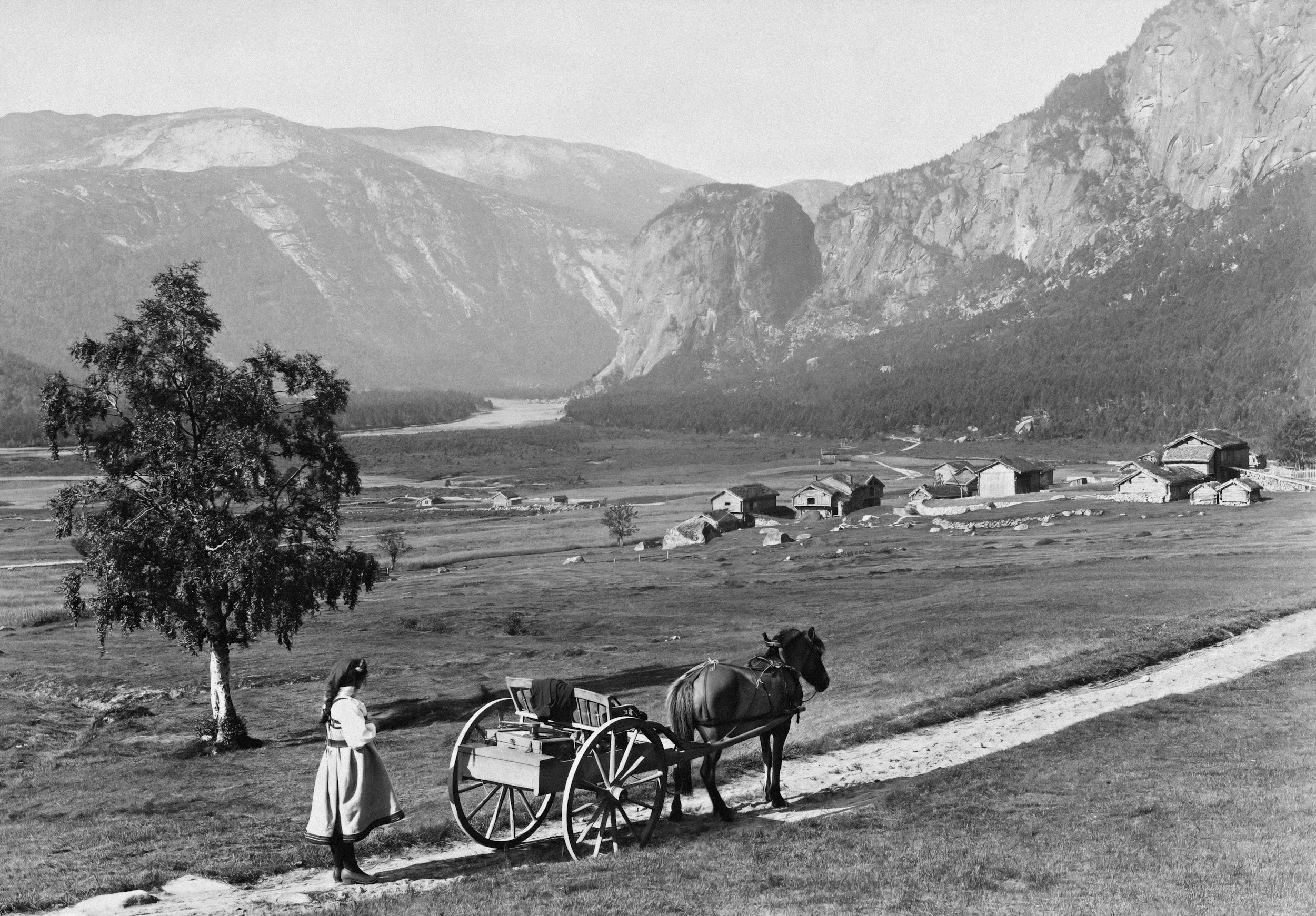
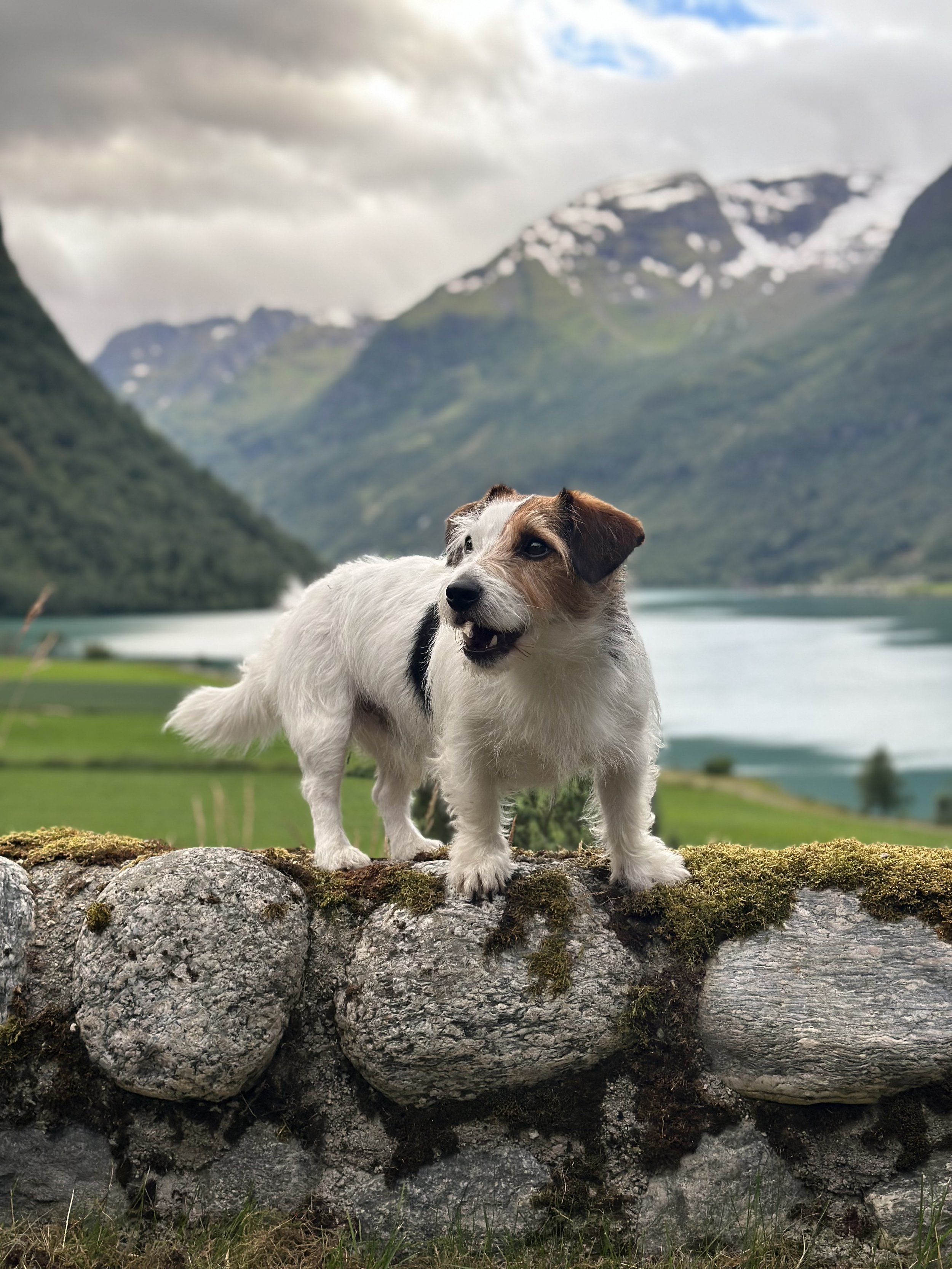
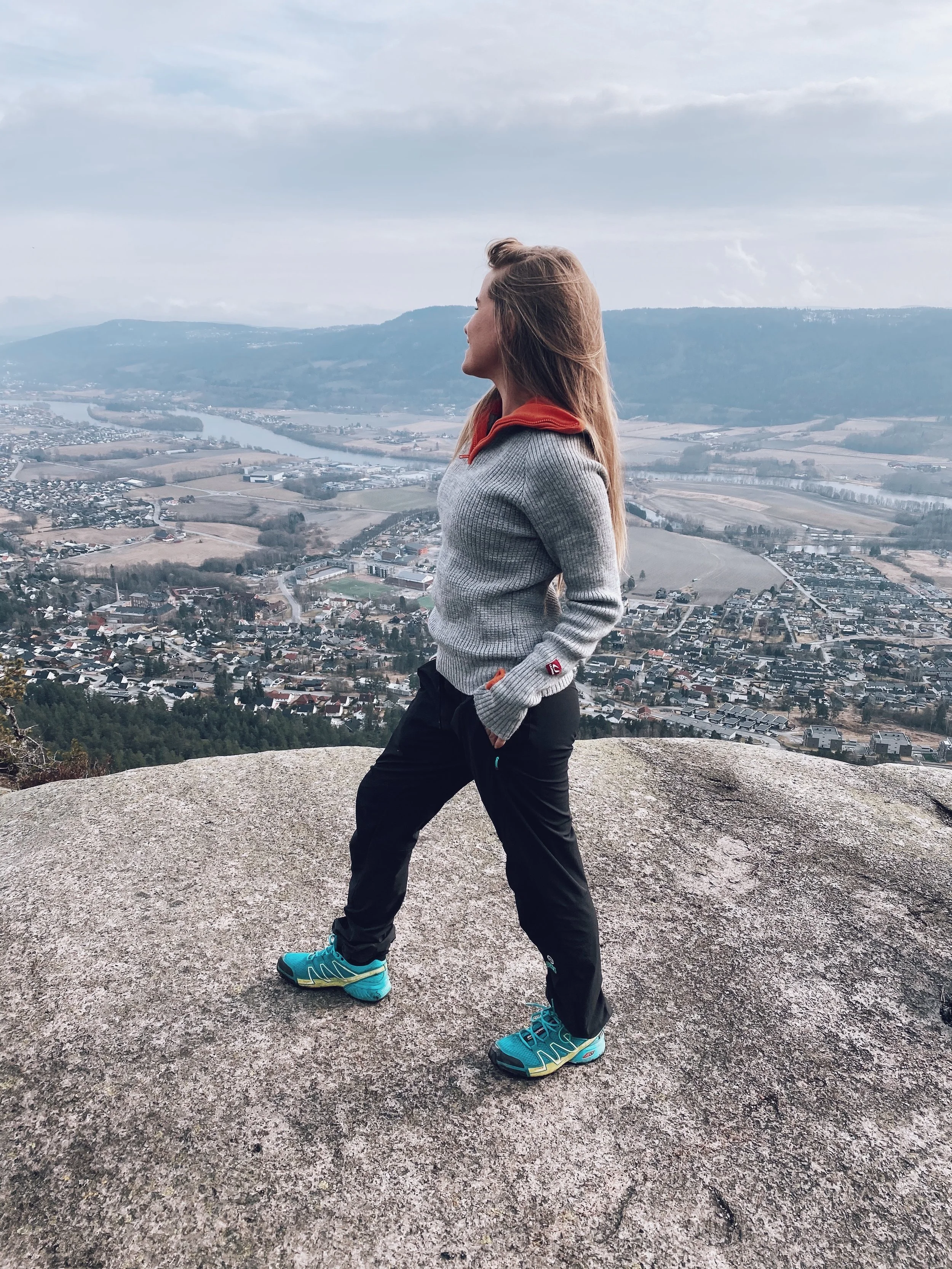
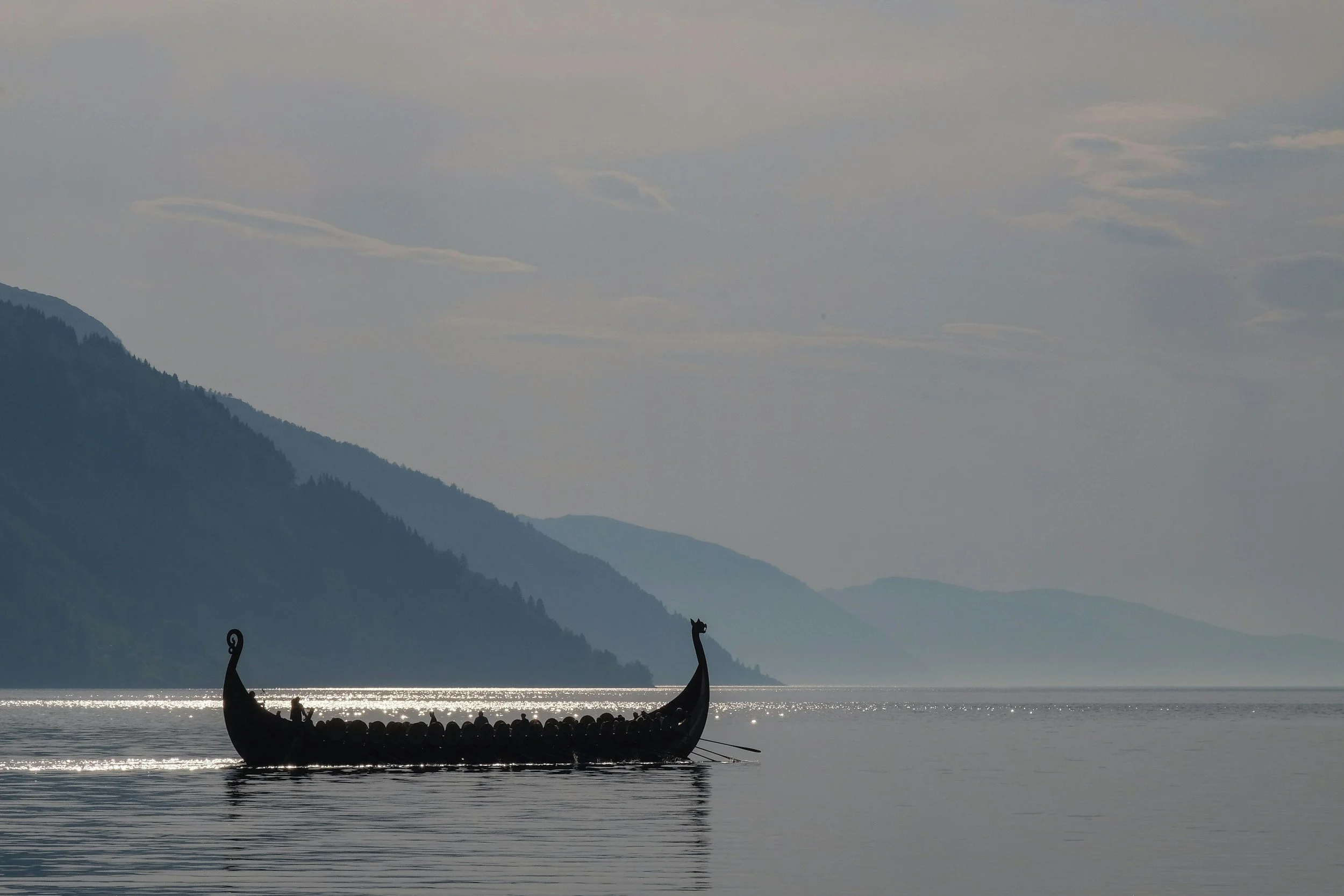
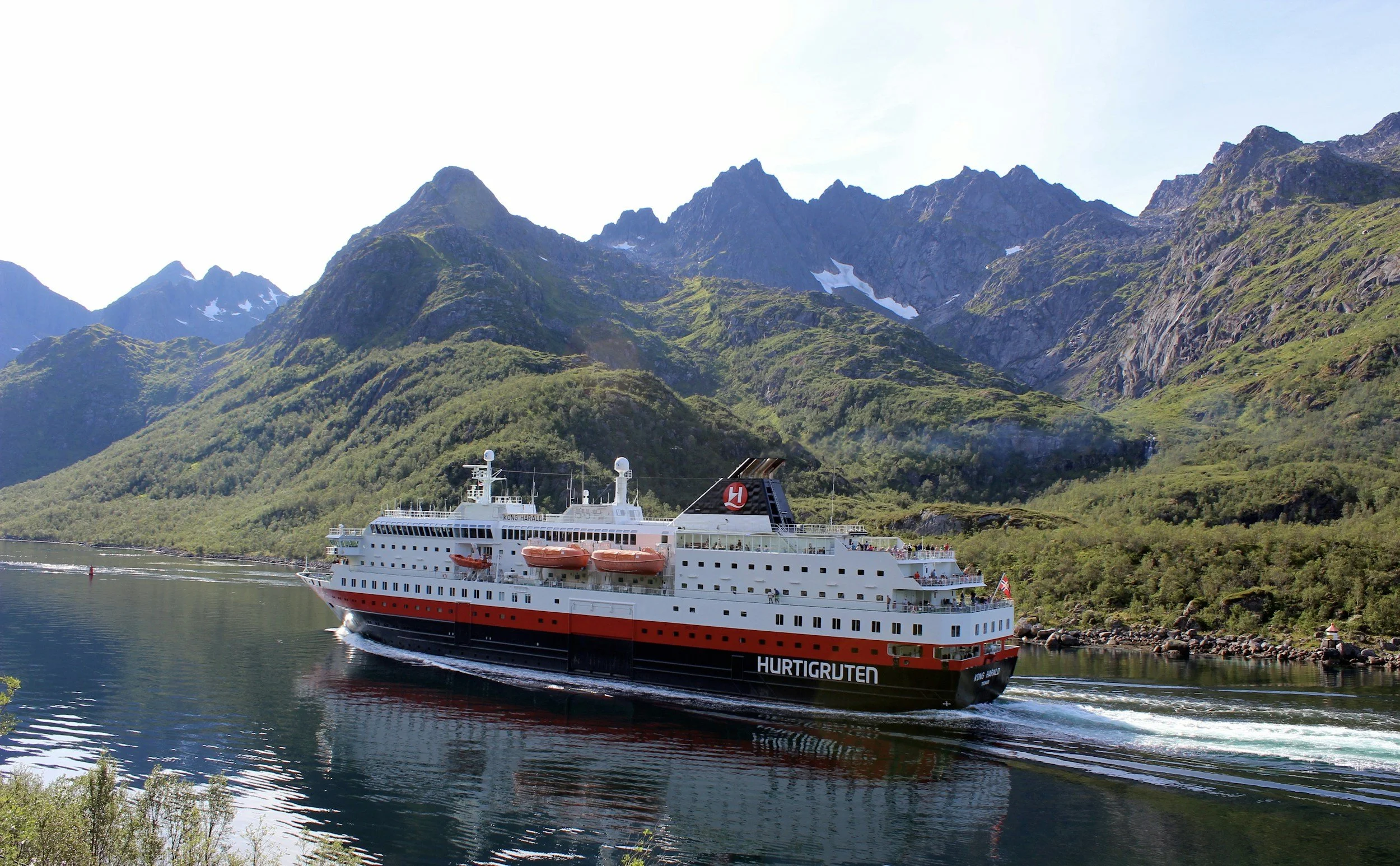
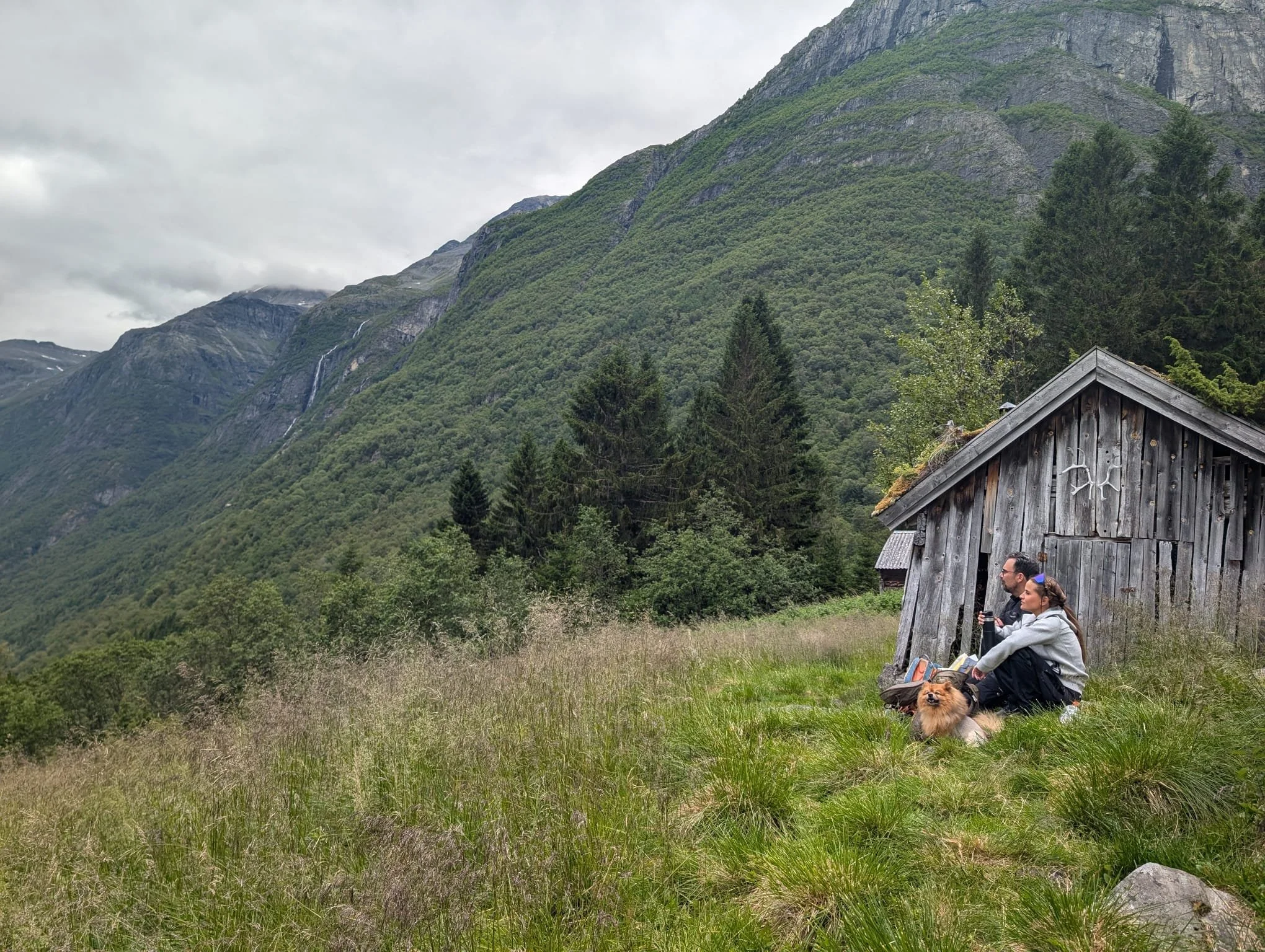
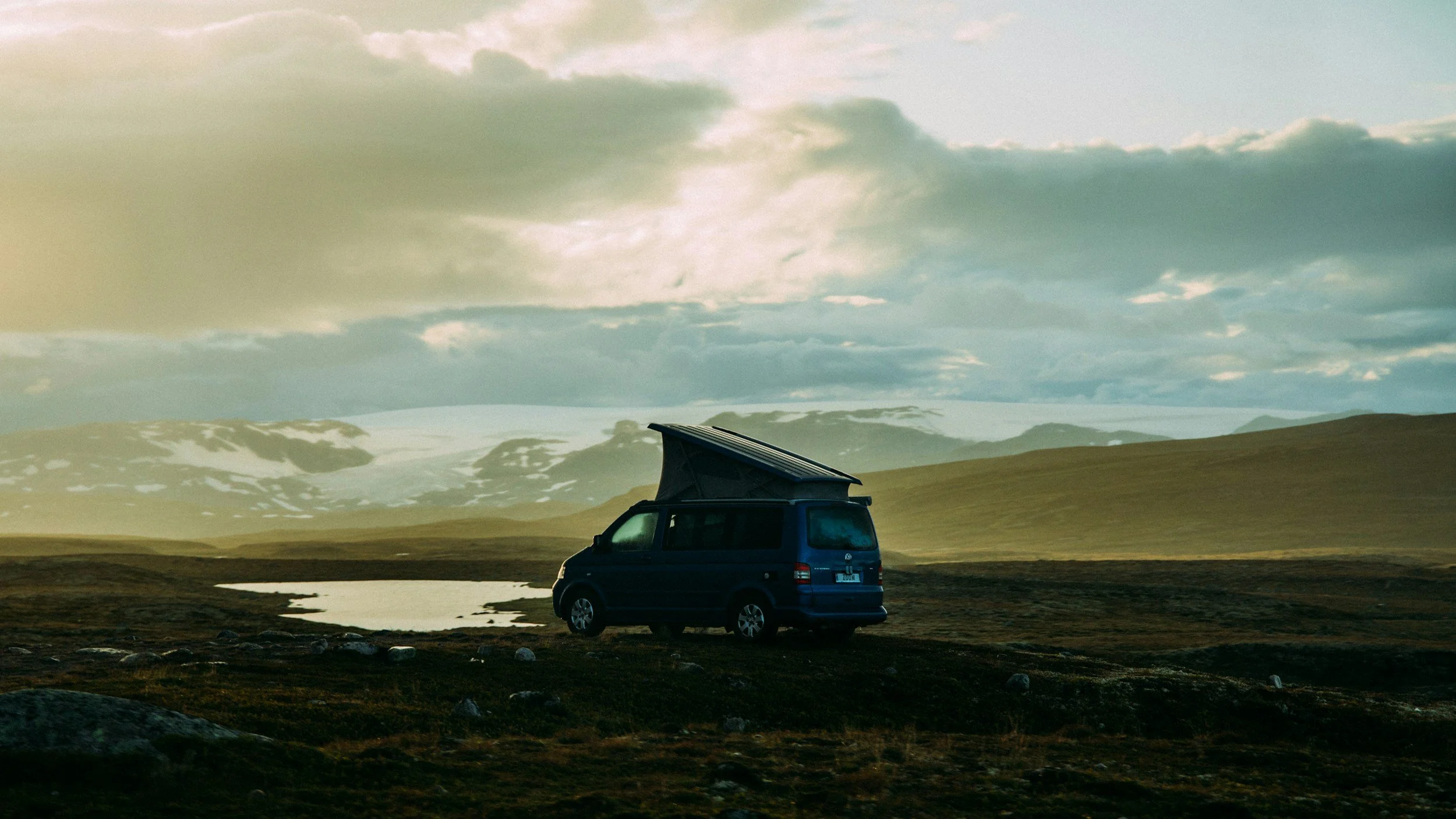
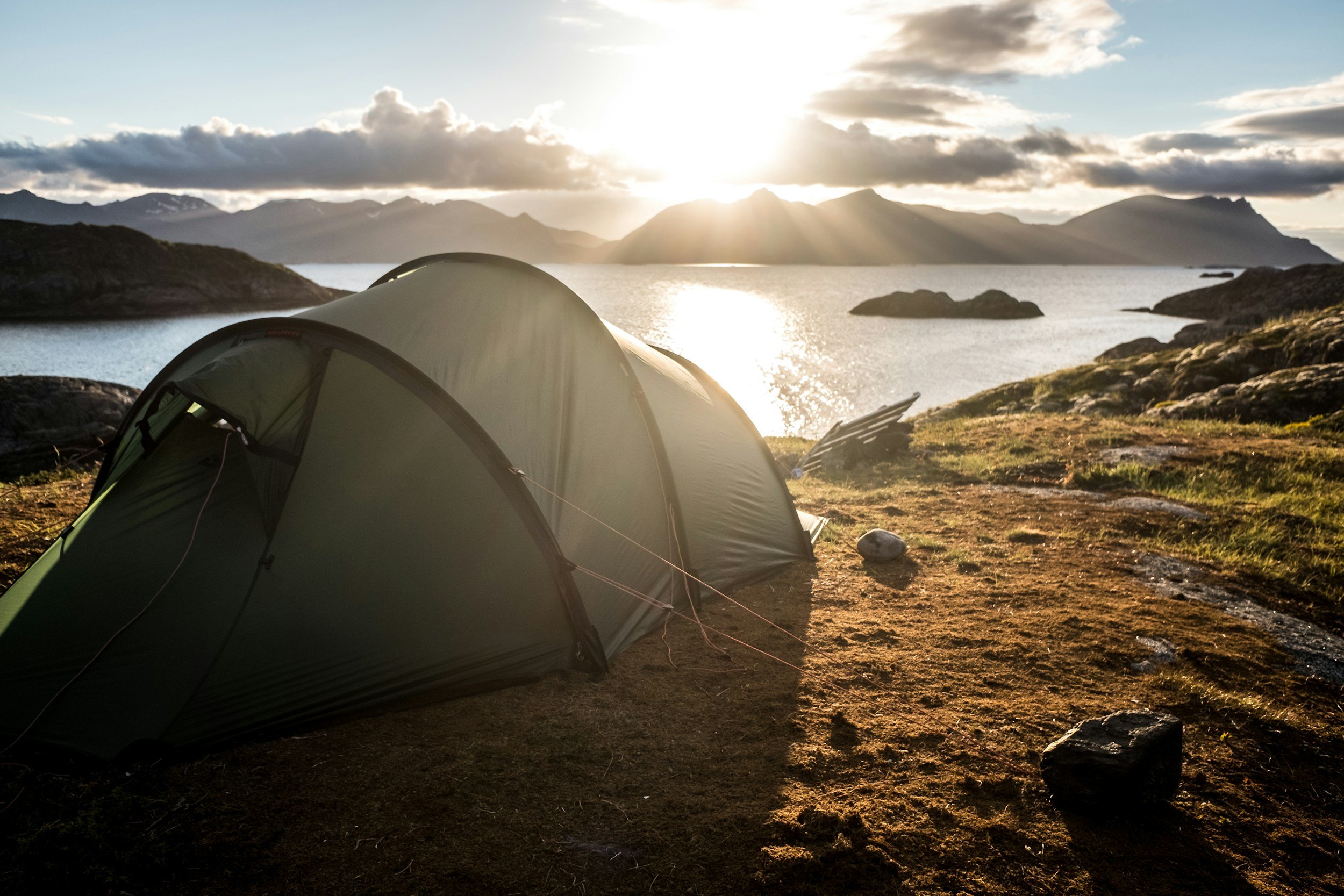
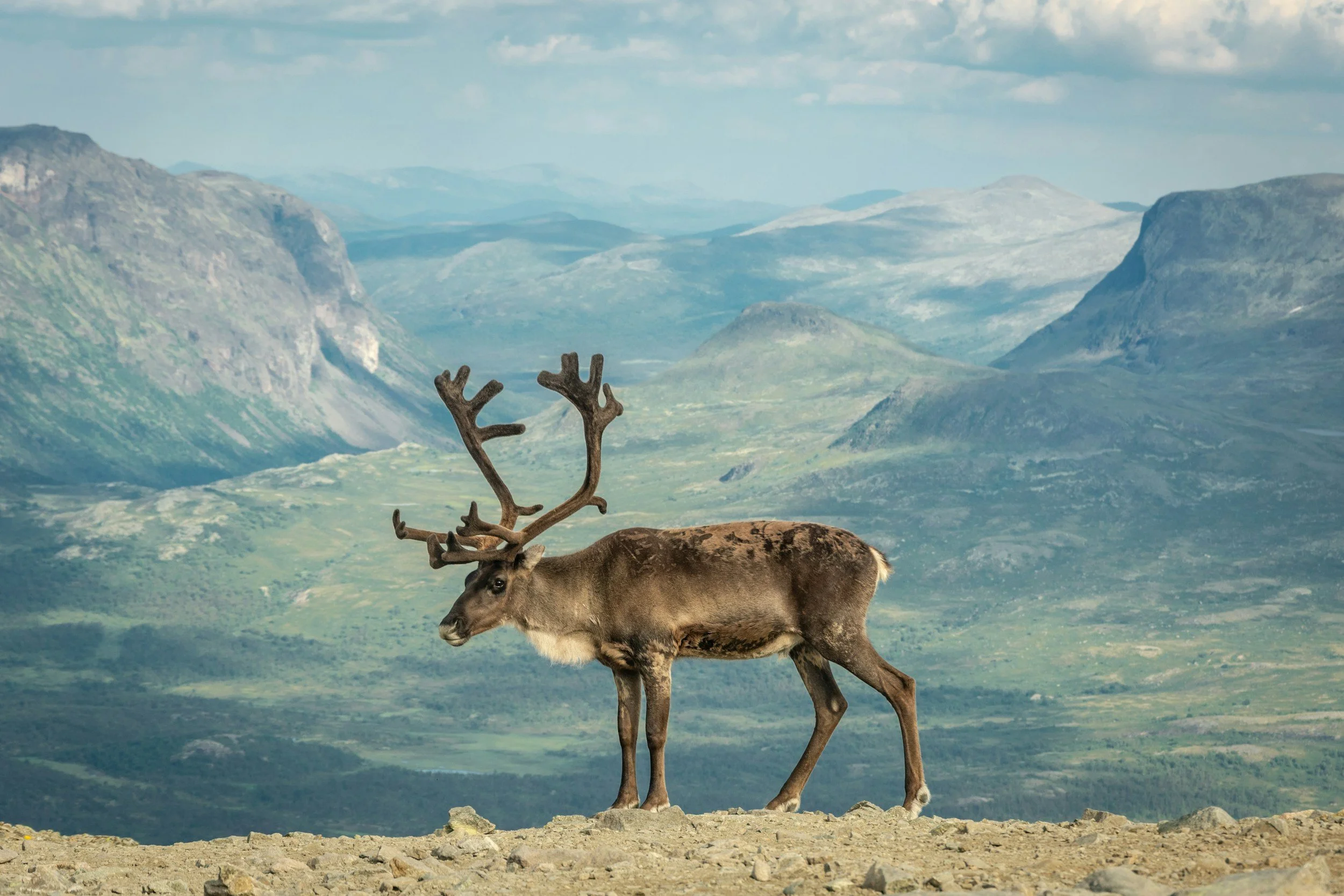
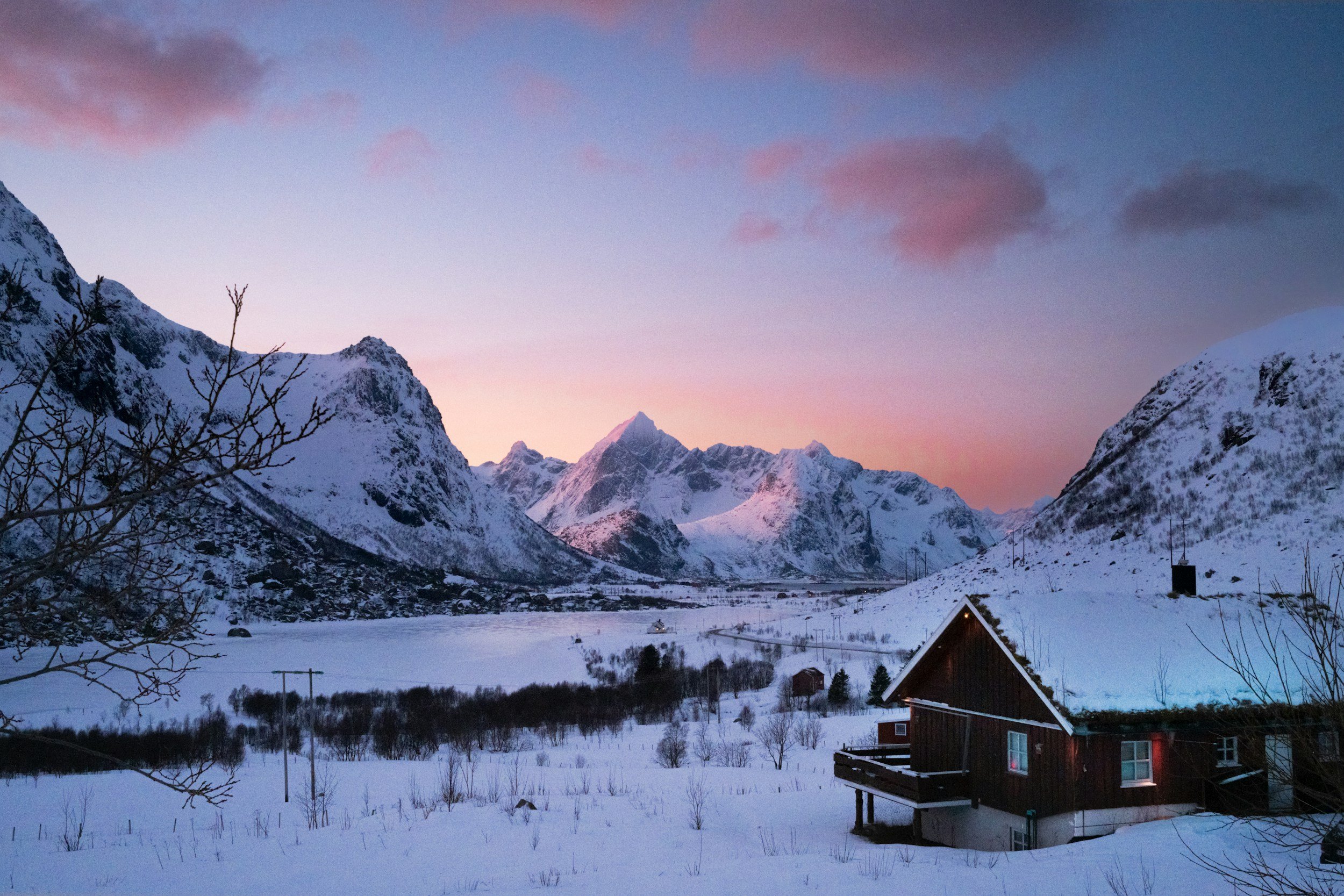
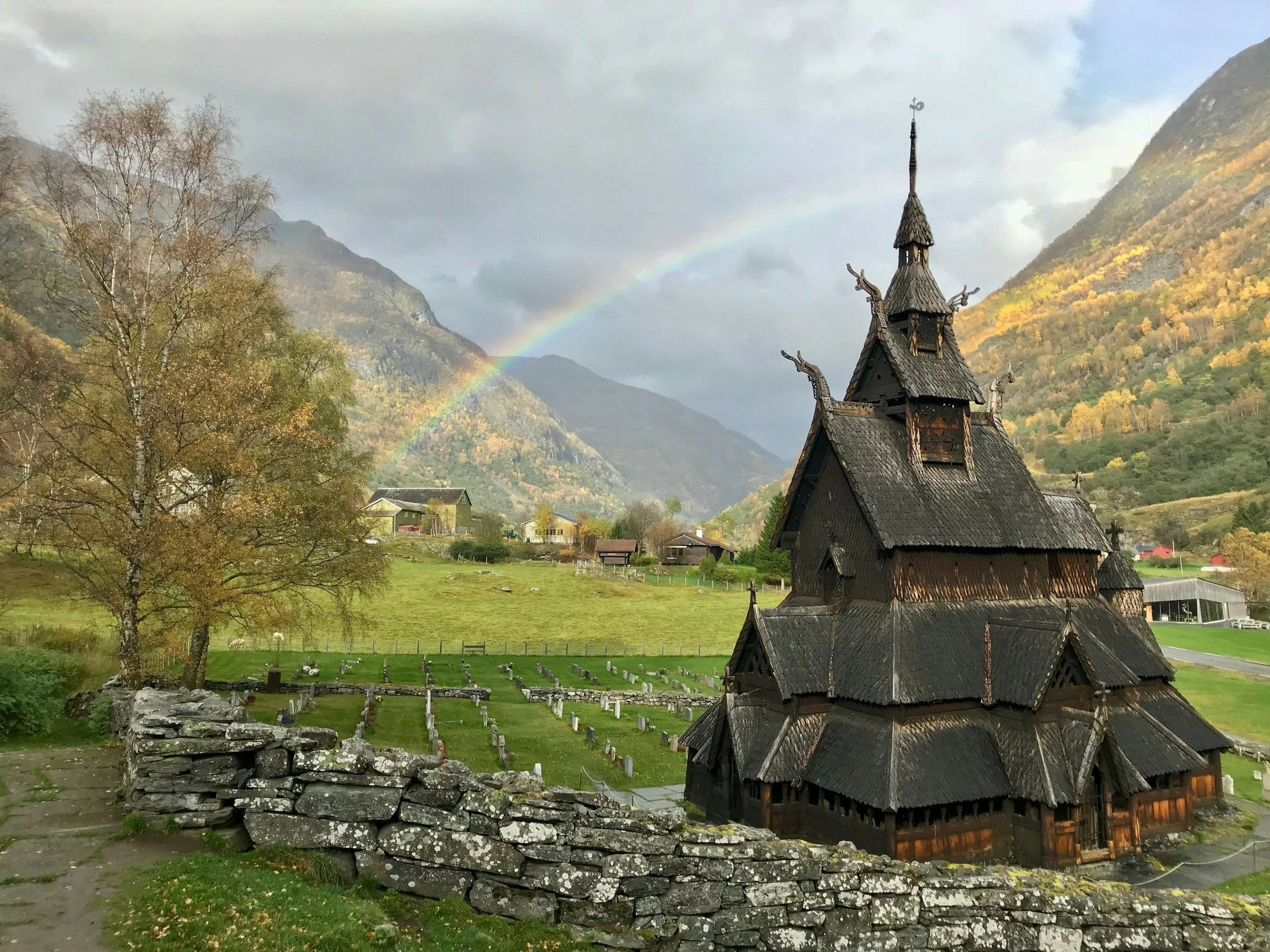
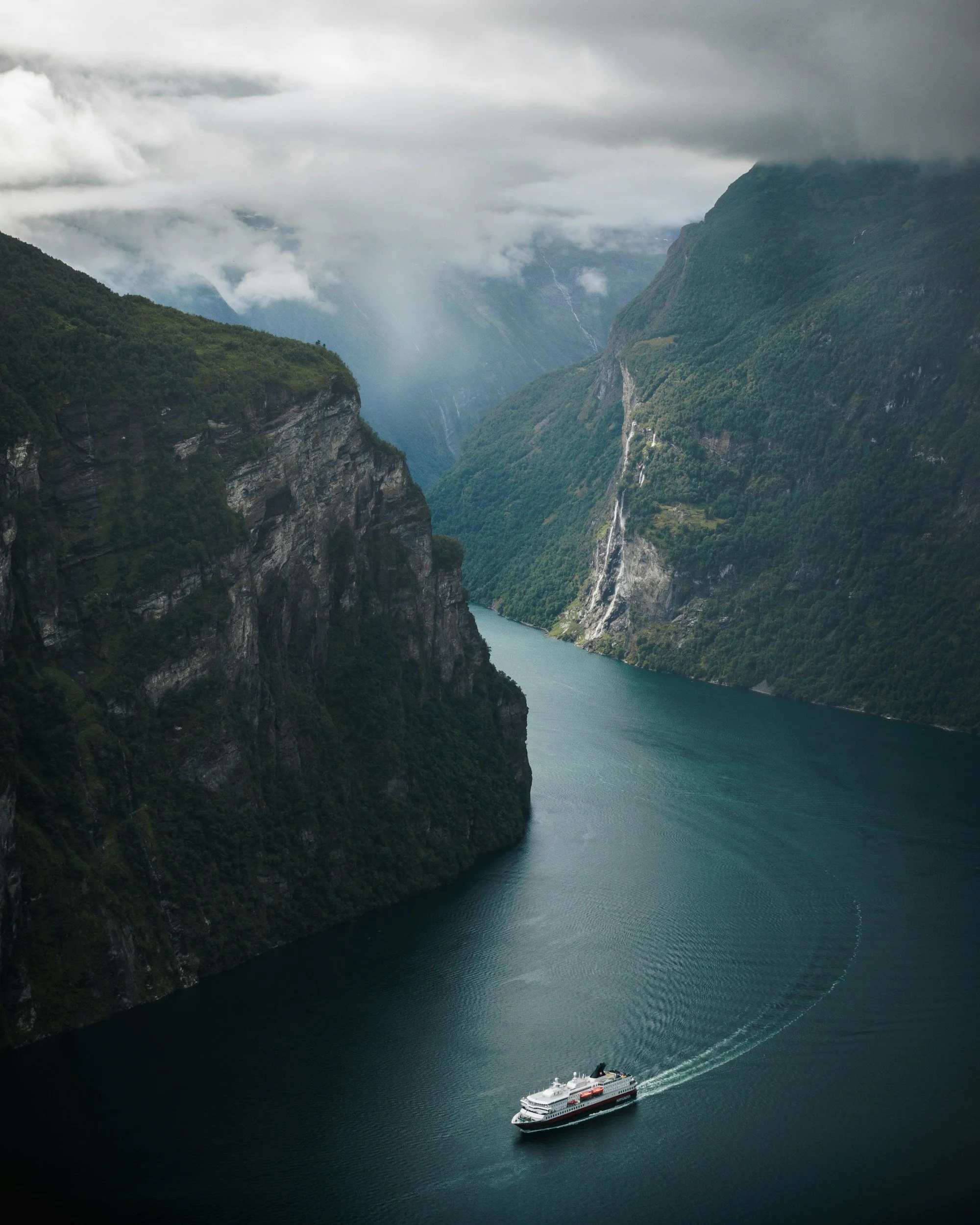
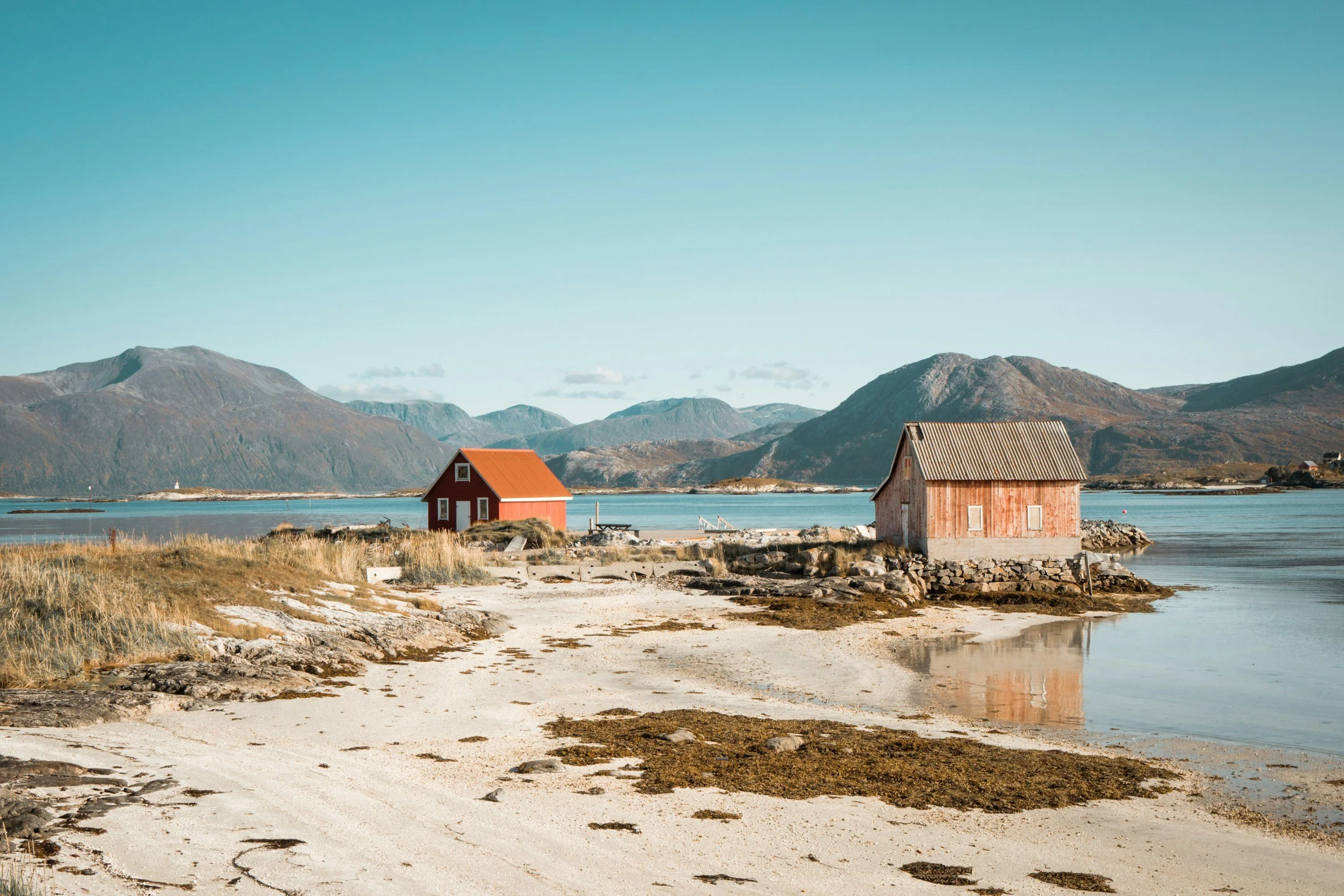
Norway is not dark all winter, but winter daylight varies enormously depending on where you travel. This guide explains how light changes between Oslo, Tromsø and Svalbard, and why December, February and March feel so different.