
Whale Watching in Norway: Where, When and Which Species You Can See
Whale watching in Norway is best planned around region and season. Andenes and Vesterålen are the strongest choices for sperm whales, while Tromsø, Skjervøy and Kvænangen are best known for winter whale watching with orcas and humpback whales. Svalbard offers a more Arctic wildlife experience, where belugas, fin whales, minke whales and other polar species may be seen as part of a wider expedition-style journey.
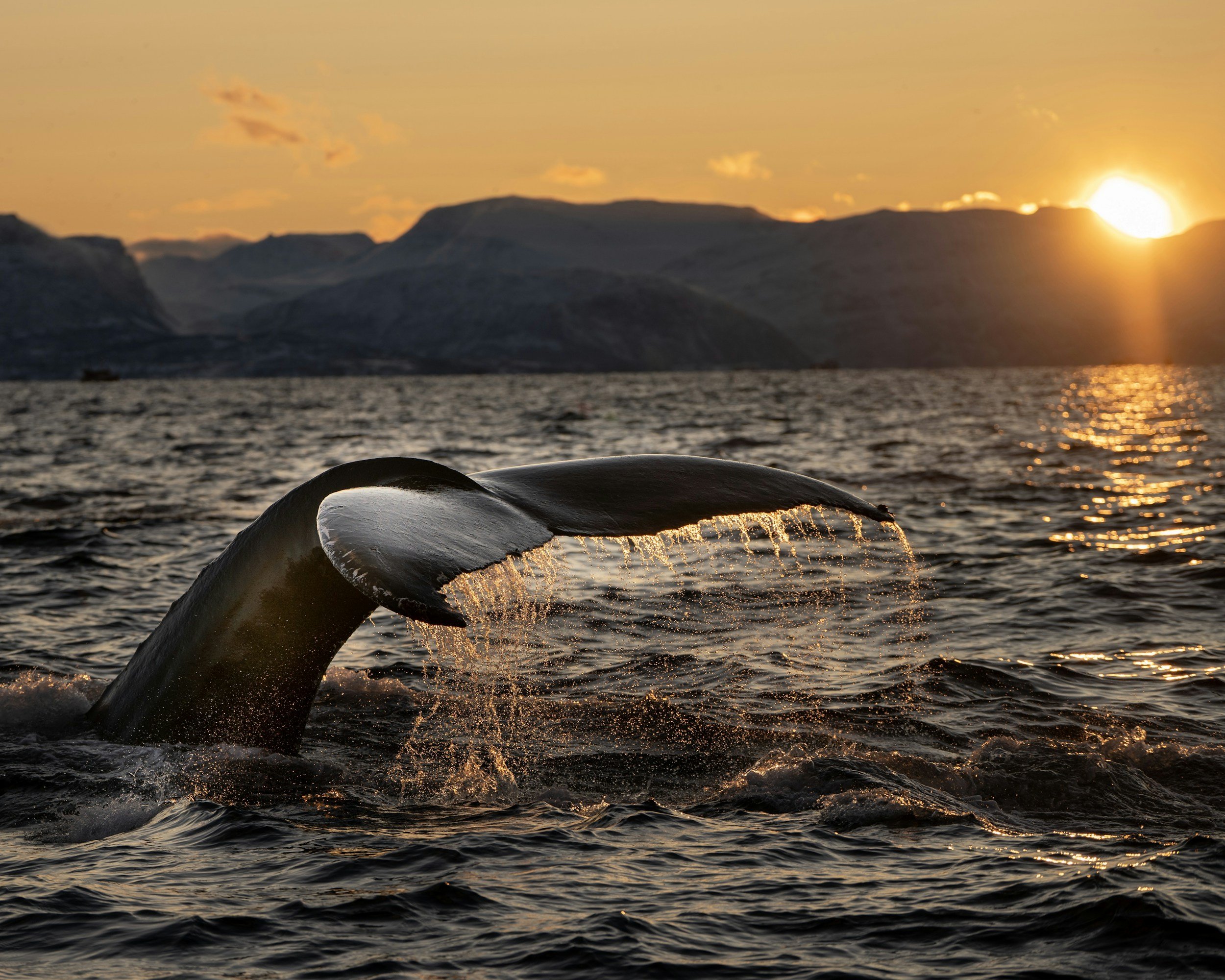
Whale watching in Norway is one of the most memorable wildlife experiences you can have in the country, but it is also one of the most seasonal. Norway is not a destination where you simply choose any coastal town, book a boat trip and expect to see whales. The best place to go depends on which species you hope to see, what time of year you are travelling, and how far north you are willing to go.
The most famous whale watching areas in Norway are in the north. Andenes in Vesterålen is especially known for sperm whales, while the winter whale season around Tromsø, Skjervøy and Kvænangen is associated with orcas and humpback whales following herring into the fjords. Svalbard is a different kind of whale destination altogether, with Arctic species and summer expedition-style wildlife experiences rather than a classic mainland whale safari.
Whales are wild animals, and sightings can never be guaranteed. This is part of what makes whale watching in Norway so powerful, but it also means that planning realistically matters. If your main dream is to see orcas, you should not plan a summer trip to Andenes and expect that to be the focus. If you want sperm whales, you should not assume Tromsø in winter is the obvious choice. Each region has its own rhythm, and understanding that rhythm is the key to choosing the right trip.
Best Places for Whale Watching in Norway
Norway has a long coastline, but the most reliable whale watching experiences are concentrated in a few key areas. The main places travellers usually consider are Andenes and Vesterålen, Tromsø and the surrounding winter whale areas, Alta and Lyngenfjord, and Svalbard. Each offers a different type of experience, and the best choice depends on whether you are hoping for sperm whales, orcas, humpbacks or Arctic whale species.
Andenes and Vesterålen are usually the strongest choice for a classic whale safari in mainland Norway, especially if sperm whales are your priority. Tromsø, Skjervøy and Kvænangen are more closely connected with winter whale watching, when orcas and humpback whales follow herring into the fjords. Alta and Lyngenfjord can also be part of this winter pattern, although the exact areas vary from year to year. Svalbard, meanwhile, is best understood as an Arctic expedition destination where whales may be part of a broader polar wildlife experience.
| Place | Best For | Main Whale Species | Best Time to Visit | |||
|---|---|---|---|---|---|---|
| Andenes / Vesterålen | Classic whale safari in mainland Norway | Sperm whale, with possible humpback, minke whale, orca, pilot whale and dolphins | Year-round possibilities, with summer as the main visitor season | |||
| Tromsø / Skjervøy / Kvænangen | Winter whale watching | Orca and humpback whale | Mainly winter, especially around November to January | |||
| Alta / Lyngenfjord | Winter herring-related whale activity | Orca, humpback whale and sometimes fin whale | Winter, depending on herring movement | |||
| Svalbard | Arctic whale species and expedition travel | Beluga, minke whale, fin whale, humpback whale, blue whale and rarer Arctic species | Mainly spring and summer expedition season |
Andenes and Vesterålen
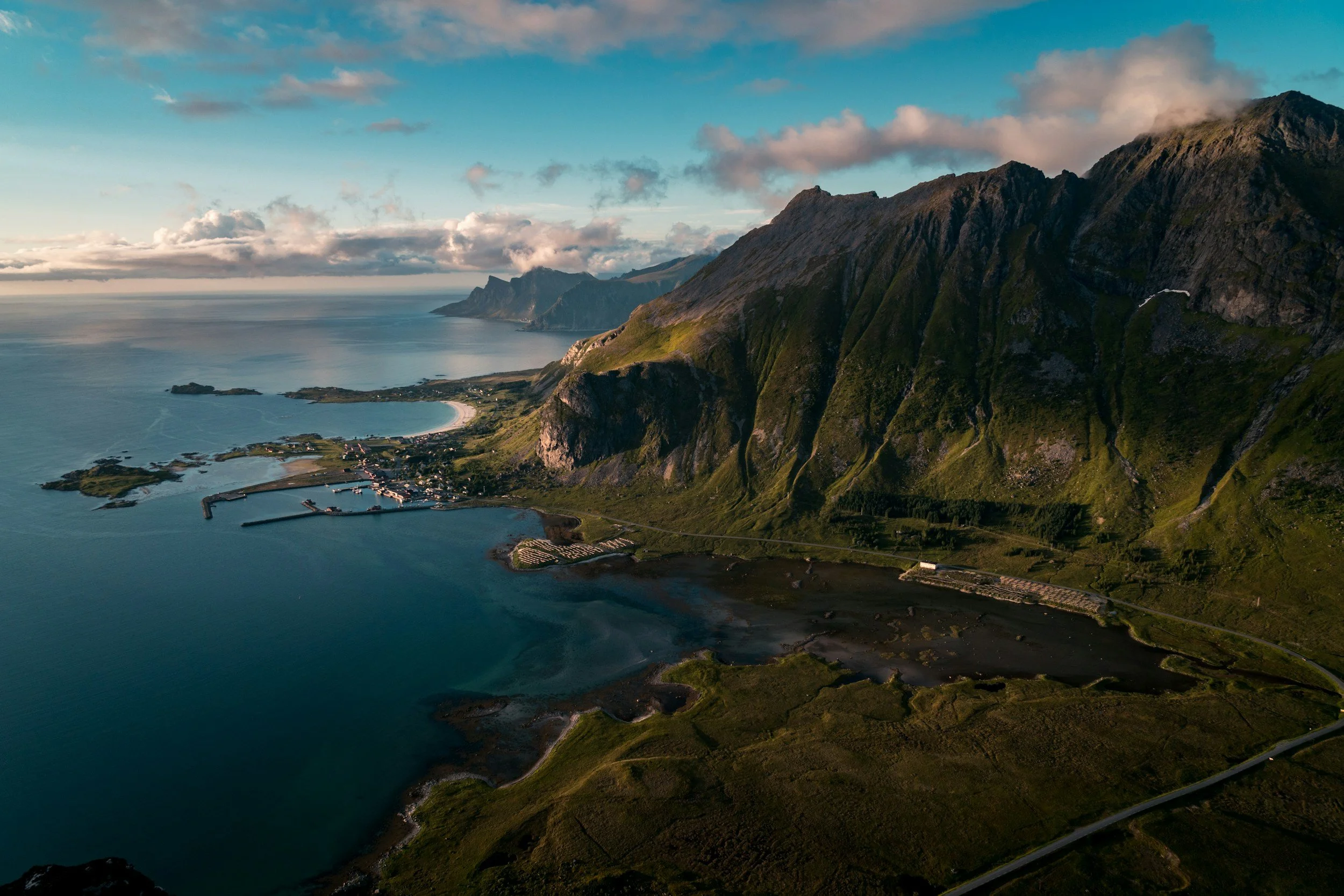
Andenes, at the northern tip of Andøya in Vesterålen, is one of the best-known places for whale watching in Norway. The reason is geography. Deep waters lie unusually close to land here, especially around Bleiksdjupet, also known as Bleik Canyon. This gives whale watching boats access to nutrient-rich deep-sea areas without travelling extremely far from shore.
The signature species in Andenes is the sperm whale. Sperm whales are deep-diving toothed whales, and the waters off Andenes give them access to the kind of deep feeding grounds they need. Other species may also be seen in the area, including humpback whales, minke whales, killer whales, pilot whales, white-beaked dolphins and harbour porpoises, but sperm whales are the species most closely associated with Andenes.
This makes Andenes a strong choice if you want a classic whale safari experience in Norway and are especially interested in sperm whales. It is also one of the more established whale watching destinations in the country, with tours designed specifically around marine wildlife rather than simply being a general fjord cruise with a chance of seeing animals.
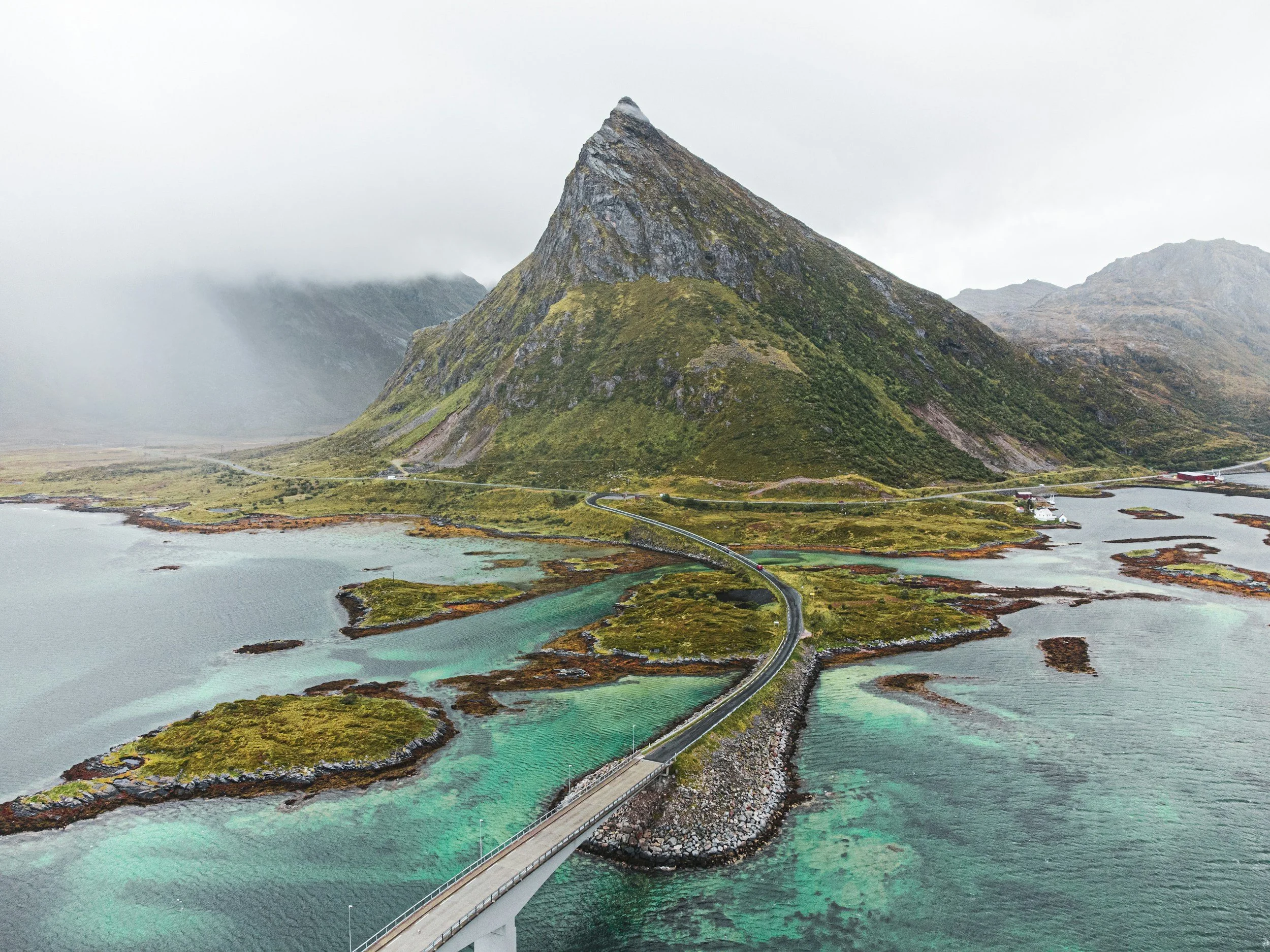
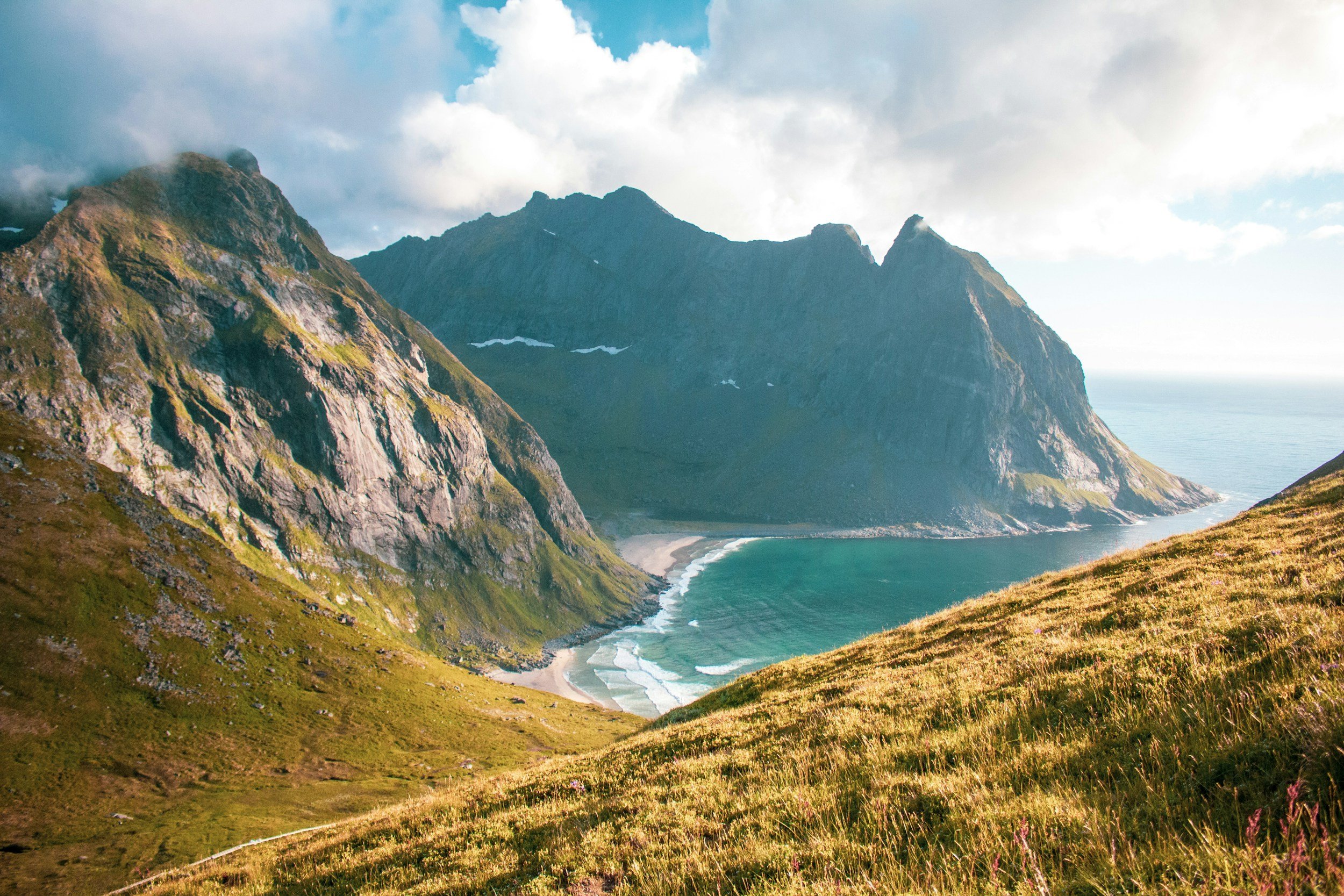
Andenes is often associated with summer travel because the weather is milder, the days are long and the area is easier to combine with a wider Northern Norway itinerary. However, it is important not to think of summer as the only possible whale season here. The bigger distinction is really about species: Andenes is the place to think about if sperm whales are your priority, while Tromsø and Skjervøy are more closely associated with orcas and humpbacks in winter.
Relevant Reading:
Tromsø, Skjervøy and Kvænangen
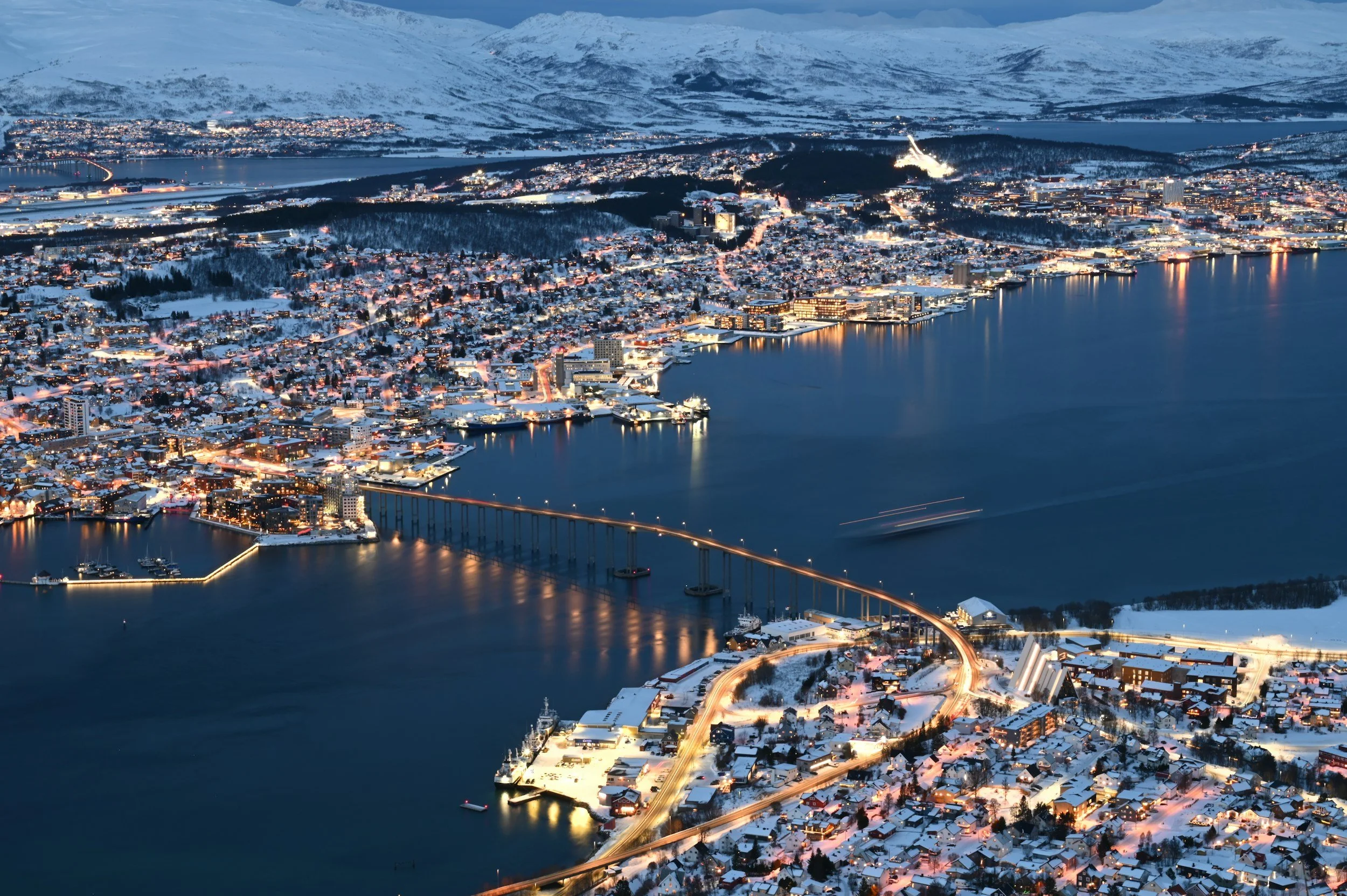
Tromsø is one of the most popular bases for winter whale watching in Norway, but it is worth understanding how these trips actually work. Many tours sold as Tromsø whale watching experiences do not necessarily take place right outside Tromsø itself. In recent years, whales have often been found farther north, especially around Skjervøy and Kvænangen, because they follow the movement of herring along the coast and into the fjords.
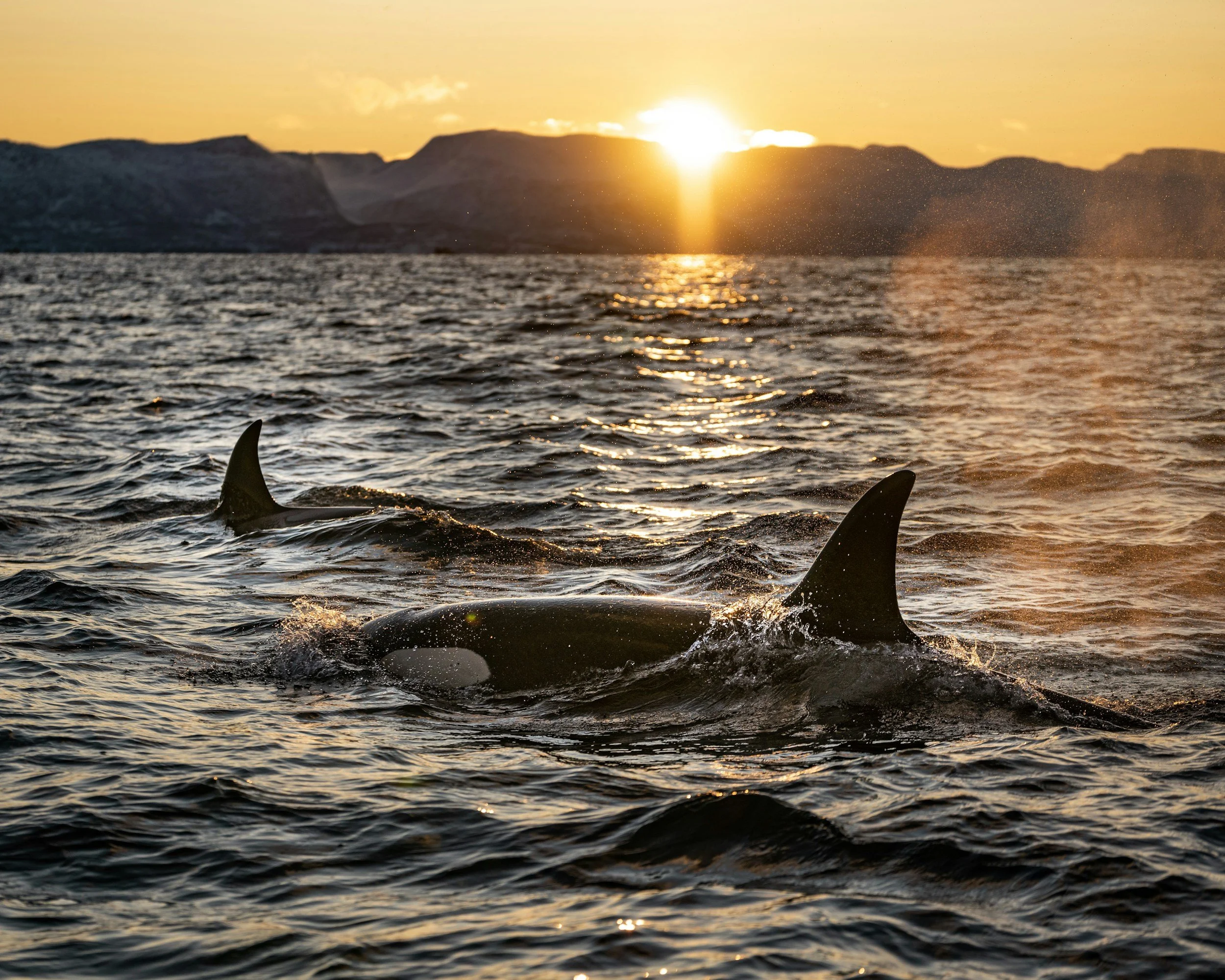
This region is most closely associated with orcas and humpback whales. For many travellers, this is the dream version of whale watching in Norway: dark winter seas, snow-covered mountains, short Arctic days and the possibility of seeing orcas hunting in the fjords. It can be extraordinary, but it is also a very different experience from a summer wildlife boat trip. The days are short, the weather can be cold and changeable, and the sea can be rough.
The reason orcas are so strongly connected to this part of Norway is their relationship with herring. Along the Norwegian coast, orcas can use coordinated hunting techniques to herd herring into tight balls near the surface before feeding. Humpback whales are also drawn to these feeding opportunities, which is why both species are often connected with the same winter whale season in Northern Norway.
For travellers, the practical thing to know is that winter whale watching from Tromsø can involve a long day. Some trips include a significant transfer by bus or boat before reaching the area where whales are currently being seen. This does not make the experience less worthwhile, but it does mean you should read the tour description carefully. If you imagine stepping onto a boat in central Tromsø and seeing orcas immediately in the harbour, you may be disappointed.
Relevant Reading:
Alta and Lyngenfjord
Alta and the Lyngenfjord area can also be part of Norway’s winter whale watching picture, although they are usually less talked about by international visitors than Tromsø and Skjervøy. These areas are connected to the same broader pattern: whales moving with the herring and other food sources along the coast of Northern Norway.
This is not a place to describe as a guaranteed whale watching destination in the same way as Andenes for sperm whales. Instead, it should be understood as part of the wider winter movement of orcas and humpbacks in Northern Norway. Some years, the whales may be more accessible in one area than another, which is why local operators and current-season information matter so much.
For travellers who are already planning a winter trip through Northern Norway, Alta and Lyngenfjord can be interesting additions. They also offer a quieter feel than Tromsø, with dramatic Arctic landscapes, northern lights possibilities and a less city-based travel experience. But if whale watching is the main reason for your trip, you should check where tours are operating that particular season before building your whole itinerary around one place.
Svalbard
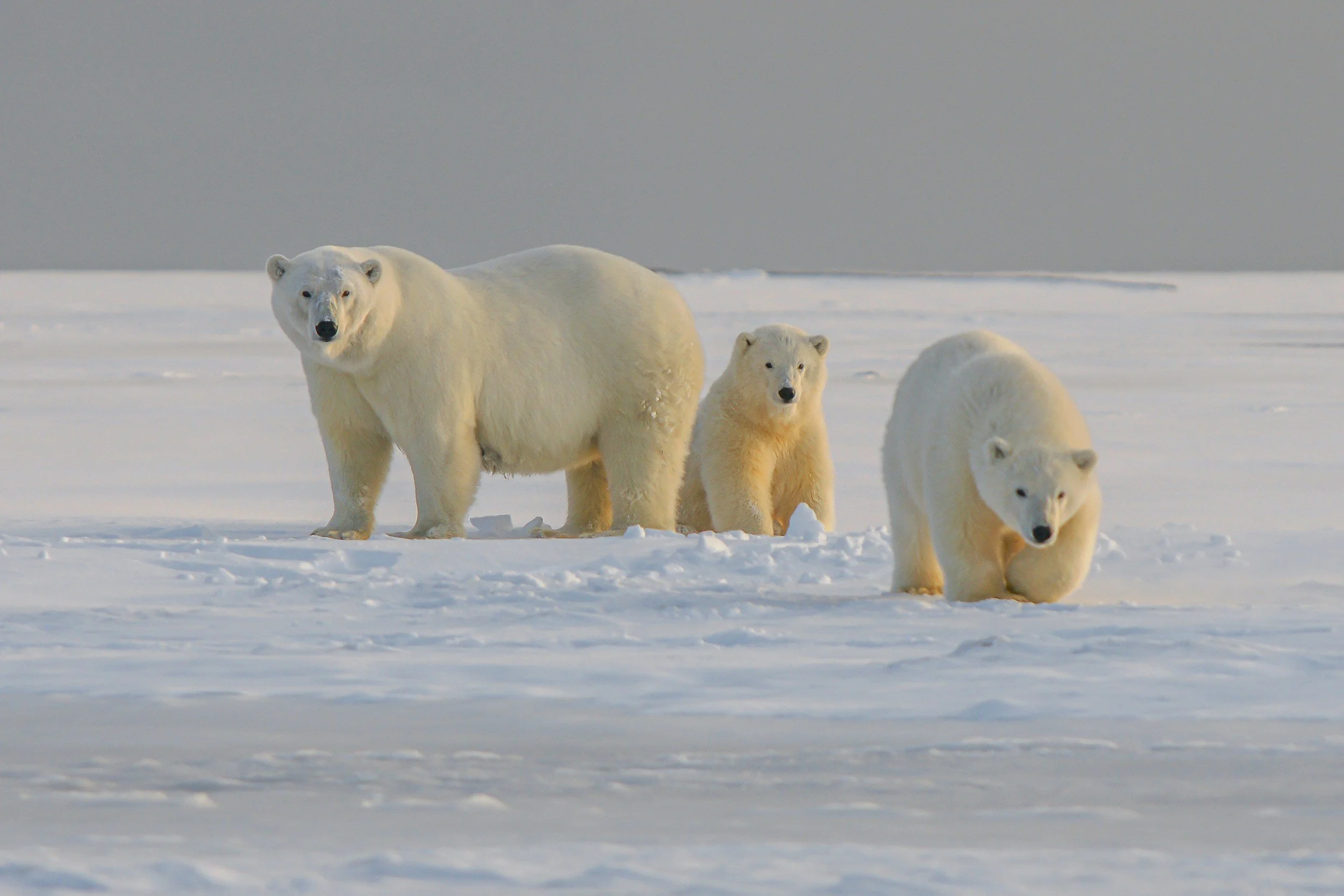
Svalbard should be treated as a separate whale watching experience from mainland Norway. This is not the place to go for a quick half-day whale safari in the same way as Andenes or Tromsø. Svalbard is more about Arctic expedition travel, fjords, glaciers, sea ice, seabirds, walrus, polar bears and whales as part of a wider High Arctic ecosystem.
Beluga whales are one of the most distinctive species associated with Svalbard. They are often seen close to the coast and in fjords, and they are among the most characteristic marine mammals of the archipelago. Svalbard can also offer the possibility of seeing larger baleen whales such as fin whales, humpback whales, minke whales and, more rarely, blue whales.
That said, Svalbard should not be presented as a place where travellers can simply tick off rare whales on demand. It is an Arctic environment, and sightings depend on route, weather, sea ice, season and luck. The strength of Svalbard is not just the chance of seeing whales, but the feeling of seeing them in a truly polar landscape.
Relevant Reading:

Whale Species You Can See in Norway
Norway is home to several whale and dolphin species, but only a few are likely to shape the average visitor’s whale watching plans. The most important species to understand are sperm whales, orcas, humpback whales, minke whales, fin whales, beluga whales and, in rarer cases, blue whales.
Sperm Whale
The sperm whale is the main reason many travellers go whale watching in Andenes. It is the largest toothed whale and is associated with deep, productive waters, which is why the deep-sea geography outside Andenes matters so much.
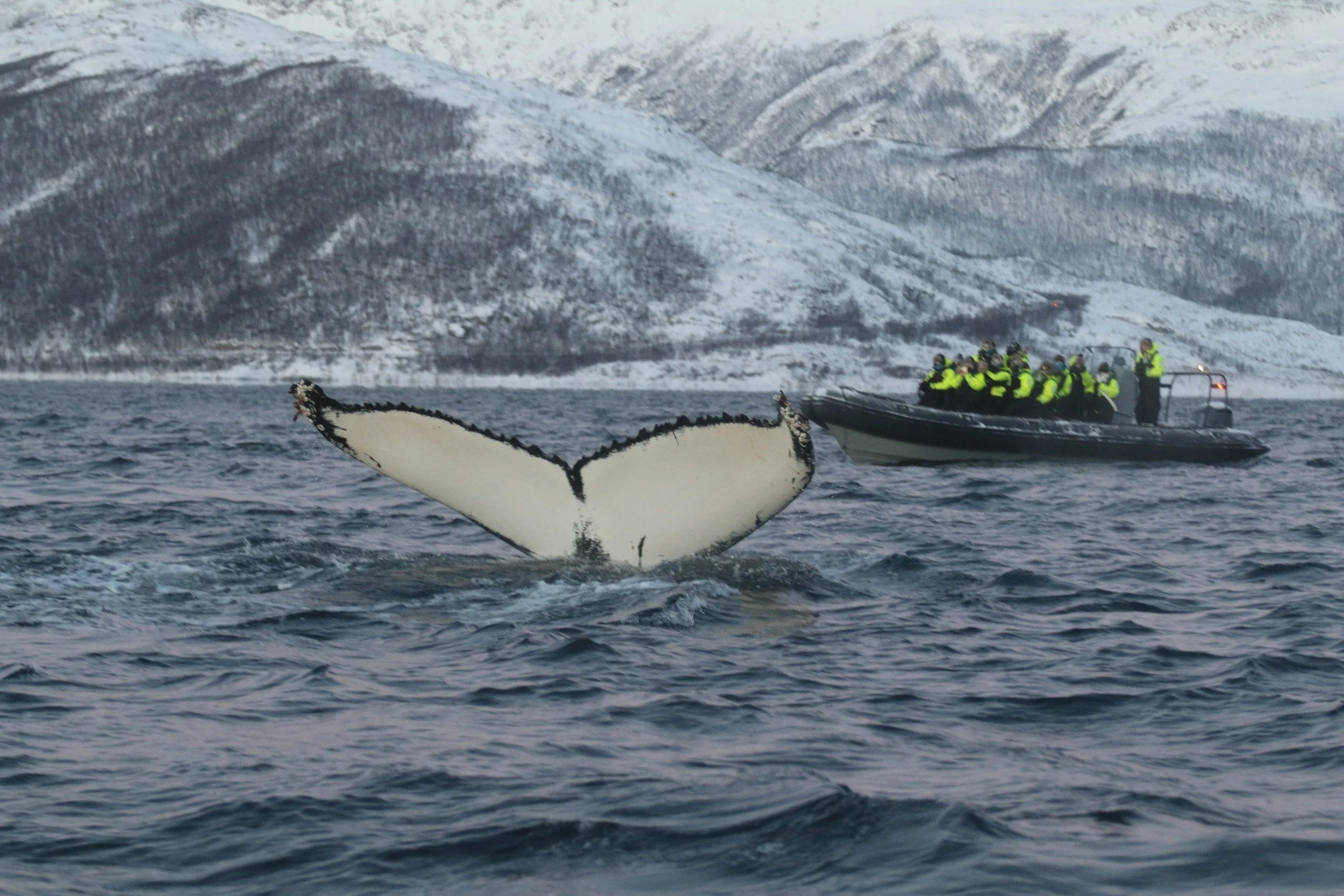
Sperm whales are not usually the most acrobatic whales to watch. The experience is often about waiting, scanning the water, seeing the blow, watching the whale rest or breathe at the surface, and then seeing the tail rise before a deep dive. That moment, when the fluke lifts and disappears into the sea, is one of the classic whale watching images of Northern Norway.
If sperm whales are your priority, Andenes and Vesterålen should be at the top of your list.
Orca / Killer Whale
Orcas, also known as killer whales, are the species many travellers most associate with winter whale watching in Norway. They are highly social, visually striking and closely linked to the seasonal movement of herring in Northern Norway. Along the Norwegian coast, some orcas use coordinated hunting techniques to herd herring into tight balls near the surface before feeding.
The best-known mainland Norway areas for seeing orcas are connected to the winter herring season around Tromsø, Skjervøy, Kvænangen and nearby fjord systems. However, this is not a fixed “same place every year” situation. The whales follow food, and the exact whale watching locations can shift.
If orcas are the species you most want to see, winter in Northern Norway is the season to look at.
Humpback Whale
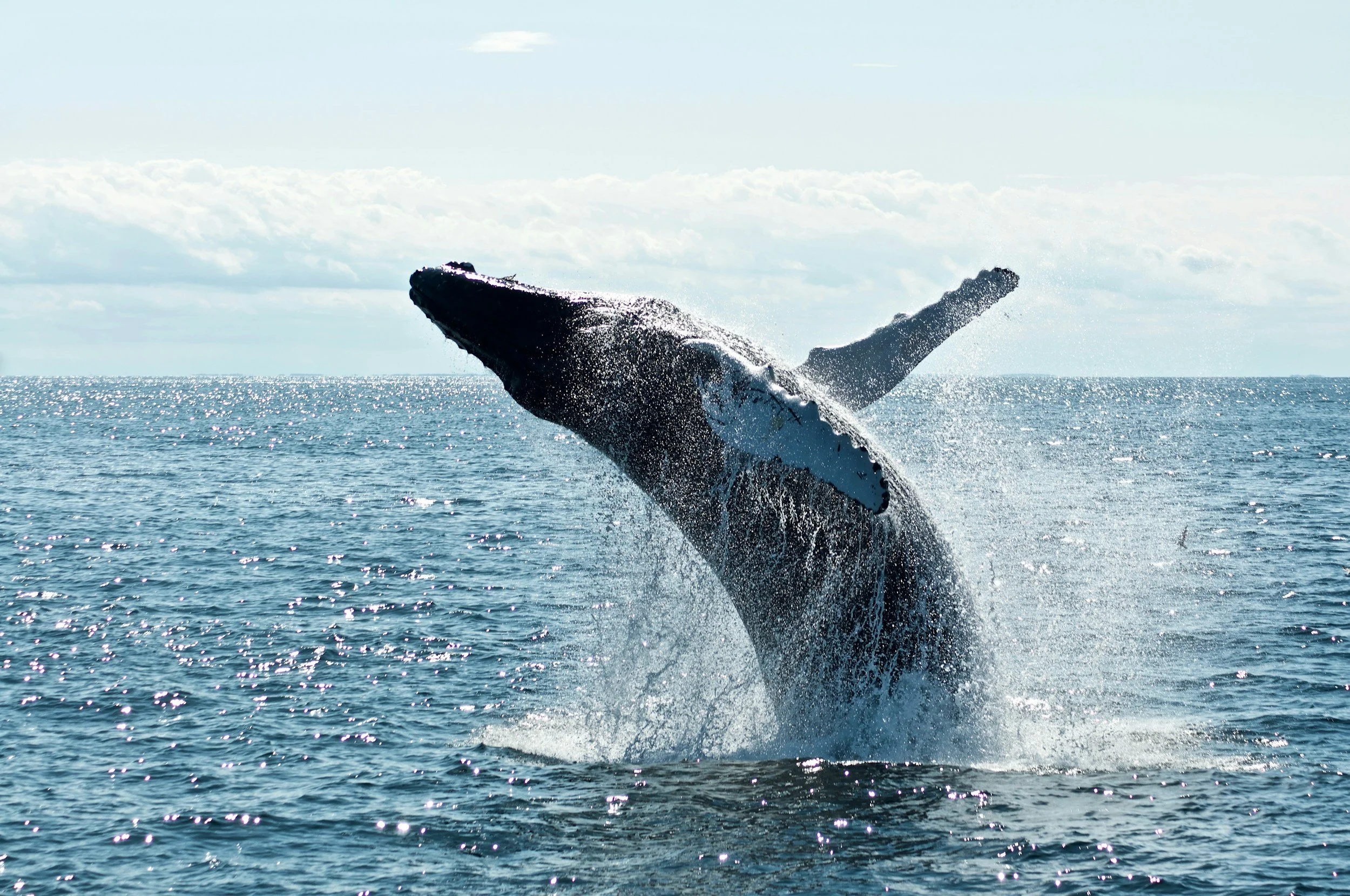
Humpback whales are among the most spectacular whales to see because they are often more visible at the surface than some other species. They may show their tail fluke when diving, and in some places they are known for more active surface behaviour. Humpbacks are migratory whales that feed in cold, productive waters and eat krill and schooling fish, including herring and capelin.
In mainland Norway, humpback whales are especially associated with the winter feeding season in Northern Norway, often in the same broad areas where orcas gather. Around Svalbard, humpback whales may also be seen during the Arctic summer season.
For travellers, humpbacks are often one of the most rewarding species to see because they can be easier to recognise than smaller or more elusive whales.
Minke Whale
Minke whales are smaller baleen whales and are found in Norwegian waters, including around Svalbard. They are not usually the headline species for a whale watching trip in the same way as orcas, sperm whales or humpbacks, but they are still part of Norway’s broader whale watching landscape.
Minke whales can surface quickly and may be easy to miss, especially compared with larger or more dramatic species. For many travellers, they are more likely to be a bonus sighting than the main reason for choosing a trip.
Fin Whale
Fin whales are enormous, elegant baleen whales and are the second longest whale species in the world. They are long, streamlined and powerful, and they migrate to higher latitudes for summer feeding. This makes them one of the species visitors may encounter around Svalbard during the productive Arctic summer.
Fin whales are not the easiest species to build a Norway trip around, but they are one of the reasons Svalbard and Arctic expedition routes can be so exciting for wildlife travellers. Seeing one is less predictable than seeing sperm whales off Andenes or joining a winter trip focused on orcas and humpbacks, but it can be a remarkable part of a polar journey.
Beluga Whale
Beluga whales are strongly associated with Svalbard. They are pale, social Arctic whales that often travel in groups and stay close to the coast. In Svalbard, belugas are commonly observed in fjords and nearshore waters, and they are among the most characteristic marine mammals of the archipelago.
Seeing belugas in Svalbard feels very different from seeing orcas in mainland Northern Norway. It is usually not a fast-paced whale safari experience. It is more often part of a broader Arctic journey, where the landscape, ice, glaciers and silence are part of the experience.
Norway’s most famous beluga was Hvaldimir, an unusually tame white whale who appeared off the coast of Finnmark in 2019 wearing a harness that led to international speculation that he may have escaped from Russian captivity. He spent several years moving along the Norwegian coast and became one of the country’s best-known individual whales before he was found dead near Stavanger in 2024.
Blue Whale
Blue whales are possible around Svalbard, but they should be described carefully. They are not a species you should expect to see, and they should not be used as the main reason to plan a trip unless you understand how rare and unpredictable sightings can be.
If you see one, it is extraordinary. But for most travellers, blue whales should be considered a rare possibility rather than a realistic expectation.
Best Time to Go Whale Watching in Norway
The best time to go whale watching in Norway depends entirely on where you are going and which species you want to see.
Winter: Orcas and Humpback Whales
Winter is the season most closely associated with orcas and humpback whales in Northern Norway. The main areas are usually linked to Tromsø, Skjervøy, Kvænangen and nearby fjords, but the exact location can change depending on where the herring moves.
This is the most dramatic version of whale watching in Norway: cold air, dark water, low winter light and snow-covered mountains. It is also the least comfortable season. You need to be prepared for cold weather, limited daylight, possible rough seas and long travel days.
For photographers, winter can be beautiful but challenging. There may be very little light, especially during the polar night period, and weather conditions can change quickly.
Summer: Sperm Whales and Arctic Species
Summer is the main visitor season for Andenes and Vesterålen. It is also the main expedition season for Svalbard. If you want a more comfortable whale watching experience, longer days and easier travel conditions, summer is usually the better choice.
In Andenes, sperm whales can be seen throughout the year, but summer is the peak visitor season. Around Svalbard, summer brings feeding opportunities for species such as minke whales, fin whales and humpback whales, while belugas remain one of the most characteristic species in the archipelago.
Summer whale watching may not have the same Arctic darkness and drama as the winter orca season, but it can be more practical for many travellers.
Can You See Whales in Norway Year-Round?
Yes, Norway has year-round whale watching possibilities, but not in the same place for the same species. This is one of the most important things to understand before planning a trip.
If you want sperm whales, Andenes is the strongest year-round option. If you want orcas and humpbacks in the fjords, winter in Northern Norway is the main season. If you want Arctic whale species as part of a broader polar journey, Svalbard is usually a spring and summer expedition destination.
This is why it is better to plan around species and region rather than simply searching for “whale watching in Norway” and booking whatever appears first.
How to Choose the Right Whale Watching Trip
If your priority is sperm whales, choose Andenes or another established whale watching base in Vesterålen. This is the most classic mainland Norway whale safari option and is especially good if you are travelling in summer or want to combine whale watching with Lofoten and Northern Norway.
If your priority is orcas, choose a winter trip connected to Tromsø, Skjervøy or Kvænangen. Be prepared for cold weather, short days and the possibility that the whales may be far from your starting point. Read tour descriptions carefully so you understand whether you are travelling by boat from Tromsø, by bus to Skjervøy, or through another arrangement.
If your priority is an Arctic wildlife expedition, choose Svalbard. This is not only about whales, but about the whole polar environment. You may see belugas, minke whales, fin whales, humpbacks or even rarer species, but whales are part of a wider Arctic experience rather than the only focus.
If you are sensitive to motion sickness, think carefully about the type of boat you choose. Larger boats are usually more comfortable, while RIBs can feel more exposed, colder and more physically demanding. RIB tours can be exciting, but they are not always the best choice for everyone, especially in winter.
Responsible Whale Watching in Norway
Whale watching can be a beautiful way to experience Norway’s marine wildlife, but it also needs to be done carefully. Whales rely heavily on sound, and boat noise, crowding and repeated approaches can disturb them. Responsible operators should keep distance, avoid chasing the animals, reduce disturbance and follow local guidelines.
This matters because the best whale watching experiences are not about getting as close as possible. They are about observing wild animals with respect, patience and enough distance that their natural behaviour is not disrupted.
When choosing a tour, look for operators that talk clearly about responsible whale watching, not just guaranteed sightings or dramatic close-up photos. A good guide should explain the behaviour you are seeing, the local ecosystem and how the boat is operating around the animals.
What to Wear for Whale Watching in Norway
What you need to wear depends on the season, but whale watching in Norway is almost always colder than people expect. Even in summer, it can feel cold on the water, especially if you are standing still for long periods. In winter, proper clothing is essential.
For summer whale watching in Andenes, wear warm layers, a windproof outer layer, a hat and gloves. The temperature on land can feel pleasant, but conditions at sea are different. If you are prone to motion sickness, bring sea sickness tablets and take them before the trip, not after you already feel unwell.
For winter whale watching in Tromsø, Skjervøy or Kvænangen, dress as you would for a full Arctic outdoor activity. Wool base layers, an insulated mid-layer, a warm outer suit or winter jacket, wool socks, gloves, hat and neck warmer are all important. Many operators provide flotation suits or thermal suits, but you still need warm clothing underneath.
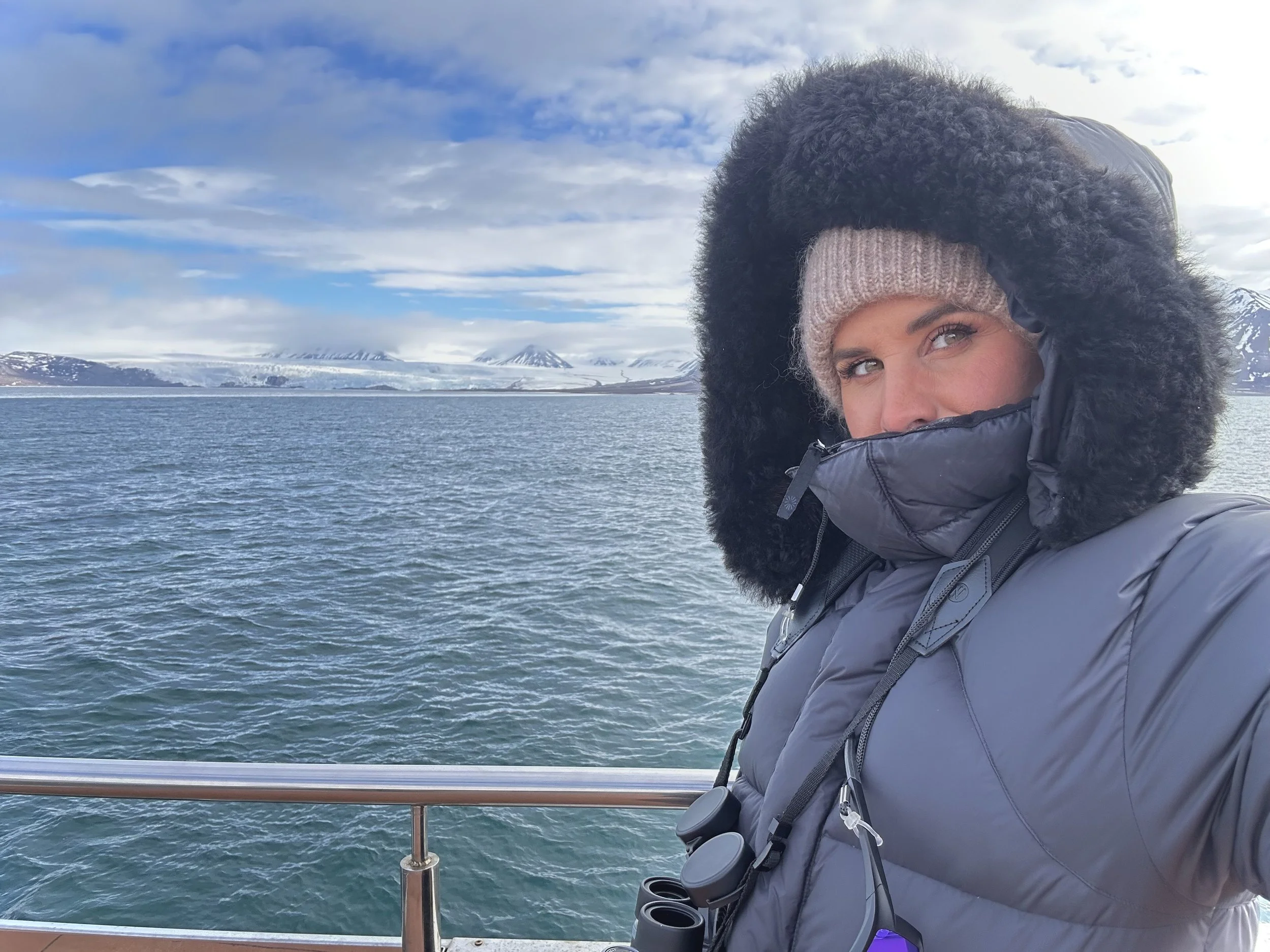
For Svalbard, follow expedition guidance carefully. Weather can change quickly, and you may be moving between ship, small boats and shore landings depending on the trip.
Relevant Reading:

Is Whale Watching in Norway Worth It?
Whale watching in Norway can absolutely be worth it, but it depends on your expectations. If you expect guaranteed close-up encounters, you may be disappointed. If you understand that whales are wild animals and that the experience depends on weather, patience, timing and luck, it can be one of the most powerful things you do in Norway.
The strongest whale watching trips are usually the ones planned around the right season and species. Andenes is the better choice for sperm whales. Tromsø, Skjervøy and Kvænangen are the better choice for winter orcas and humpbacks. Svalbard is the better choice for Arctic species and a wider polar wildlife experience.
Whale watching is also not only about the moment you see a whale. It is about being out on the Norwegian Sea, watching the light change over the mountains, scanning the horizon, listening to the guide and understanding that the ocean around Norway is alive in ways you cannot always see from land.
Final Words
Whale watching in Norway is not one single experience. It can mean sperm whales diving into deep water outside Andenes, orcas and humpbacks following herring through the winter fjords of Northern Norway, or belugas moving quietly through the Arctic waters of Svalbard.
The best trip depends on what you want to see and when you are travelling. If you plan around the right region and season, Norway can offer some of the most memorable whale watching experiences in Europe. But the most important thing to remember is that whales follow food, not tourist calendars. That unpredictability is part of the experience, and part of what makes seeing them in Norway feel so special.
More articles about Norway:

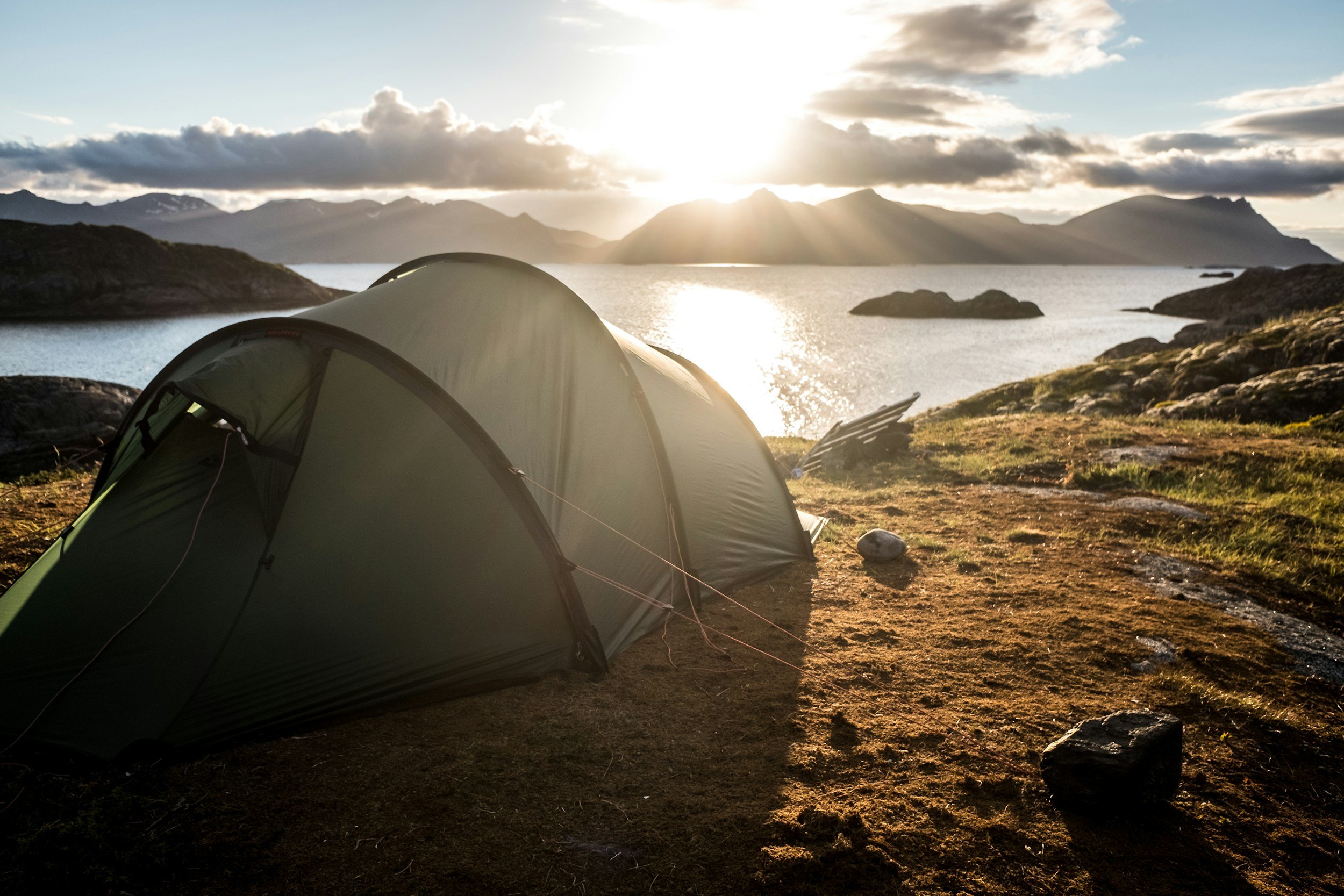

Discover where to see whales, moose, reindeer, puffins, polar bears and other iconic wildlife across Norway and Svalbard.