
A Guide to Jotunheimen: Home to Northern Europe’s Highest Mountain
Jotunheimen is where some of Norway’s most iconic mountain experiences come together, from Galdhøpiggen and Besseggen to glacier walks, historic mountain lodges and long summer days beside high mountain lakes. This guide explores what makes the region special, the experiences worth travelling for, where to stay and the practical things to know before you go.
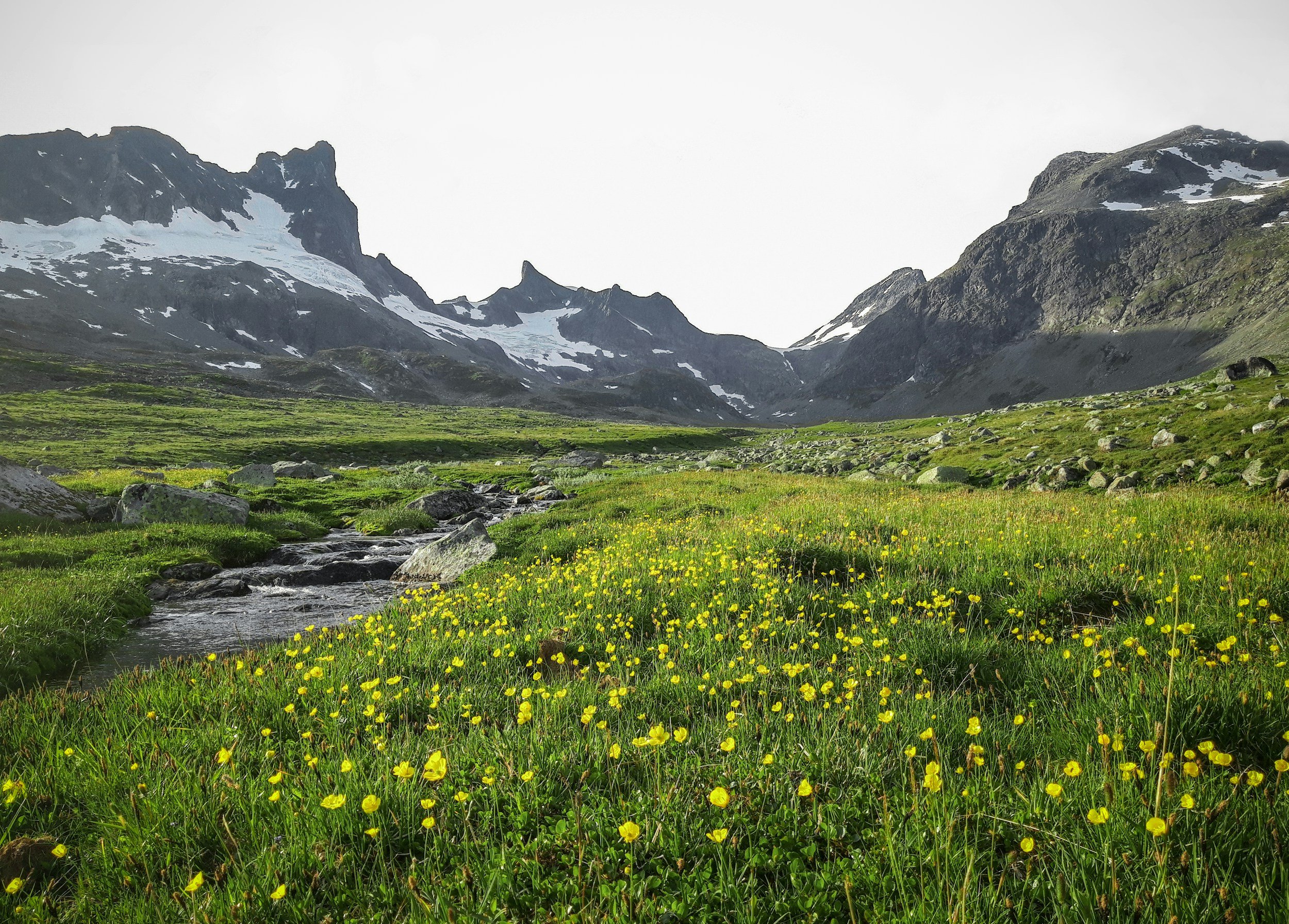
Jotunheimen is one of Norway’s great mountain landscapes, a region of high peaks, glaciers, deep valleys and long mountain lakes in the heart of Southern Norway. It is home to Galdhøpiggen, the highest mountain in Norway and Northern Europe, as well as many of the country’s other highest summits. Yet Jotunheimen has never been important simply because of the height of its mountains.
For generations, Norwegians have travelled here to walk, ski, stay in mountain lodges and spend time outdoors. The region has played an important role in the development of Norwegian hiking culture, and the network of trails and fjellstuer that runs through the mountains remains part of that tradition today. For a wider introduction to the landscapes and traditions of the Norwegian highlands, read my guide to Mountain Norway: Jotunheimen, Rondane, Valdres and Beyond.
For travellers, this makes Jotunheimen much more varied than its reputation for serious hiking might suggest. You can climb Galdhøpiggen, cross the famous Besseggen ridge or walk for several days between mountain lodges, but you can also travel across Gjende or Bygdin by boat, drive through the high mountains, join a guided glacier walk or simply stay at a traditional fjellstue and choose shorter walks according to the weather.
Jotunheimen is therefore not a place that needs to be experienced through one famous hike. What makes it memorable is the combination of scale, mountain culture and the many different ways of moving through the landscape.
What Is Jotunheimen and Why Does It Matter?
Jotunheimen is a large mountain region between the inland valleys of Eastern Norway and the fjord landscapes farther west. Jotunheimen National Park protects part of the area, although the wider region normally referred to as Jotunheimen extends beyond the national park itself.
This is Norway’s highest mountain country. More than 250 peaks rise above 2,000 metres, including Galdhøpiggen at 2,469 metres and Glittertind, Norway’s second-highest mountain. Farther west, the sharper peaks of Hurrungane create some of the country’s most dramatic alpine terrain.
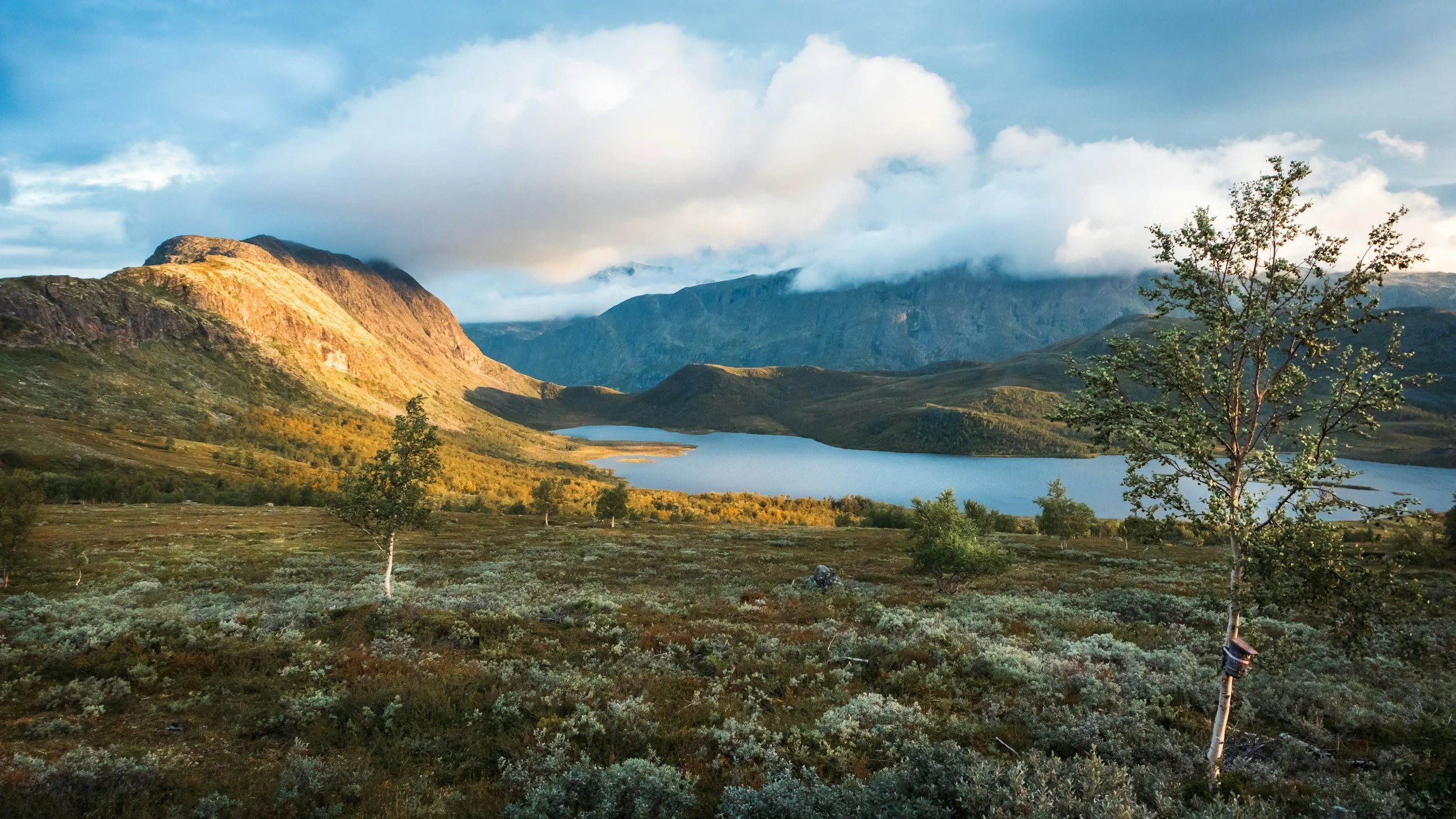
The mountains are only part of the landscape. Glaciers remain between many of the higher peaks, rivers descend through broad valleys and long lakes such as Gjende and Bygdin cut deep into the region. Gjende is particularly famous for its unusual green colour, while the view from Besseggen towards Gjende and the darker waters of Bessvatnet has become one of the most recognisable images of hiking in Norway.
Jotunheimen’s name translates as “the home of the giants”, referring to the jotner of Norse mythology. The name was introduced in the nineteenth century by the Norwegian poet Aasmund Olavsson Vinje, who had a close relationship with these mountains and built a small cabin at Eidsbugarden beside Lake Bygdin.
It is an unusually fitting name. Jotunheimen feels larger and more rugged than many of Norway’s gentler mountain regions, particularly when clouds gather around the higher peaks or snow remains on the slopes well into summer. At the same time, generations of trails, boats and mountain lodges have made parts of this apparently wild landscape surprisingly accessible.
That relationship between wild nature and established mountain culture is one of the things that makes Jotunheimen distinctive. You can spend hours walking through remote terrain and still arrive at a warm lodge for dinner in the evening. Boats cross Gjende and Bygdin, allowing travellers to move farther into the mountains without walking the entire distance, while scenic roads reveal high-altitude landscapes to visitors who have no intention of climbing a summit.
What Jotunheimen Means to Norwegians
Jotunheimen occupies a special place in Norwegian friluftsliv, the cultural tradition of spending time outdoors as part of ordinary life. It is a concept that extends well beyond hiking, and I explain it in more detail in my guide to Norwegian outdoor culture and friluftsliv.
Friluftsliv is sometimes translated simply as “outdoor life”, but it is broader than hiking or adventure sports. It can mean walking, skiing, sleeping in a cabin, spending a day by a lake or simply being outside without turning the experience into a competition or achievement.
Jotunheimen expresses this tradition particularly well. The mountains are serious enough to demand preparation and respect, but they have also been part of Norwegian holiday culture for generations. Families return to familiar lodges, groups of friends walk between cabins and children are introduced to the mountains through shorter hikes before eventually attempting longer routes.
The Norwegian Trekking Association, DNT, has played an important role in this history. Mountain lodges and marked trails gradually made it possible for ordinary travellers to move through terrain that had previously been much more difficult to access.
The fjellstue remains central to the experience. At a staffed mountain lodge, breakfast is usually followed by the preparation of a packed lunch before guests head out for the day. Walkers return during the afternoon, boots are left near the entrance and everyone gathers again for dinner. Weather forecasts and possible routes for the following day become natural topics of conversation.
There is nothing particularly glamorous about this rhythm, and that is part of its appeal. A mountain holiday in Jotunheimen can be remarkably simple, built around walking, eating, sleeping and deciding what the weather will allow the following morning. This slower relationship with nature is closely connected to Norway’s wider cabin culture and the tradition of the hytte.
For international visitors, this is worth experiencing in its own right. Jotunheimen offers not only some of Norway’s most dramatic scenery, but also an introduction to the way many Norwegians have traditionally spent time in the mountains.
The Best Things to Do in Jotunheimen
Jotunheimen can support an entire holiday, but travellers do not need to experience every corner of the region. A small number of distinctive activities provide a much stronger introduction than trying to move between as many places as possible.
Climb Galdhøpiggen
At 2,469 metres, Galdhøpiggen is the highest mountain in Norway and Northern Europe, making it an obvious goal for many visitors to Jotunheimen.
There are two main summer approaches. The route from Juvasshytta begins high in the mountains and crosses the Styggebrean glacier as part of a guided rope team. This is the shorter and more structured option, and the glacier crossing makes the day feel very different from an ordinary mountain hike.
The route from Spiterstulen begins considerably lower and does not normally require a glacier crossing on the standard summer trail. The trade-off is a much longer ascent and a physically demanding mountain day.
Neither route should be treated as a casual walk simply because Galdhøpiggen is popular. Conditions at this altitude can be cold, windy and very different from those in the valleys below, and the weather should always determine whether a summit attempt is sensible.
For travellers who enjoy having a clear physical goal, however, standing on the highest mountain in Northern Europe is a memorable way to experience the scale of Jotunheimen. If this is one of the main reasons for your visit, my complete guide to hiking Galdhøpiggen covers the two routes, difficulty, glacier crossing, what to bring and how to prepare.
Hike Besseggen
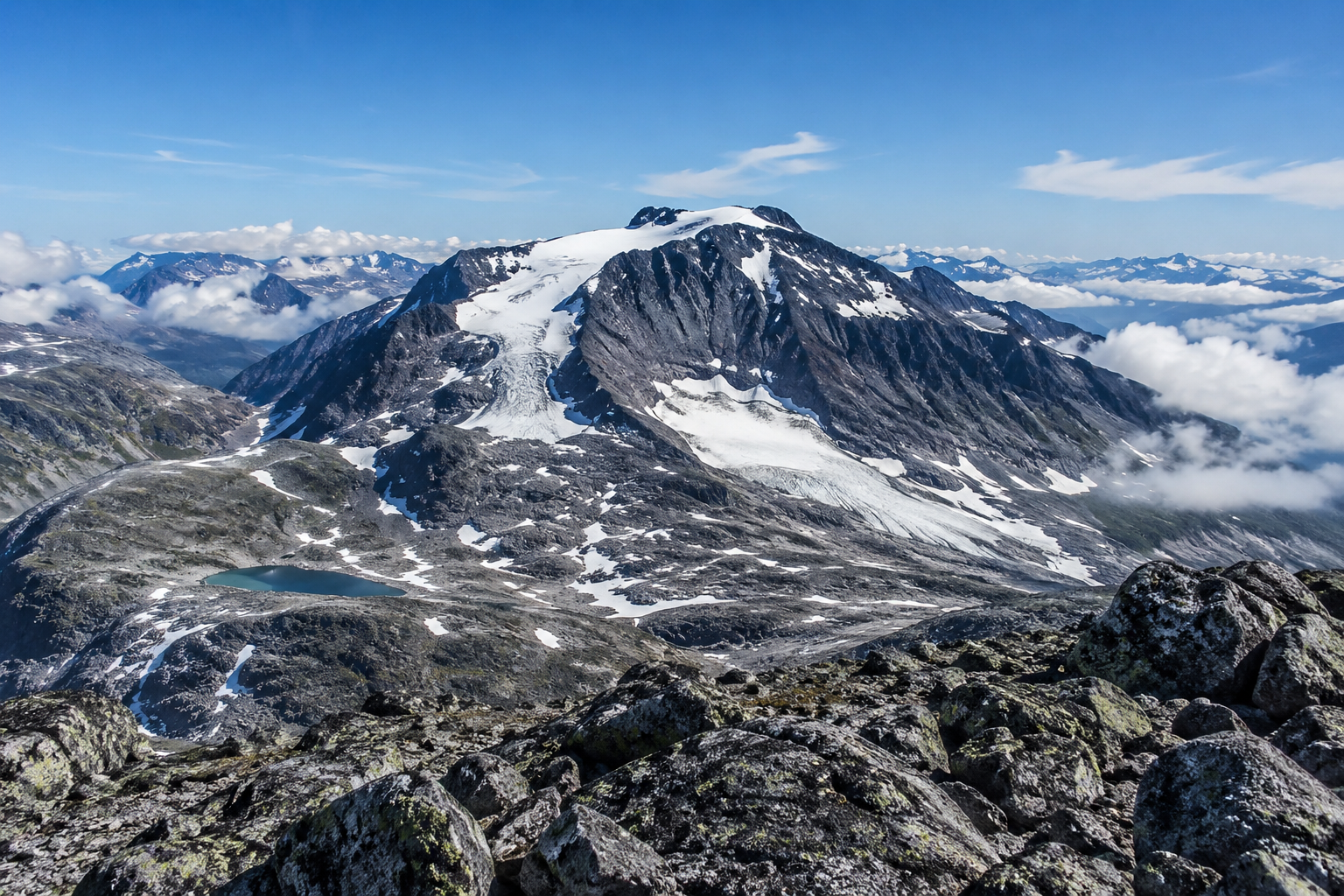
Besseggen is arguably the most famous hiking route in Jotunheimen.
The ridge runs high above Gjende, with the green lake on one side and the darker Bessvatnet on the other. The difference in colour and elevation between the two lakes creates the view that has made Besseggen internationally famous.
Most hikers take the passenger boat across Gjende to Memurubu and walk back towards Gjendesheim. The full route is a demanding mountain day, with considerable ascent, rocky terrain and a steep ridge section where hikers use their hands.
Besseggen is not technical climbing, but the exposed section can feel intimidating for people who are uncomfortable with heights. Weather also plays an important role, particularly because wind, rain and wet rock can change the character of the ridge considerably.
For confident hikers with suitable fitness, it remains one of the classic experiences in the Norwegian mountains. Those who prefer less exposure can still experience Gjende by boat or choose one of the many other walks in the region.
Travel Across a Mountain Lake
The passenger boats on Gjende and Bygdin provide one of the easiest ways to appreciate the scale of Jotunheimen without committing to a demanding hike.
On Gjende, boats connect the eastern end of the lake with Memurubu and Gjendebu. Many passengers are beginning or ending hiking routes, but the journey is worthwhile in itself. Travelling beneath steep mountains while the road and buildings disappear behind you creates a very different impression of Jotunheimen from simply stopping at a roadside viewpoint.
Lake Bygdin offers a quieter version of the same experience. The historic M/B Bitihorn carries passengers across the long mountain lake, connecting Bygdin with places farther west and providing access to mountain lodges and walking routes along the way.
Both journeys work particularly well for travellers who want to spend time in the mountains without structuring the entire visit around long hikes.
Stay at a Traditional Mountain Lodge
A night at a fjellstue is one of the experiences that best explains why Jotunheimen is so closely connected to Norwegian outdoor culture.
Mountain lodges vary considerably. Some resemble simple hiking accommodation, while others are closer to historic hotels with private rooms, lounges and carefully prepared meals. Several can be reached directly by road, while others require a boat journey or hike.
What matters is not necessarily how remote the lodge is, but the rhythm of staying there. Guests tend to organise the day around the weather and the mountains rather than around a long list of attractions. Breakfast, a packed lunch, several hours outside and dinner at the lodge can easily become the structure of an entire holiday.
For travellers accustomed to busy sightseeing itineraries, spending two or three nights in one mountain lodge can feel surprisingly different. The slower pace is part of the experience rather than time that needs to be filled.
Walk from Lodge to Lodge
Jotunheimen is one of the best places in Norway to experience cabin-to-cabin hiking.
Instead of returning to the same hotel each evening, walkers follow marked trails between mountain lodges. Staffed cabins provide beds and meals, allowing travellers to move through the mountains without carrying a tent, cooking equipment and several days of food.
This does not make the walking itself easy. Distances can be long, trails can cross rocky or exposed terrain and weather may change plans completely. However, the lodge network makes multi-day mountain journeys accessible to people who might not otherwise consider travelling this way.
For a first cabin-to-cabin trip, choosing staffed lodges and manageable daily distances creates a much gentler introduction than attempting one of the most remote routes immediately. Travellers who plan to hike, camp or spend time independently in Norwegian nature should also understand Norway’s Right to Roam and the responsibilities that come with it.
The appeal is as much about movement as destination. Instead of driving around the mountains and stopping at viewpoints, you gradually travel through the landscape under your own power.
Drive Valdresflye or Sognefjellet
Two of Norway’s National Scenic Routes provide spectacular road access to the high-mountain landscapes around Jotunheimen.
Valdresflye crosses a broad and open plateau on the eastern side of the region. The landscape is expansive rather than sharply alpine, with mountain lakes, low vegetation and long views towards the peaks of Jotunheimen.
Sognefjellet has a different character. The road climbs into a more alpine landscape of snowfields, glaciers and exposed rock before descending towards the inner Sognefjord. The transition from high mountains to green fjord valleys makes it particularly impressive as part of a longer road trip through Norway.
Neither road needs to be approached as a checklist of viewpoints. Their appeal lies in the journey itself, with time to stop for a short walk, eat at a mountain lodge or simply watch the landscape change. If Jotunheimen forms part of a longer self-drive journey, my Driving in Norway guide covers road rules, tolls, ferries, parking and the practical realities of travelling by car.
Join a Guided Glacier Walk
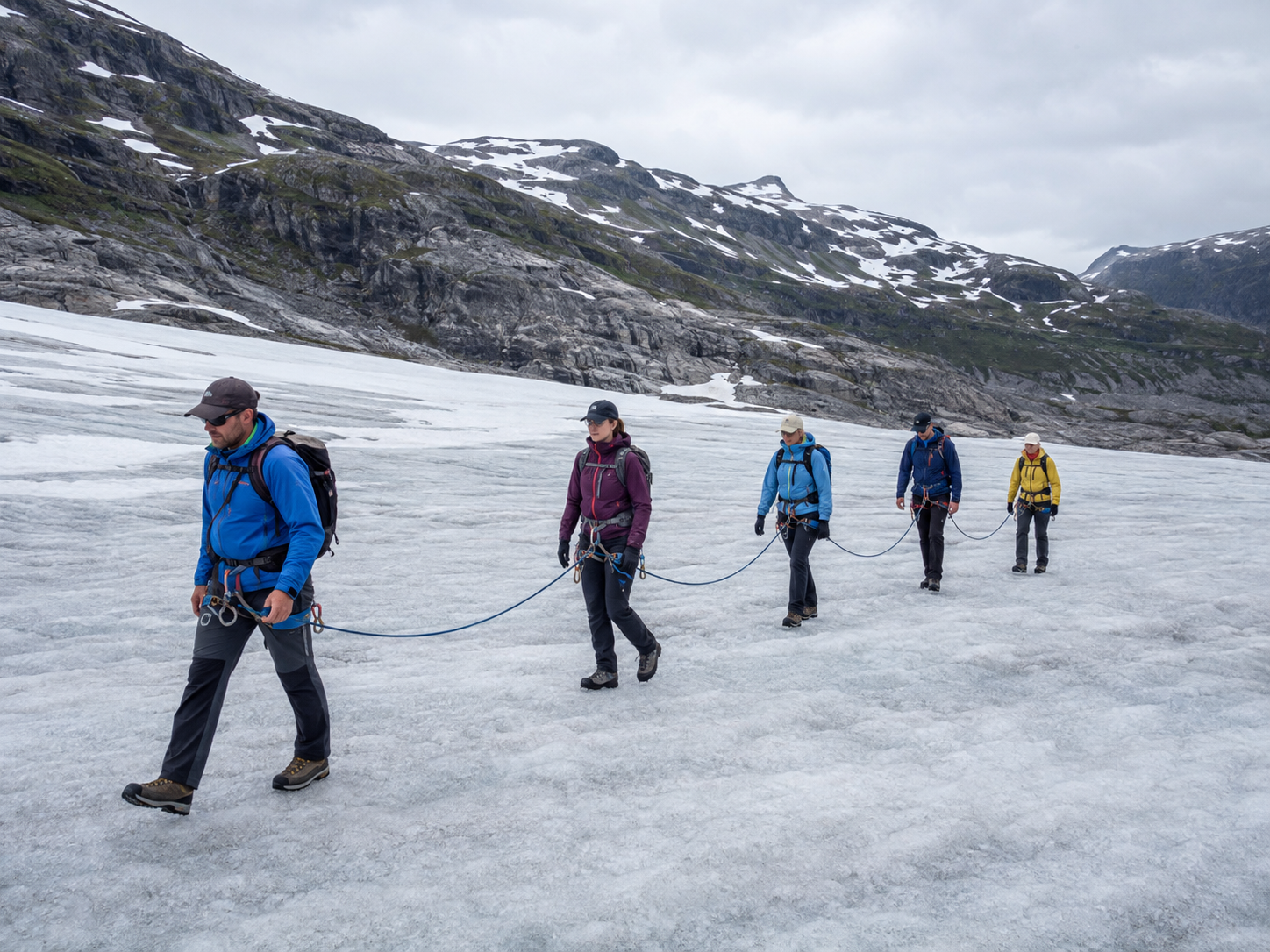
Glaciers are an important part of Jotunheimen’s high-mountain landscape, and a guided glacier walk provides an opportunity to experience them more closely.
Walking on a glacier is very different from hiking on an ordinary trail. Crevasses may be hidden beneath snow and the surface changes throughout the season, which is why visitors without the necessary experience should always join a qualified guide.
Guided trips normally provide the specialist safety equipment required and introduce participants to the glacier environment without turning the experience into a technical climbing expedition.
For travellers who want something more adventurous than a short hike but are not interested in climbing one of Jotunheimen’s major summits, this can be an excellent middle ground.
Spend Time in Lom
Lom provides a useful contrast to the high mountains.
The small village is one of the main gateways to Jotunheimen and has a strong connection to Norwegian mountain culture. Lom Stave Church introduces a much older layer of Norwegian history, while the Norwegian Mountain Center explores the landscape, climate and cultural history of the surrounding mountains.
Lom is also a good place to slow down between outdoor days. Bakeriet i Lom has become one of Norway’s best-known bakeries, while Fossheim Hotel has a long tradition of using Norwegian ingredients and regional food.
Travellers do not need to spend several days here, but combining a mountain journey with a few hours in Lom adds cultural context and provides a welcome alternative when the weather is unsuitable for a major hike.
Where to Stay in Jotunheimen
Accommodation is part of the experience in Jotunheimen, particularly if you choose one of the traditional mountain lodges rather than using the region only for day trips.
Gjendesheim
Gjendesheim is one of the easiest fjellstuer to include in a first visit. It sits close to Gjende and is particularly convenient for Besseggen, the passenger boat and shorter walks in the surrounding mountains.
The lodge is busy during the main hiking season, but that energy is part of the atmosphere. It provides an accessible introduction to Norwegian mountain-lodge culture without requiring visitors to hike or take a boat simply to reach their accommodation.
Gjendebu
At the opposite end of Gjende, Gjendebu feels considerably more remote.
It can only be reached on foot or by boat, and the atmosphere becomes particularly peaceful once the last day visitors have left. Gjendebu is an excellent choice for travellers who want to spend several nights deeper in the mountains while still having the comfort of a staffed lodge.
Fondsbu
Fondsbu at Eidsbugarden is known for its warm and social fjellstue atmosphere.
It works well for travellers who want several days of walking without changing accommodation every night. The surrounding area provides a range of possible routes, allowing plans to be adapted according to the weather.
Fondsbu is particularly appealing if the cultural experience of staying in a Norwegian mountain lodge is as important as completing a specific hike.
Bygdin Høifieldshotel
Bygdin Høifieldshotel offers more of a traditional hotel experience while retaining a strong connection to the mountains.
Its location beside Lake Bygdin makes it easy to combine an overnight stay with the M/B Bitihorn, short walks or the Valdresflye scenic route. It is a good option for travellers who want historic atmosphere and mountain scenery without the more communal character of a DNT lodge.
Juvasshytta
Juvasshytta is the obvious choice for travellers planning the guided glacier route to Galdhøpiggen.
Its high-altitude location creates a very different atmosphere from accommodation in the valleys, and staying overnight removes the need for an early drive before a summit attempt.
The experience is strongly centred on the surrounding mountains, so travellers looking for shops, restaurants and alternative activities may prefer to stay in Lom.
Spiterstulen
Spiterstulen is better suited to visitors whose main reason for coming to Jotunheimen is hiking.
It is the starting point for the longer route to Galdhøpiggen and is connected to the wider network of trails through the mountains. The setting is more immersive than staying in a village, making it a strong base for several days of serious walking.
Sognefjellshytta
Sognefjellshytta sits high along the Sognefjellet road and is surrounded by some of the most dramatic scenery accessible by car in Jotunheimen.
It is particularly suited to road trippers who want to spend a night in the high mountains rather than driving straight across the pass. Glacier views, short walks and the distinctive high-altitude landscape make the location as important as the accommodation itself.
Turtagrø Hotel
Turtagrø has a unique place in Norwegian mountaineering history.
The hotel lies close to Hurrungane and has long been associated with climbers, mountain guides and more adventurous forms of outdoor travel. Even visitors who are not planning a technical climb may appreciate the character of the hotel and its dramatic setting beneath some of Norway’s sharpest peaks.
Fossheim Hotel
For travellers who prefer a more conventional hotel base, Fossheim in Lom provides a comfortable alternative to staying directly in the mountains.
Its history, food and location make it particularly useful for combining Jotunheimen with cultural attractions in Lom and day trips towards Galdhøpiggen or Sognefjellet.
Planning Your Visit
For most travellers, summer and early autumn are the easiest seasons to experience Jotunheimen. July and August normally provide the widest selection of open mountain lodges, passenger boats, guided activities and accessible hiking routes, although they are also the busiest months. If you are still deciding when to travel, my Best Time to Visit Norway guide explains how weather, daylight and accessibility change throughout the year.
Late June can be beautiful, with long days and snow still visible across the higher mountains, but conditions on high trails vary considerably from year to year. September often brings quieter paths and autumn colours, although colder temperatures, shorter days and early snowfall become increasingly possible.
Two days provide enough time for a scenic introduction, particularly if you combine a mountain lodge, boat journey or scenic road with one walk. Three or four days are better if Jotunheimen is an important part of the trip, while longer stays make sense for travellers planning several demanding hikes or a cabin-to-cabin journey.
A car provides the greatest flexibility, particularly if Jotunheimen is part of a wider Norway road trip. Seasonal public transport reaches some of the main gateways, and the passenger boats on Gjende and Bygdin can then be used to travel farther into the mountains. Travelling without a car is therefore possible, but it requires more advance planning.
Mountain weather deserves particular respect. Conditions can change quickly, and temperatures at higher elevations may be dramatically colder than in the valleys. Even during summer, waterproof clothing and warm layers should be carried on mountain walks, and the forecast should be checked before setting out. My guide to what to wear in Norway throughout the year explains the layering system and weather protection that become particularly important in mountain environments.
Popular accommodation, passenger boats and guided activities should also be reserved in advance during the main summer season, particularly when a trip depends on a specific departure or hiking day. At the same time, maintaining some flexibility is valuable. Jotunheimen is a much more enjoyable destination when the itinerary can adapt to the mountains rather than forcing a particular hike into poor conditions.
Final Words
Galdhøpiggen may be the reason some travellers first hear about Jotunheimen, and Besseggen may provide its most famous view, but neither experience fully explains why this mountain region has remained so important in Norway.
Jotunheimen combines extraordinary natural scale with a long tradition of travelling through the mountains in a relatively simple way. Boats still carry passengers across high mountain lakes, marked trails connect lodges that have welcomed walkers for generations and evenings at a fjellstue continue to revolve around food, weather and plans for the following day.
That makes Jotunheimen equally rewarding for travellers who want a physical challenge and those who simply want to spend time in the Norwegian mountains. You may leave remembering the summit of Galdhøpiggen or the ridge above Gjende, but the quieter details can be just as memorable: a cold morning beside a lake, a packed lunch eaten somewhere along a trail or dinner at a mountain lodge after the weather changed the plans you had made.
Perhaps that is the best way to approach Jotunheimen. Choose one or two experiences that genuinely appeal to you, allow enough time for the mountains to influence the journey and resist the temptation to turn the region into a list of places that need to be completed.