
Norwegian Social Norms: Why Norwegians Avoid Small Talk, Value Space and Hate Being Late
Norwegian social norms are shaped by a mixture of cultural values, practical traditions and strong unwritten expectations. Norwegians often avoid unnecessary small talk, value personal space, take punctuality seriously and prefer humility over obvious self-promotion. Visitors are also generally expected to arrange home visits in advance, remove their shoes indoors, wait their turn and treat shared spaces and nature with consideration.
Every country has its own unwritten social rules, and Norway is no exception.
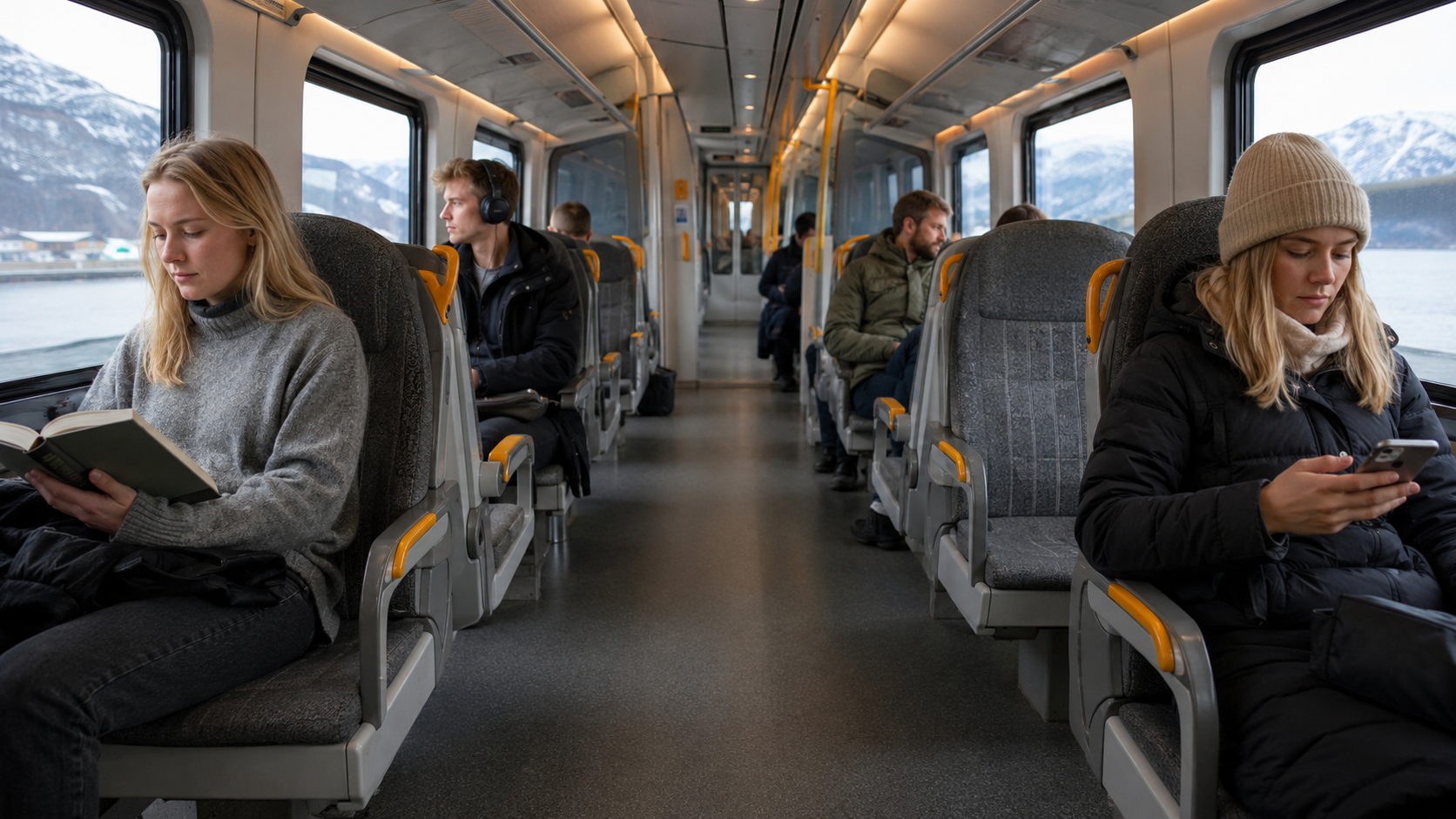
Some of them are obvious, while others only become apparent after you have spent a few days here. Public transport is surprisingly quiet, people rarely strike up conversations while waiting in line, shoes are left by the front door before entering someone’s home, and if there are plenty of empty seats on a train, most people will choose one rather than sitting next to somebody else.
To many visitors, these habits can seem unusual at first. In Norway, they are simply part of everyday life.
Like every culture, Norway has developed its own social norms over time. Some are practical, shaped by the country’s climate, geography and history. Others reflect values and expectations that have gradually become embedded in everyday life.
What makes these customs interesting is not only the behaviour itself, but the way people learn it. Most social norms are never formally explained. They are absorbed through observation, repeated in ordinary situations and reinforced by the reactions of the people around us. Over time, they begin to feel natural, even when there is no written rule behind them.
Understanding where these customs come from will not only help you avoid awkward moments during a trip. It also offers a deeper insight into how culture shapes behaviour, how unwritten expectations are maintained and why even small departures from them can feel surprisingly noticeable.
The Unwritten Rule About Talking to Strangers
If there is one thing visitors notice almost immediately, it is how quiet everyday life can feel.
On the bus, people usually keep to themselves. In supermarkets, everyone quietly waits their turn. On the train, most passengers spend the journey reading, listening to music, working or simply looking out of the window.
Complete strangers certainly do speak to one another, but there is usually a reason. Someone may need directions, a train may have been delayed, a dog may want attention, or two hikers may be looking at the same trail map. Without that kind of natural starting point, most people simply carry on with their day.
If a complete stranger suddenly starts chatting for no obvious reason, many Norwegians will instinctively begin looking for an explanation. They may wonder whether the person needs something, is trying to sell something, is asking for money, is flirting, or has simply had one drink too many.
For many visitors, this can be one of the biggest culture shocks in Norway.
The same unwritten rule also helps explain something else many visitors notice. If there are several empty seats on a bus or train, most Norwegians will choose one rather than sitting next to somebody else. At bus stops, in waiting rooms and even in parks, people tend to spread out when space allows.
This is not necessarily about avoiding other people. It is simply considered normal to use the space that is available. If there are empty seats, people generally choose them. If the bus fills up, everyone sits wherever there is room without giving it a second thought.
The behaviour changes with the situation, but the expectation remains clear. Conversation usually begins when there is a reason for it, and physical distance is maintained when there is enough room to do so.
The Psychology Behind Why Norwegians Rarely Talk to Strangers
There is no single explanation for why this pattern has developed. Norway’s geography, climate and history have almost certainly influenced the way society evolved, but they do not explain everything on their own.
One of the more interesting explanations comes from cultural psychology.
Researchers have found that societies differ in how strongly they enforce social norms and how much variation they tolerate in everyday behaviour. This is often described as the difference between tight and loose cultures.
In tighter cultures, social norms tend to be clearer and more strongly enforced. People are generally more aware of what is considered appropriate, and behaviour that falls outside those expectations is more likely to attract attention or disapproval.
In looser cultures, there is usually greater tolerance for variation. Social behaviour is less tightly regulated, and people may be more comfortable acting in ways that others would consider unusual or unexpected.
Norway ranked surprisingly high in one of the largest international studies on this subject.
This does not necessarily mean that Norwegians live under more rules than everyone else. The distinction is more subtle. It suggests that people may be especially aware of the unwritten expectations that shape ordinary social situations.
Talking to a stranger is not forbidden, and sitting next to someone on an otherwise empty train is not considered a serious offence. Neither action breaks a formal rule. They can still feel socially noticeable because they fall outside what people are accustomed to seeing.
This is one of the ways social norms maintain themselves. People learn what is normal by observing the behaviour around them. When almost nobody begins conversations with strangers, silence becomes expected. When most people leave space where possible, distance begins to feel natural.
The norm is then reinforced each time people follow it. Most Norwegians are not consciously deciding that they should avoid speaking to someone. The hesitation is usually automatic because initiating an unexpected conversation can make people unusually aware of their own behaviour.
When almost everyone follows the same pattern, breaking it may feel uncomfortable even when there is no obvious consequence. People continue to follow the norm because it is familiar, while acting differently can feel like stepping outside an unwritten rule that everyone else already understands.
Personal Space and Individual Autonomy
The same perspective can help explain why Norwegians often place such a high value on personal space in public.
Researchers have long connected Scandinavian societies with values such as privacy, independence and individual autonomy. People are generally expected to manage their own lives, make their own decisions and avoid interfering unnecessarily in the choices of others.
Within that cultural context, giving someone space can be interpreted as a form of consideration rather than emotional distance. Leaving an empty seat between yourself and another passenger gives them more room. Remaining quiet on a train allows them to spend the journey as they choose, while avoiding unnecessary questions protects their privacy.
These small decisions are rarely made consciously. They become automatic because they reflect both the social norms people have learned and the wider values those norms express.
For visitors from cultures where friendliness is shown through conversation, physical closeness and visible interest in other people, Norwegian behaviour can therefore be easy to misread. Silence may appear cold, distance may feel unfriendly, and a lack of small talk can be interpreted as rejection.
Within the Norwegian social context, however, the same behaviour may communicate something quite different. It can signal respect for privacy and an assumption that other people should be allowed to continue with their day unless they indicate that they would like to interact.
When Norwegians Do Talk to Strangers
As with most social rules, context matters.
In smaller towns and villages, people are often more likely to greet one another than they are in larger cities. Head into the mountains, and saying hello to everyone you pass is almost expected. Spend a Friday evening in a local pub, and people will usually be far more talkative than they were on the morning bus.
The same often happens when Norwegians travel abroad. Away from their usual surroundings, many become noticeably more open and are more likely to strike up conversations with both locals and other travellers.
Visitors are something of an exception too. Most Norwegians understand that tourists have not grown up with the same unwritten rules, so asking someone for directions, recommendations or help is completely normal. Many visitors therefore leave Norway with two seemingly contradictory impressions: strangers rarely started conversations with them, yet people were extremely helpful whenever they needed assistance.
The difference is usually not whether Norwegians are willing to talk, but whether the situation provides a natural reason to do so.

Why Being on Time Matters
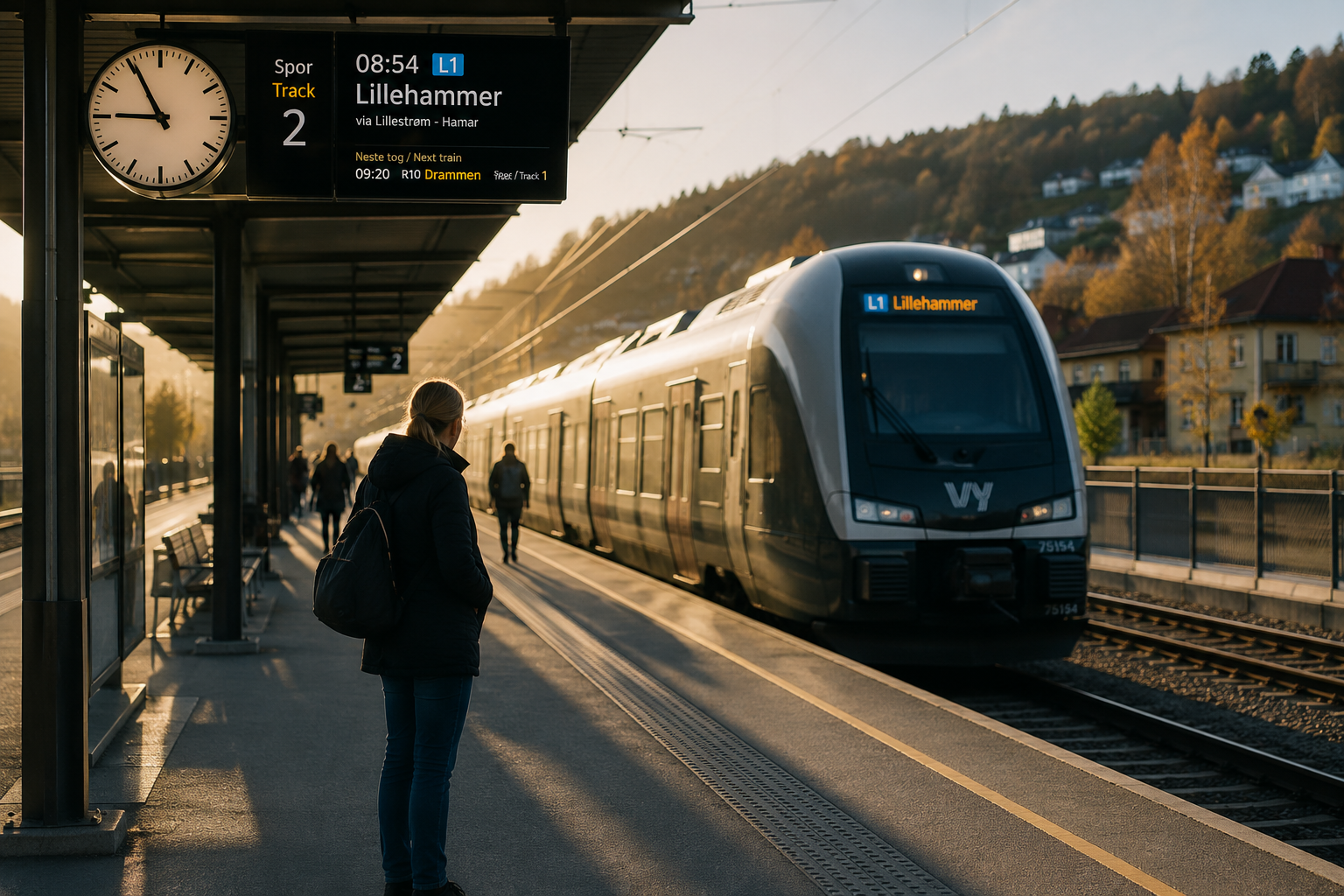
Another social norm that many visitors notice is how seriously Norwegians tend to take punctuality.
Whether it is meeting someone for coffee, joining a guided tour, arriving at a restaurant or attending a business meeting, the agreed time is generally understood to be the time people expect you to arrive.
Being a few minutes late is not usually a serious problem, particularly if you let the other person know. What tends to matter more is that they have planned part of their day around the agreement you have made and expect you to take that agreement seriously.
The importance placed on punctuality is not simply about watching the clock. It reflects the way time is organised in Norwegian society and the expectations that develop around it.
How Norwegian Culture Organises Time
One of the best-known theories about cultural differences in time comes from the anthropologist Edward T. Hall.
Hall distinguished between what he called monochronic and polychronic cultures. In monochronic cultures, time tends to be organised in a structured and sequential way. Activities are expected to happen at particular times, and schedules, appointments and deadlines play an important role in everyday life.
In polychronic cultures, time is often treated more flexibly. Several activities or conversations may happen at once, and responding to the people present or the situation itself can take priority over following a fixed schedule.
Norway is generally associated with the first pattern.
Daily life revolves around relatively structured timetables. Work begins at a set hour, public transport follows schedules, children are collected from kindergarten at agreed times, sports clubs begin training at fixed hours, and appointments are usually booked for a specific time rather than a general part of the day.
In a society organised this way, punctuality helps different parts of everyday life fit together. A delay does not only affect the person who is late. It can also interrupt the plans of everyone else involved and make the rest of their day more difficult to organise.
This gives punctuality a social meaning as well as a practical one. Arriving when agreed shows that you recognise the other person has reserved part of their day for you.
Norway’s strong emphasis on equality may also contribute to this expectation. If several people have agreed to meet at a particular time, one person’s schedule is not automatically considered more important than everyone else’s. Expecting others to wait without explanation can therefore seem inconsiderate because it places your time above theirs.
Punctuality can communicate reliability and respect, while being late without saying anything may create the opposite impression. The issue is not always the number of minutes involved, but whether the agreement appears to have been taken seriously.
This does not mean Norwegians expect life to run perfectly. Trains are delayed, traffic builds unexpectedly, meetings overrun and children become ill. Most people understand that these things happen.
What is generally appreciated is communication. A short message explaining that you are running late allows the other person to adjust their plans rather than wait without knowing whether you are still coming.
When Punctuality Is More Flexible
Expectations vary depending on the relationship and the occasion.
Close friends and family may be more relaxed with one another than colleagues or people meeting for the first time. A casual gathering at someone’s home may also allow more flexibility than a restaurant reservation, a guided tour or a professional appointment.
The meaning of the agreed time matters too. If someone invites you to a party that begins at seven, arriving a little later may be completely normal. If you have agreed to meet one person outside a restaurant at seven, they are likely to expect you at seven.
The difference lies in how much another person’s plans depend on your arrival.
For visitors who are uncertain about what is expected, arriving at the agreed time is usually the safest choice. A minor delay is unlikely to cause offence, but letting people know shows that you recognise the agreement and the time they have set aside.
Why Norwegians Value Humility
If you spend enough time in Norway, you may eventually notice another unwritten social rule.
People rarely talk openly about how much money they earn, and repeatedly drawing attention to wealth, status or professional importance can quickly be interpreted as boastful. At work, it is generally more common to let your achievements speak for themselves than to constantly remind other people of what you have accomplished.
That does not mean Norwegians are uncomfortable with success. People can be highly competitive, take enormous pride in their work and pursue ambitious goals without attracting any negative reaction.
What tends to matter is how success is communicated.
Talking confidently about an achievement or sharing something you are proud of is not considered inappropriate. The discomfort usually appears when success is used to establish social superiority or when someone seems to expect greater admiration, respect or consideration because of their position.
Janteloven and the Norwegian Ideal of Modesty
The concept most closely associated with Norwegian attitudes towards status and self-promotion is Janteloven, or the Law of Jante.
The term comes from the Danish-Norwegian author Aksel Sandemose, who introduced it in his 1933 novel A Fugitive Crosses His Tracks. The novel describes the fictional town of Jante, where anyone who believes they are exceptional or more important than everyone else is quickly reminded not to think too highly of themselves.
Sandemose wrote Janteloven as satire and social criticism, not as a positive guide to how people should behave. Even so, the expression became part of everyday Scandinavian language and is still frequently used when discussing modesty, equality and attitudes towards success.
Janteloven is sometimes interpreted as the idea that people should not be ambitious or believe in themselves, but that is too simplistic. Norway has a strong culture of achievement, particularly in sport, where discipline, competition and the determination to perform at the highest level are widely admired.
The distinction lies between achievement and superiority.
A person can work hard, compete, win and take pride in the result without suggesting that the achievement makes them inherently more important than other people. The tension is more likely to arise when someone repeatedly emphasises their salary, possessions, qualifications or status in order to establish a higher position within the group.
This is closely connected to Norway’s strong ideal of social equality. Differences in wealth, education and authority clearly exist, but they are not generally expected to determine how much basic respect someone deserves in ordinary social situations.
Norwegian society is relatively informal in this respect. Job titles are rarely emphasised in everyday conversation, workplaces often have fairly flat hierarchies, and people in powerful positions are generally still expected to interact with others without demanding special social treatment.
Status exists, but openly performing it can be less acceptable than simply possessing it.
This also helps explain why Norwegians often soften the way they speak about success. Someone may mention the contribution of their colleagues, acknowledge the help they received or use a little self-deprecating humour. This does not necessarily mean they are embarrassed by what they achieved. It can be a way of sharing good news without turning the achievement into a claim of superiority.

Erling Haaland and the Difference Between Success and Superiority
Erling Haaland is a useful modern example of what this Norwegian ideal can look like in practice.
In interviews, he is often notably measured when discussing his own performances. Even after scoring several goals or breaking another record, he frequently acknowledges his teammates, thanks the people around him and returns the focus to the result or the work still ahead. He rarely uses an exceptional individual performance as an opportunity to give a long account of his own greatness.
That restraint should not be confused with a lack of confidence. Haaland clearly believes in his own ability and makes no secret of his desire to perform at the highest level. What stands out is that confidence in his performance does not usually become a claim that he deserves to be treated as socially more important than everyone else.
The same quality can be seen in the many short videos of him that circulate on social media. He is regularly shown stopping to acknowledge young supporters and matchday mascots, shaking their hands, thanking them or making sure that a child who might otherwise have been overlooked is included.
Other widely shared clips show him taking time with supporters or treating ball boys, kit staff and other people working around the match with visible respect. In one frequently circulated moment, he carefully folds his shirt before handing it to a member of staff, while players around him leave theirs on the floor.
The action itself is small, but that is partly why it resonates. It suggests an awareness that the people working behind the scenes should not become invisible simply because the players hold more fame and status.
Videos like these are often contrasted online with clips of other famous players ignoring children, walking past supporters or behaving dismissively towards stadium staff. Individual videos can never provide a complete picture of anyone’s personality, and social media comparisons are often selective. Even so, the fact that similar moments involving Haaland appear repeatedly helps explain why so many people describe him as grounded.
This is a more accurate illustration of Norwegian modesty than the idea that successful people should hide their wealth, reduce their ambitions or pretend their achievements are ordinary. Haaland does none of those things.
What he demonstrates instead is that visible success does not have to change how a person speaks to others or treats people with less power and status. He can recognise his own ability while still thanking the team, acknowledging the work around him and meeting other people with basic respect.
The cultural ideal is therefore not that nobody should stand out. It is that standing out should not become an excuse to look down on everyone else.

AI-generated illustration of Erling Haaland interacting with a young supporter. It does not depict a specific documented event.
Etiquette in Norwegian Homes
Why Norwegians Rarely Visit Without Asking
In Norway, it is relatively unusual to arrive unexpectedly at someone’s home.
Even close friends and family will often send a message or call before visiting. The arrangement does not need to be formal or made several days in advance, but people generally want to know that the timing is convenient before they appear at the door.
This does not mean Norwegians dislike spontaneous plans. Someone may suggest meeting later that afternoon or ask whether they can stop by in half an hour. The important part is that the other person is given the opportunity to say whether it suits them.
The home is often treated as a private place where people can withdraw from work, appointments and other obligations. An unexpected visitor may therefore interrupt plans the person has already made, even when those plans involve nothing more than having a quiet evening.
There are differences between families, generations and communities, and informal visits may be more common among neighbours or relatives who live nearby. Even then, a quick message is usually appreciated.
Taking Your Shoes Off Indoors
Outdoor shoes are normally removed when entering a Norwegian home.
The custom has an obvious practical explanation. Rain, snow, mud, gravel and road salt would quickly be carried across the floors if people kept their shoes on, particularly during autumn and winter.
Because the habit is so well established, most Norwegians remove their shoes automatically throughout the year. Guests are generally expected to do the same unless the host says otherwise.
For larger celebrations, some people bring clean indoor shoes, particularly if they are wearing formal clothing. In an ordinary home, however, leaving outdoor shoes in the hallway is usually the safest choice.
Offering to Bring Something
When invited to someone’s home, it is common to ask whether you should bring anything.
The host may suggest wine, snacks, dessert or something specific for the meal, but they may also say that nothing is needed. The offer itself is often what matters. It shows that the guest does not expect the host to organise and provide everything without help.
For a casual coffee visit, bringing something is not always necessary. For dinner, a party or a larger gathering, however, asking in advance is generally considered thoughtful.
Offering to Help
Guests will often offer to help set the table, clear plates or tidy up after a meal.
The host may decline, especially if the visit is more formal, but offering is still a familiar part of Norwegian hospitality. In relaxed gatherings between friends and family, guests may simply begin carrying dishes to the kitchen or helping without waiting to be asked.
This does not mean visitors are expected to take over the work. The gesture is a way of showing that hospitality is not treated as a one-sided service and that everyone can contribute to making the gathering run smoothly.

Everyday Rules in Public and Shared Spaces
Waiting Your Turn
Norwegians generally take queues seriously, even when the queue is not clearly marked.
At a counter, bus stop or waiting area, people are usually expected to notice who arrived before them. In shops, pharmacies and public offices, numbered ticket systems are common because they remove any uncertainty about whose turn it is.
Pushing ahead or pretending not to notice an informal queue is likely to be poorly received. The expectation is that everyone waits under the same conditions, regardless of status, urgency or how important they consider their own plans.
Norwegians may not always confront someone who jumps the queue directly, but the behaviour will usually be noticed.
Leaving Shared Spaces Ready for Others
There is also a general expectation that shared areas should be left in a condition that allows the next person to use them.
This can mean clearing a table after eating, returning a shopping trolley, removing lint from a shared dryer or respecting the booking times in a communal laundry room. In apartment buildings, residents are generally expected not to leave rubbish, bicycles or personal belongings where they obstruct hallways and entrances.
The same principle applies in workplaces, communal kitchens and other areas used by several people. Nobody expects every space to remain perfect, but leaving unnecessary work or inconvenience for the next person can be considered inconsiderate.
These actions are small, but they reflect the idea that access to a shared space also brings responsibility towards the people who use it after you.
Respecting Nature
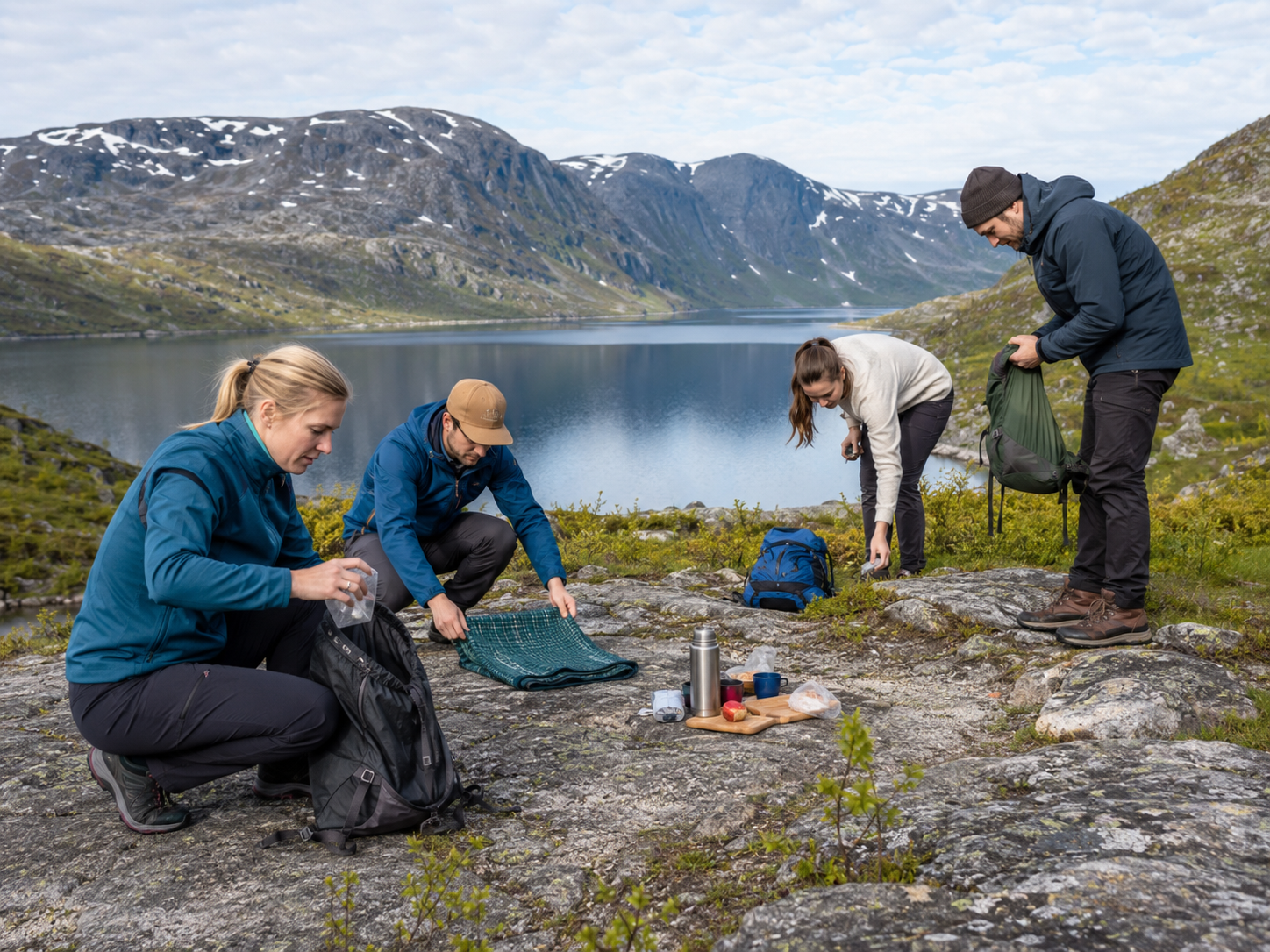
Norwegians have extensive access to forests, mountains, lakes and coastal areas, and spending time outdoors is an important part of life for many people.
This freedom is accompanied by clear expectations about how the landscape should be treated.
People are expected to take their rubbish home, avoid damaging vegetation and show consideration for wildlife, livestock and other visitors. Loud music may be accepted at a festival or organised campsite, but it can be poorly received in an otherwise quiet natural setting.
Campfires, tents and outdoor cooking also require awareness of the surroundings. Even when an activity is permitted, people are expected to consider fire risk, maintain an appropriate distance from homes and cabins and leave the area without visible damage.
These expectations are closely connected to the Norwegian right to roam. The right gives people considerable freedom to travel through and spend time in uncultivated land, but that freedom depends on responsible behaviour.
Access does not mean that the landscape belongs to whoever happens to be using it at the time. Other hikers, local residents, landowners, animals and future visitors must also be considered.
A person who leaves rubbish behind or behaves carelessly may receive little more than a disapproving look. The unwritten expectation is nevertheless clear: leave the place in the condition you would hope to find it.
Final Words
Norwegian social norms can be easy to misread when viewed from the outside.
Silence may appear unfriendly, personal space may feel distant, punctuality can seem rigid, and modesty may be mistaken for a lack of confidence. Yet these behaviours often make more sense when they are understood within the culture that shaped them.
Some norms are connected to wider cultural patterns, such as the strength of unwritten expectations, the Norwegian relationship with time and the ideal of social equality. Others have more practical origins, including the custom of removing outdoor shoes or the responsibility that comes with using shared spaces and nature.
What they have in common is that they are rarely explained directly. People learn them by observing what others do, noticing what is expected and gradually treating those expectations as ordinary.
There are always differences between individuals, generations and situations. A Norwegian may behave very differently with close friends than with strangers, in a business meeting than at home, or on a mountain trail than on a crowded train. Social norms are not fixed rules that determine every interaction, but they do influence what feels natural, polite or out of place.
Understanding Norwegian culture is therefore not about memorising a list of correct behaviours. It is about recognising the assumptions that shape everyday life and remembering that politeness does not look the same in every country.
Which of these Norwegian social norms surprised you the most? Have you noticed any others during a visit or while living in Norway? Share your experience in the comments. I would love to hear how they compare with the unwritten rules where you live.
Image note: Some of the images in this article were created using artificial intelligence for illustrative purposes.
More articles about Norway




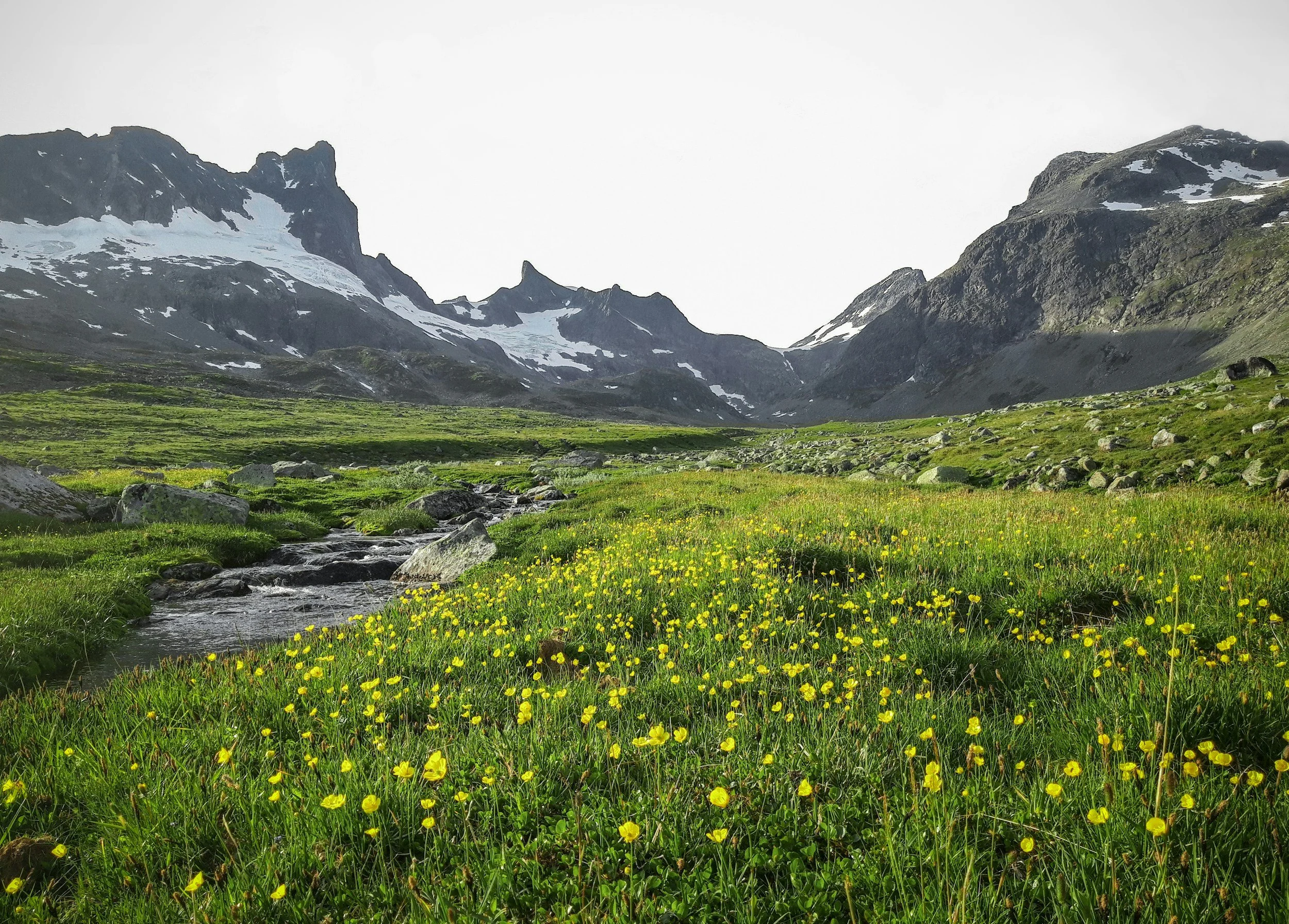













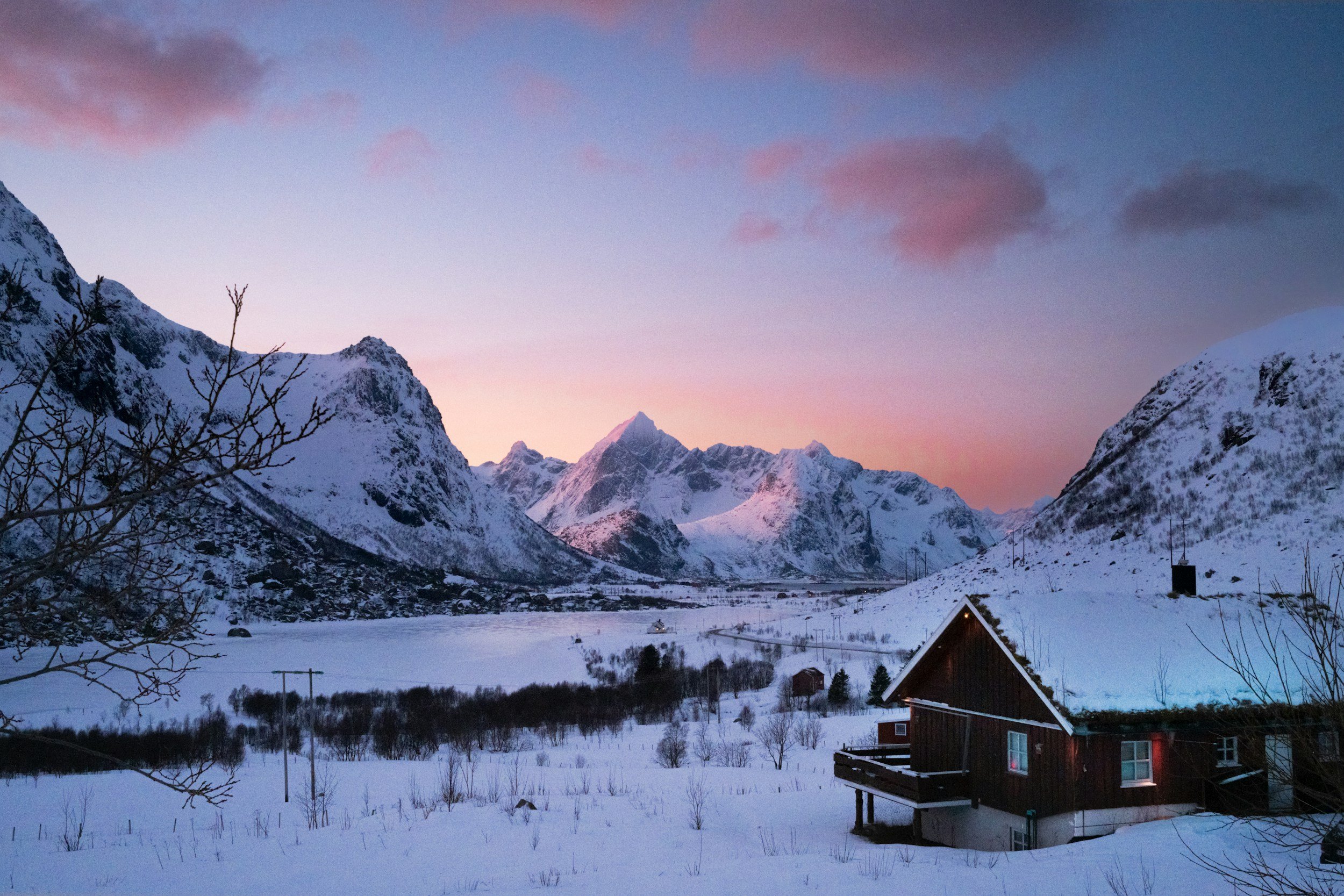


Norway is not dark all winter, but winter daylight varies enormously depending on where you travel. This guide explains how light changes between Oslo, Tromsø and Svalbard, and why December, February and March feel so different.