
Norwegian Food: The Dishes, Desserts and Traditions That Define Norway
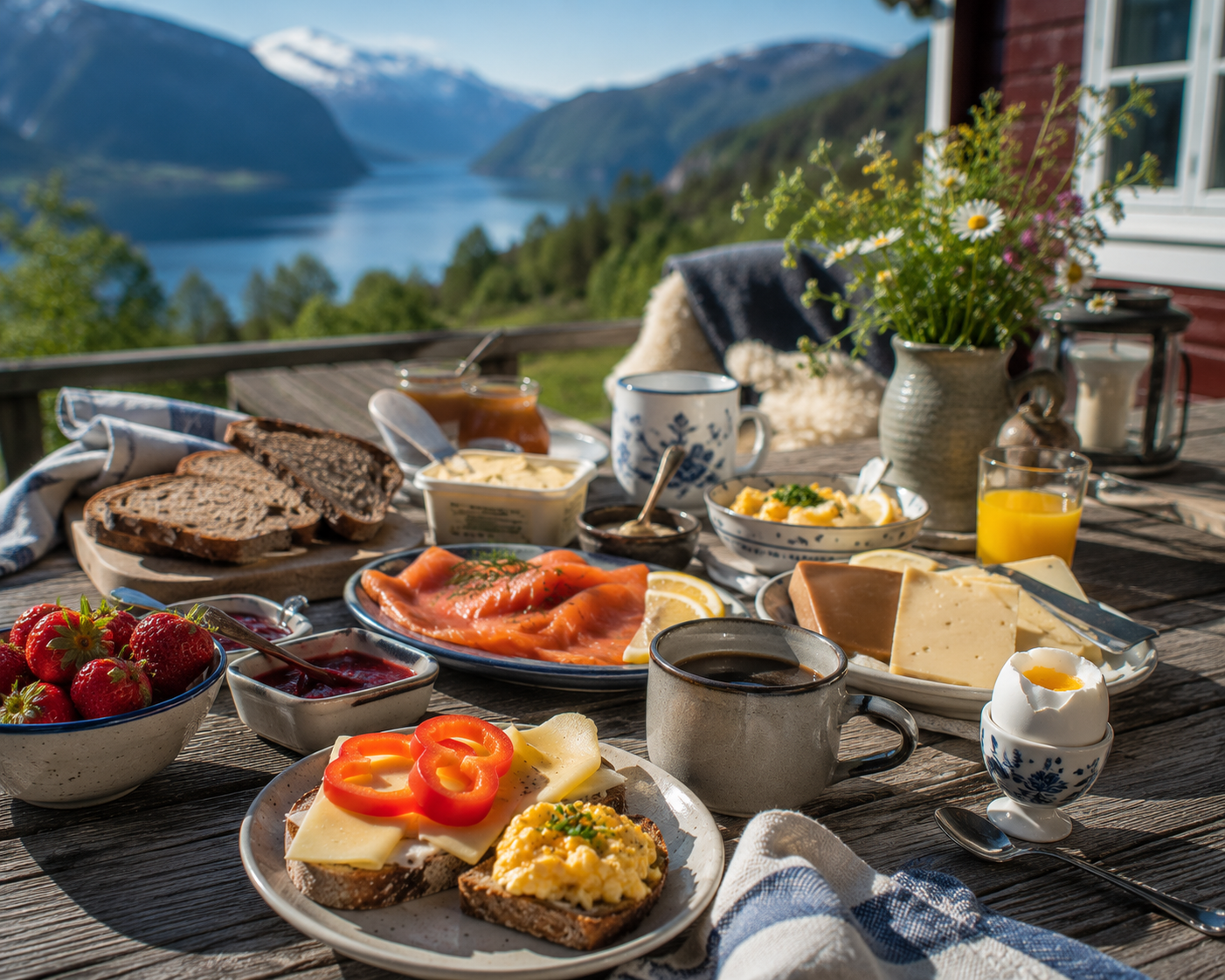
Norwegian food has never achieved the same international recognition as the cuisines of Italy, France or Japan. While dishes such as sushi, pizza and tacos are recognised around the world, few people outside Scandinavia could name more than a handful of traditional Norwegian foods.
One reason is that Norwegian cuisine developed from simple, practical cooking rather than elaborate culinary traditions. For centuries, everyday meals were built around the ingredients people could grow, raise, catch or forage themselves. Fish, lamb, beef, dairy products, grains, potatoes and root vegetables formed the foundation of the Norwegian diet, while preserving food for the long winter months was an essential part of everyday life.
Norwegian food has changed considerably since then. Walk through any Norwegian town or city today and you'll find Italian pizzerias, Thai restaurants, Indian curries, sushi bars and Middle Eastern cuisine alongside traditional cafés and bakeries. Friday tacos have become Norway's most popular family dinner, and generations of Norwegians have grown up with Grandiosa frozen pizza as a familiar part of everyday life.
Despite these international influences, traditional food remains an important part of Norwegian culture. Historic recipes are still prepared for Christmas, Easter and other celebrations, regional specialities continue to be enjoyed across the country, and many classic dishes continue to be passed from one generation to the next.
This guide explores Norwegian food from both a historical and modern perspective. You'll discover how Norwegian cuisine developed, how geography influenced regional food traditions, the dishes and desserts that have become part of the country's culinary identity, and the everyday eating habits that continue to shape Norwegian food today.
PS: Some of the images are AI images, as I am neither a chef nor a food photographer, but I do believe that seeing a photo of the actual food provides so much more than only reading about it, and I have tried to generate photos that best depict the way a dish would look.
The History of Norwegian Food
For much of Norway's history, food was determined by geography, climate and necessity. A short growing season, long winters and a rugged landscape limited what could be cultivated, while mountains, forests and one of the world's longest coastlines provided very different resources depending on where people lived.
Along the coast, fishing supplied both food and income, while inland communities relied more heavily on farming, livestock and dairy production. Hunting, foraging and small-scale agriculture supplemented everyday meals, and diets varied considerably between regions according to local conditions.
Making food last through the winter was just as important as producing it. Drying, smoking, salting, curing and fermenting allowed fish, meat and dairy products to be stored for months, reducing waste and ensuring families had food long after the harvest had ended. Many of Norway's best-known foods originated from these preservation methods and remain part of Norwegian cuisine today.
The Norwegian diet gradually became more varied during the eighteenth and nineteenth centuries. Potatoes were widely adopted and eventually became one of the country's most important staple foods. Coffee developed into a daily ritual, while improved transport and trade made new ingredients increasingly available across the country. Refrigeration and industrial food production later reduced the need for traditional preservation methods, although many of the foods themselves remained closely associated with Norwegian culture and celebrations.
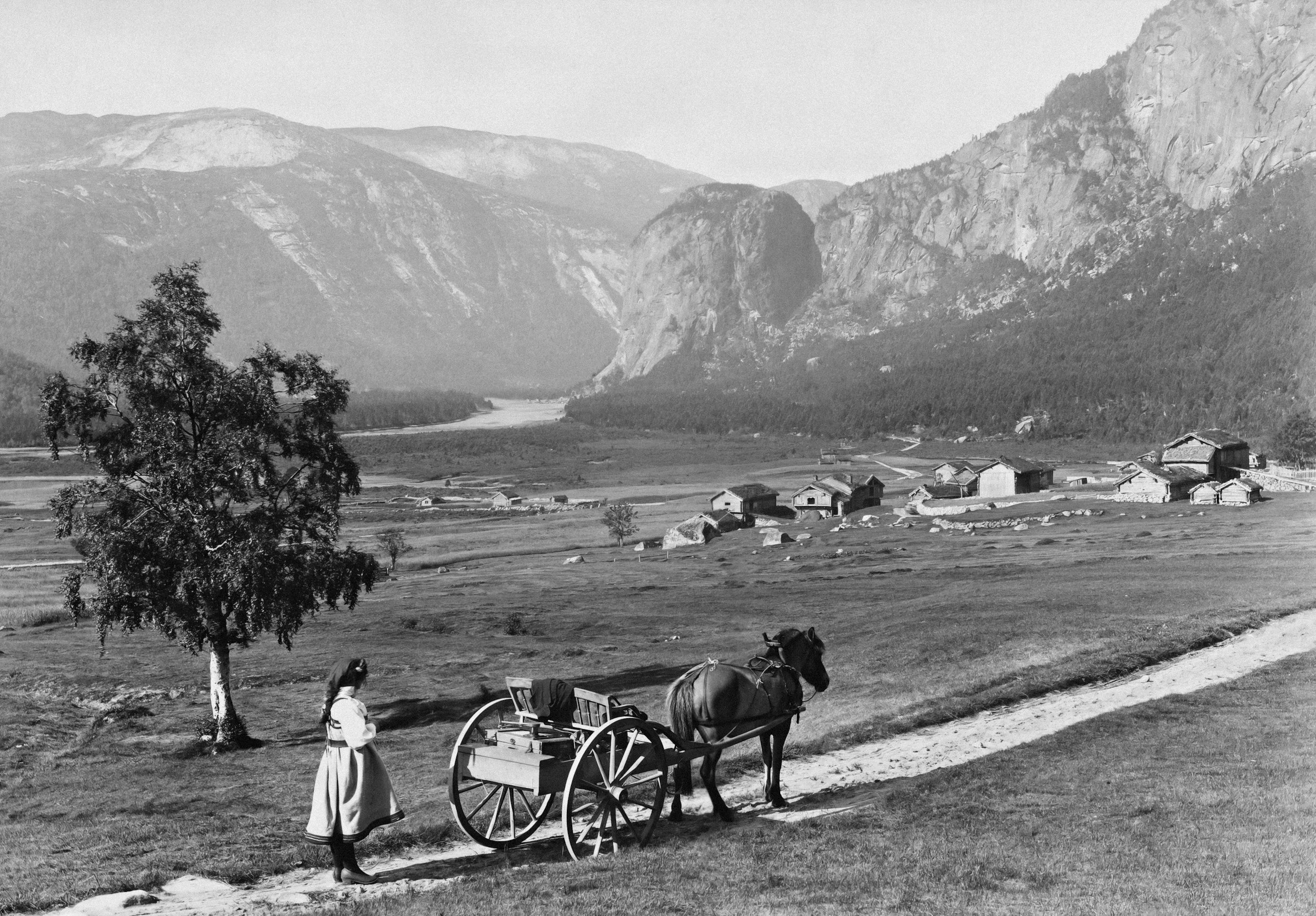
How Geography Shaped Norwegian Food
Although many traditional dishes are now enjoyed throughout Norway, they often originated in regions where particular ingredients were most abundant. Norway's varied landscapes created distinct local food traditions that still influence the country's cuisine today.
Along the Coast
Fishing has shaped life along the Norwegian coast for centuries. Cod, herring, salmon and shellfish became everyday staples, while drying and salting fish created products that could be stored for months and exported across Europe.
Inland Valleys and Farmland
The fertile farmland of eastern Norway supported grain cultivation, dairy farming and livestock. These ingredients became the basis of many hearty dishes, as well as the breads, porridges and baked goods that formed part of everyday life.
Mountains and Fjords
Mountain communities often depended on sheep, goats and dairy farming. Limited farmland encouraged people to make full use of every resource, resulting in traditions centred around preserved meats, cheeses and substantial meals suited to physically demanding work and harsh winters.
The Arctic North
Northern Norway's food culture developed around Arctic seafood and reindeer, reflecting the region's climate, coastline and long traditions of fishing and reindeer herding.
Although each region developed its own specialities, the same principles can be seen throughout Norwegian food culture: making use of local ingredients, avoiding waste and adapting recipes to the landscape. These traditions continue to influence both classic dishes and modern Norwegian cuisine.
Traditional Norwegian Dishes
Traditional Norwegian cooking developed around one simple idea: make the most of what was available. Families relied on ingredients that could be grown, hunted, fished or preserved locally, resulting in meals that were nourishing, filling and often surprisingly simple. While some dishes were everyday staples and others were reserved for celebrations, they all reflect the landscapes and lifestyles that shaped Norway for centuries.
Although modern Norwegians enjoy cuisines from around the world, these traditional dishes remain an important part of the country's food culture. Some are still served regularly in family homes, while others are closely associated with Christmas, autumn or special occasions.
Meat and Farmhouse Dishes
Fårikål (Mutton and Cabbage Stew)
Often described as Norway's national dish, fårikål (mutton and cabbage stew) is a celebration of simplicity. The dish contains just a handful of ingredients: bone-in mutton, cabbage, whole black peppercorns and water. Everything is layered into a large pot and gently simmered for several hours until the meat becomes tender and the cabbage absorbs the rich cooking broth.
Fårikål has its roots in Norway's farming communities, where sheep grazed freely on mountain pastures during the summer. The dish became particularly popular because both lamb and cabbage were plentiful in early autumn, making it an ideal seasonal meal after the harvest.
Today, fårikål is strongly associated with September and October. Restaurants often add it to their menus during autumn, supermarkets promote the "fårikål season," and many families gather to enjoy what has become one of Norway's most iconic comfort foods. It is traditionally served with boiled potatoes and is even better the following day, when the flavours have had time to develop.
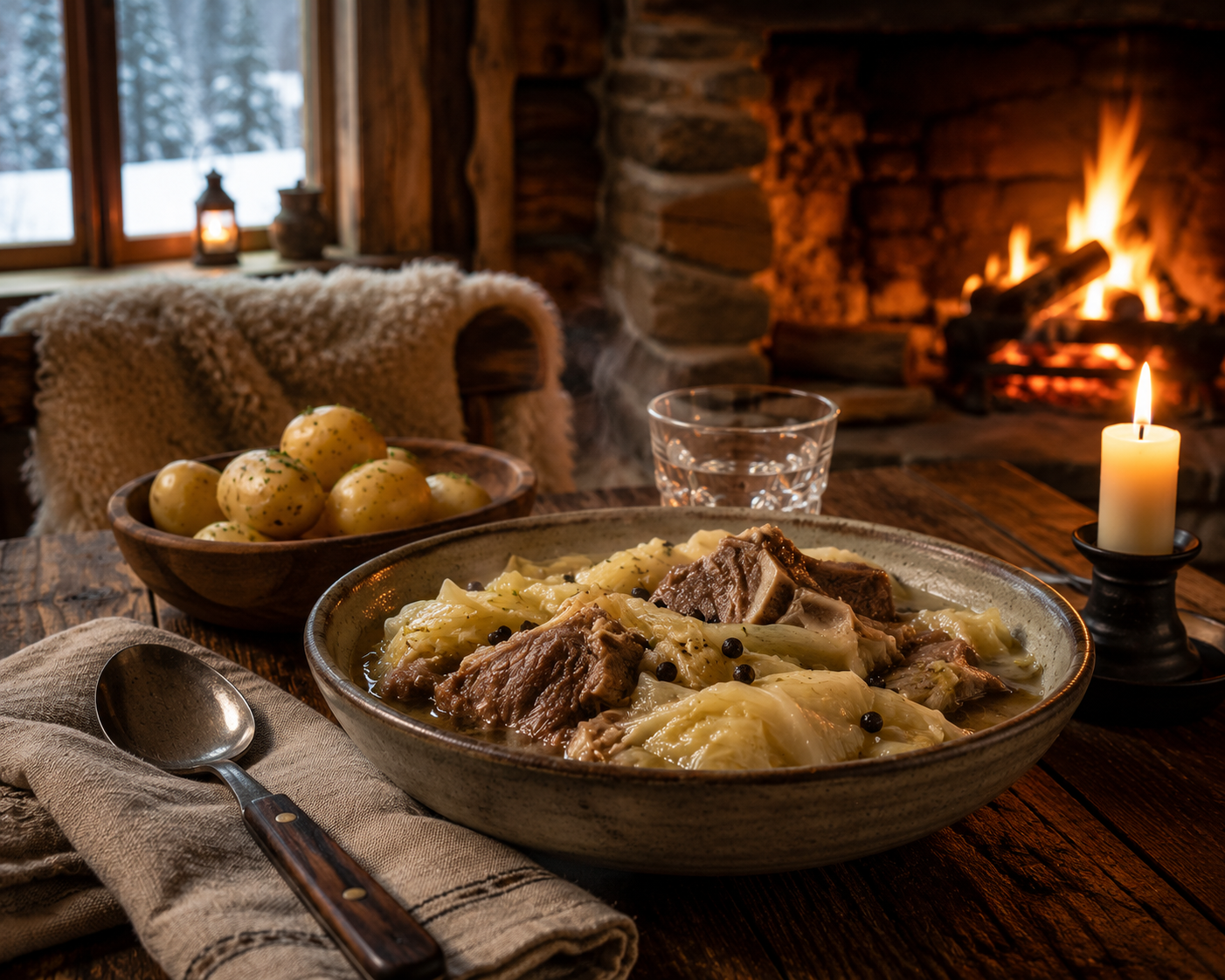
Fårikål is often called Norway's national dish, and for good reason. Made with just lamb, cabbage, whole black peppercorns and a little water, it proves that simple ingredients can create remarkable flavour. Traditionally served with boiled potatoes, this slow-cooked autumn meal has brought families together around the dinner table for generations and remains one of Norway's most cherished comfort foods.
Kjøttkaker (Norwegian Meatballs)
Although they are often compared with Swedish meatballs, kjøttkaker (Norwegian meatballs) are a very different dish. They are larger, softer and served as a hearty family dinner rather than as a small appetiser.
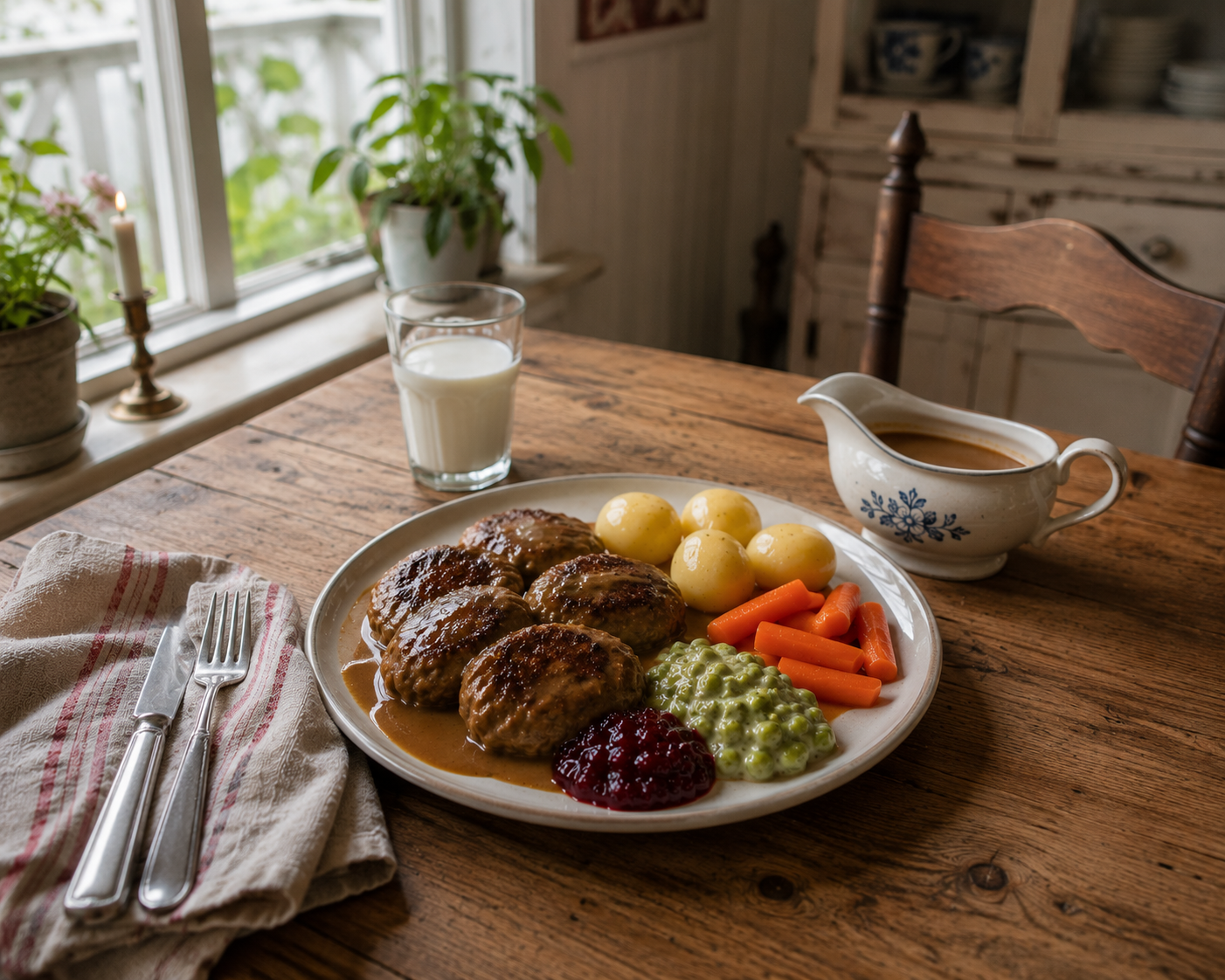
Made from minced beef mixed with onion, breadcrumbs, milk and seasoning, the meatballs are pan-fried before being served in a rich brown gravy. A traditional meal is completed with boiled potatoes, peas or cabbage, carrots and a spoonful of lingonberry jam, whose sweetness balances the savoury sauce.
Kjøttkaker remain one of Norway's best-loved home-cooked meals. Every family has its own recipe, and many Norwegians associate the dish with Sunday dinners, grandparents and childhood memories.
Lapskaus (Meat and Vegetable Stew)
Few dishes capture the essence of Norwegian comfort food better than lapskaus (meat and vegetable stew). This hearty one-pot meal combines beef or lamb with potatoes, carrots, swede and other root vegetables, all slowly cooked together until thick and full of flavour.
Historically, lapskaus was an economical way to use leftover meat and seasonal vegetables, making it particularly popular among farming families. It required little preparation, could feed a large household and was perfect for cold winter days.
Different parts of Norway have their own versions. Some recipes use fresh beef, while others are prepared with salted meat. It is commonly served with buttered flatbread and remains a popular meal in Norwegian homes today.
Komle (Norwegian Potato Dumplings)
Known by many names including komle, raspeball, potetball and klubb, these potato dumplings are one of Norway's most regional dishes. The ingredients are simple: grated potatoes, flour and salt, shaped into dumplings before being boiled until firm.
Depending on where you are in Norway, komle may be served with salted lamb, bacon, pork, sausages, mashed swede or melted butter. Some traditional recipes even hide a piece of salted meat inside each dumpling.
The many regional names reflect just how deeply rooted the dish is in local traditions. Ask Norwegians which version is best and you are likely to receive several different answers.
Reindeer (Reinsdyr)
Reinsdyr (reindeer) has been an important food source in Northern Norway for centuries, particularly within Sámi culture, where reindeer herding remains central to both livelihoods and identity.
The meat is lean, tender and full of flavour, often compared to venison. It is commonly served as roasted fillet or steak with potatoes, mushrooms, seasonal vegetables, a creamy game sauce and lingonberries. Slow-cooked reindeer stews are equally popular, especially during the colder months.
Although reindeer appears on restaurant menus throughout Norway, it is most closely associated with the Arctic north and offers visitors a taste of one of the country's oldest culinary traditions.
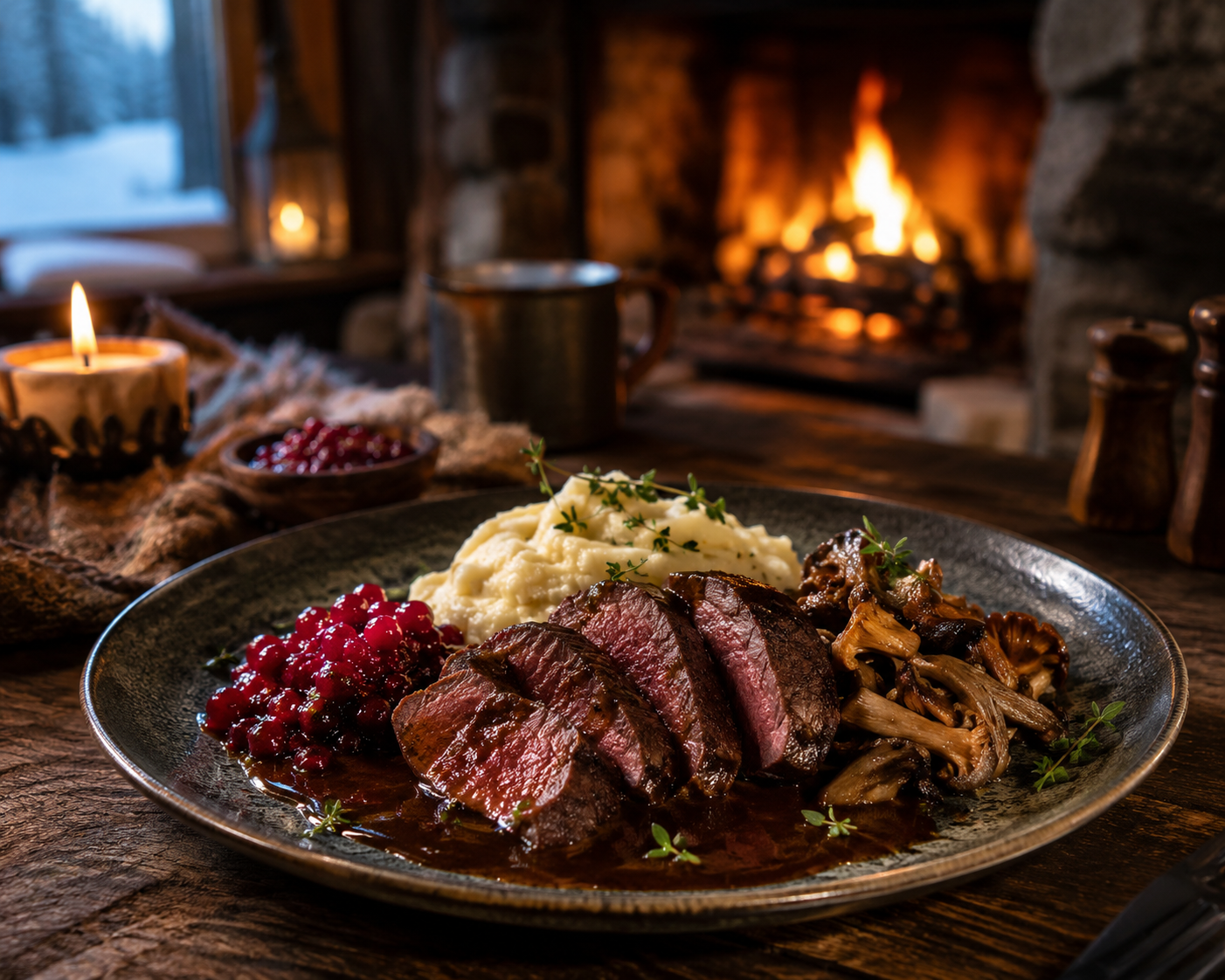
Reindeer has been part of life in Northern Norway and Sápmi for centuries, valued for its rich flavour and ability to thrive in the Arctic landscape. Today, it remains one of Norway's most distinctive traditional dishes, often served with creamy mashed potatoes, wild mushrooms, lingonberries and a rich game sauce. The combination of sweet, earthy and savoury flavours is a classic example of Norwegian mountain cuisine, where simple local ingredients come together to create a comforting meal.
Fish and Seafood Dishes
Laks med Sandefjordsmør (Salmon with Sandefjord Butter Sauce)
Fresh salmon is one of Norway's most famous ingredients, but one of its most traditional presentations is laks med Sandefjordsmør (salmon with Sandefjord butter sauce).
The dish consists of gently cooked salmon served with boiled potatoes and Sandefjordsmør, a silky sauce made from butter, cream, lemon and fresh herbs. Named after the coastal town of Sandefjord, the sauce enhances the delicate flavour of the fish without overpowering it.
It is a classic restaurant dish that showcases the quality of Norwegian salmon and demonstrates how traditional Norwegian cooking often relies on excellent ingredients rather than complex preparation.
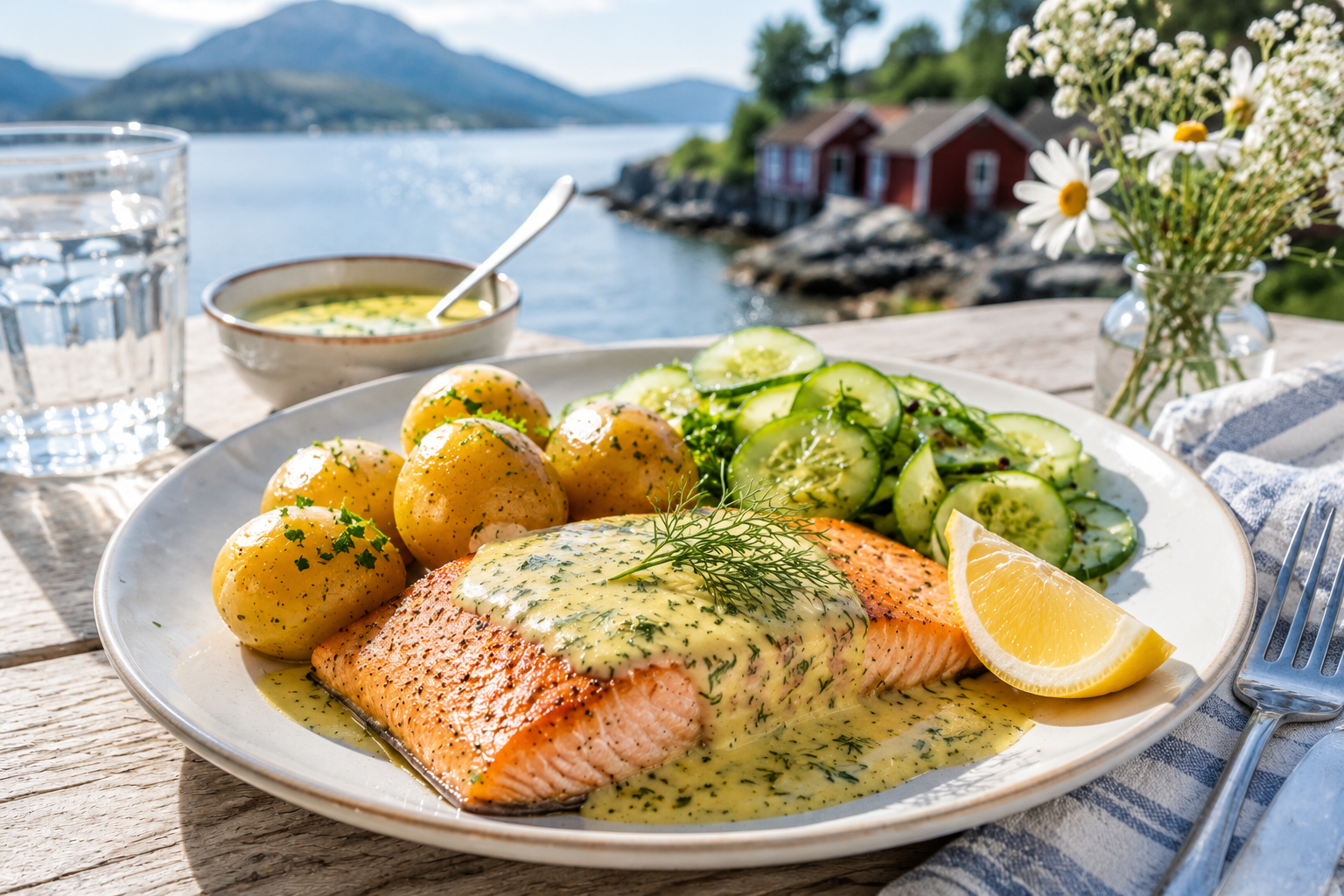
A classic Norwegian salmon dinner served with Sandefjordsmør, boiled new potatoes and cucumber salad. Originating in the coastal town of Sandefjord, Sandefjordsmør is a rich butter sauce made with butter, cream, egg yolks and fresh herbs. Together with fresh salmon and simple seasonal ingredients, it is one of Norway's most iconic seafood dishes.
Gravlaks (Cured Salmon)
Gravlaks (cured salmon) dates back to the Middle Ages, when fishermen lightly salted freshly caught salmon before burying it in the sand above the high tide line to ferment. Modern gravlaks is no longer buried, but it is still cured using salt, sugar and plenty of fresh dill.
Thin slices are traditionally served with mustard sauce, bread or crispbread and are particularly popular during Christmas, Easter and festive buffets. Gravlaks has also become one of Norway's best-known culinary exports and appears on menus throughout Scandinavia.
Skrei med Lever og Rogn (Arctic Cod with Liver and Roe)
Every winter, mature Arctic cod migrate from the Barents Sea to the Norwegian coast to spawn. This fish is known as skrei, and its arrival marks one of the highlights of the Norwegian fishing calendar.
The most traditional way to enjoy it is skrei med lever og rogn (Arctic cod with liver and roe). The cod is gently cooked and served with boiled potatoes, cod liver, roe and melted butter. While this combination may seem unusual to visitors, it reflects an older Norwegian tradition of using every edible part of the fish.
Skrei season runs from January to April, and many restaurants across Norway create seasonal menus celebrating this prized ingredient.
Fiskekaker (Norwegian Fish Cakes)
Fiskekaker (Norwegian fish cakes) have been a staple of Norwegian home cooking for generations. Made primarily from finely minced white fish combined with milk, flour or potato starch, they are lightly fried until golden.
Recipes vary across the country. Some contain almost pure fish, while others have a softer texture created by a larger proportion of starch. Fresh fish cakes from local fishmongers are widely considered the best.
They are traditionally served with boiled potatoes, grated carrots and peas, although many Norwegians also enjoy them cold in a bread roll with lettuce and remoulade.
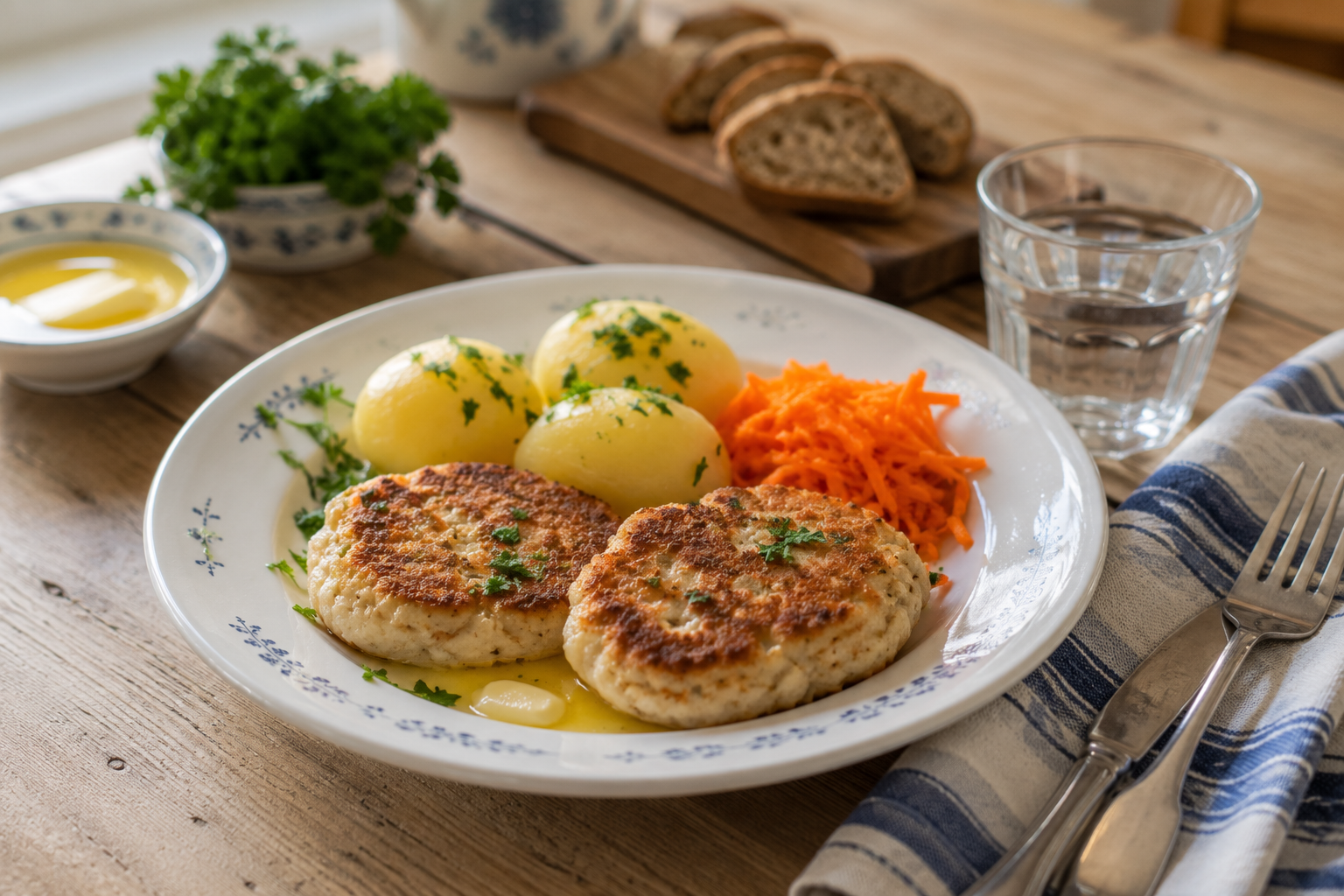
Fish cakes have been a staple of Norwegian cooking for generations. Originally created as an affordable way to make fresh fish go further, they remain one of the country's most popular everyday meals, enjoyed by families across Norway.
Fiskeboller i Hvit Saus (Fish Dumplings in White Sauce)
For many Norwegians, fiskeboller i hvit saus (fish dumplings in white sauce) are the definition of comfort food.
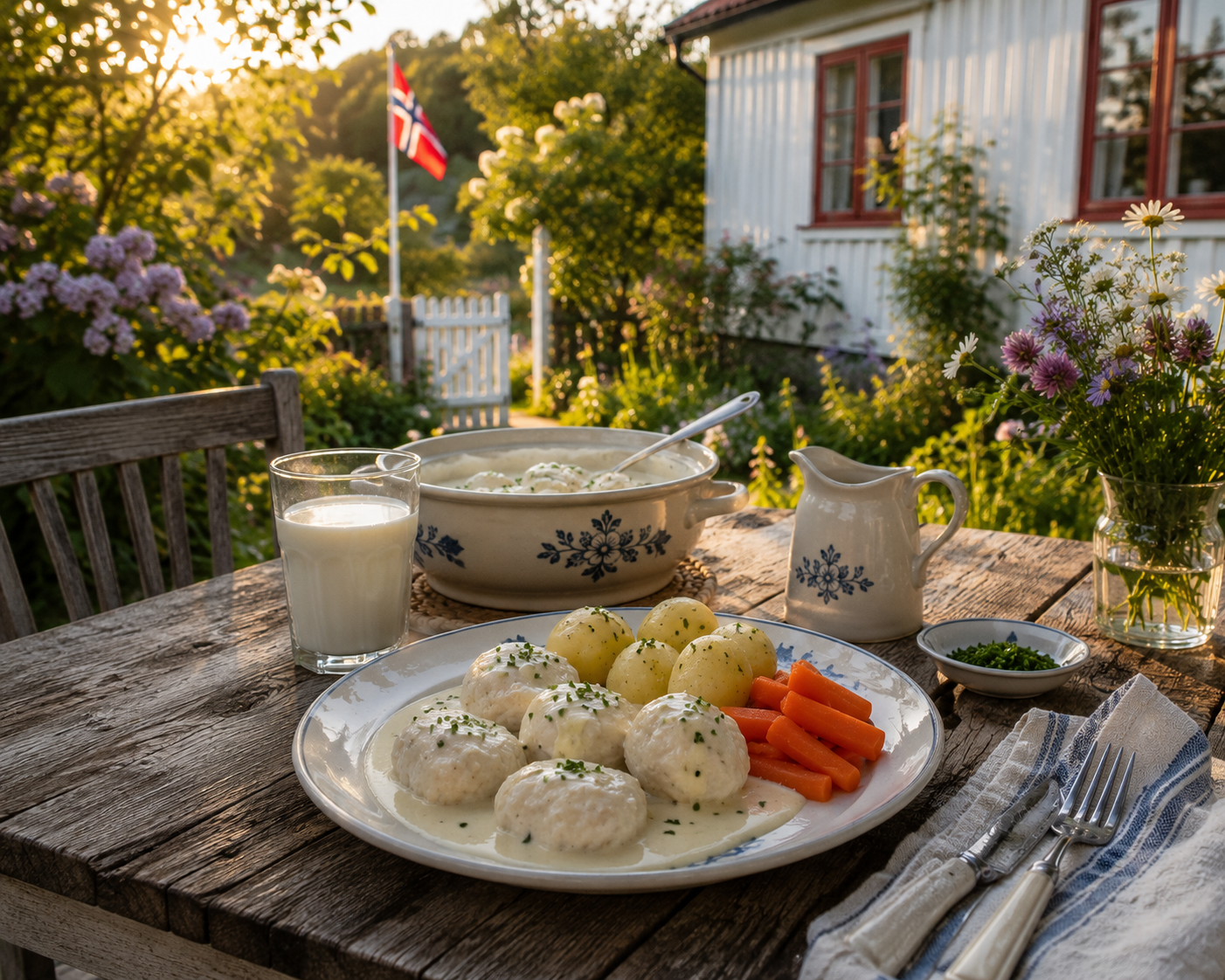
The soft fish dumplings are made from finely minced white fish before being gently cooked and served in a creamy white sauce. A traditional meal includes boiled potatoes, carrots and sometimes crispy bacon, which provides a salty contrast to the mild fish.
While simple, the dish remains a nostalgic favourite that has appeared on Norwegian dinner tables for decades.
Lutefisk (Lye Fish)
Few dishes are more closely associated with Christmas than lutefisk (lye fish). Made from dried cod that has been rehydrated and treated with lye before being soaked again, the preparation gives the fish its distinctive soft texture.
Lutefisk is traditionally served with boiled potatoes, pea purée, crispy bacon, mustard and melted butter. Although it divides opinion, many Norwegian families continue to enjoy it every Christmas as part of a long-standing festive tradition.
Rakfisk (Fermented Trout)
One of Norway's oldest preserved foods is rakfisk (fermented trout). The trout is salted and fermented for several months before being eaten without cooking.
Its powerful aroma and distinctive flavour make it an acquired taste, even among Norwegians. It is traditionally served with lefse, boiled potatoes, sour cream, chopped red onion and beetroot.
Rakfisk is particularly associated with the Valdres region, where an annual festival celebrates this centuries-old tradition.
Reker med Loff og Majones (Norwegian Shrimp Feast)
A bowl of freshly cooked shrimp may seem simple, but reker med loff og majones (shrimp with white bread and mayonnaise) is one of Norway's most beloved summer meals.
Fresh shrimp are served cold alongside soft white bread, butter, mayonnaise, lemon and dill. Rather than being a formal dinner, it is a relaxed meal shared with family and friends on balconies, boats, coastal cabins and harbours during long summer evenings.
For many Norwegians, peeling shrimp together is as much a social tradition as it is a meal, making it one of the country's most recognisable seasonal food experiences.
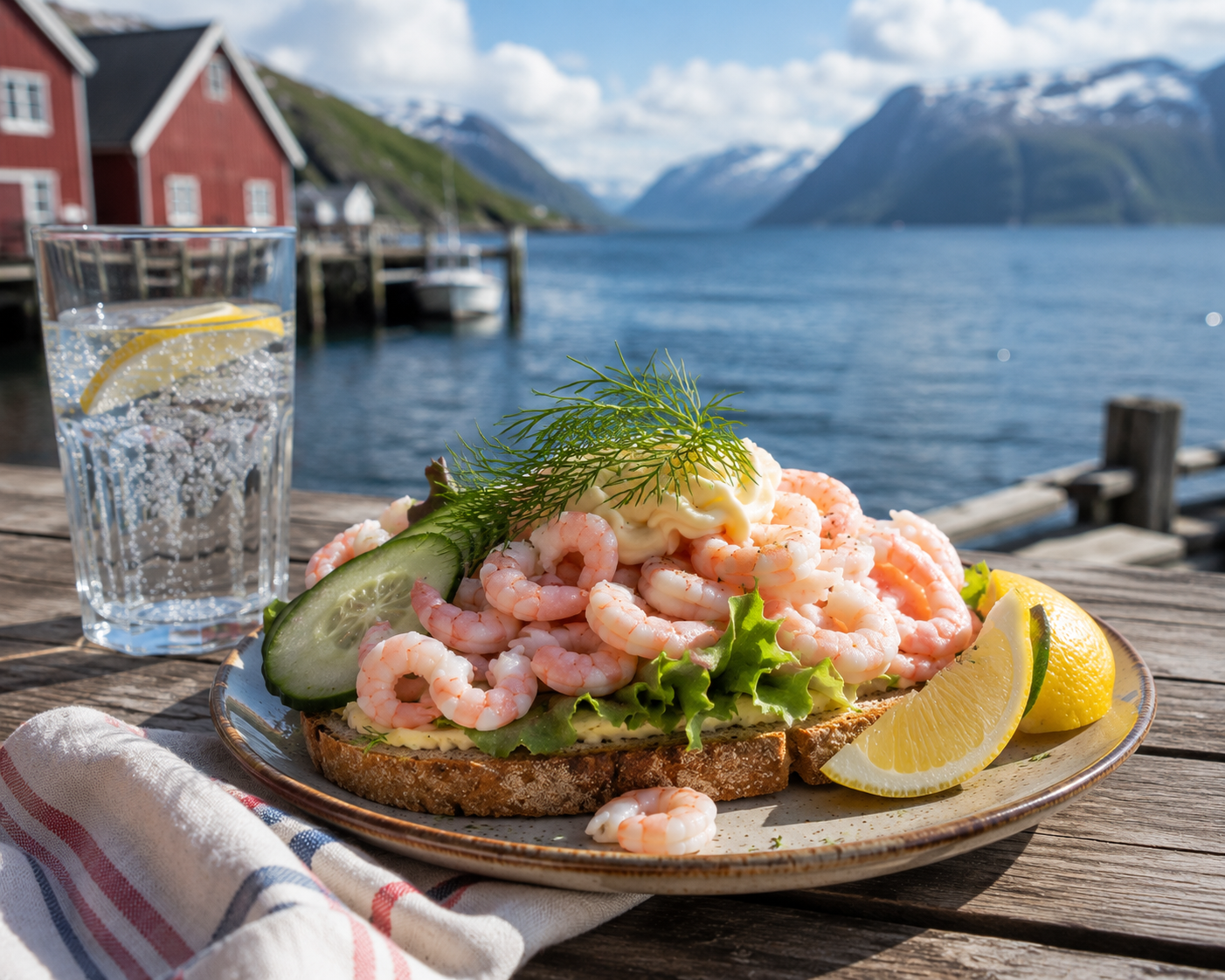
Open shrimp sandwiches are a true taste of the Norwegian summer. Typically served on fresh bread with crisp lettuce, mayonnaise, cucumber, lemon and plenty of sweet cold-water shrimp, they are a favourite at seaside cafés, harbour restaurants and family gatherings. Simple, fresh and packed with flavour, few meals capture Norway's coastal food culture quite like a classic rekesmørbrød.
Porridges and Traditional Rural Specialities
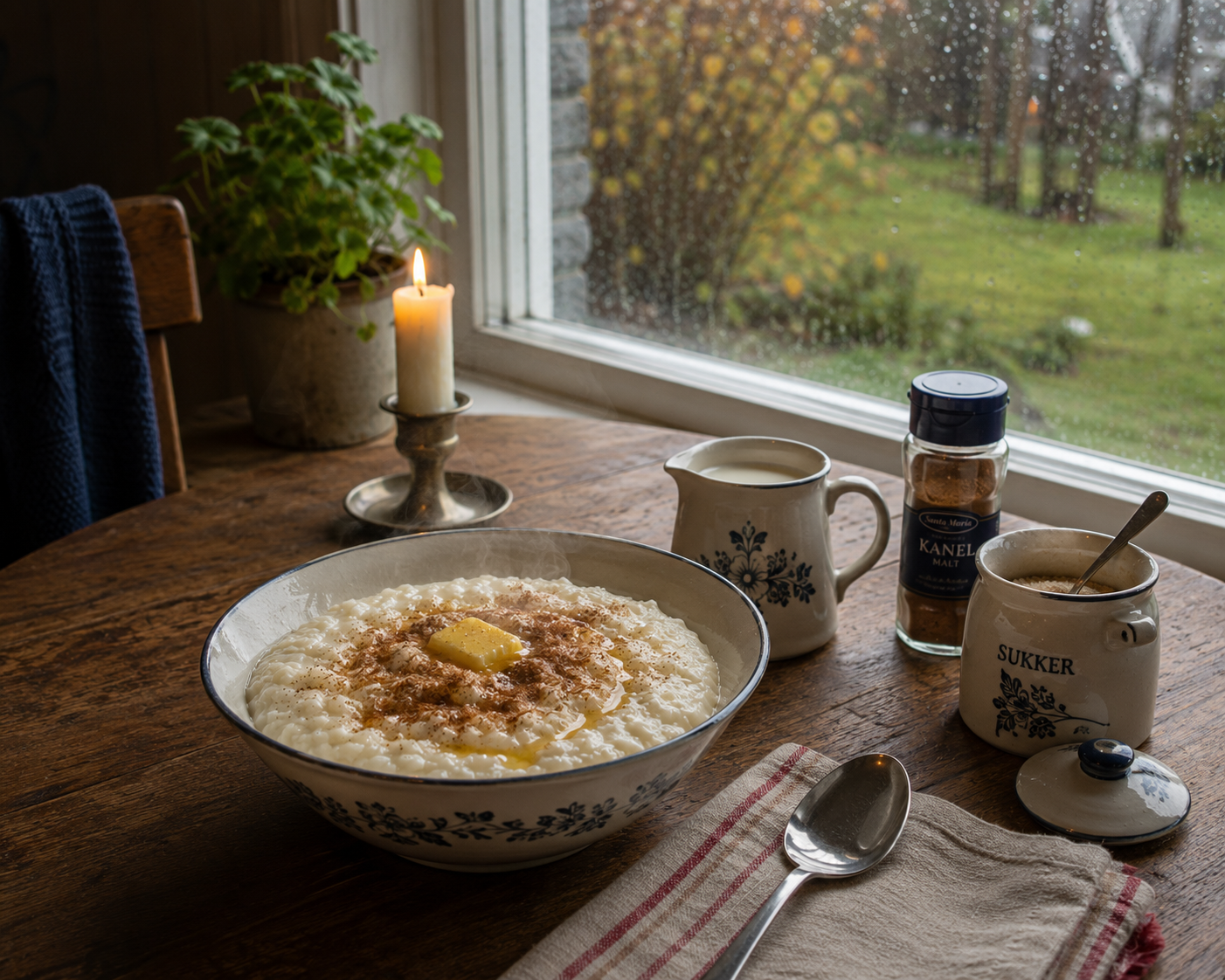
Risgrøt (Rice Porridge)
Although rice is not native to Norway, risgrøt (rice porridge) has become one of the country's most cherished traditional dishes. Slowly cooked in milk until thick and creamy, it is served with butter, cinnamon and sugar.
Throughout December, many families hide a single almond in the pot. Whoever finds it wins a small prize, usually a marzipan pig, making risgrøt a favourite Christmas tradition for both children and adults.
Rømmegrøt (Sour Cream Porridge)
Rømmegrøt (sour cream porridge) is one of Norway's oldest surviving dishes. Made from sour cream, flour, milk and butter, it has a rich, silky texture and is traditionally topped with melted butter, cinnamon and sugar.
Historically, it was considered a luxury because dairy products were valuable. It was therefore reserved for weddings, harvest festivals and other important celebrations.
Today, rømmegrøt is especially popular during the summer and on Norway's Constitution Day, 17 May. It is often served alongside spekemat (cured meats), creating the sweet-and-savoury combination that has become a classic feature of Norwegian food culture.
Preserved Food and Coastal Traditions
Many of Norway's most distinctive foods are not dishes in the traditional sense, but ingredients and preservation methods that helped people survive in a country with long winters and limited access to fresh food. Long before refrigeration, fish and meat had to last for months, sometimes until the following fishing season or harvest. Drying, salting, smoking and fermenting became essential skills, and these techniques shaped Norwegian cuisine just as much as the recipes themselves.
Although supermarkets have replaced the old food stores found on farms and in fishing villages, many of these traditions continue today. Some preserved foods are still everyday ingredients, while others have become delicacies or are enjoyed mainly during holidays and festivals.
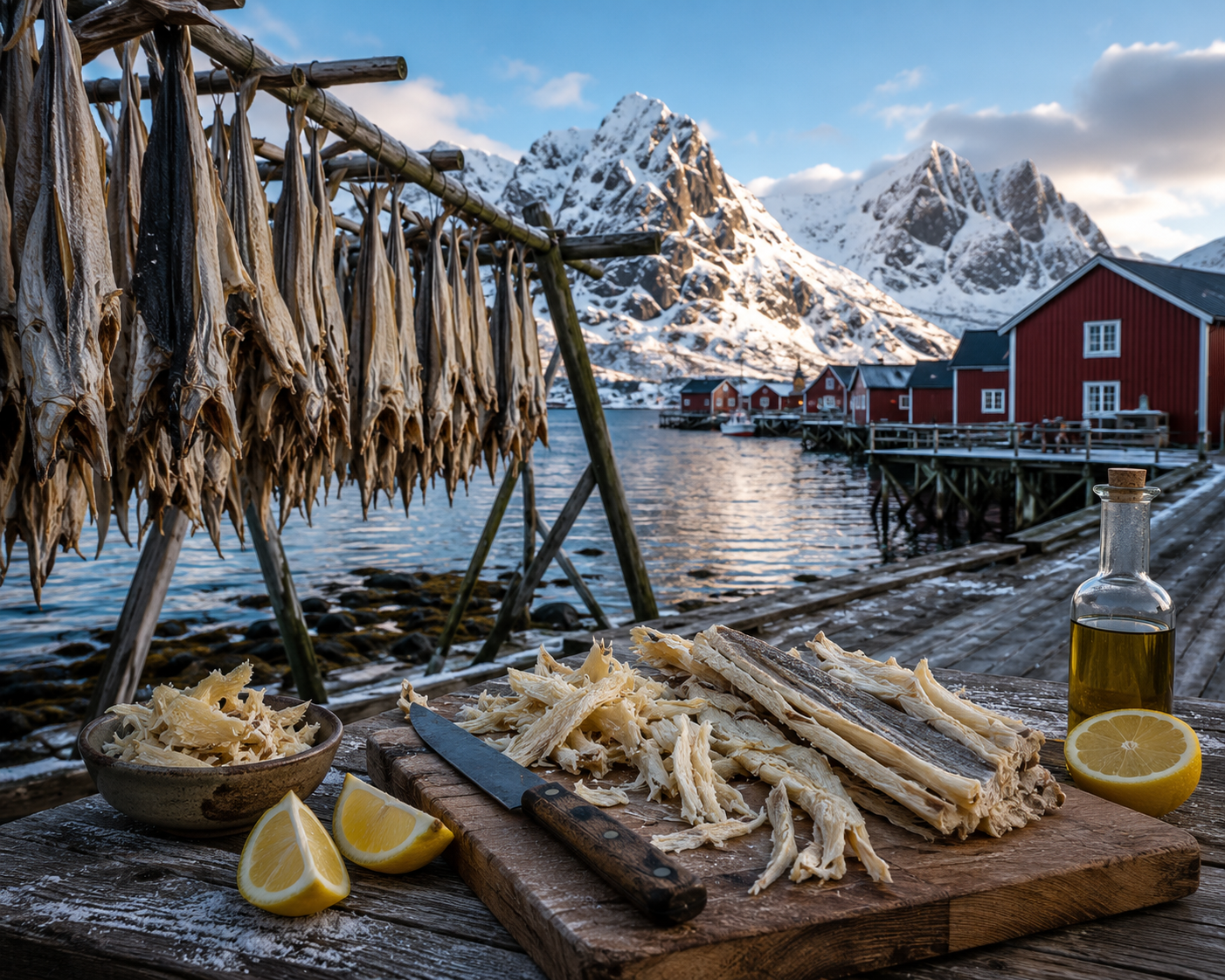
Tørrfisk (Stockfish)
One of Norway's oldest and most important food products is tørrfisk (stockfish). Fresh cod is hung on large wooden drying racks during late winter, where the cold Arctic air and coastal winds slowly remove the moisture without the need for salt or artificial preservation.
This natural drying process has been used for more than a thousand years and transformed Norway into one of Europe's most important seafood exporters. During the Viking Age and the Middle Ages, stockfish was traded across Europe, providing food for sailors, merchants and entire cities while creating wealth for coastal communities in Northern Norway.
Today, the Lofoten Islands are the region most closely associated with stockfish production. During late winter and early spring, thousands of cod hang from traditional drying racks, creating one of Norway's most iconic coastal landscapes.
Although relatively little stockfish is eaten in Norway compared with earlier centuries, it remains an important part of the country's culinary heritage and is highly valued in countries such as Italy and Croatia, where Norwegian stockfish continues to feature in traditional recipes.
Klippfisk (Salted and Dried Cod)
While stockfish relies entirely on cold air for preservation, klippfisk (salted and dried cod) follows a different process. Fresh cod is heavily salted before being dried, producing a fish that can be stored for long periods while developing its characteristic flavour and texture.
The name comes from the traditional practice of drying fish on smooth coastal rocks, known as klipper. Although production is now carried out using modern drying facilities, the historic name remains.
Klippfisk became particularly important during the eighteenth and nineteenth centuries, when Norway developed strong trading links with Portugal and Spain. Even today, much of the cod used in Portuguese bacalhau originates from Norway, making it one of the country's most successful culinary exports.
Before cooking, klippfisk must be soaked for one to three days to remove excess salt. Once rehydrated, it is used in a wide variety of dishes both in Norway and internationally.
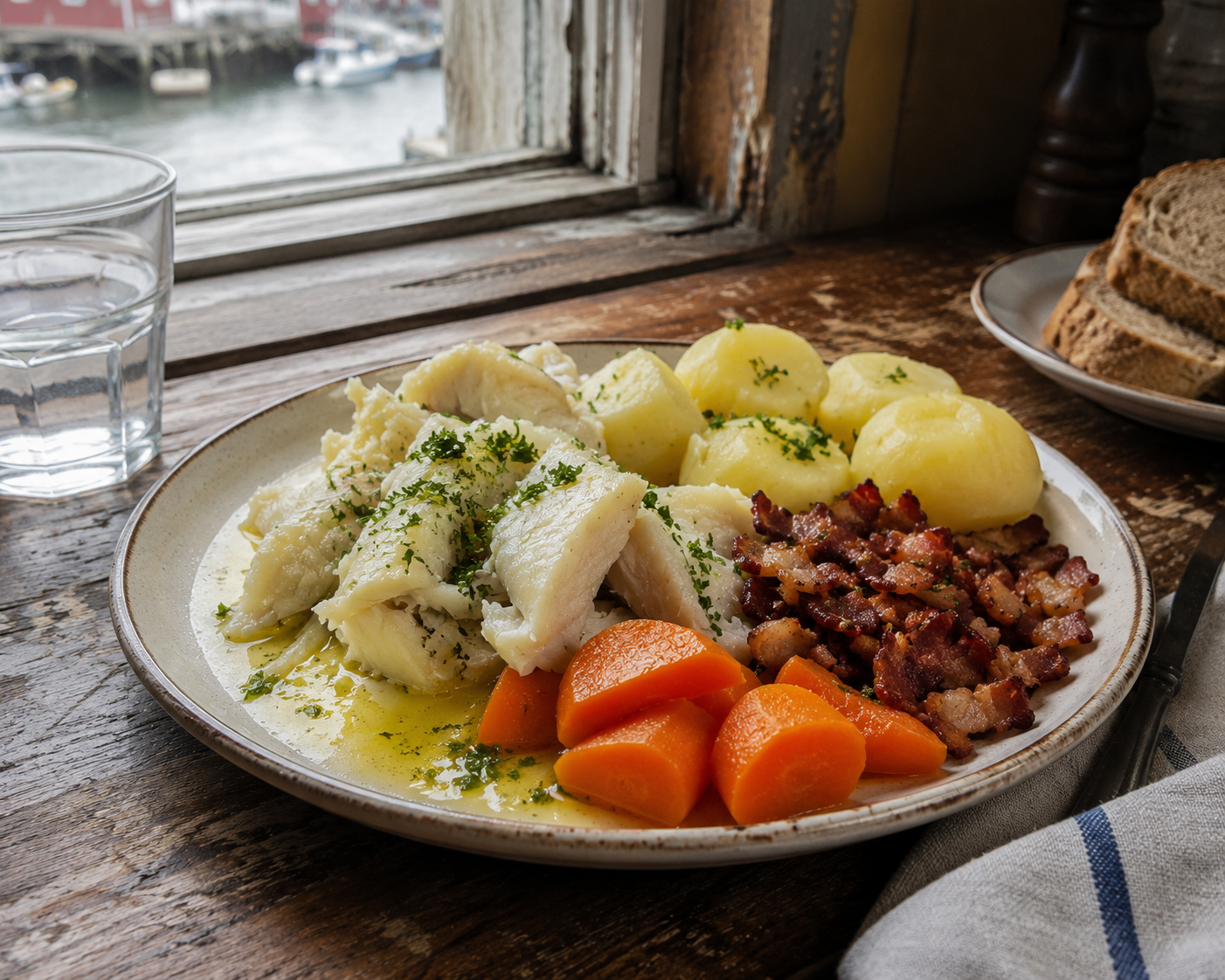
A traditional Norwegian clipfish dinner served the way it has been enjoyed for generations. Tender salted cod is paired with boiled potatoes, sweet carrots, crispy bacon and melted butter, creating a simple yet comforting meal that remains a favourite in many Norwegian homes, particularly along the country's west coast.
Spekemat (Cured Meats)
Fish was not the only food preserved for the winter. Across rural Norway, families also relied on spekemat (cured meats), a broad term that includes salted, air-dried and cured meats such as ham, lamb and sausages.
These products were traditionally prepared during autumn after livestock had been slaughtered, ensuring there would be enough food throughout the winter months. Mountain air and cool temperatures created ideal conditions for slow curing, and many regions developed their own recipes and techniques.
Today, spekemat is commonly served as part of a cold buffet with flatbread, sour cream, scrambled eggs, potato salad or rømmegrøt (sour cream porridge). It remains especially popular during summer gatherings and on Norway's Constitution Day on 17 May.
Brown Cheese (Brunost)
Although technically a cheese, brunost (brown cheese) deserves a place among Norway's most distinctive traditional foods because it is unlike almost anything found elsewhere in the world.
Rather than being made from cheese curds, brunost is produced by slowly boiling whey until the natural milk sugars caramelise. This gives the cheese its characteristic brown colour, smooth texture and sweet, caramel-like flavour.
Brown cheese is most commonly eaten in thin slices on bread, crispbread or waffles and is a familiar part of everyday breakfasts and packed lunches. Several varieties exist, but Gudbrandsdalsost, made using a mixture of goat's milk and cow's milk, is the version most visitors encounter.
For many Norwegians, brunost is not a special occasion food but an everyday staple that has become one of the country's most recognisable culinary symbols.
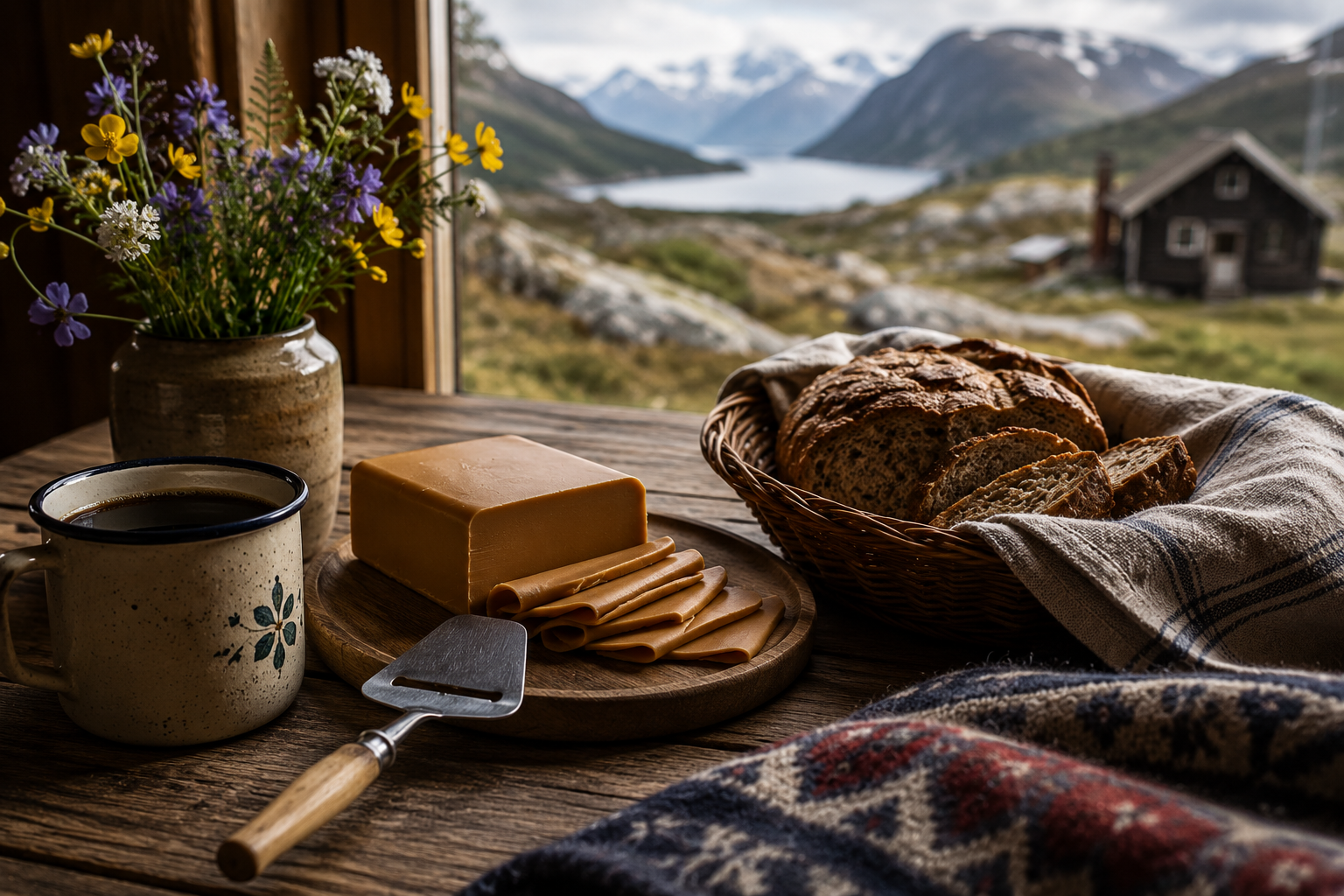
Fresh bread, brunost and coffee are a familiar sight in Norwegian cabins. Simple, comforting and deeply rooted in everyday life, they have become part of the rituals that accompany long hikes, ski trips and slow mornings surrounded by nature.
Flatbrød (Crispbread) and Knekkebrød (Crispbread)
Long before bakeries and supermarkets, Norwegian households baked breads designed to last for months.
Flatbrød (traditional crisp flatbread) has been eaten in Norway since Viking times. Made from simple ingredients such as barley, oats or rye, it was rolled into extremely thin rounds before being baked until completely dry. Because it contained almost no moisture, it could be stored throughout the winter without spoiling.
Modern Norwegians also eat large quantities of knekkebrød (crispbread), which has become a popular everyday alternative to ordinary bread. While knekkebrød is a more modern product than traditional flatbrød, both reflect Norway's long history of creating foods with an exceptionally long shelf life.
A Tradition Built Around Preservation
Today, Norwegians have access to fresh ingredients from all over the world, yet many of these preservation methods remain an important part of the country's culinary identity. Stockfish and klippfisk continue to support coastal industries, cured meats are still served during celebrations, and brown cheese remains a daily favourite in countless households.
These foods tell the story of a country where survival once depended on planning ahead. They also explain why Norwegian cuisine developed so differently from many other European food cultures, with preservation becoming just as important as cooking itself.
Norwegian Cakes & Sweet Treats
Bread and baking have long been at the heart of Norwegian food culture. While many traditional main dishes were shaped by farming, fishing and preservation, baked goods became an important part of everyday life, celebrations and family gatherings. Coffee and something sweet are a familiar combination across Norway, whether visiting friends, celebrating birthdays or stopping at a mountain café after a day outdoors.
Many of Norway's best-loved cakes and pastries are still baked at home, while others are found in bakeries throughout the country. Some are closely linked to Christmas or other holidays, while others are enjoyed all year round.
Lefse (Soft Potato Flatbread)
Lefse (soft potato flatbread) is one of Norway's oldest and most recognisable traditional breads. While recipes vary from region to region, many modern versions are made with potatoes, flour, butter and milk before being rolled into thin rounds and cooked on a hot griddle.
Lefse can be enjoyed in several ways. The simplest version is spread with butter, sugar and cinnamon before being rolled up, while others are served alongside cured meats, smoked salmon or festive meals.
Different parts of Norway have developed their own styles of lefse, ranging from thick, soft varieties to thinner versions that are almost paper-like. Despite these regional differences, lefse remains one of the country's most beloved traditional baked goods.
Norwegian Waffles (Vafler)
Unlike the large Belgian waffles found elsewhere in Europe, Norwegian waffles (vafler) are thin, soft and heart-shaped. They are cooked in a distinctive waffle iron that produces five connected hearts, making them instantly recognisable.
They are most commonly served with brown cheese, strawberry jam, sour cream or whipped cream, depending on the occasion. Waffles are a familiar sight in cafés, mountain lodges, ski centres and charity events, and many families regularly make them at home for afternoon coffee.
For many Norwegians, waffles represent hospitality. Offering guests coffee and freshly made waffles is a simple tradition that has become part of everyday life throughout the country.
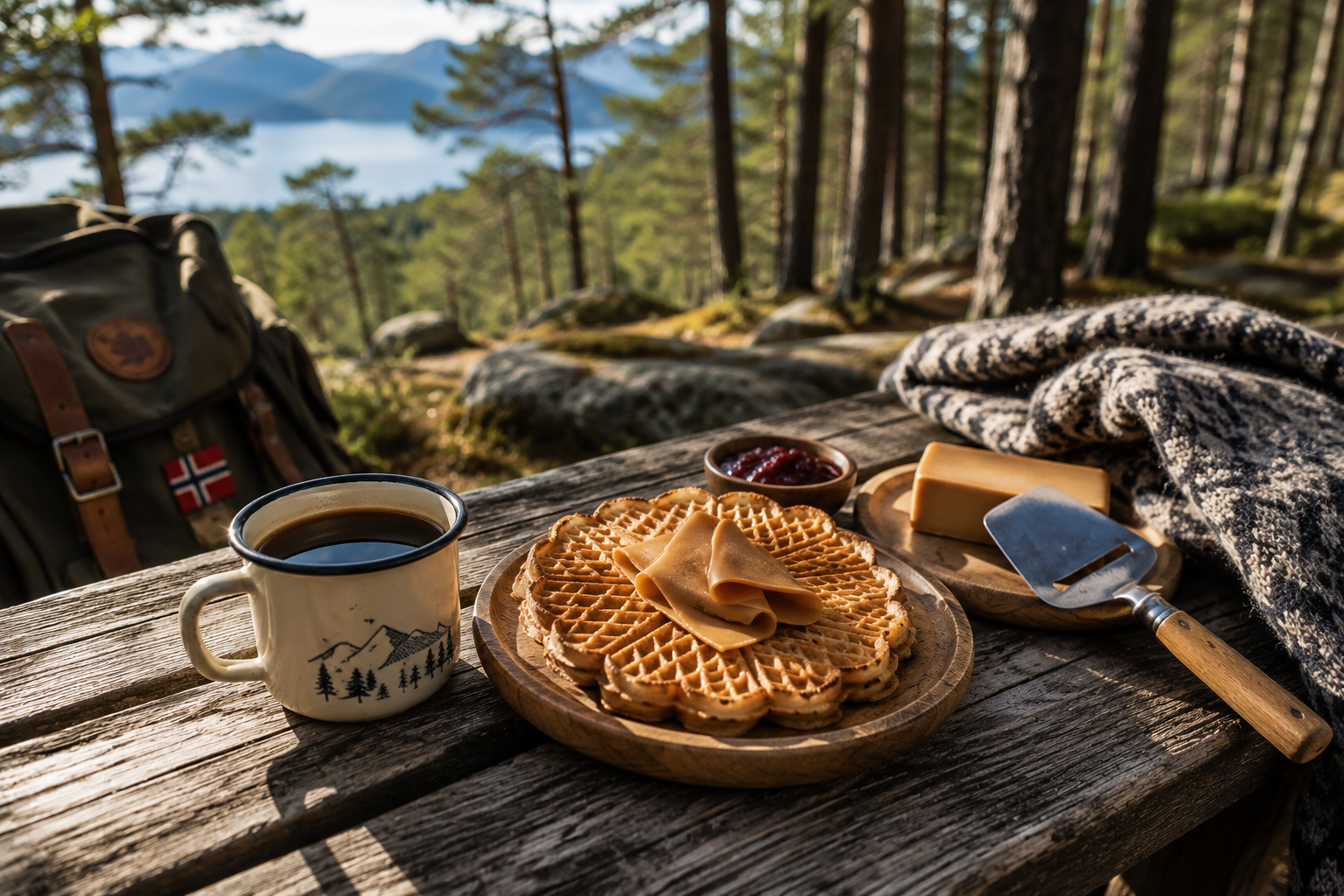
More than just a sweet treat, Norwegian waffles are part of the country's social culture. They appear everywhere from family kitchens and local cafés to school fundraisers, museums and mountain lodges, often enjoyed with a cup of coffee and good company.
Skolebrød (Norwegian School Bun)
Few bakery treats are as iconic as skolebrød (Norwegian school bun). This soft yeast bun is filled with vanilla custard, baked until golden, then topped with icing and coated in shredded coconut.
Despite the name, skolebrød is not something children regularly eat at school today. The origins of the name are uncertain, but the pastry has become one of Norway's most recognisable bakery classics.
Found in bakeries, cafés and supermarkets across the country, skolebrød is often enjoyed alongside a cup of coffee and remains a favourite treat for both children and adults.
Skillingsboller (Cinnamon Buns from Bergen)
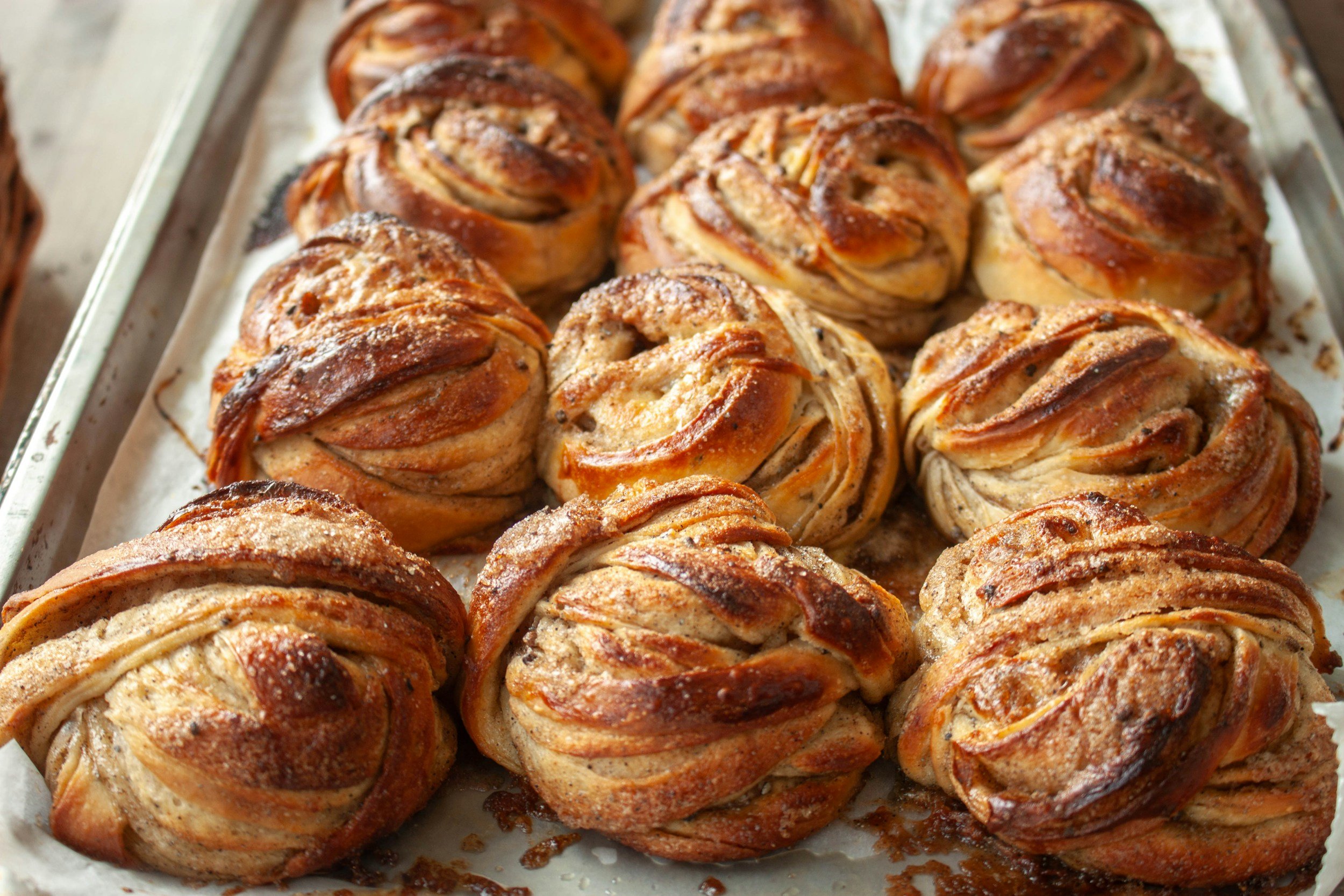
While cinnamon buns are enjoyed throughout Norway, skillingsboller are particularly associated with the city of Bergen. These soft, spiral-shaped buns are filled with butter, cinnamon and sugar before being baked until lightly golden.
The recipe has been part of Bergen's baking traditions for generations, and visitors will find skillingsboller in bakeries throughout the city. Although similar pastries exist elsewhere in Scandinavia, Bergen has become especially well known for its version.
Freshly baked skillingsboller are best enjoyed warm, making them one of the highlights of a visit to a traditional Norwegian bakery.
Kanelboller (Cinnamon Buns)
Outside Bergen, the more general term kanelboller (cinnamon buns) is commonly used. They appear in homes, cafés and bakeries throughout Norway and are a familiar part of everyday baking.
Although they resemble cinnamon buns found in neighbouring Scandinavian countries, Norwegian versions are often lightly flavoured with cardamom as well as cinnamon, creating a distinctive aroma.
Whether bought from a bakery or baked at home, they remain one of Norway's favourite sweet pastries.
Kransekake (Almond Ring Cake)
No Norwegian celebration feels quite complete without kransekake (almond ring cake). Made from ground almonds, sugar and egg whites, the cake is baked as a series of rings that are stacked into a tall tower before being decorated with white icing.
Kransekake is traditionally served at weddings, Christmas, Constitution Day, baptisms and milestone birthdays. The chewy almond texture and elegant appearance have made it one of Norway's most famous celebration cakes.
Although visually impressive, its ingredients are surprisingly simple, reflecting the understated style of many traditional Norwegian desserts.
Bløtkake (Layered Cream Cake)
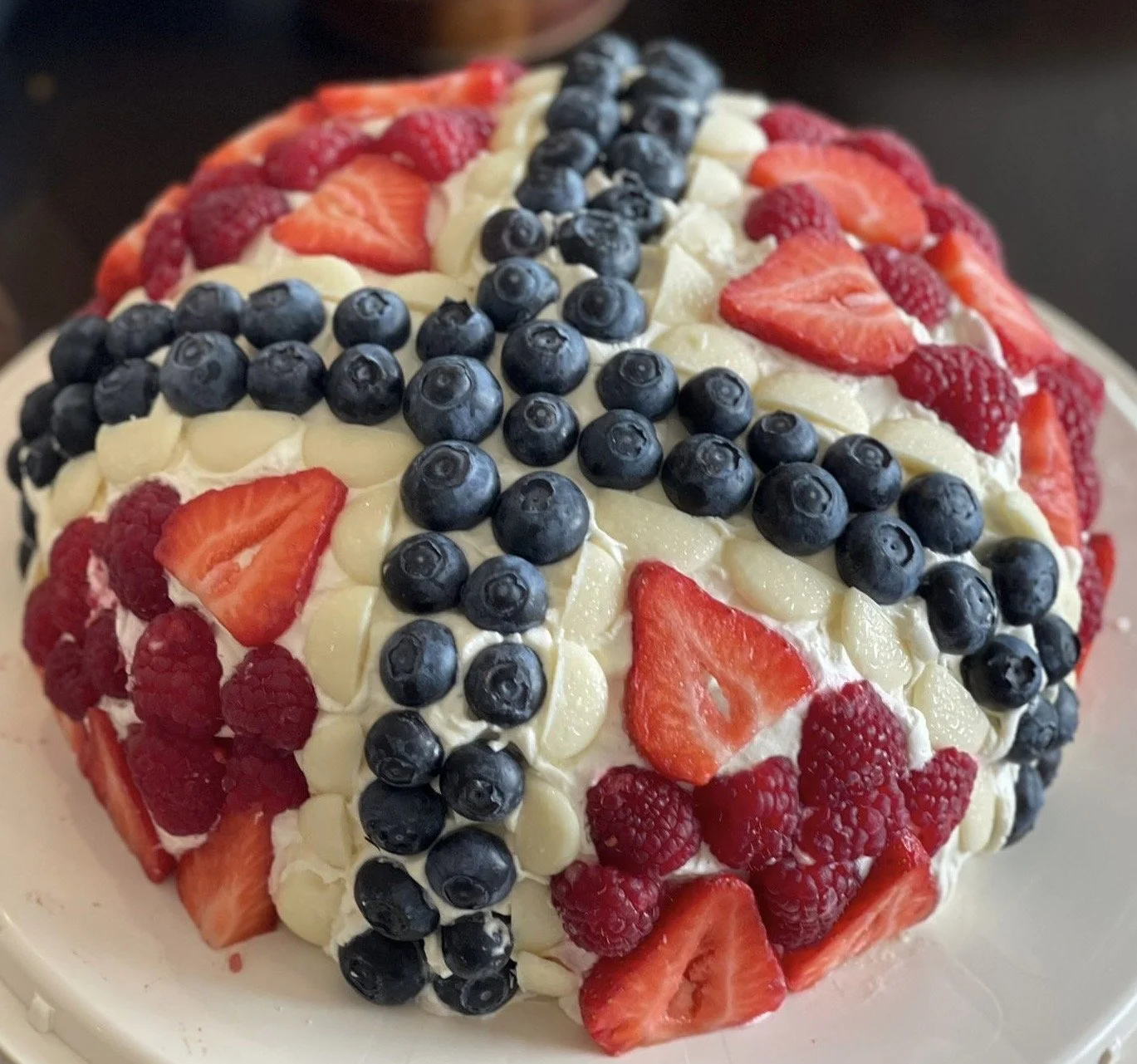
Bløtkake (layered cream cake) is the classic Norwegian birthday cake. Light sponge cake is layered with whipped cream, jam and fresh berries or fruit before being decorated with more cream on top.
While recipes vary between families, strawberries, raspberries and blueberries are particularly popular during summer when Norwegian berries are in season.
Bløtkake is commonly served at birthdays, confirmations, graduations and other family celebrations, making it one of the country's most familiar celebration desserts.
Kvæfjordkake (Verdens Beste)
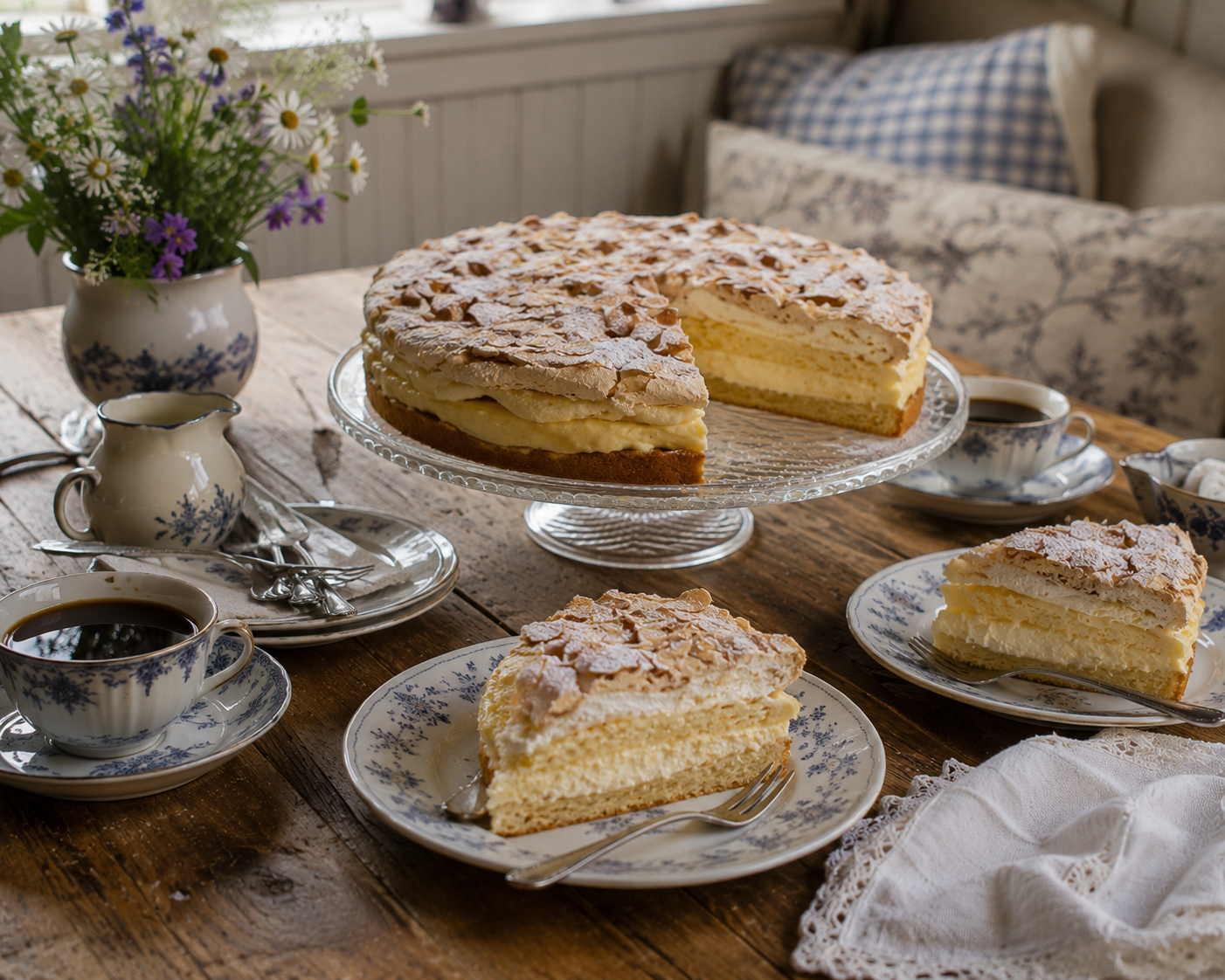
Often called Verdens Beste, meaning "The World's Best", Kvæfjordkake is one of Norway's most celebrated cakes. It originated in the municipality of Kvæfjord in Northern Norway during the 1930s and has since become a favourite for birthdays, confirmations, weddings and other special occasions across the country.
The cake consists of two layers of soft sponge topped with crisp meringue and sliced almonds. Between the layers is a generous filling of vanilla custard, whipped cream or a combination of both, creating a contrast between the light, crunchy meringue and the rich, creamy centre.
Although it is served year-round, Kvæfjordkake is especially popular for celebrations and is often considered one of Norway's finest celebration cakes. Its nickname, Verdens Beste, reflects its reputation rather than any official title, but few Norwegian cakes inspire as much affection.
Suksessterte (Success Cake)
Despite its name, suksessterte (success cake) has become a humble favourite in Norwegian homes. The cake features a rich almond base topped with a smooth buttercream flavoured with egg yolks and vanilla.
Its bright yellow filling makes it instantly recognisable, and it is a common sight on dessert tables during birthdays, Christmas and family gatherings.
Because it is naturally gluten-free, suksessterte has also become increasingly popular for modern celebrations.
Multekrem (Cloudberry Cream)
Multekrem (cloudberry cream) combines whipped cream with sweet, golden cloudberries, one of Norway's most prized wild berries.
Cloudberries grow in bogs and mountain areas across northern and central Norway and are carefully harvested during late summer. Because they are difficult to cultivate commercially, they remain one of the country's most exclusive ingredients.
Multekrem is particularly associated with Christmas, when it is often served as a festive dessert alongside traditional holiday meals.
Riskrem (Rice Cream)
Riskrem (rice cream) is one of Norway's best-loved Christmas desserts. It is made by folding whipped cream into chilled leftover rice porridge, creating a light dessert that is typically served with a bright red berry sauce.
The dessert became popular as an economical way to use leftover risgrøt (rice porridge) from earlier festive meals. Today, however, many families prepare it specifically for Christmas dinner.
For countless Norwegians, riskrem is as much a part of Christmas as the main meal itself.
Tilslørte Bondepiker (Veiled Farm Girls)
With one of the most unusual names in Norwegian cuisine, tilslørte bondepiker (veiled farm girls) is a traditional dessert made from layers of stewed apples, whipped cream and buttery toasted breadcrumbs.
Created during the nineteenth century, it remains one of Norway's classic apple desserts and is especially popular during autumn when locally grown apples are at their best.
Its combination of crisp breadcrumbs, soft fruit and lightly whipped cream creates a simple dessert that highlights seasonal ingredients rather than elaborate decoration.
Christmas Biscuits
No Norwegian Christmas would be complete without homemade biscuits. Many families still bake several traditional varieties every December, filling tins that are shared with guests throughout the festive season.
Among the best known are pepperkaker (gingerbread biscuits), krumkaker (thin waffle cookies rolled into cones), sandkaker (almond tartlets) and fattigmann (fried cardamom biscuits). Recipes are often passed down through generations, and Christmas baking remains an important family tradition across the country.
Coffee and Something Sweet
Norwegians are among the world's biggest coffee drinkers, and coffee is rarely served without something to accompany it. Whether it's a slice of cake, a cinnamon bun, waffles or a simple biscuit, offering guests coffee and a sweet treat is an important part of Norwegian hospitality.
This tradition, sometimes simply referred to as kaffe og kake ("coffee and cake"), reflects the social role that baking continues to play in Norwegian culture. While everyday meals have changed considerably over the past century, gathering around the table for coffee and homemade baking remains one of the country's most enduring traditions.
Norwegian Christmas, Holiday and Celebration Food
While many traditional Norwegian dishes can be enjoyed throughout the year, some foods are closely tied to specific holidays and celebrations. Christmas, Easter, Constitution Day and the summer months all have their own culinary traditions, and for many Norwegians these seasonal meals are just as important as the celebrations themselves.
Although everyday eating habits have changed significantly over the past century, holiday meals remain one of the strongest ways Norwegian food traditions are passed from one generation to the next.
Christmas Eve
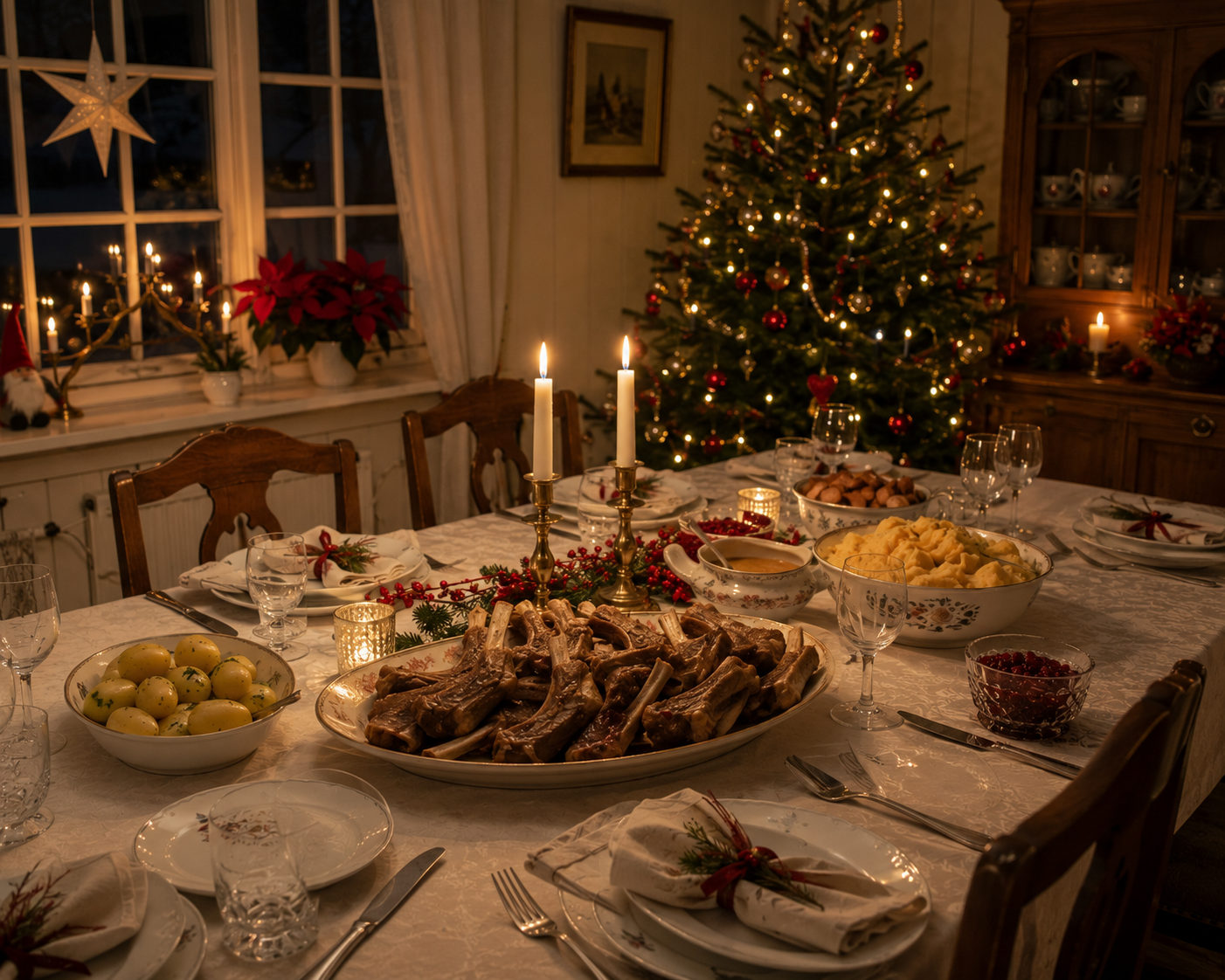
Christmas Eve, celebrated on 24 December, is the most important festive meal of the year in Norway. Families typically gather at home, often with several generations around the same table, and the menu is usually decided by family tradition rather than personal preference.
The two most common Christmas dinners are ribbe (roast pork belly) and pinnekjøtt (dried and steamed lamb ribs). Ribbe is particularly popular in Eastern Norway, while pinnekjøtt dominates much of Western Norway. Both meals are served with traditional accompaniments such as potatoes, sausages, sauerkraut, red cabbage and rich sauces.
Some regions, particularly parts of Western and Northern Norway, continue to serve lutefisk, while others have their own local Christmas dishes. Despite these regional differences, Christmas dinner remains one of the few meals that many Norwegian families prepare almost exactly the same way every year.
Dessert often follows, with riskrem or multekrem among the most popular choices, before coffee is served alongside homemade Christmas biscuits.
Easter Traditions
Easter in Norway is closely associated with mountain cabins, skiing and spending time outdoors, and the food reflects this relaxed atmosphere.
Breakfasts often include fresh bread, boiled eggs, cured meats and cheeses, while oranges and chocolate have become almost symbolic of a day spent on the ski slopes. Many families prepare simple meals that are easy to cook at a cabin, with grilled sausages, soups and hearty stews being common choices.
Lamb is traditionally the centrepiece of Easter dinner, whether served as a roast or in a slow-cooked stew. After a long winter, Easter also marks the arrival of spring, making it one of the first opportunities for many Norwegians to enjoy longer days outside.
Constitution Day (17 May)
Norway's Constitution Day on 17 May is celebrated with parades, children's events and gatherings with family and friends. Food plays a central role throughout the day, although the menu is very different from Christmas.
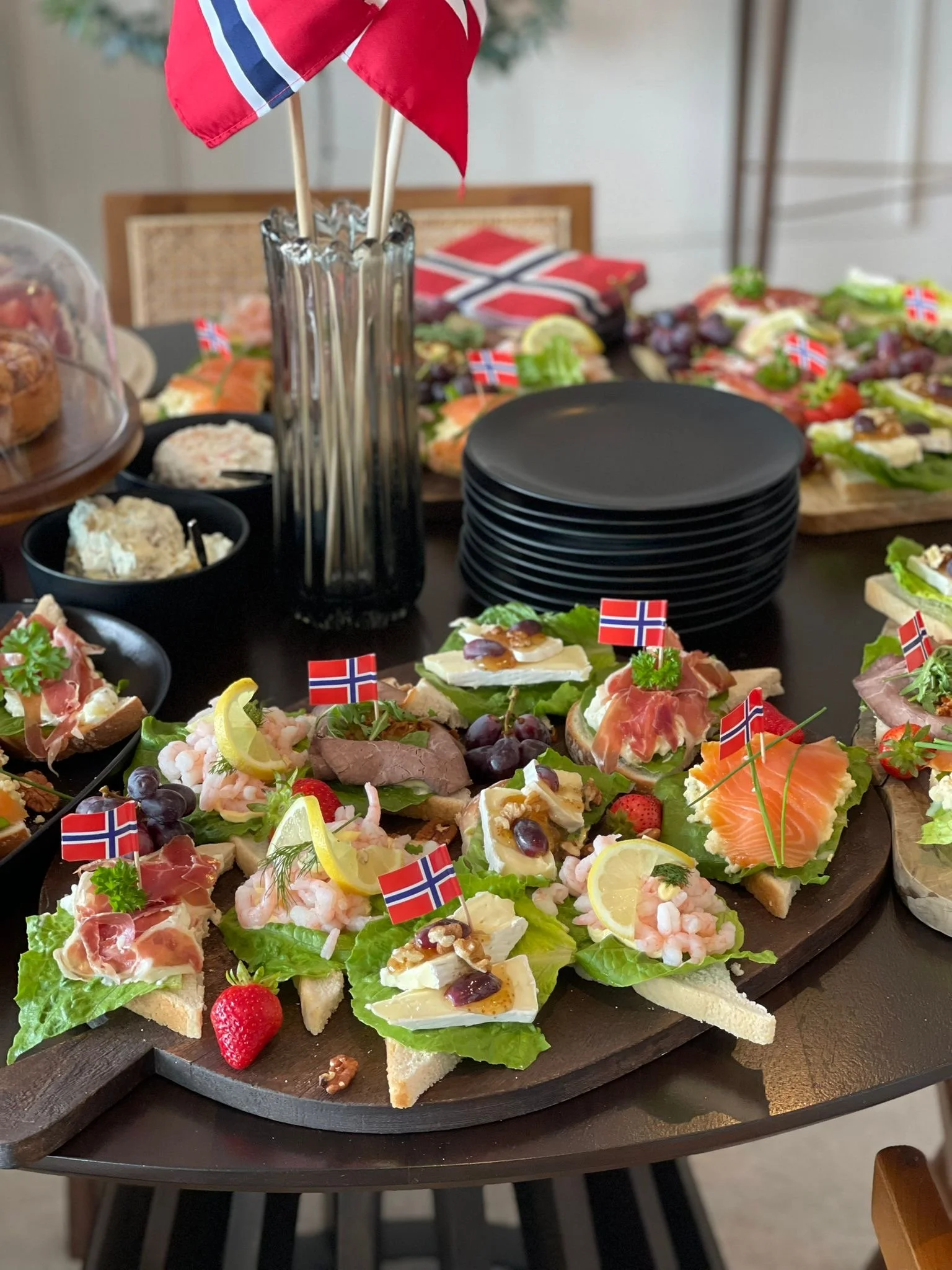
The day usually starts with a 17 Mai frokost (breakfast), which often includes champagne, traditional open rye sandwiches, cakes, etc. Guests often contribute by bringing a dish each.
Later in the day, we often eat pølser (hot dogs), served either in a brød (bread roll) or, uniquely, wrapped in a lompe, a soft potato flatbread. Many Norwegians have strong opinions about which is better, while plenty choose both. On 17 May, it is perfectly normal for children and adults alike to eat several hot dogs as they move between parades, school celebrations and family gatherings.
Ice cream is another essential part of the day. Children often compete to see how many they can eat, and it is one of the few occasions when parents are likely to be more relaxed about sweets than usual.
Later in the evening, many families gather for coffee, cakes and desserts. Bløtkake, kransekake, pavlova and rømmegrøt served with cured meats are all common features of Constitution Day celebrations, although menus vary from family to family.
Summer Food Traditions
Summer brings some of Norway's simplest and most enjoyable meals. Warm weather encourages outdoor dining, whether on a balcony, at a cabin, by the fjord or on a boat.
Fresh shrimp with white bread, butter, mayonnaise and lemon is one of the country's most iconic summer meals. It is less about formal dining and more about sitting together for hours, peeling shrimp while talking with family and friends.
The barbecue also becomes an important part of Norwegian summer. Grilled sausages, burgers, salmon and vegetables are common, reflecting the more relaxed pace of the season.
Summer is also the best time to enjoy Norwegian berries. Strawberries, raspberries and blueberries appear in cakes, desserts and breakfasts, while freshly picked cloudberries are transformed into multekrem later in the season.
Food and Family Traditions
Many Norwegian holiday foods are valued not because they are complicated, but because they are familiar. Families often prepare the same dishes year after year, using recipes handed down through generations.
Regional traditions remain strong, and it is common for Norwegians to debate whether ribbe or pinnekjøtt belongs on the Christmas table, or whether hot dogs should be served in lompe or brød on 17 May. These friendly disagreements have become part of Norway's food culture, reflecting how closely many dishes are tied to family memories and local identity.
For visitors, trying these seasonal foods offers a glimpse into everyday Norwegian life. They are more than meals; they are traditions that bring people together and continue to shape how Norwegians celebrate the most important moments of the year.
Everyday Norwegian Food Traditions
Not every food that defines Norway is reserved for Christmas or served at a family celebration. Some of the country's strongest food traditions are found in everyday life, from packed lunches and roadside hot dogs to coffee breaks and simple open sandwiches.
These foods may not attract the same attention as pinnekjøtt or kransekake, but they are often the dishes visitors are most likely to encounter during a trip to Norway. Together, they offer a glimpse into how Norwegians eat throughout the year.
Pølser (Norwegian Hot Dogs)
Few foods are as closely woven into everyday Norwegian life as pølser (hot dogs). Whether you're stopping at a petrol station, buying lunch from a kiosk, attending a football match or celebrating Constitution Day, there's a good chance you'll see someone eating a hot dog.
One of the most distinctive features of Norwegian hot dogs is the choice between pølse i brød, served in a soft bread roll, and pølse i lompe, wrapped in a lompe, a soft potato flatbread. Many Norwegians have a clear favourite, while others happily eat both.
Toppings vary, but crispy fried onions, raw onions, ketchup, mustard, shrimp salad and potato salad are all common. Regional specialities also exist, and many kiosks offer locally produced sausages alongside the more familiar varieties.
While hot dogs are strongly associated with 17 May celebrations, they are far from a once-a-year tradition. They are everyday convenience food, a favourite after hiking, a quick meal during road trips and one of the first things many Norwegians buy at a service station.
Open Sandwiches (Smørbrød)
Bread has long been one of the foundations of the Norwegian diet, and open sandwiches (smørbrød) remain an everyday staple.
Unlike sandwiches in many other countries, Norwegian open sandwiches are usually served with a single topping rather than several ingredients stacked together. Popular choices include brown cheese, white cheese, cured meats, smoked salmon, mackerel in tomato sauce, liver pâté, boiled eggs, caviar paste and cucumber.
Open sandwiches are commonly eaten for breakfast, lunch and evening meals, making bread one of the most important foods in everyday Norwegian life.
The Norwegian Matpakke
One of Norway's most enduring food traditions is the matpakke, a packed lunch prepared at home and taken to school or work.
A traditional matpakke usually consists of slices of bread topped with cheese, ham, liver pâté, mackerel in tomato sauce or other simple spreads. The sandwiches are often wrapped individually before being packed into a lunchbox, accompanied by fruit or vegetables.
While many countries rely heavily on school cafeterias or takeaway lunches, bringing food from home remains remarkably common in Norway. For many Norwegians, the matpakke is simply part of everyday life from childhood onwards.
Brown Cheese Every Day
Although brunost (brown cheese) was introduced earlier in this guide, its place in Norwegian everyday life deserves special mention.
For many Norwegians, brown cheese is not an occasional treat but something eaten almost daily. Thin slices are commonly placed on bread, crispbread or waffles for breakfast or lunch, and it is one of the foods many Norwegians miss most when living abroad.
Its sweet, caramel-like flavour often surprises visitors, but it has become one of the country's most recognisable everyday foods.
Coffee Culture
Norway consistently ranks among the world's highest coffee-consuming countries, and coffee is deeply woven into everyday routines.
A cup of coffee accompanies breakfast, morning meetings, afternoon breaks and visits with family and friends. At home, in cafés and in workplaces, coffee is often served alongside a slice of cake, waffles or a cinnamon bun.
The tradition is about more than caffeine. Inviting someone for coffee usually means taking time to sit together and talk, making coffee an important part of Norwegian hospitality and social life.
Simplicity at the Table
One of the defining characteristics of Norwegian everyday food is its simplicity. Meals tend to focus on fresh ingredients, good-quality bread, dairy products, fish and seasonal produce rather than elaborate preparation.
While modern Norway offers cuisine from every corner of the world, these everyday traditions remain remarkably consistent. Packed lunches, open sandwiches, hot dogs after a walk, coffee with homemade baking and bread topped with brown cheese continue to be small but familiar rituals that shape daily life across the country.
Understanding these habits provides a different perspective on Norwegian food culture. They may not be the meals most often photographed in travel guides, but they are the foods that many Norwegians eat, share and return to every single week.
How Norwegian Food Has Evolved
Norwegian food has never been static. While many of the country's best-known dishes have been enjoyed for generations, everyday eating habits have changed significantly over the past century. Better transport, refrigeration, international travel and immigration have all transformed what ends up on the Norwegian dinner table.
Today's Norway combines long-standing culinary traditions with influences from around the world. It is entirely normal for a family to eat tacos on Friday, sushi during the week and pinnekjøtt at Christmas. Rather than replacing traditional dishes, international cuisine has become another layer of Norway's evolving food culture.
Friday Taco: Norway's Favourite Family Dinner
Few food traditions surprise visitors more than fredagstaco (Friday taco).
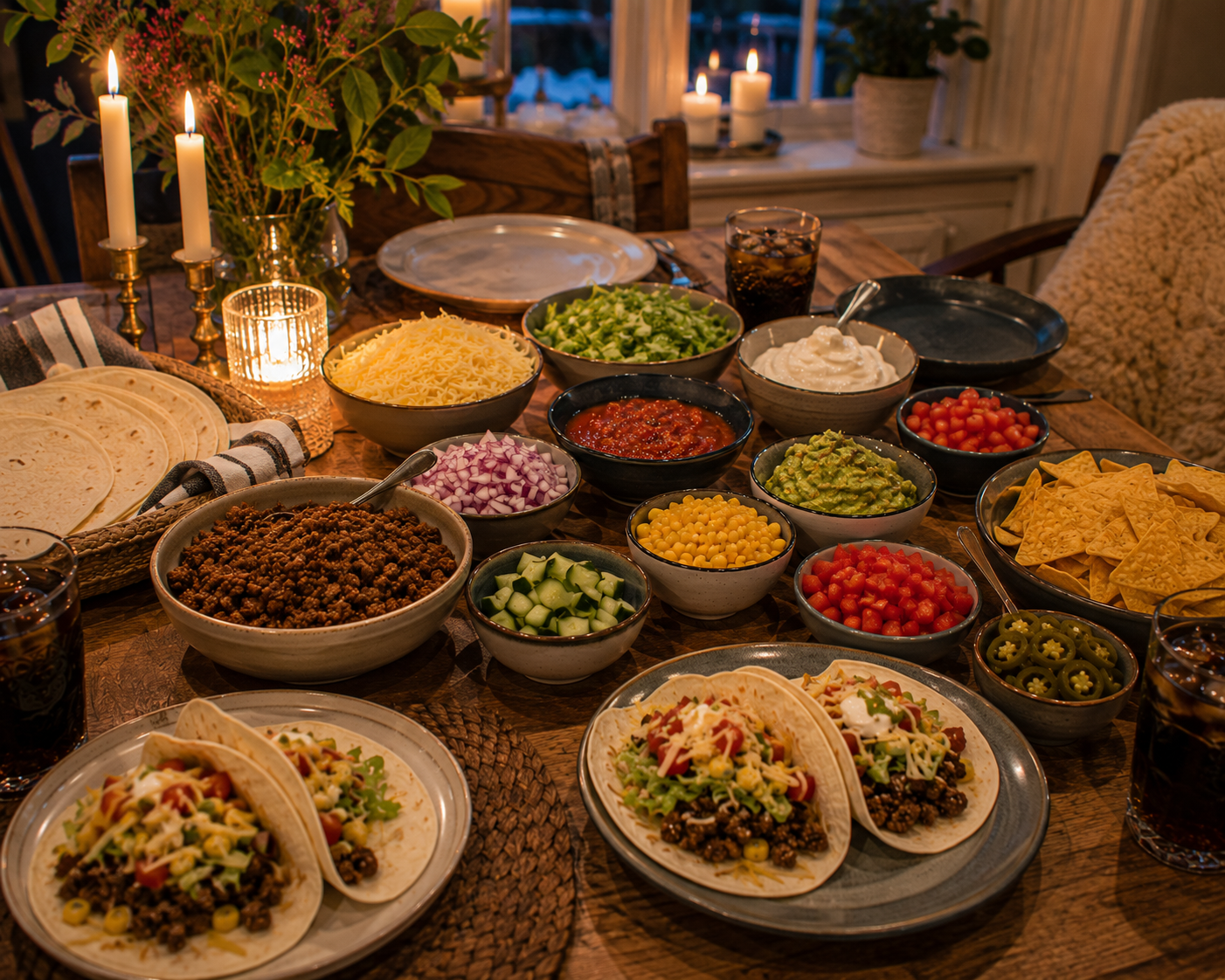
Although tacos originated in Mexico, they became popular in Norway during the 1980s and 1990s as supermarkets began selling ready-made taco kits. Over time, they evolved into something uniquely Norwegian. Today, many families gather around the table every Friday evening to prepare tacos together, making it one of the country's most recognisable weekly traditions.
A typical Norwegian taco spread includes seasoned minced beef, tortillas or crunchy taco shells, lettuce, tomatoes, cucumber, sweetcorn, grated cheese, salsa, sour cream and guacamole. Every family builds their own taco, making the meal as much about spending time together as the food itself.
For many Norwegians, Friday tacos mark the beginning of the weekend, and it is now one of the most commonly eaten dinners in the country.
Grandiosa and the Rise of Convenience Food
As Norwegian society became busier, convenience foods also became more popular.
No product represents this better than Grandiosa, the frozen pizza first introduced in 1980. It quickly became a household staple and remains one of Norway's best-selling frozen foods. For many people, it brings back memories of student life, busy weekdays, late-night meals and weekends at the family cabin.
While fresh, home-cooked meals continue to play an important role, frozen pizza has become part of everyday life for many Norwegian households, reflecting broader changes in work patterns and lifestyles.
A More International Kitchen
Modern Norway is far more multicultural than it was just a few generations ago, and its food reflects that diversity.
Italian cuisine is now firmly established, with pizza and pasta among the country's favourite meals. Indian restaurants are found in most towns and cities, while Thai, Vietnamese, Chinese, Japanese and Middle Eastern cuisines have become everyday choices for both takeaway and dining out.
Sushi has experienced particularly rapid growth. Thanks to Norway's reputation for high-quality salmon, sushi has become one of the country's most popular takeaway meals and is now as familiar to many Norwegians as traditional fish dishes.
These international influences have broadened Norwegian cuisine without replacing its traditional foundations.
Eating Habits Have Changed
The way Norwegians eat has changed just as much as what they eat.
Packed lunches, open sandwiches and home-cooked dinners remain common, but busy schedules have increased demand for quick and convenient meals. Supermarkets offer a far greater variety of ingredients than they did a few decades ago, making it easy to prepare dishes from almost anywhere in the world.
At the same time, there has been growing interest in fresh, seasonal and locally produced food. Farmers' markets, artisan bakeries and locally sourced ingredients have become increasingly popular, reflecting a renewed appreciation for traditional produce and craftsmanship.
Tradition Still Has Its Place
Despite these changes, traditional Norwegian food continues to play an important role in everyday life and national celebrations.
Families still prepare fårikål each autumn, debate whether ribbe or pinnekjøtt belongs on the Christmas table, gather around bowls of risgrøt in December and enjoy rømmegrøt during summer celebrations. Fresh shrimp remain a favourite on warm evenings, while waffles, brown cheese and hot dogs continue to be everyday classics across the country.
This balance between old and new is one of the defining features of Norwegian food culture. Traditional recipes have not been left behind. Instead, they exist alongside international influences, creating a cuisine that reflects both Norway's history and the multicultural society it has become.
Norwegian Food Etiquette and Dining Culture
Food culture in Norway is generally informal and practical.
Visitors are often surprised by how relaxed dining culture can be compared with some parts of Europe.
A few things worth knowing include:
Tipping is appreciated but not expected.
Tap water is safe and usually provided free of charge.
Restaurants are generally expensive compared with much of Europe.
Lunch is often simple and bread-based.
Dinner is traditionally eaten earlier than in Southern Europe.
Coffee plays an important social role, and many gatherings revolve around coffee and cake rather than large meals.
Where to Try Traditional Norwegian Food
If you want to experience authentic Norwegian food, there are several good options beyond high-end restaurants.
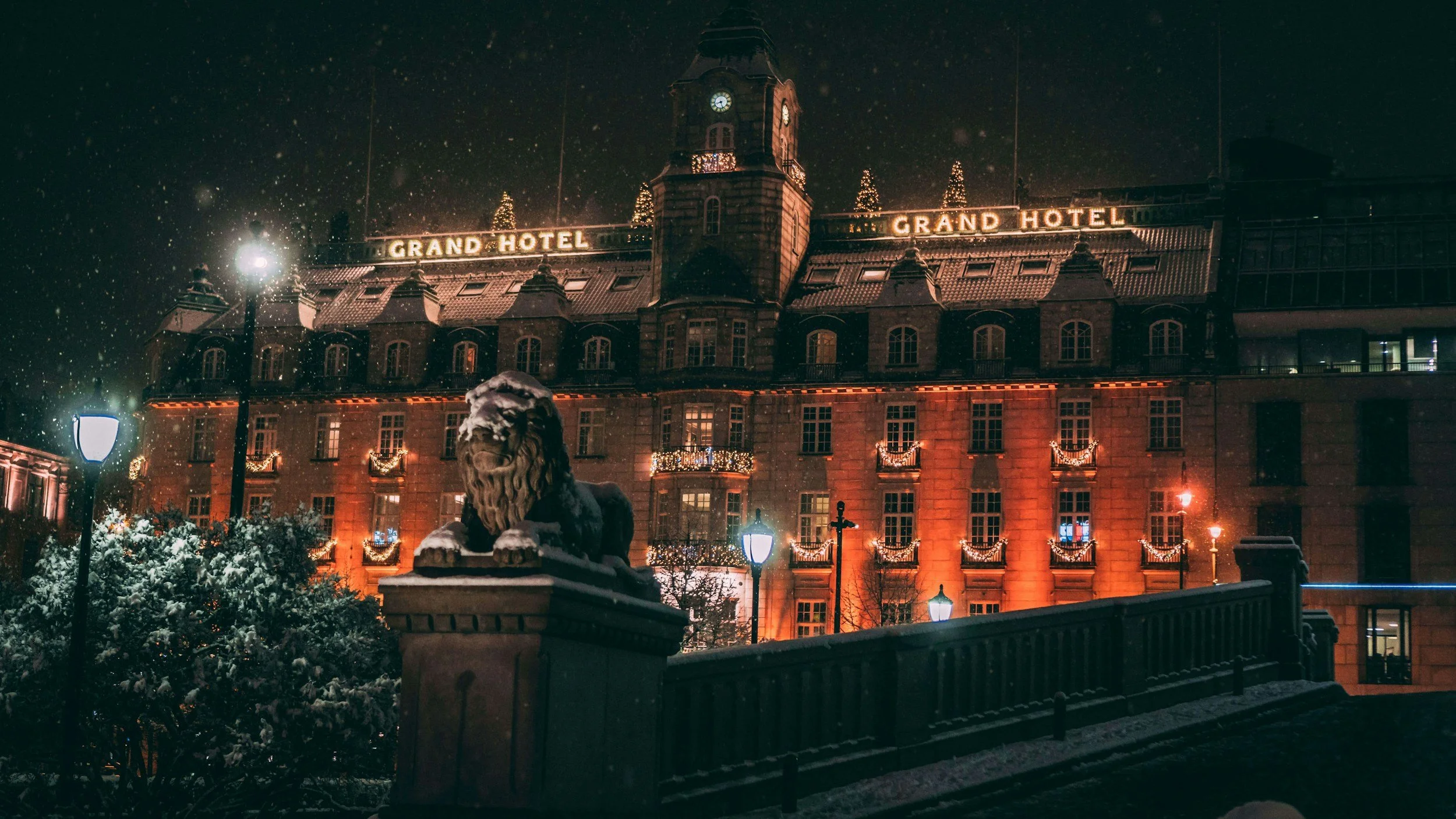
Historic Hotels
Many of Norway's historic hotels serve regional specialities that reflect local traditions and ingredients.
These can be excellent places to try traditional dishes prepared to a high standard.
Mountain Lodges
Mountain lodges often offer some of the most authentic Norwegian food experiences.
Menus frequently include:
Waffles
Traditional soups
Lamb dishes
Local cheeses
Game meat
Seafood Restaurants
Along the coast, seafood restaurants provide opportunities to try some of Norway's finest ingredients.
Fresh shrimp, cod, salmon and shellfish are often at their best in coastal towns and fishing communities.
Local Bakeries
Norwegian bakeries are ideal for sampling everyday treats.
Look for:
Skillingsboller
School buns
Waffles
Traditional cakes
Fresh bread
Food Markets
Food markets can be found in several Norwegian cities and often showcase local producers, cheeses, cured meats, baked goods and regional specialities.
They are an excellent introduction to contemporary Norwegian food culture.
Final Words
Norwegian food is about far more than a handful of famous dishes. It tells the story of a country shaped by dramatic landscapes, changing seasons and generations of people who learned to make the most of what nature provided.
From hearty farmhouse stews and Arctic seafood to soft waffles, brown cheese and the now-iconic Friday taco, Norway's cuisine combines centuries-old traditions with modern influences in a way that feels both familiar and distinctive.
Whether you're exploring Norway for the first time or simply curious about its food culture, tasting these traditional dishes offers a deeper understanding of the country's history, landscapes and everyday life.
Have you tried any traditional Norwegian food, or is there a dish you'd love to taste? Share your favourites or questions in the comments below. I'd love to hear from you.
More articles about Norway
















Why do Norwegian houses look so American? Discover the history behind Norway's wooden homes, colourful façades, grass roofs and centuries-old building traditions shaped by climate, forests and practical craftsmanship