
The History of Hurtigruten: How Norway's Coastal Express Shaped a Nation
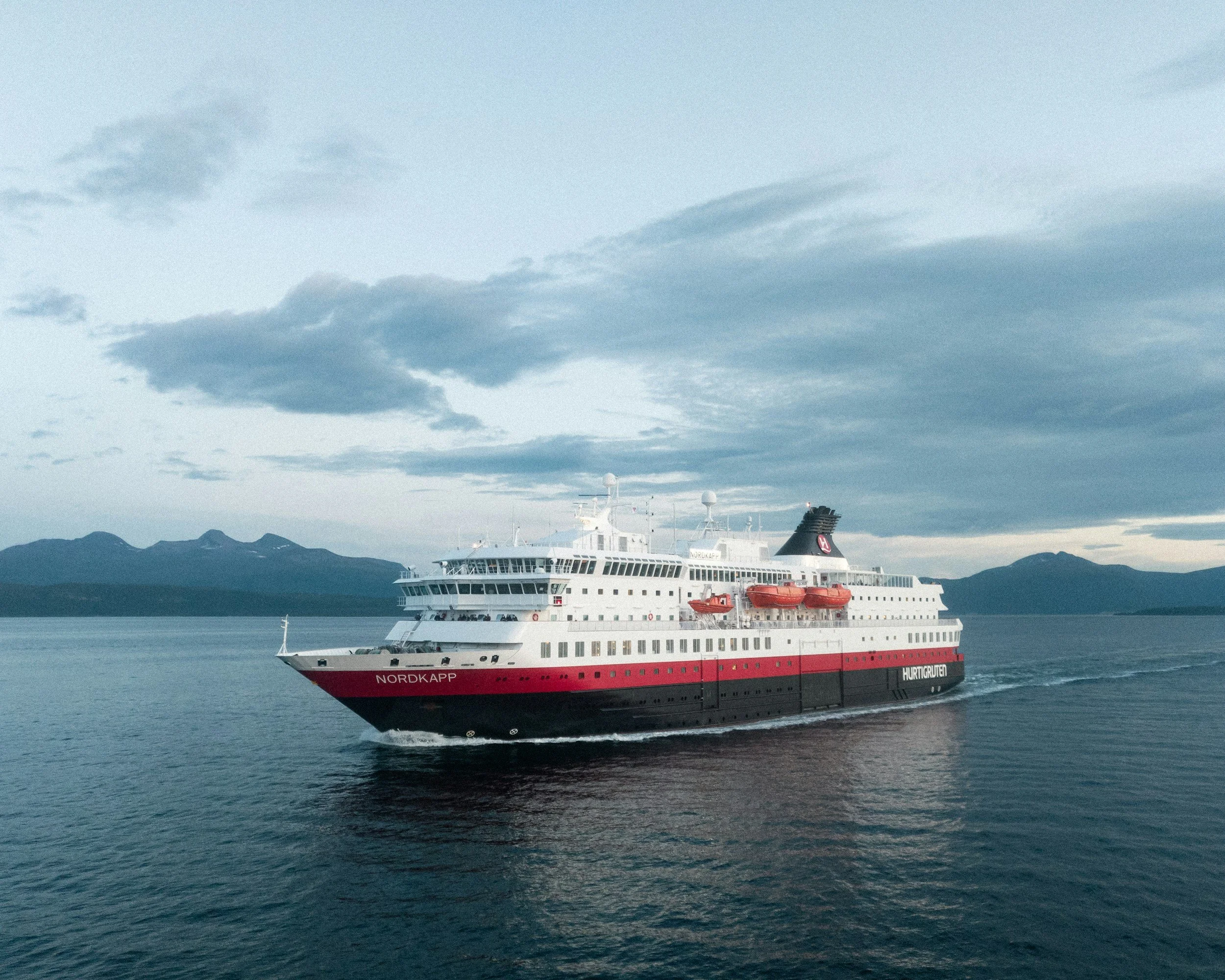
For more than 130 years, Hurtigruten has connected Norway's coastline. What began as a government-supported mail and passenger service in 1893 transformed everyday life for coastal communities and today remains one of Norway's most iconic journeys while continuing to serve many of the towns it was originally created to connect.
A Route That Changed Norway
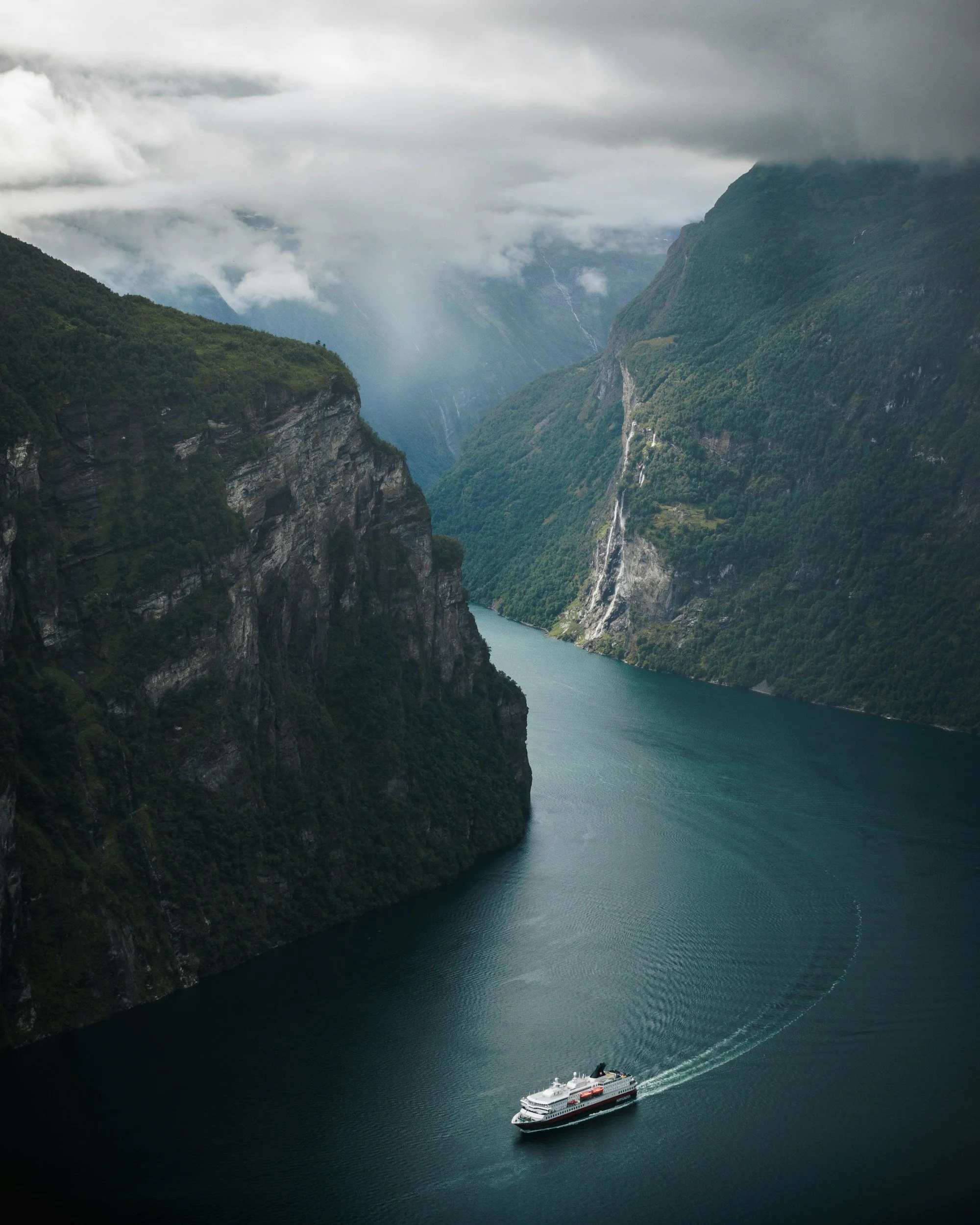
Today, Hurtigruten is one of Norway's best-known travel experiences. Visitors board the ships to admire the fjords, cross the Arctic Circle, search for the Northern Lights and visit fishing villages scattered along the coast.
Yet tourism is only a small part of Hurtigruten's story.
When the route was established in 1893, Norway was still a young nation with a coastline that was incredibly difficult to navigate and even harder to connect. Roads barely existed outside parts of Southern Norway, the railway stopped far from the Arctic, and many coastal communities depended entirely on ships for communication with the rest of the country.
Hurtigruten didn't simply make travel easier.
It fundamentally changed how Norway functioned.
Norway Before Hurtigruten
Modern visitors often underestimate how isolated Northern Norway once was.
Today you can fly from Oslo to Tromsø in under two hours or drive north on highways that didn't exist until well into the twentieth century. In the late 1800s, neither option was available.
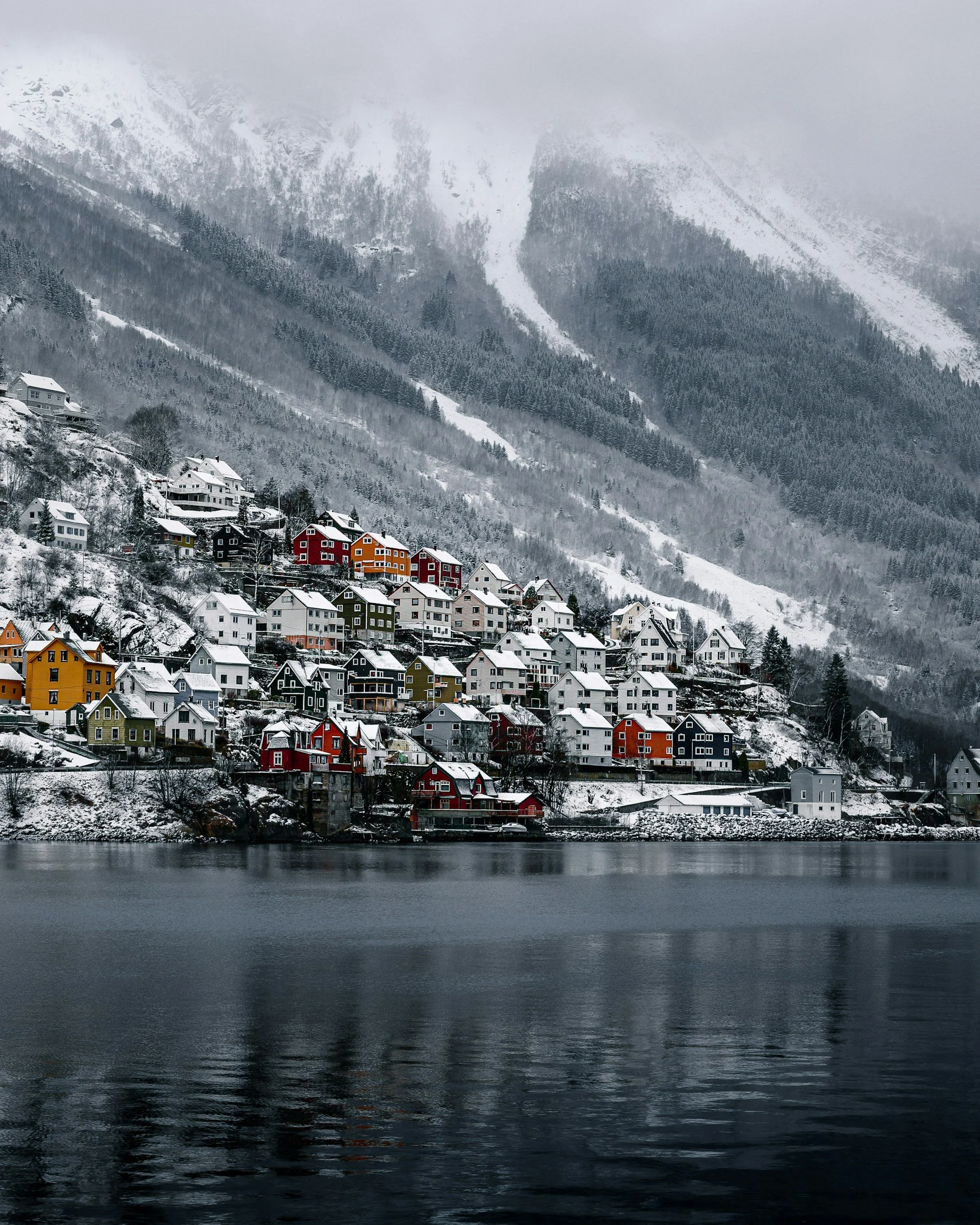
The sea was the country's transport network.
Everything travelled by ship.
Food.
Livestock.
Medicine.
Building materials.
Fishing equipment.
Passengers.
The post.
When storms interrupted shipping, communities could be cut off from the rest of the country for weeks.
The postal service provides perhaps the clearest example.
Before Hurtigruten began sailing, a letter sent from Trondheim to Hammerfest usually took around three weeks during summer. During winter, the same letter could take as long as five months to arrive because of storms, ice and irregular shipping schedules. When Hurtigruten began operating, that delivery time was reduced to around a week, transforming communication between Northern and Southern Norway.
For businesses this meant orders could finally be placed and answered within days instead of months.
For newspapers it meant the news was still relevant when it arrived.
For families it meant staying in touch became far easier than it had ever been before.
Richard With and an Impossible Idea
The man behind Hurtigruten was Richard With, a shipowner based in Stokmarknes in Vesterålen.
Unlike many people in the south of Norway, With knew the northern coastline intimately. He believed the greatest obstacle wasn't the weather itself but the lack of reliable navigation. By carefully charting dangerous waters, using experienced local pilots and developing detailed sailing instructions, he believed ships could safely operate throughout the year.
It was a bold claim.
Much of the coastline remained poorly mapped, navigation equipment was basic by modern standards and winter sailing was considered dangerous even by experienced captains.
The Norwegian government nevertheless agreed to support a trial service.
On 2 July 1893, the steamship Vesteraalen departed Trondheim under the command of Richard With himself.
It reached Hammerfest in just 67 hours.
For communities that had waited weeks—or months—for ships to arrive, the impact was immediate.
More Than a Passenger Ship
Looking at Hurtigruten today, it is easy to assume it has always been about passengers.
In reality, passengers were only one part of the operation.
Every stop involved loading and unloading cargo. Fresh fish travelled south to markets in Trondheim, Bergen and beyond, while flour, coffee, machinery, fuel and household goods travelled north. The route also carried livestock, bicycles, cars and industrial equipment, helping businesses develop in places that had previously struggled to obtain supplies.
Mailbags were exchanged at almost every port.
Some stops lasted only a few minutes.
Crew members worked with remarkable speed, unloading cargo, taking on freight, delivering post and boarding passengers before the ship continued to its next destination.
Unlike a cruise ship, every stop had a practical purpose.
Helping Build Coastal Norway
The arrival of Hurtigruten did more than reduce travel times.
It helped reshape Norway's economy.
Fishing communities could send fresh cod, herring and other seafood to market much faster than before, improving quality and increasing profits. Merchants could receive goods more regularly, businesses became less dependent on seasonal shipping, and isolated settlements became more closely connected to the rest of the country.
Doctors, teachers, government officials and travelling tradespeople could also move more easily along the coast.
In many ways, Hurtigruten became the backbone of everyday life in coastal Norway.
Even after roads gradually improved during the twentieth century, many communities continued relying on the ships because they remained the fastest and most practical way to transport both people and freight.
War, Loss and Survival
Like much of Norway, Hurtigruten faced enormous challenges during the Second World War.
Several ships were requisitioned by the occupying forces, while others continued operating under extremely difficult conditions. Sailing the Norwegian coast became increasingly dangerous as mines, air attacks and naval operations turned what had once been a routine journey into a high-risk undertaking.
The most devastating event came in 1944, when the DS Prinsesse Ragnhild and the DS Irma were sunk in separate attacks. Over the course of the war, fourteen Hurtigruten ships were lost and hundreds of passengers and crew members died.
Despite these losses, the Coastal Express never disappeared.
Communities still needed food, medicine and mail, and whenever it was possible to sail, Hurtigruten continued to connect the Norwegian coast.
A Family Connection
Hurtigruten also became part of my own family's story.
My grandmother grew up in Kirkenes in Northern Norway. After the Second World War, she left home to attend Orkdal Landsgymnas in central Norway.
At the time, attending gymnas often meant leaving home. There were relatively few upper secondary schools, particularly in Northern Norway, so many students had to move far from home to continue their education.
While studying in Orkdal, she met my grandfather, who later became a pilot for SAS. They eventually settled in Oslo, while her parents remained in Kirkenes.
Whenever my grandparents and father travelled north to visit family, Hurtigruten formed an important part of the journey. Long before today's road network and frequent domestic flights, it was one of the most practical ways to travel between Southern and Northern Norway.
My father remembers those voyages very differently from the comfortable journeys passengers experience today.
The ships were much smaller, and without modern stabilisers they rolled heavily in rough seas. He spent much of the journey lying in his cabin, seasick and vomiting as the ship made its way along the coast.
His childhood memories of Hurtigruten are therefore very different from the experience visitors have today, and they offer a reminder of just how much the ships have changed over the decades.
For our family, Hurtigruten wasn't a famous tourist attraction.
It was simply one part of the journey to visit parents, grandparents and relatives living on the other side of the country.
From Steamships to Modern Ships
The fleet changed dramatically after the war.
The earliest Hurtigruten ships were relatively small steamships designed first and foremost as working vessels. Cabins were basic, comfort was limited and many passengers shared facilities that would seem very simple by today's standards.
Over the following decades, the ships became larger, safer and considerably more comfortable.
Steam engines were replaced by diesel power, navigation technology improved and stabilisers transformed the experience at sea. Anyone who has travelled on today's ships during rough weather has probably still felt the Norwegian Sea at work, but it is a very different experience from the one previous generations knew.
As Norway's road network expanded during the 1950s, 60s and 70s, Hurtigruten's role also began to change.
Communities that had once depended almost entirely on coastal shipping gradually became connected by roads, bridges, tunnels and domestic flights.
Passenger numbers declined.
Freight patterns changed.
For the first time, some people questioned whether Hurtigruten still had a future.
A New Chapter: Tourism
Rather than disappearing, Hurtigruten adapted.
During the 1980s and 1990s, more international travellers began discovering Norway's coastline. What Norwegians had long considered everyday scenery became one of the country's biggest attractions.
Gradually, the ships evolved to accommodate this new audience.
Restaurants became an important part of the experience. Cabins became larger and more comfortable. Observation lounges were designed to make the most of the scenery, and lectures, excursions and seasonal voyages helped introduce visitors to Norwegian history, wildlife and coastal culture.
Yet one thing never really changed.
Unlike a traditional cruise ship, Hurtigruten still operated as part of Norway's transport network.
Even today, freight is loaded and unloaded at ports along the route. Local passengers board for short journeys between neighbouring towns, while others use the ships to travel much longer distances.
For visitors, it may feel like a cruise.
For many people living along the coast, it remains a practical means of transport.
That combination is what makes Hurtigruten unique.
Visiting the Hurtigruten Museum
If you have the chance to stop in Stokmarknes, I think the Hurtigruten Museum is one of the most worthwhile museums in Norway.
The museum stands where Hurtigruten began, and its centrepiece is the beautifully preserved MS Finnmarken (1956). Rather than displaying individual artefacts in exhibition cases, the museum has enclosed the entire ship inside a striking glass building, allowing visitors to walk through it almost exactly as passengers once would have.
You can explore the bridge, cabins, lounges, dining rooms, engine room and crew areas, giving you a much better understanding of what travelling on Hurtigruten was actually like before it became a famous tourist experience.
I visited the museum with my father.
As we walked through the ship, he kept recognising different parts of it. He would stop in a corridor, look into a cabin or point towards a staircase and tell me that he remembered it from the journeys he made as a child to visit his grandparents in Kirkenes.
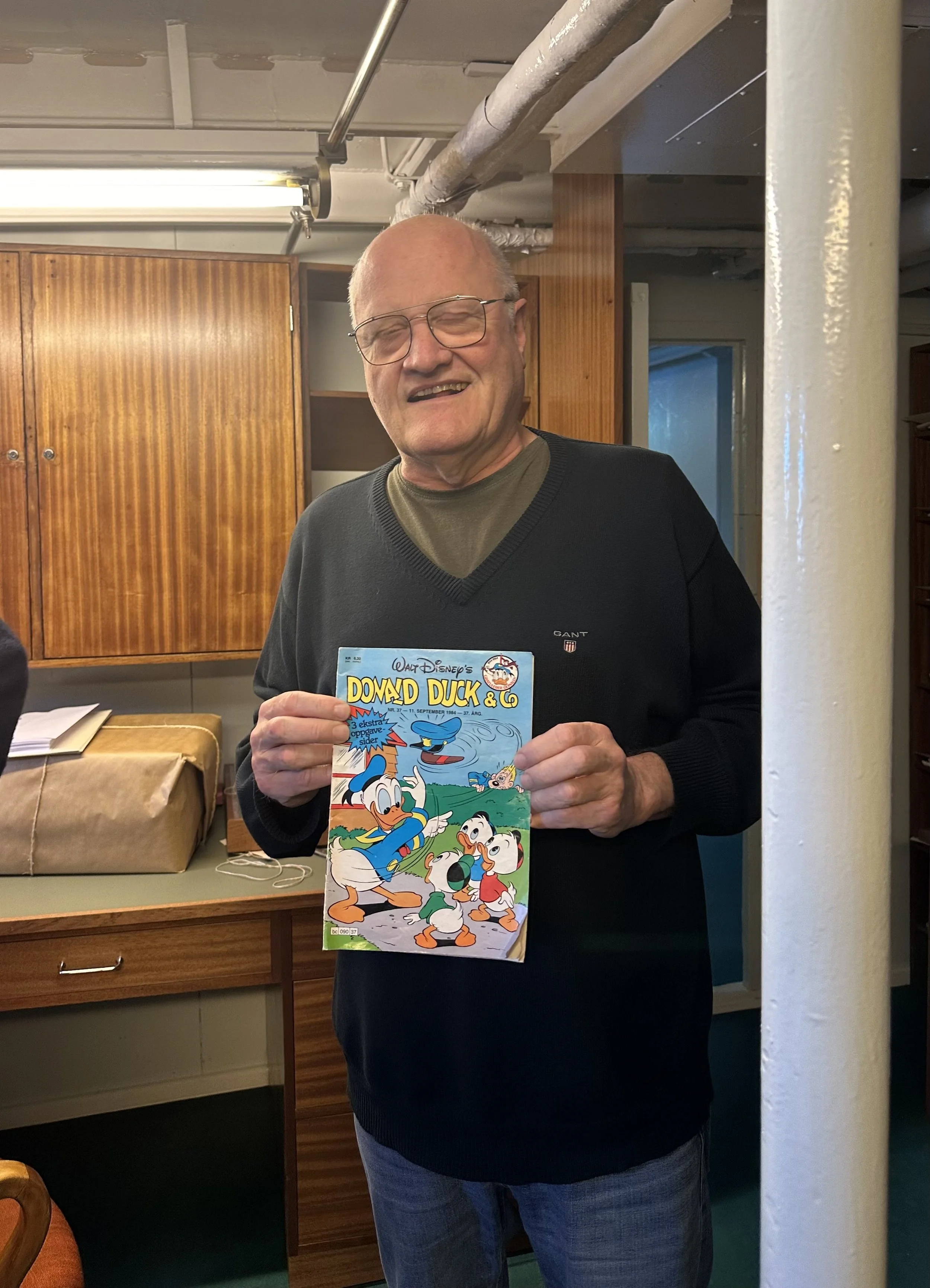
Then we reached the old mail room.
Growing up, this had always been his favourite place onboard because it was where he collected the latest issue of Donald Duck during every voyage north.
Standing there together, we noticed an original Donald Duck magazine from that period on display. It was the highlight of his rather dreadful journey.
Seeing that magazine in the same room where those memories were made suddenly connected those stories to a real place.
That is what I enjoyed most about the museum.
It doesn't simply tell you the history of Hurtigruten. It helps you understand what those ships meant to the people who travelled on them.
Hurtigruten Today
Today, the historic Coastal Route between Bergen and Kirkenes is shared by Hurtigruten and Havila Voyages, with departures alternating between the two companies.
Modern ships are larger, quieter and significantly more comfortable than the vessels that first sailed the route in 1893, but their purpose has never completely changed.
Every day they continue to call at dozens of ports, carrying freight, local passengers and visitors from around the world.
More than 130 years after Richard With's first voyage, Hurtigruten remains both a working transport route and one of Norway's defining travel experiences.
Related Reading:
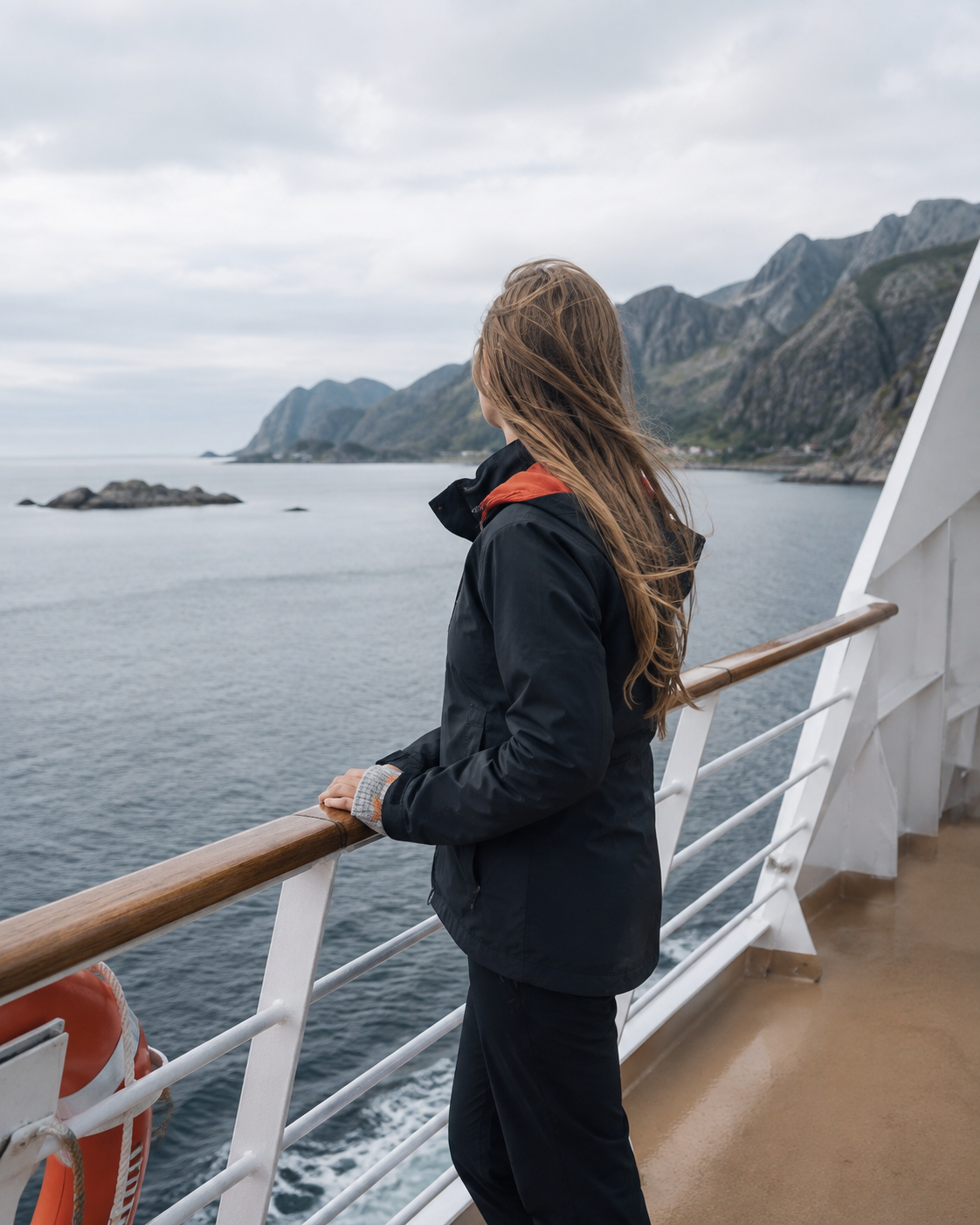
Final Words
When people talk about Hurtigruten today, they usually talk about the scenery.
The fjords.
The Northern Lights.
The Midnight Sun.
Those experiences are undoubtedly part of what makes the voyage special.
But its real significance lies elsewhere.
For more than a century, Hurtigruten helped connect a country that geography had divided. It made communication faster, supported coastal industries, carried generations of families along the Norwegian coast and became part of everyday life for communities from Bergen to Kirkenes.
Walking through the Hurtigruten Museum with my father reminded me that this history isn't only found in archives or old photographs.
Sometimes it's found in the stories people carry with them—and occasionally in an old Donald Duck magazine waiting in a ship's mail room.
More articles about Norway:




Thinking about travelling on Hurtigruten? This guide explains what life on board is really like, from the daily rhythm and coastal scenery to cabins, food, port stops and how it compares to a traditional cruise.