
When (and Where) to See the Northern Lights in Norway
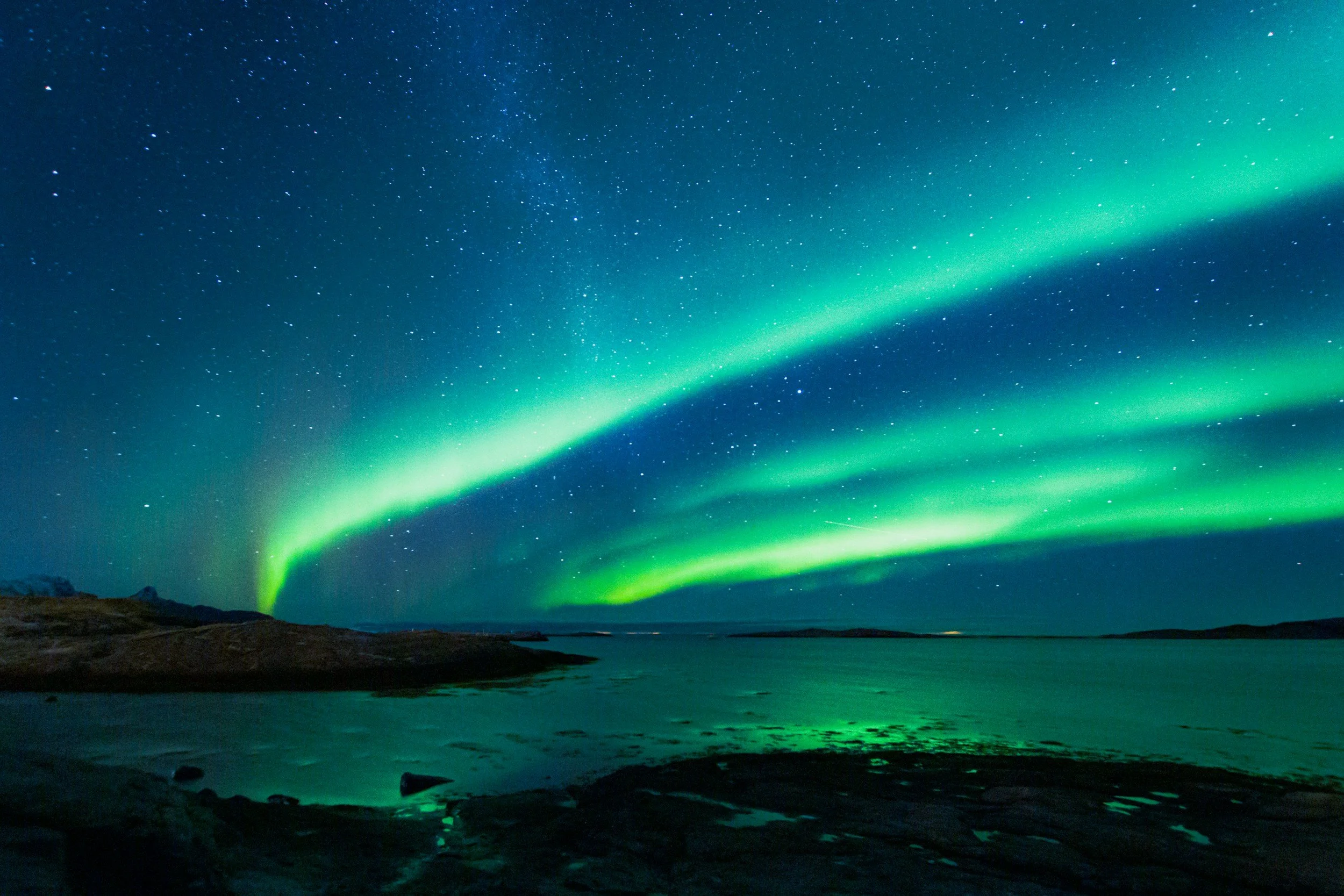
The northern lights are one of the main reasons many travellers visit Norway during winter, particularly in the north of the country.
But despite how often they appear in photographs and travel marketing, the reality is far less predictable than many visitors expect.
Seeing the aurora depends on darkness, clear skies and solar activity aligning at the same time. There is no guaranteed location, and some of the most important factors have less to do with the specific destination itself than people assume.
This guide explains when the northern lights are visible in Norway, which parts of the country generally offer the strongest conditions and what travellers should realistically expect before planning a winter trip.
Before travelling, it also helps to read Winter Travel in Norway: Where to Go and What to Expect as winter conditions shape much of the overall experience.
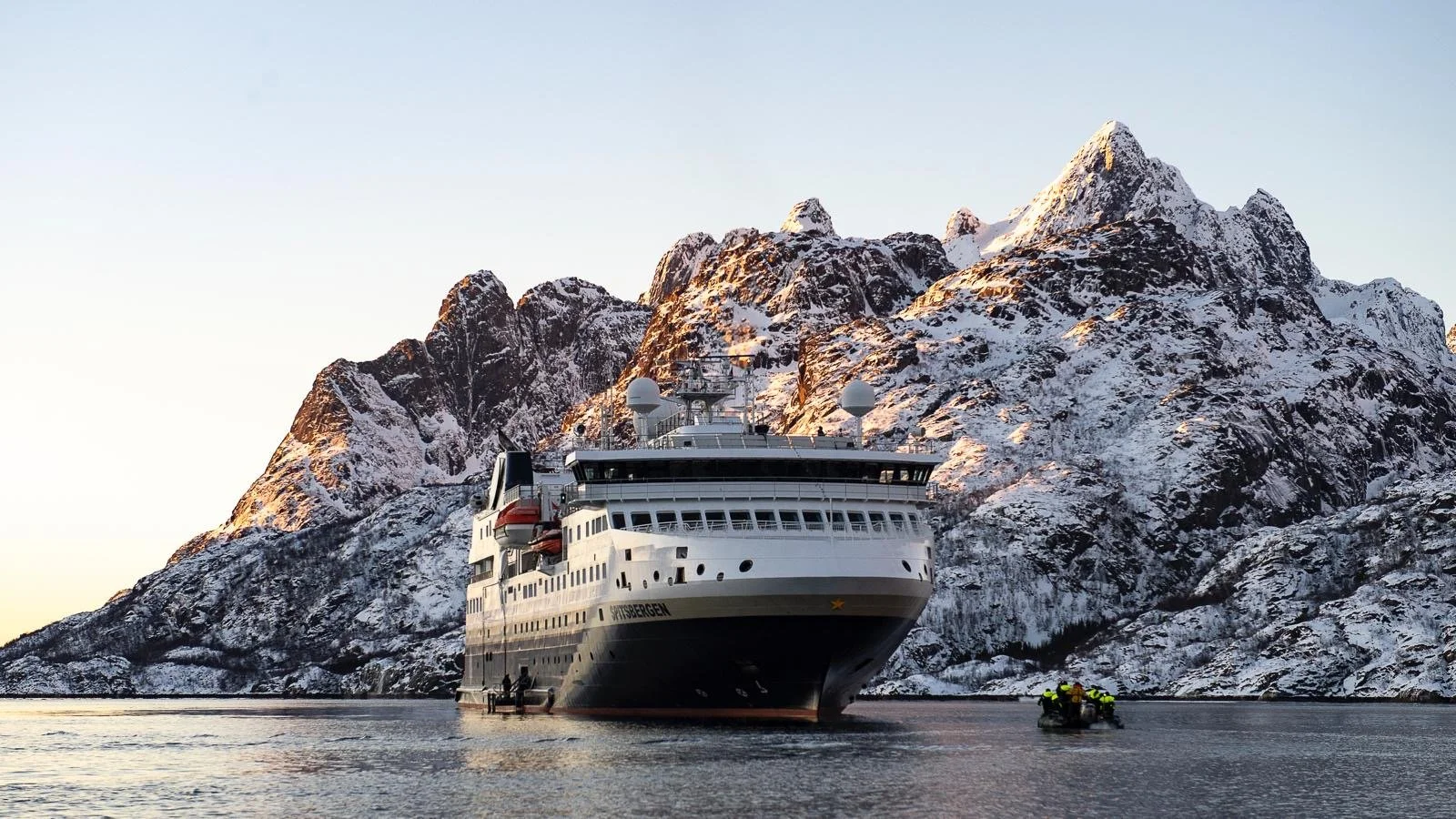
Some travellers also experience the northern lights through coastal voyages in Northern Norway. Routes operated by Hurtigruten and HX travel through Arctic coastal regions during winter, combining northern lights opportunities with fjords, fishing villages and long stretches of the Norwegian coastline during the darkest part of the year.
While both travel through Arctic Norway in winter, they offer very different experiences onboard and ashore. For a more detailed comparison, read Hurtigruten vs Hurtigruten Expeditions (HX) in Norway: Key Differences in Winter Coastal Cruises.
When Can You See the Northern Lights in Norway?
The northern lights season in Norway usually runs from late September until early April.
The most important requirement is darkness. Even during periods of strong solar activity, the aurora is not visible during summer because the sky never becomes properly dark in much of Northern Norway.
However, the experience of travelling through Arctic Norway changes significantly throughout the winter season.
September and October
Early autumn is often overlooked, but can be one of the most comfortable periods for northern lights travel.
Temperatures are usually milder, roads are easier to drive and the landscape has not yet entered the deepest part of winter. Snow may already appear in some northern regions and mountain areas, but conditions are generally less demanding than later in the season.
This period also offers more daylight hours and softer transitions between day and night.
For travellers who want northern lights combined with autumn landscapes and easier travel conditions, early season can work very well.
November
November marks the transition into Arctic winter.
Days become noticeably darker, snow becomes more consistent across Northern Norway and the atmosphere begins to feel distinctly more Arctic. Coastal storms, changing weather and long evenings become a much larger part of the experience.
This is often when northern lights travel starts feeling more dramatic and winter-focused.
December and January
December and January are the heart of Arctic winter.
In Northern Norway, this is the period of polar night, when the sun no longer fully rises above the horizon in many northern regions. Instead of normal daylight, the landscape remains in deep blue twilight during the middle of the day before returning to darkness again.
For many travellers, this is the most atmospheric time to visit Arctic Norway.
Snow-covered landscapes, long dark evenings, frozen conditions and quiet winter scenery create the type of Arctic experience many people imagine when planning a northern lights trip.
At the same time, weather conditions can also be harsher during this period, particularly along the coast.
February and March
By late winter, daylight slowly begins returning to Northern Norway.
Snow conditions are usually excellent, winter landscapes remain fully Arctic and many regions begin experiencing slightly more stable weather patterns compared to midwinter.
March in particular is often considered one of the most balanced months for northern lights travel because it combines:
deep snow
longer daylight hours
winter scenery
strong aurora visibility
For many visitors, late winter offers the easiest balance between Arctic atmosphere and more manageable travel conditions.
Early April
Northern lights can still be visible in early April, particularly in the far north.
However, daylight increases rapidly during spring, shortening the dark hours available for aurora viewing.
By this stage, the season is gradually transitioning away from Arctic winter and towards brighter spring conditions.
What Is Polar Night?
In parts of Northern Norway above the Arctic Circle, the sun does not fully rise above the horizon during parts of winter.
This period is known as the polar night.
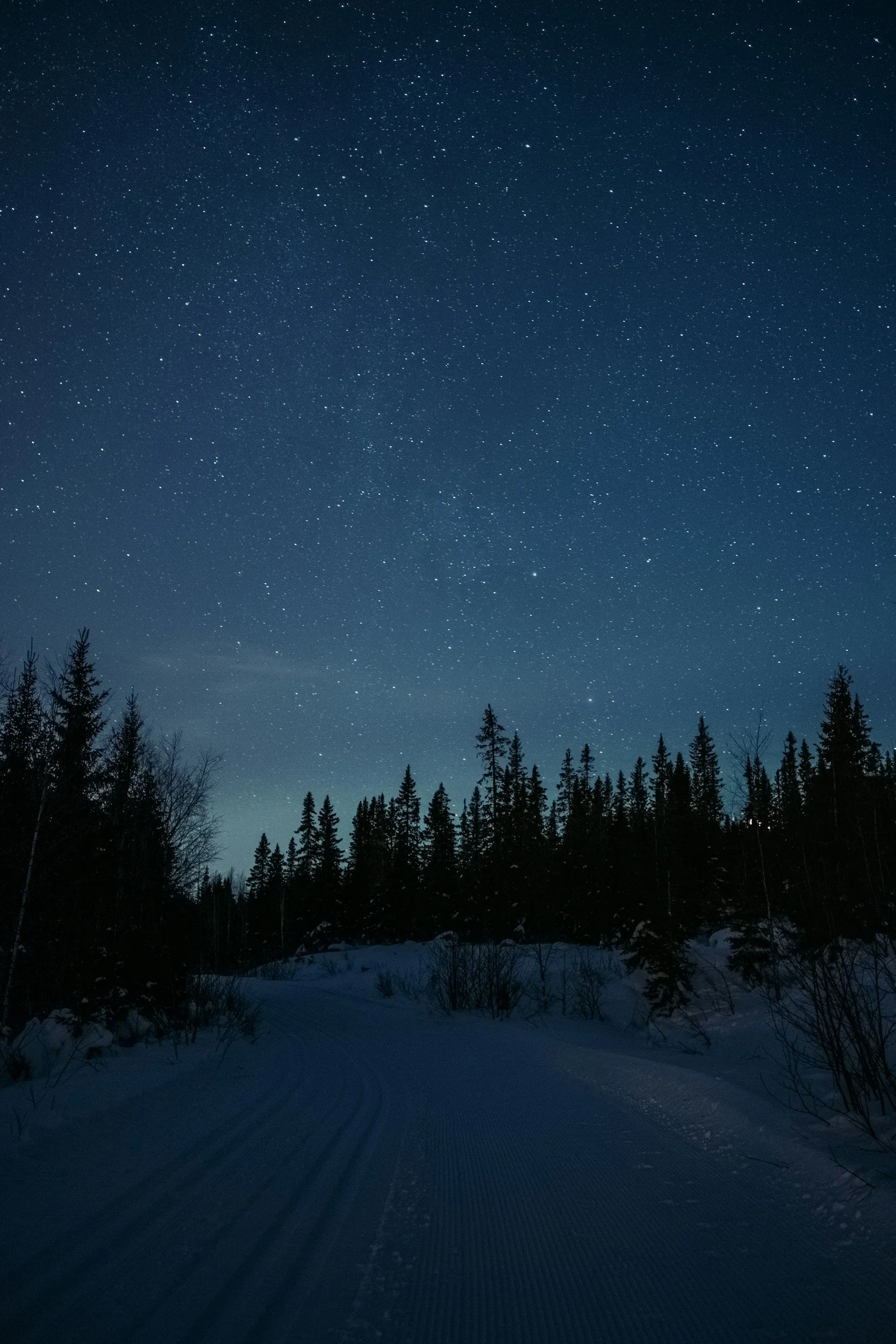
Places such as Tromsø still experience several hours of blue Arctic twilight during the middle of the day, but the landscape remains suspended in low winter light rather than full daylight.
For many visitors, this atmosphere becomes as memorable as the northern lights themselves. Winter in Arctic Norway is shaped by darkness, snow, silence and changing weather as much as by the aurora.
What Are the Northern Lights?
The northern lights, also known as the aurora borealis, occur when charged particles from the sun interact with the Earth’s magnetic field and atmosphere.
These particles are drawn towards the polar regions, which is why the aurora is most commonly visible in places close to the Arctic Circle, including Northern Norway.
As the particles collide with gases in the atmosphere, energy is released in the form of light. This creates the moving bands, waves and shifting colours associated with the northern lights.
Green is the most common colour, though strong solar activity can also produce pink, purple or red tones depending on altitude and atmospheric conditions.
The northern lights seen in the Arctic are called the aurora borealis, while the equivalent phenomenon in the Southern Hemisphere is known as the aurora australis, or southern lights.
Both are caused by the same solar activity, but the colours and visibility can appear slightly different depending on atmospheric composition, viewing conditions and landscape surroundings. In practice, however, the northern and southern lights are fundamentally the same phenomenon occurring around opposite polar regions of the Earth.
The intensity and appearance of the aurora change constantly, which is why the northern lights never look exactly the same twice.
Best Places to See the Northern Lights in Norway
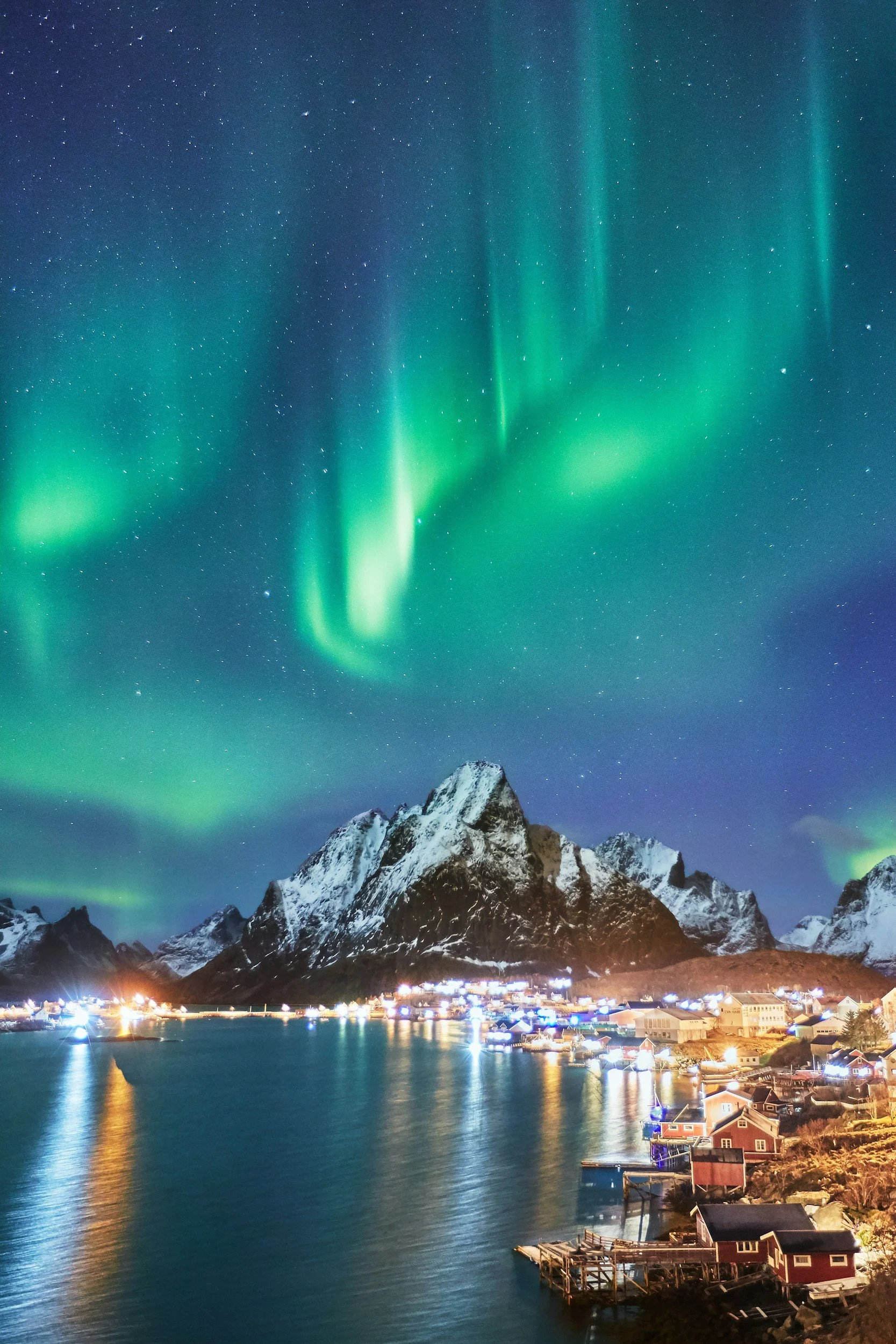
In general, the strongest and most reliable northern lights conditions in Norway are found in Northern Norway, particularly above the Arctic Circle.
This includes large parts of:
Troms
Finnmark
Nordland
The further north you travel, the longer and darker the winter nights become. However, geography also shapes viewing conditions significantly.
Coastal regions tend to have milder temperatures but more variable weather, while inland areas are often colder, drier and clearer during winter.
Northern lights can be visible across large parts of Northern Norway under the right conditions. The locations below are simply some of the best-known and most practical places to use as a base.
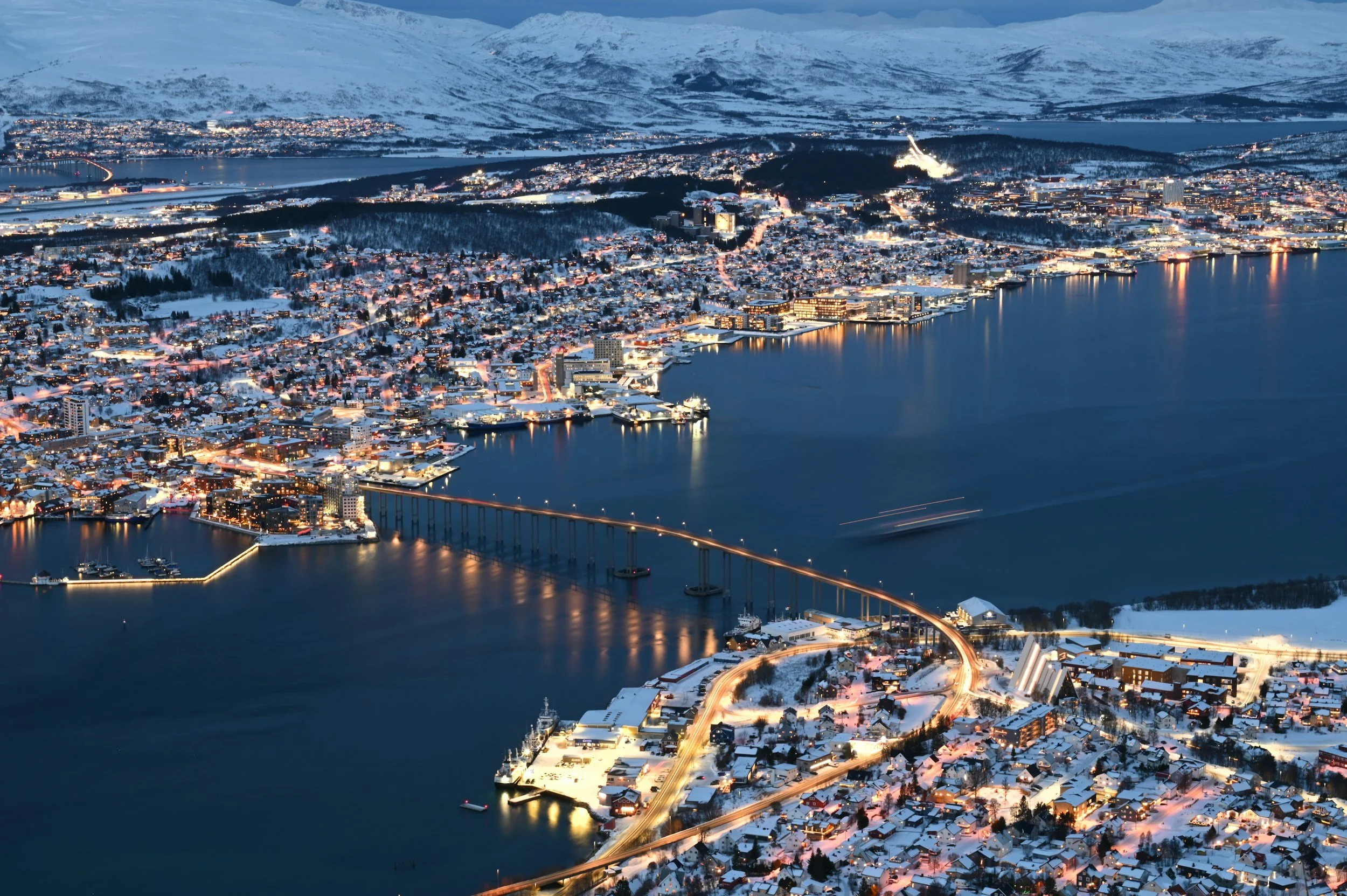
Tromsø
Tromsø is the most established northern lights destination in Norway and usually the easiest starting point for first-time visitors.
The city combines Arctic scenery with restaurants, museums, cafés, harbour life and winter infrastructure, while still providing direct access to fjords, mountains and darker surrounding landscapes.
Northern lights conditions around Tromsø are often strong, though coastal weather changes quickly. Many northern lights tours leave the city and drive inland in search of clearer skies when cloud systems move across the coast.
For travellers who want both Arctic nature and an actual city atmosphere, Tromsø is often the most balanced option.
Senja
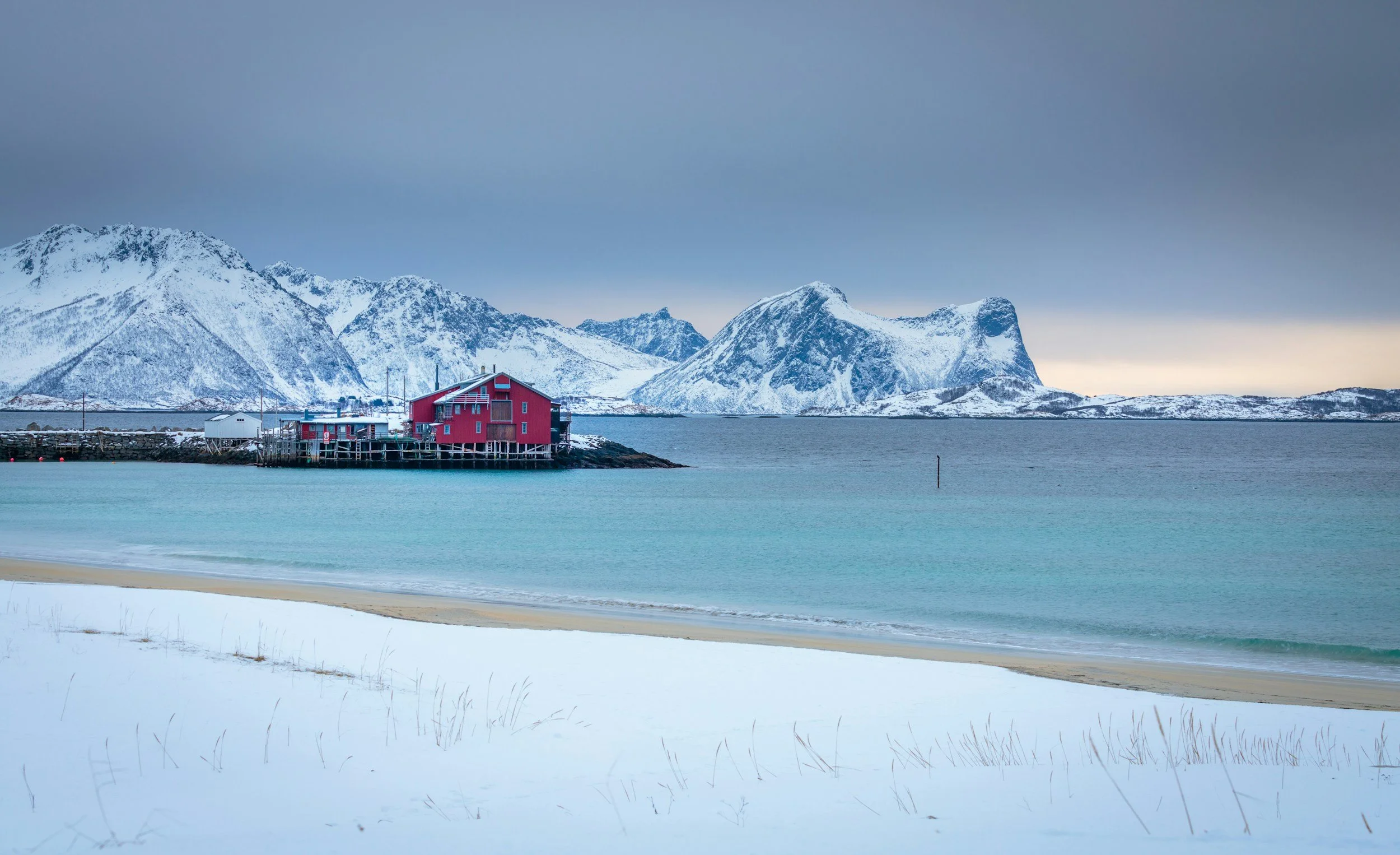
Senja offers a quieter and more landscape-focused Arctic experience.
The island is known for steep mountains rising directly from the sea, fishing villages, exposed coastal roads and long stretches of dark coastline with very little artificial light.
Compared to Tromsø, Senja feels more remote, slower and less developed for tourism. During winter, weather conditions can shift rapidly across the island, but on clear nights the combination of snow-covered mountains, open water and dark Arctic skies can feel extraordinary.
For many travellers, Senja works best as part of a broader Northern Norway itinerary rather than as a stand-alone destination.
Alta
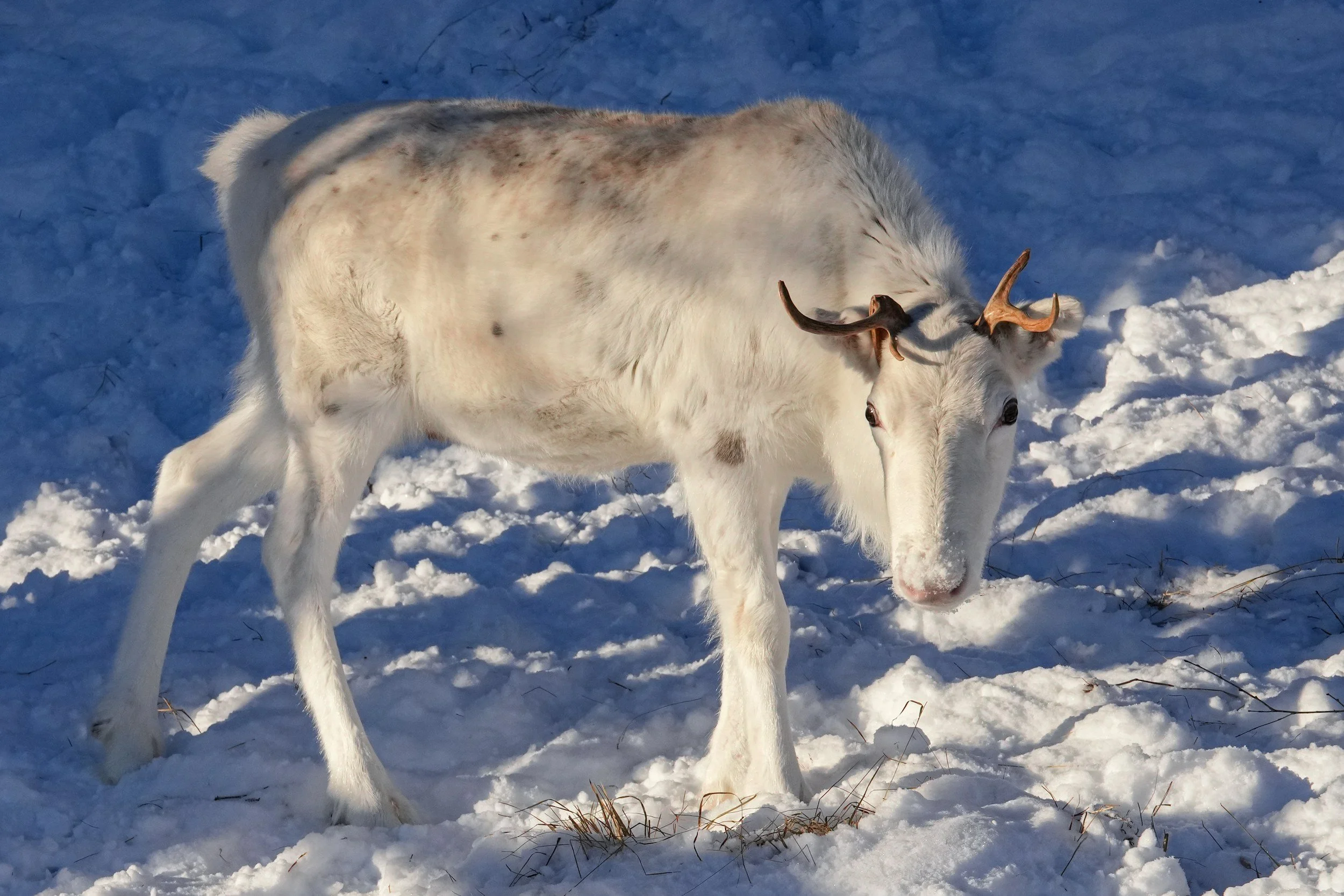
Alta is often considered one of the most stable northern lights destinations in Norway because of its inland climate.
Compared to more exposed coastal regions, Alta frequently experiences colder temperatures, drier air and clearer winter skies.
The region also has a long connection to northern lights research and Arctic winter tourism, and is often chosen by travellers specifically prioritising aurora visibility.
Kirkenes
Kirkenes offers one of the most distinctly Arctic winter experiences in Norway.
Located close to the Russian and Finnish borders, Kirkenes has a colder and more continental climate than much of coastal Northern Norway. Winters are darker, drier and often more stable than further west along the coast.
The region is known for:
strong northern lights visibility
deep snow conditions
inland Arctic landscapes
very limited light pollution
a quieter and more remote atmosphere
Compared to Tromsø, Kirkenes feels far smaller and more isolated, with fewer visitors and less tourism infrastructure. The landscape here feels less coastal Norway and more high Arctic frontier.
For travellers prioritising winter atmosphere, darkness and northern lights conditions over restaurants and city life, Kirkenes can be one of the strongest places in Norway to experience the aurora.
Lofoten
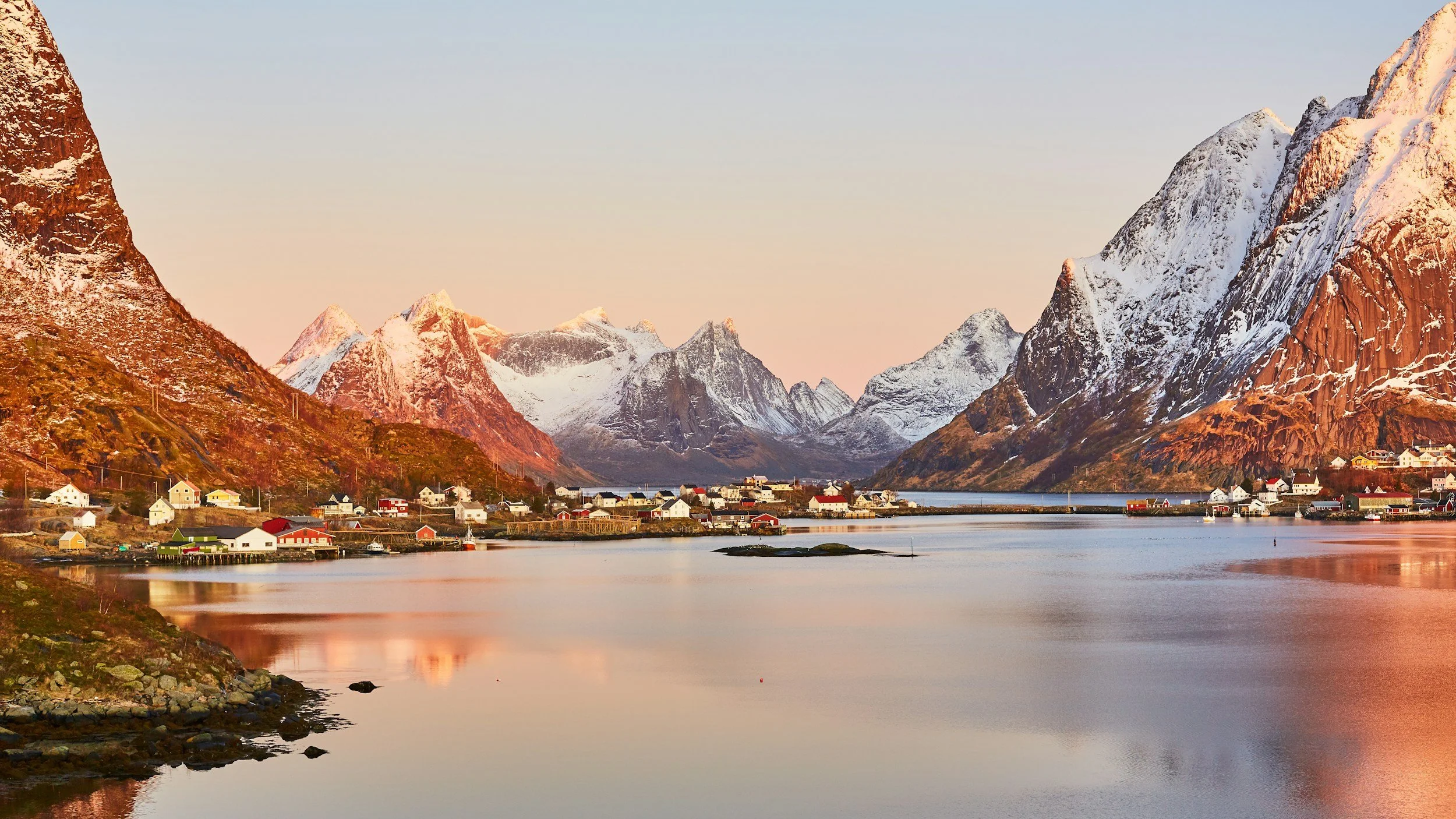
Lofoten is visually one of the most photographed winter destinations in Norway.
The combination of Arctic beaches, fishing villages and steep mountains rising directly from the sea creates extraordinary northern lights photography conditions.
However, many visitors underestimate how exposed the islands are during winter. Weather systems move quickly across the coastline, and conditions can change dramatically within hours.
Svalbard
Svalbard is a remote Arctic archipelago located far north of mainland Norway, roughly halfway between Northern Norway and the North Pole.
The main settlement, Longyearbyen, is one of the northernmost towns in the world with a permanent population.
Svalbard offers one of the most unusual northern lights experiences anywhere in the Arctic.
During the polar night period, darkness lasts throughout the day, creating the possibility of seeing the aurora during afternoon hours rather than only at night.
The landscape feels distinctly different from mainland Norway: wider, colder and more exposed, with glaciers, polar desert terrain and very limited vegetation.
However, Svalbard is significantly more remote, colder and more expensive than mainland Northern Norway, and works best for travellers specifically seeking a deeper high-Arctic winter experience.
For a broader introduction to the region, read Svalbard: The Ultimate Guide to the Arctic Frontier, because conditions in Svalbard are considerably harsher than in mainland Norway. It is also worth reading What to Pack for Svalbard: The Complete Arctic Packing Guidebefore travelling.
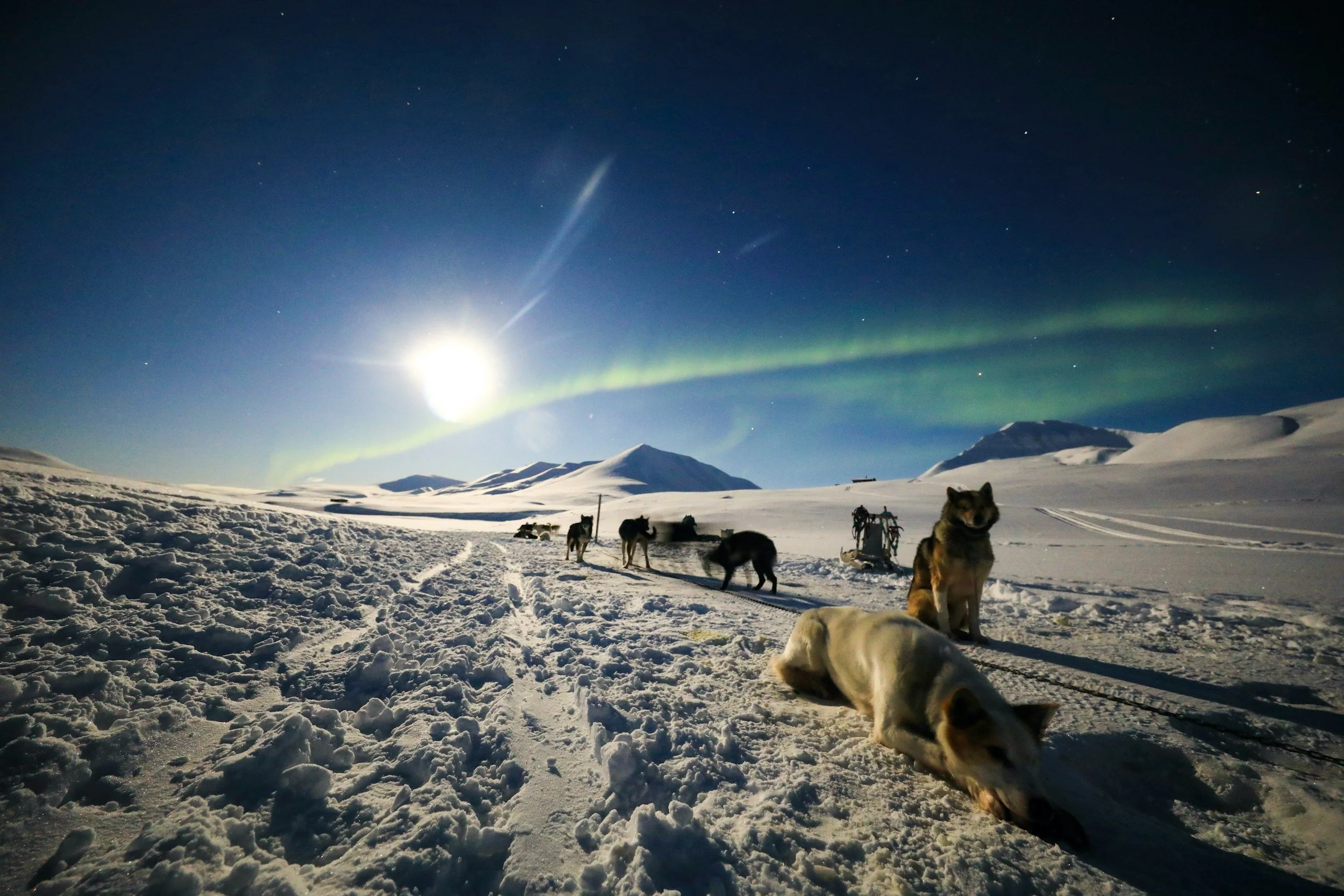
What the Northern Lights Actually Look Like
Northern lights photography often creates unrealistic expectations.
Some nights produce intense green movement clearly visible to the naked eye. Other nights appear softer, weaker or more muted in colour than they do on camera.
Modern cameras capture light differently from human vision, particularly during lower solar activity.
What many people remember afterwards is not necessarily a single dramatic moment, but the wider atmosphere surrounding it: frozen roads at night, snow-covered landscapes, distant coastal lights, cold air and long periods spent waiting beneath the Arctic sky.
Guided Tours vs Driving
Guided Tours
For many visitors, guided northern lights tours are the simplest option.
Experienced local guides:
monitor weather systems
track cloud cover
understand local geography
know where conditions are more likely to clear
This is particularly useful for travellers unfamiliar with Arctic winter driving.
Driving
Driving provides more independence and flexibility, particularly for photographers or travellers spending longer in Northern Norway.
However, winter roads in Arctic Norway can become difficult quickly due to snow, ice, wind and reduced visibility.
Before planning a winter road trip, it is worth reading Driving in Norway in Winter: Laws, Tyres, Road Conditions and What Travellers Must Know.
What to Wear for Northern Lights
This is more important than you may think. Viewing the Northern Lights often involves standing outside for extended periods in very cold temperatures, and staying warm and comfortable helps you enjoy the overall experience more.
Layering is essential.
Typical winter clothing includes:
wool base layers
insulated outerwear
hats and gloves
proper winter boots
windproof outer layers
For more detailed preparation, read:
What to Wear in Norway (All Seasons): The Ultimate Guide Based on How Norwegians Actually Dress
Other Winter Experiences in Northern Norway
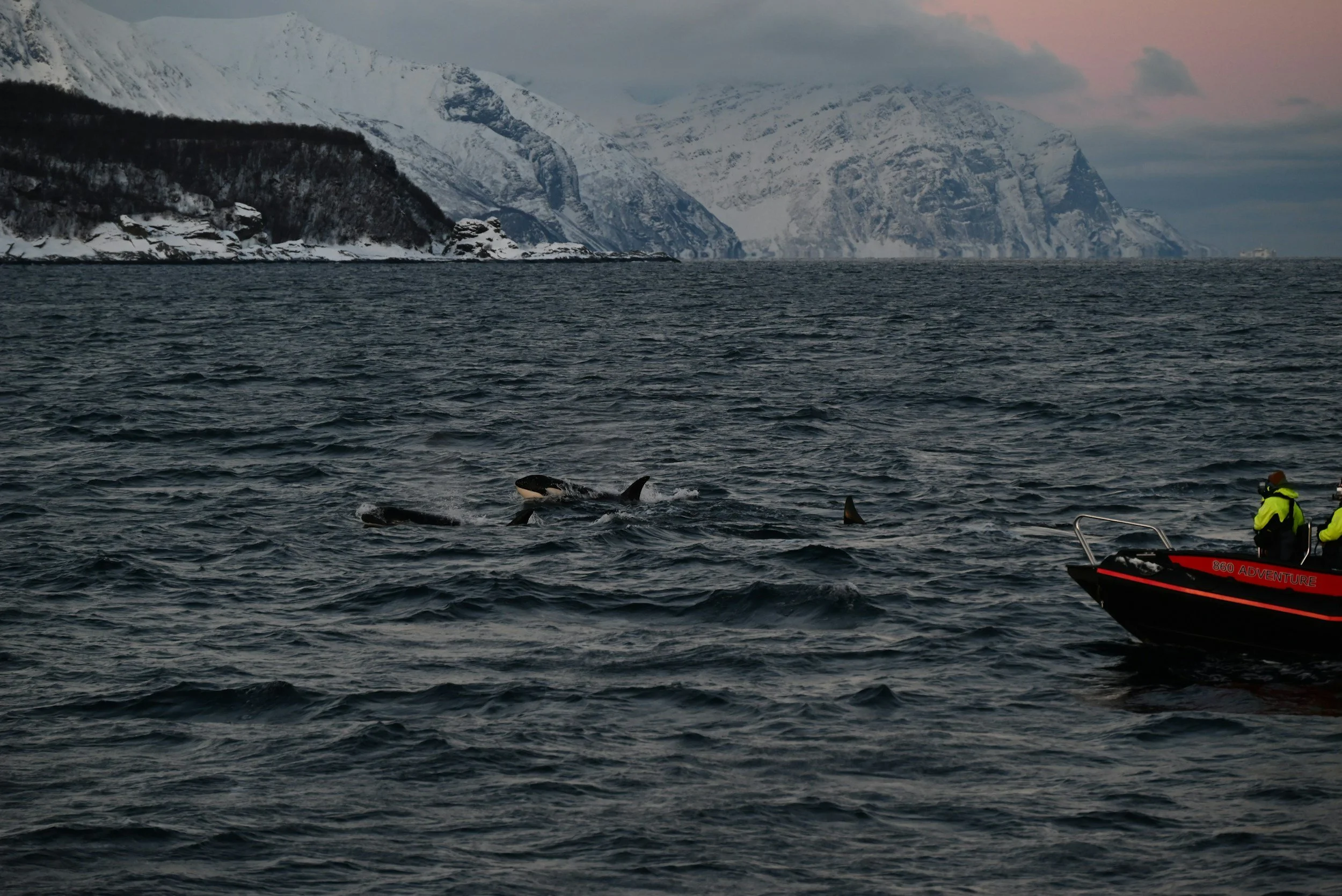
Many travellers combine northern lights trips with other Arctic winter experiences, including:
Husky sledding
Whale watching
Snowshoeing
Cross-country skiing
Fjord cruises
Sami cultural experiences
Arctic sauna and cold-water bathing
In practice, northern lights travel in Norway is often experienced less as a single activity and more as part of a wider Arctic winter atmosphere.
FAQ
Can you see the northern lights in Oslo?
Yes, it does occasionally happen during periods of particularly strong solar activity, but it is relatively rare and not something travellers should plan an entire trip around.
For significantly stronger and more reliable northern lights conditions, Northern Norway is a far better choice.
Can you see the northern lights every night?
No. Aurora visibility changes constantly depending on solar activity and weather.
Is Tromsø worth visiting for the northern lights?
Yes. Tromsø is usually the most practical and accessible northern lights destination for first-time visitors to Norway.
Are northern lights tours worth it?
For many visitors, yes. Guides understand local weather systems and often improve the chances of finding clearer skies.
Can you see the northern lights during summer?
No. Northern Norway experiences midnight sun during summer, meaning the sky never becomes dark enough.
Final Words
Winter temperatures in Northern Norway can become far colder than many visitors expect, particularly inland and during clear nights. Dressing properly makes a significant difference to the overall experience, especially when spending long periods outdoors in Arctic conditions.
The northern lights themselves are never fully guaranteed. Some travellers experience clear skies and strong aurora activity almost immediately, while others spend much of their trip beneath snow, cloud or coastal storms.
But travelling through Arctic Norway in winter is rarely only about the northern lights themselves.
What many people remember afterwards is the atmosphere of the region as a whole: blue polar light during the middle of the day, snow-covered fishing villages, quiet fjords, changing weather moving across the mountains and the feeling of being surrounded by vast Arctic landscapes during the darkest part of the year.
And because of that, Northern Norway in winter can feel extraordinary even on nights when the sky remains completely dark.