
What to Pack for Norway in Summer: A Practical Guide for Changing Weather
Packing for summer in Norway means preparing for far more than cool weather. Temperatures can climb above 30°C during warm, sunny periods, while rain, wind, mountains and coastal conditions can make the same trip feel surprisingly cold. This guide explains what to pack for Norwegian cities, fjords, mountains, Northern Norway, hiking and coastal travel, with practical advice for dressing comfortably wherever your summer journey takes you.
Summer in Norway can be far warmer than many travellers expect. During settled periods, temperatures can rise into the high twenties and above 30°C, particularly in Southern Norway and inland valleys. Oslo can feel genuinely hot, lakes and fjords fill with swimmers, and light summer clothes are completely normal.
But Norwegian summer is also changeable. A warm, sunny day can be followed by rain, wind and a noticeable drop in temperature, and conditions often differ sharply between the coast, the mountains and the north. A week that begins in shorts and sandals may still include days when you reach for a wool jumper and waterproof jacket.
That is why packing well for Norway in summer is less about choosing between “summer clothes” and “warm clothes” and more about bringing both. The best suitcase gives you enough light clothing for real summer weather, while still making it easy to add a layer when conditions change.
What you need also depends on where you are going and what you plan to do. A city break in Oslo requires something very different from hiking in Jotunheimen, travelling through the fjord regions, spending a week in Lofoten or standing outside on the deck of a coastal ship. This guide looks at those differences in detail, so you can pack for the trip you are actually taking rather than for a generic idea of Norwegian summer.
What Summer Weather in Norway Is Actually Like
Norway does not have one single type of summer weather. Conditions change considerably depending on whether you are in a city, beside the coast, deep inside a sheltered valley, high in the mountains or travelling through Northern Norway. They can also change surprisingly quickly within the same place.
Warm and Sunny Weather
Norwegian summers can be genuinely hot. During settled periods of warm weather, temperatures can reach the high twenties and rise above 30°C, particularly in Southern Norway and inland areas. When that happens, you will want the same clothes you would pack for summer elsewhere in Europe: T-shirts, shorts, dresses, skirts, sandals and other lightweight clothing.
Strong sunshine can make it feel even warmer, particularly in cities and sheltered valleys where there is little wind. Oslo can become very hot during warm spells, while inland areas surrounded by mountains can hold onto the heat for days. High temperatures are not limited to the south either. Northern Norway can also experience remarkably warm summer days when weather conditions are right.
The long daylight hours add to the feeling of summer. In June and July, evenings remain light for hours, and in the far north the sun does not set at all around midsummer. Warm weather often means people stay outside late, eat outdoors, swim in lakes and fjords and spend as much of the day as possible in the sun.
This is why it is a mistake to pack for Norway as though summer automatically means cool weather. If you arrive during a hot period without proper summer clothing, you may spend far more time feeling overheated than worrying about the cold.
When the Weather Turns
The other side of Norwegian summer is how quickly that warmth can disappear.
Rain, cloud and wind can make a day feel dramatically cooler, even when the forecasted temperature does not initially look particularly low. A sunny 25°C afternoon and a wet, windy 14°C day require completely different clothing, and both can occur during the same trip.
This difference becomes especially noticeable along the coast. In Western Norway, changing Atlantic weather can bring rain and wind even in the middle of summer, while exposed fjord landscapes can feel much cooler once the sun disappears behind the mountains. Northern coastal areas are similarly influenced by wind and the sea.
Rain also changes what feels comfortable. A temperature that would feel mild in sunshine can feel distinctly cold after several hours outside in wet clothes. This is why a lightweight waterproof jacket and something warm underneath it are so useful, even if the forecast looks excellent when you leave home.
It does not mean you need to spend your Norwegian summer dressed for autumn. It simply means you should have a few layers available when the weather changes.
Mountains Create Their Own Conditions
Summer in the Norwegian mountains deserves particular attention because conditions can be very different from those in the valleys below.
On a sunny day with little wind, hiking can become extremely warm. Strong sunlight, limited shade and the heat generated by walking uphill mean you may be perfectly comfortable in shorts and a T-shirt even at considerable elevation.
But exposed terrain also reacts quickly when weather moves in. Wind can increase, cloud can cover the sun and temperatures can fall rapidly. The higher and more exposed the route, the more important it becomes to carry an extra warm layer and weather protection regardless of how warm it feels when you begin.
This is one of the reasons Norwegian summer packing is so dependent on what you are actually planning to do. Clothes that are perfectly adequate for a café day in Oslo are not necessarily appropriate for several hours above the tree line.
Evenings Can Feel Very Different from the Afternoon
Even after a genuinely hot day, you may want another layer later in the evening.
Near the sea, a breeze can become noticeably cooler once the sun loses its strength. In the mountains, temperatures often fall more quickly than they do in cities. Sitting outside at a cabin, restaurant or campsite also feels very different from walking around during the warmest part of the afternoon because you are no longer generating heat through movement.
A light wool jumper, cardigan or jacket is therefore one of the most useful things you can bring. You may barely touch it during a heatwave, but on another day it may be the piece you wear from morning until evening.
The key to understanding Norwegian summer weather is not that Norway is particularly cold. It is that summer can move between genuine heat and conditions that require warm, weatherproof layers, sometimes within a remarkably short period of time. Packing for both is what allows you to enjoy the country regardless of which version of summer you encounter.
How to Dress for a Norwegian Summer
The most useful way to dress for summer in Norway is to think in terms of clothes you can add and remove easily throughout the day. You do not need to dress as though every summer day is a hiking expedition, but you should rarely leave accommodation without considering what you might need if the weather changes.
On a warm day, this can be as simple as a T-shirt, dress, skirt, shorts or lightweight trousers. If the sun is out and temperatures are in the twenties or above, there is no reason to dress more heavily just because you are in Norway. Proper summer clothing is completely appropriate, and during hot periods anything heavier can quickly become uncomfortable.
The useful part is having another layer with you rather than wearing it unnecessarily from the beginning. A lightweight wool jumper, cardigan, fleece or even a normal sweatshirt can work well depending on what you are doing. Thin merino wool is particularly practical because it packs down easily and regulates temperature well, but there is nothing wrong with bringing a favourite cotton hoodie for city days or evenings. The important thing is simply that you have something warmer available when the temperature drops.
A light waterproof and windproof jacket is one of the most consistently useful pieces to pack. It may spend several sunny days untouched in your suitcase or backpack, but when rain arrives or wind increases near the coast or in the mountains, it becomes much more valuable. You do not need a heavy insulated jacket for an ordinary Norwegian summer trip. The purpose of the outer layer is primarily to keep wind and water out while the clothing underneath provides any additional warmth you need.
This is also why one enormous “just in case” layer is often less useful than several lighter pieces. A T-shirt with a wool jumper and waterproof jacket gives you several combinations depending on the weather. You can wear only the T-shirt in the sun, add the jumper when it cools, use the jacket in warm rain, or combine all three when conditions become wet and cold.
For trousers, the same flexibility applies. Jeans, linen trousers, cotton trousers, skirts and shorts all have a place in a Norwegian summer wardrobe. Technical hiking trousers are useful when you are actually hiking or spending long days outdoors, but they are not necessary for walking around Oslo, having lunch in Bergen or visiting a fjord village.
Your clothing should ultimately reflect the day you are planning, not simply the fact that you are in Norway. A hot afternoon beside the Oslofjord, a rainy day in Western Norway and a full-day hike above the tree line require different clothes, even if they all take place in July.
That is the main principle to remember: pack genuine summer clothes, then add a small number of useful layers that allow those clothes to work when the weather changes.
What to Wear in Norwegian Cities in Summer
Norwegian cities dress for the weather rather than for a fixed idea of what summer should look like. On a hot day in Oslo, you will see exactly the kind of clothing you would expect in any European city in summer: dresses, skirts, shorts, T-shirts, linen, sandals and trainers. When temperatures climb towards 30°C or above, heavier layers quickly become unnecessary.

Oslo is particularly good at showing how different Norwegian summer can feel from the cool, grey image many visitors arrive with. Parks fill up, restaurants move outdoors, people head towards the fjord after work, and swimming becomes part of an ordinary summer day. The Oslofjord in Summer: Islands, Swimming and Sauna Culture looks more closely at this side of life in the capital, from island trips and beaches to swimming and waterfront sauna culture.
For a normal day in the city, there is no reason to wear technical outdoor clothing unless you are actually planning to leave the urban areas for a hike or another outdoor activity. Jeans, lightweight trousers, dresses, skirts and comfortable shoes are all entirely normal. Norwegian city style tends to be casual and understated, and practical clothing does not necessarily mean looking as though you are heading into the mountains.
The complication is that the weather may not stay warm all day. A sunny afternoon can turn into a cooler evening, and rain can change what feels comfortable surprisingly quickly. Carrying a light knit, cardigan or wool jumper gives you something to put on without requiring an entirely different outfit. A compact waterproof jacket is also useful on days when rain is possible, particularly in cities on the western coast.
Footwear can remain fairly ordinary as well. Comfortable trainers or sneakers work for most city sightseeing, while sandals are perfectly practical during genuinely warm weather. If rain is forecast, shoes that tolerate getting wet are more useful than delicate summer footwear, but you do not need hiking boots simply because you are travelling in Norway.
The same basic principle applies in Bergen, Trondheim, Stavanger and other Norwegian cities, although local weather changes what you are likely to reach for most often. Bergen generally makes a waterproof layer more useful, while Oslo can spend long periods in much warmer and drier summer weather.
For city travel, the best approach is therefore to pack as you would for a European summer, but keep one warmer layer and some rain protection available. Norwegian cities can feel properly summery when the weather is good, and there is no reason to spend a 30°C afternoon dressed for a climate you are not actually experiencing.
What to Pack for Southern Norway
Southern Norway is one of the places where visitors are most likely to underestimate how warm a Norwegian summer can become. Oslo, the Oslofjord, Sørlandet and the inland areas of Eastern Norway can all experience long periods of warm, settled weather, with temperatures climbing into the high twenties and sometimes above 30°C. On those days, you need genuine summer clothing rather than a wardrobe built around the assumption that Norway will always be cool.
T-shirts, dresses, skirts, shorts, linen and other lightweight fabrics are therefore worth packing properly. Sandals can be useful during hot weather, although comfortable trainers are still the most versatile choice for sightseeing and longer days on foot. Swimwear should also be easy to reach rather than buried at the bottom of the suitcase. Beaches, lakes, fjords and swimming spots become an important part of summer life when the weather is warm.

The southern coast has its own rhythm in summer. Towns and smaller coastal communities become livelier, boats fill the harbours and much more of the day is spent outside. If you are travelling through this part of the country, Southern Norway Travel Guide looks more closely at the coastline, towns and landscapes that make the region particularly appealing during the warmer months.
Warm weather does not mean you should leave every layer at home. Sea breezes can make evenings along the coast noticeably cooler, while a rainy day can feel completely different from the sunny afternoon before it. One light wool jumper, cardigan or sweatshirt and a waterproof jacket are usually enough to cover those changes without filling your suitcase with heavy clothing. A pair of jeans or lightweight long trousers is also useful for cooler evenings and wet days.
Inland areas can feel even hotter when the weather is stable because they do not receive the same cooling influence from the sea. If your itinerary moves between the coast and inland Norway, it is quite possible to spend one day in shorts and a T-shirt and another wearing long trousers and a jumper beneath a rain jacket.
This is also the part of Norway where many classic Norwegian summer habits become particularly visible. Long evenings at a cabin, boating, swimming, barbecues, eating outdoors and spontaneous trips to the water are all part of how many Norwegians use the season. Norwegian Summer Traditions: How Norwegians Spend the Summer in Norway explores this wider summer culture in more depth, including the role of July holidays, coastal travel, cabin life and the traditions that shape the season.
For most trips through Southern Norway, the balance is therefore fairly simple: pack for real summer heat first, then add a small number of layers for rain, wind and cooler evenings. You are much more likely to use both sides of that wardrobe than to spend the entire trip dressed for one consistent temperature.
What to Pack for Western Norway and the Fjords
Western Norway requires a different packing strategy from Southern Norway because the weather is generally more influenced by the Atlantic. Summers can still be warm and sunny, sometimes very warm in sheltered fjord areas, but rain, wind and sudden changes are much more likely to shape the day.
The most important thing to bring is a lightweight waterproof and windproof jacket that you can wear over normal summer clothes. This does not need to be a heavy hiking shell for ordinary sightseeing, but it should be genuinely waterproof rather than simply water-resistant. A light wool jumper, cardigan or fleece is useful underneath when temperatures drop.
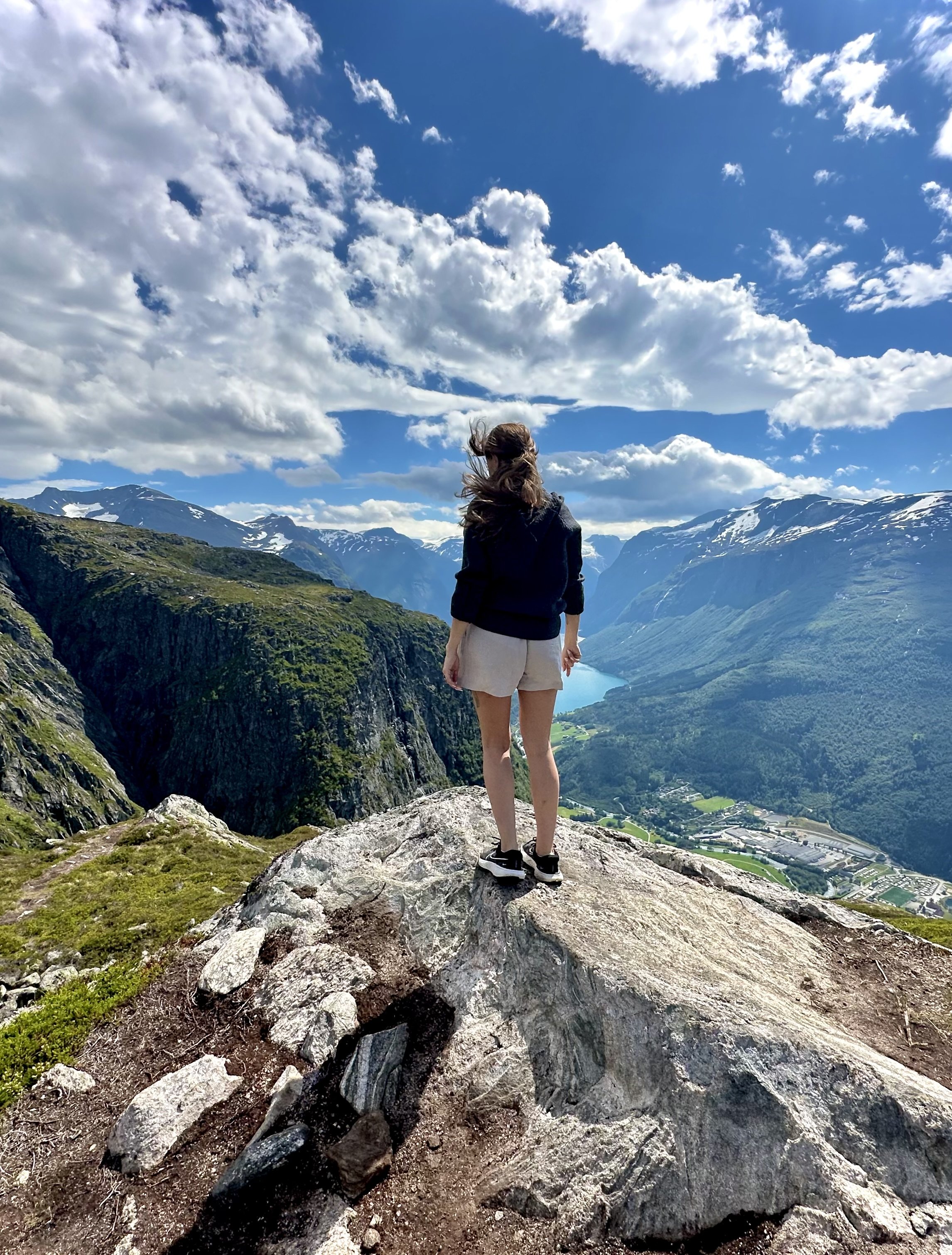
On warm days, you can still dress exactly as you would elsewhere in summer. T-shirts, dresses, shorts, skirts and lighter trousers are all appropriate. The difference is that you should expect to carry an extra layer more often, especially if you are spending time near the water or moving between different elevations.
The fjords can also create their own local conditions. A sheltered village may feel warm and still, while a viewpoint, boat trip or exposed road can feel much cooler because of wind. The same is true when travelling between fjord regions, which can differ noticeably in weather and landscape. The Different Fjord Regions of Norway gives a useful overview of how these areas differ and can help you understand why packing for one part of Western Norway is not always identical to another.
Footwear depends heavily on what you are doing. Comfortable trainers or walking shoes are usually enough for villages, museums and ordinary sightseeing, while hiking shoes become more important if you are planning trails, viewpoints or longer walks on uneven ground. Waterproof footwear is helpful during wet periods, particularly if you are spending several days outside.
Places such as Geiranger are a good example of why layering works so well. You might begin the day in relatively mild conditions beside the fjord, then travel higher into the surrounding mountains where it is noticeably cooler and windier. Geiranger Travel Guidelooks more closely at the village, fjord and surrounding viewpoints, and is useful if this area is part of your itinerary.
Boat trips add another layer of variation. Even when it feels warm on land, moving across open water can make the air feel much cooler, particularly in shade or wind. A jumper and windproof outer layer are often worth carrying even when the forecast looks good.
Western Norway is therefore not a place where you need to pack for permanent cold. You should still bring proper summer clothes. The difference is that rain protection, wind protection and one reliable warm layer are more likely to be used regularly here than in the warmer and drier parts of the south.
What to Pack for the Norwegian Mountains
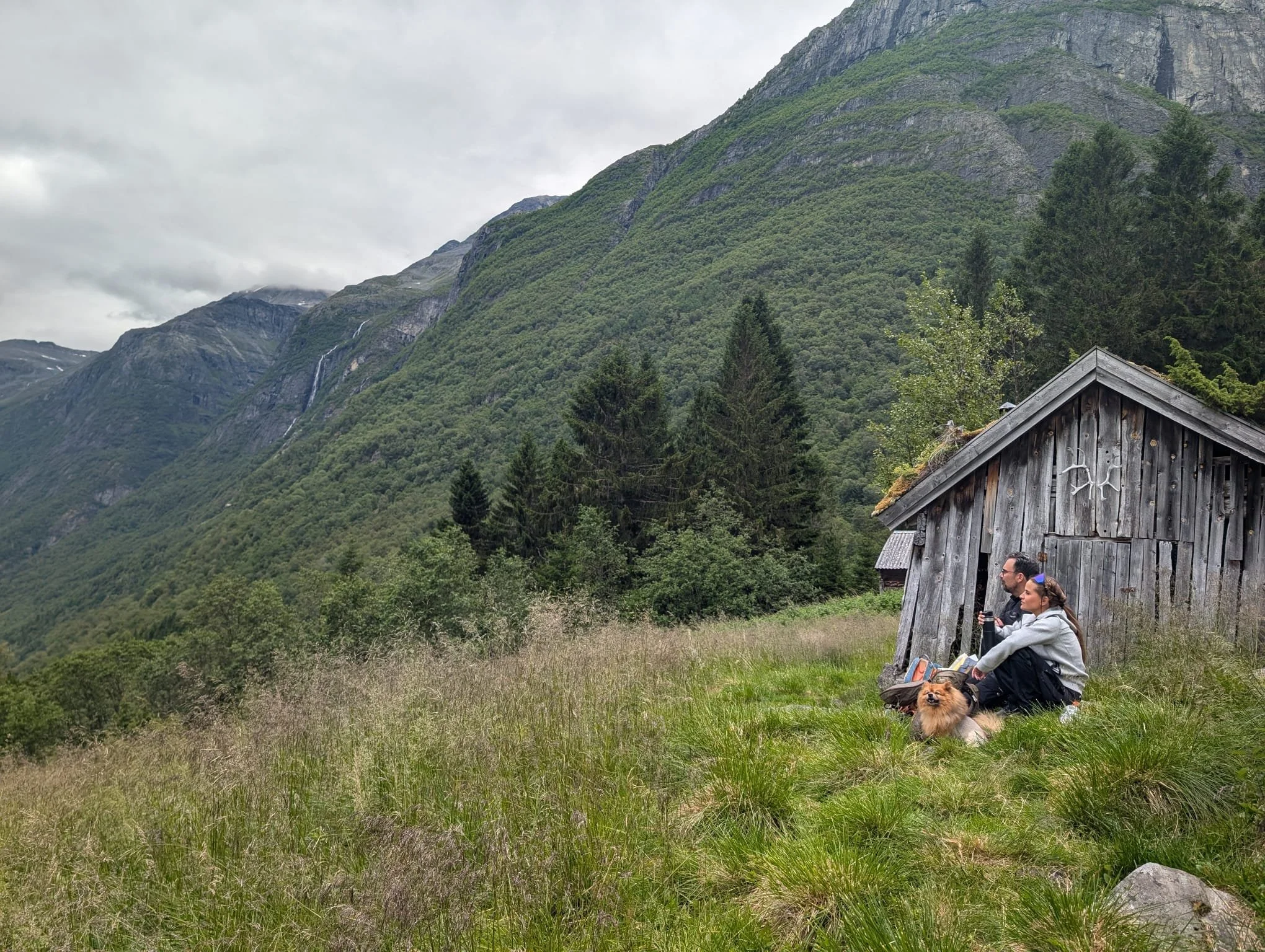
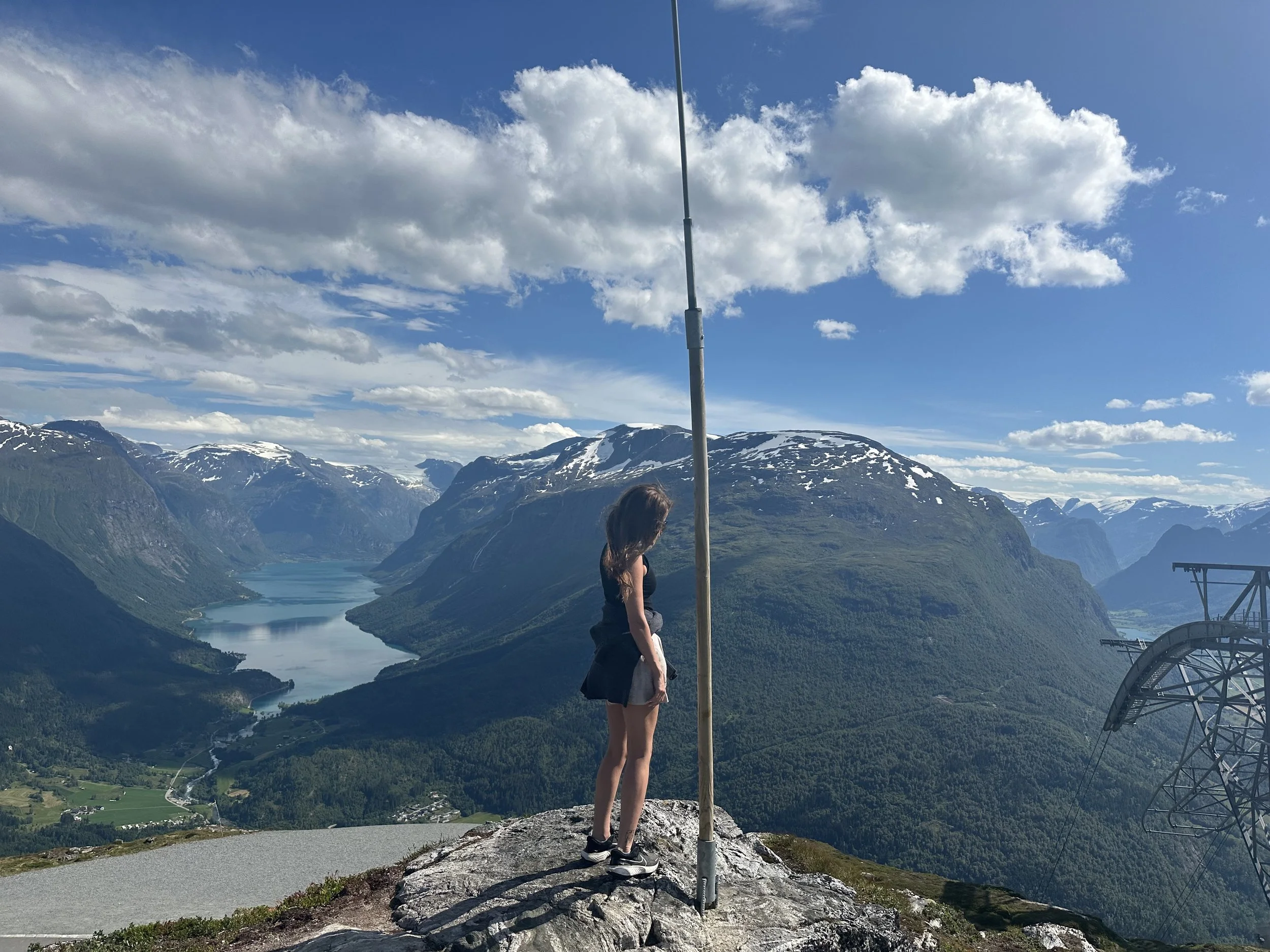
Summer in the Norwegian mountains can be surprisingly warm. On clear days with little wind, strong sun and physical activity can make hiking feel hot even at considerable elevation, and it is completely normal to walk in shorts and a T-shirt when conditions are stable.
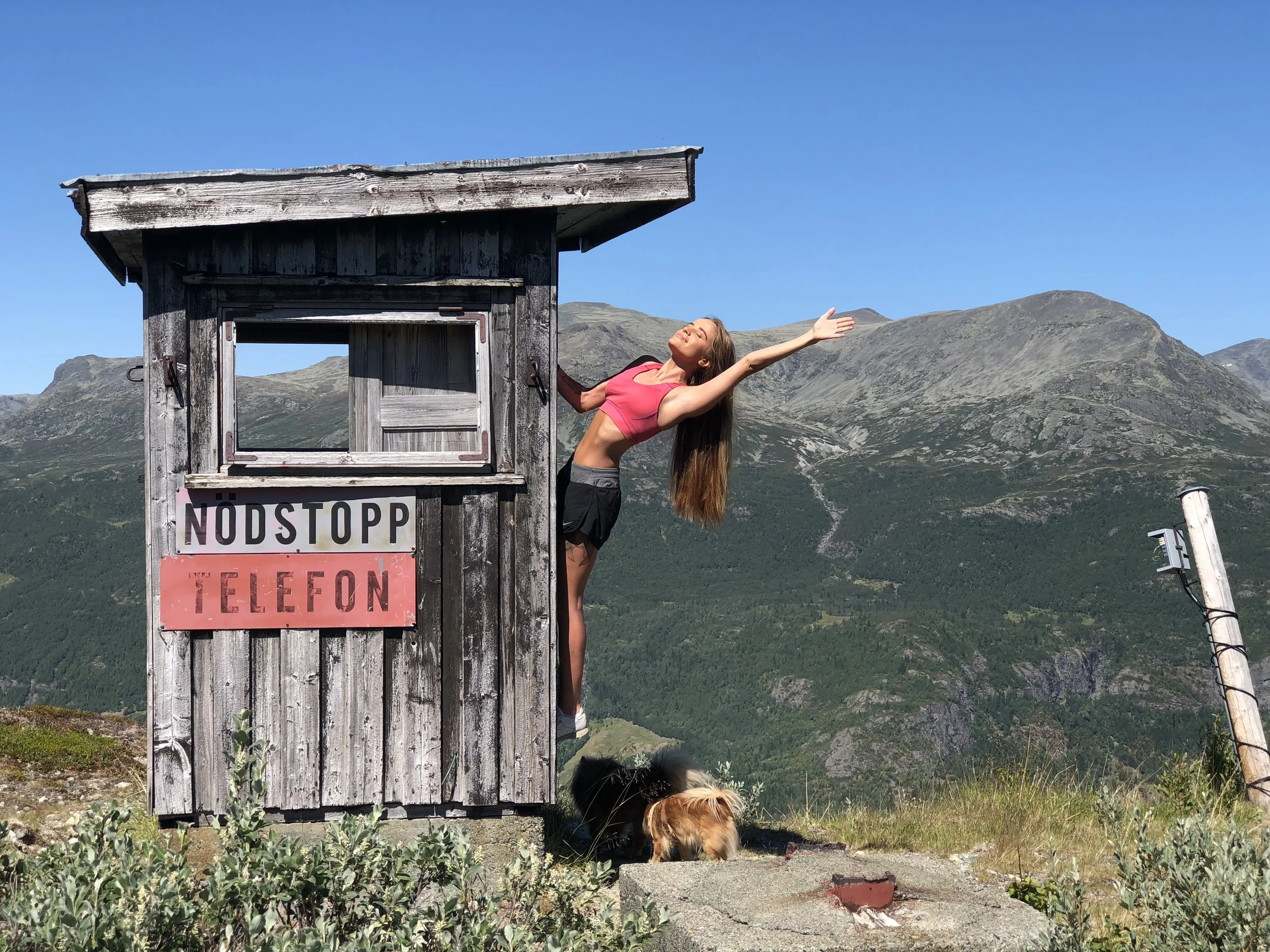
The difficulty is that mountain weather can change much faster than the weather in a city or sheltered valley. Wind can increase, cloud can move in and temperatures can drop sharply, particularly above the tree line. A route that begins in warm sunshine can therefore require a wool jumper and waterproof jacket later in the same day.
For ordinary summer hiking, breathable clothing, a light warm layer and proper weather protection are more useful than dressing heavily from the beginning. A small backpack is essential because you need somewhere to carry the layers you are not wearing, along with water, food and other basics.
Footwear should reflect the route rather than the fact that you are simply “in the mountains”. Easy valley walks and well-maintained trails may be perfectly comfortable in supportive trainers or light hiking shoes, while steeper, rockier or longer routes are better suited to proper hiking boots. If you are planning serious mountain days, Hiking in Norway Packing Guide goes into much more detail about clothing, footwear and equipment for the trail.
Jotunheimen is a good example of how varied conditions can be. A sunny day in the valleys can feel warm and sheltered, while exposed ridges and higher routes are cooler, windier and much less forgiving if the weather turns. A Guide to Jotunheimen: Home to Northern Europe’s Highest Mountain gives more context on the landscape and the kind of terrain you may encounter there.
The same applies more broadly across Mountain Norway. Valdres, Rondane and Jotunheimen can all experience beautiful, hot summer weather, but the combination of altitude, exposure and long distances means you should still carry enough clothing to deal with sudden changes. Mountain Norway: Jotunheimen, Rondane, Valdres and Beyond is useful if your trip includes several inland mountain regions rather than one specific destination.
If you are travelling more slowly through the valleys and mountain communities rather than hiking every day, your packing can be much more relaxed. Jeans, shorts, T-shirts and normal summer clothes will often be enough around villages, hotels and farms, with a jumper and rain jacket for cooler weather. Valdres, Norway: Mountain Farms, Local Food and Life Between the Valleys and Peaks shows this softer side of the mountain regions, where summer is as much about valley life, farms and local food as it is about high-altitude hiking.
The key difference in the mountains is therefore not that you always need warmer clothes. It is that you need to be able to carry more options with you. When conditions are good, summer can feel genuinely hot. When the weather changes, those extra layers become important very quickly.
What to Pack for Lofoten and Northern Norway
Northern Norway is often packed for as though it will be cold all summer, but that is too simplistic. Lofoten, Tromsø and the wider northern coast can have beautiful, warm summer days, and when the sun is out and the wind drops, temperatures can feel surprisingly high. Shorts, T-shirts, dresses and other normal summer clothes can all be useful.
At the same time, the weather is more exposed and more strongly influenced by the sea than in much of Southern Norway. Wind can make a mild day feel much cooler, and cloud or rain can change conditions quickly. It is therefore sensible to carry a warm layer and a lightweight waterproof and windproof jacket even when the forecast looks good.
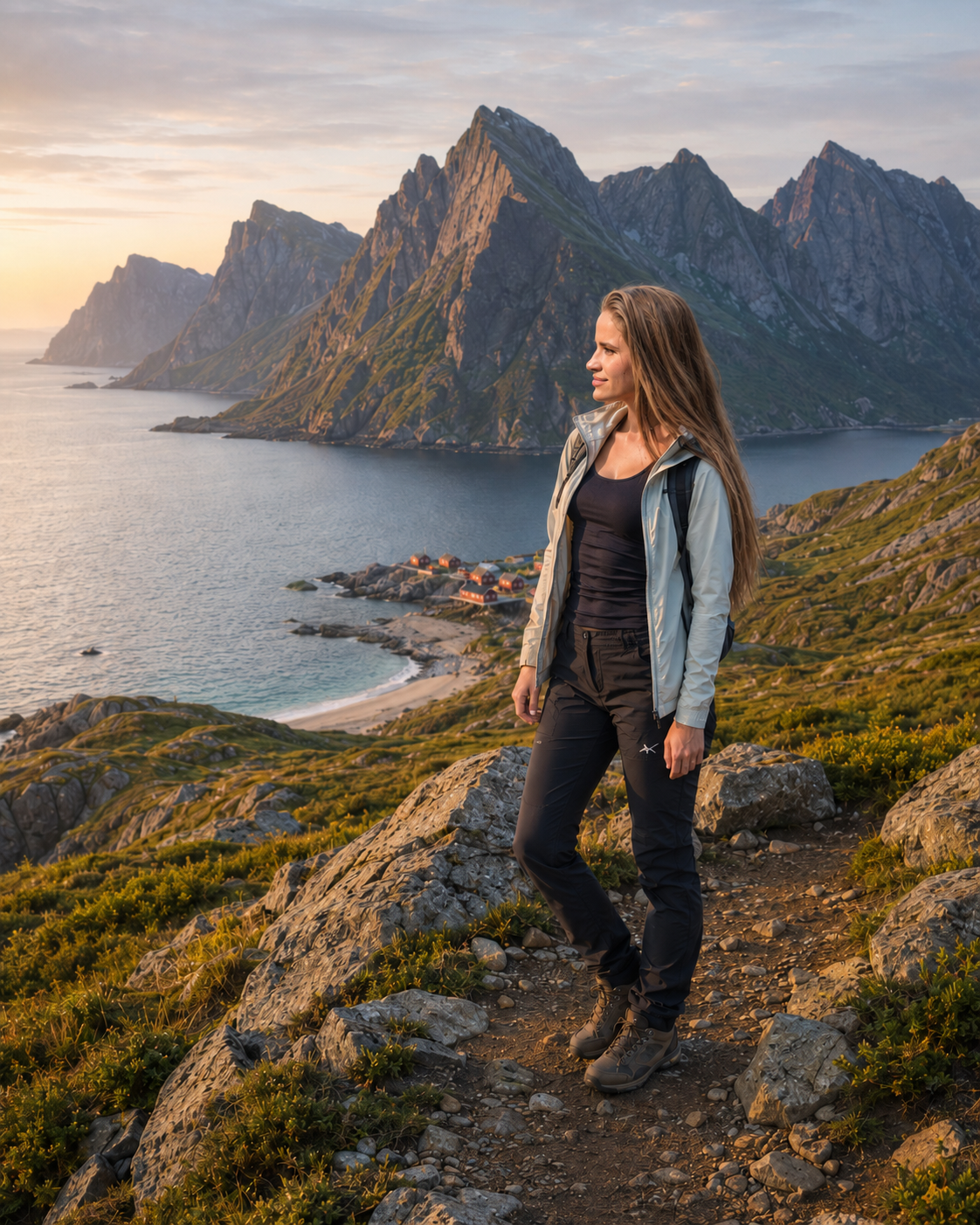
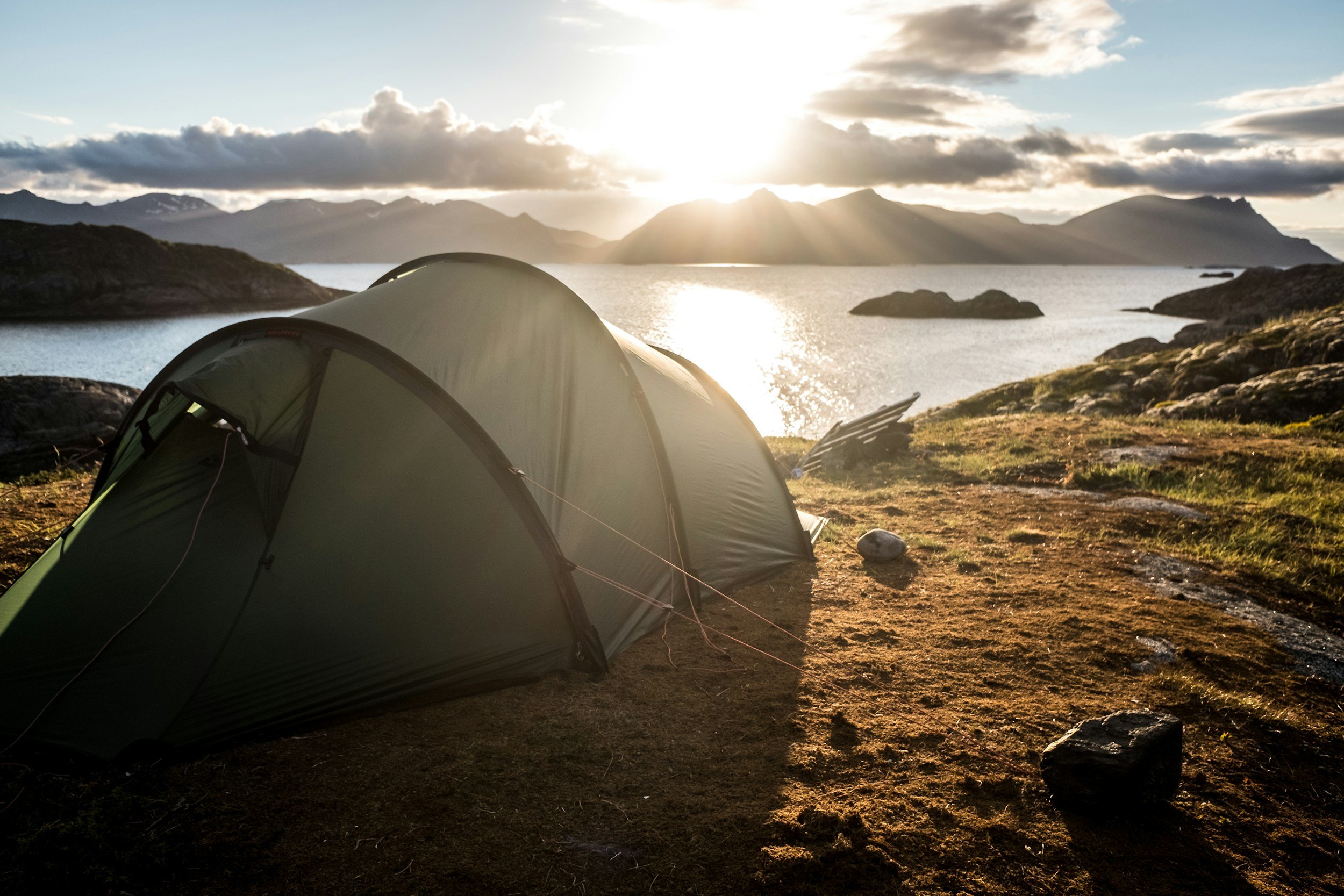
Lofoten is a good example of this contrast. A sunny afternoon in a sheltered fishing village can feel warm enough for a T-shirt, while a boat trip, exposed viewpoint or hike can require a jumper and jacket later the same day. Lofoten Travel Guide looks more closely at the islands, villages, beaches and landscapes you may encounter, which also helps explain why what you wear can change so much depending on the day.
Footwear should again reflect what you plan to do. Comfortable trainers are perfectly suitable for villages and ordinary sightseeing, but hiking routes in Lofoten can be steep, uneven and wet, so proper hiking footwear becomes much more important if you plan to spend time on the trails. A small backpack is useful for carrying extra layers because you are likely to take clothing on and off repeatedly as conditions change.
The long daylight also affects what is worth packing. Around midsummer, much of Northern Norway experiences the Midnight Sun, and in the far north the sky can remain bright throughout the night. Sunglasses remain useful late into the evening, while a sleep mask can make a real difference if your accommodation does not have effective blackout curtains.
Northern Norway is therefore not a place where you should leave summer clothes at home. The better approach is to bring both proper summer clothing and dependable layers for wind, rain and cooler periods. You may spend one afternoon in shorts beside the sea and the next wearing long trousers, a wool jumper and waterproof jacket in the same region.
What to Pack for a Norway Coastal Cruise
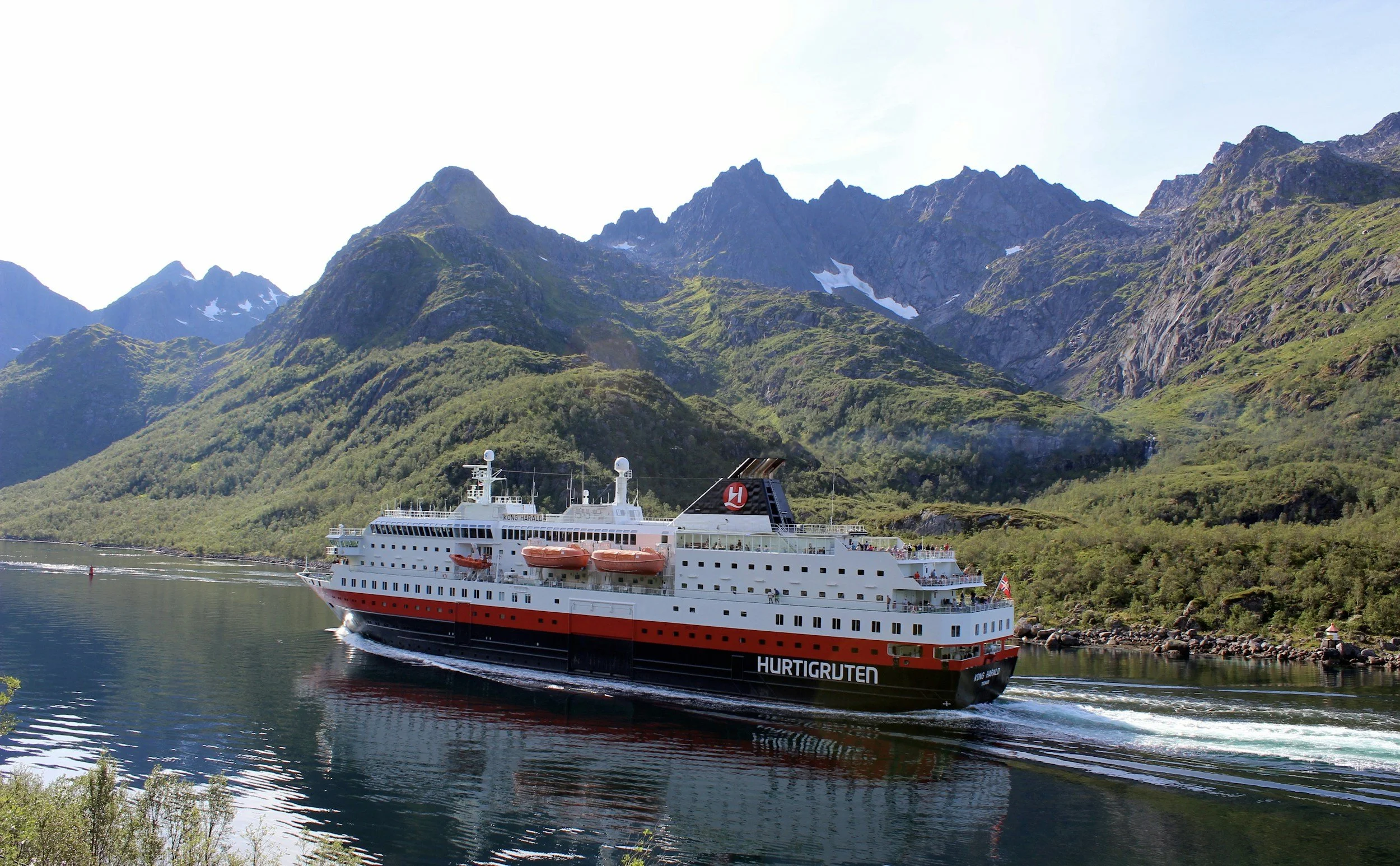
A summer voyage along the Norwegian coast creates one of the biggest contrasts between what the weather looks like and how it actually feels. You may spend a warm afternoon ashore in Bergen, Ålesund or another coastal town wearing a T-shirt, then return to the ship and need a jumper and windproof jacket almost immediately when you step onto an exposed deck.
Wind is the main reason. Even during warm weather, a moving ship can feel considerably cooler than the same temperature on land, particularly early in the morning, late in the evening or when sailing through open stretches of coast. Inside the ship, however, temperatures are comfortable, so heavy clothing can quickly become impractical. Layers that are easy to take on and off work particularly well.
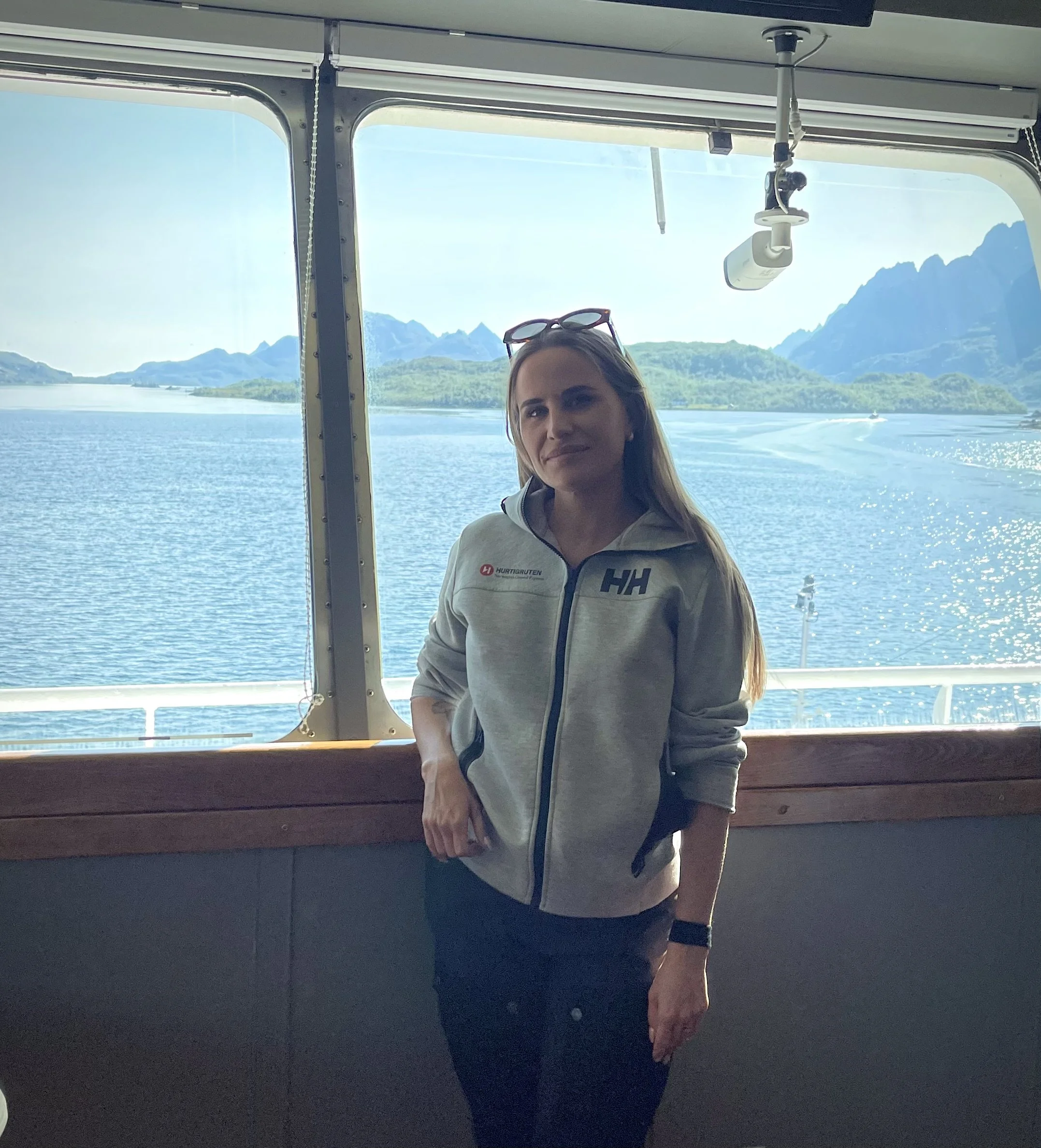
For summer coastal travel, I would pack normal summer clothing alongside a light wool jumper or fleece and a waterproof, windproof outer layer. Jeans or lightweight trousers work well for most days, while shorts and dresses are useful during genuinely warm weather ashore. Comfortable shoes are usually sufficient on board, although more supportive footwear may be useful for excursions.
The conditions can also change significantly as you travel north. A journey beginning on the western coast may move through mild, rainy weather before reaching cooler and more exposed conditions farther north. That makes versatility more important than trying to predict one temperature for the entire voyage.
If a coastal voyage is a major part of your trip, What to Pack for a Norway Coastal Cruise goes into the clothing, footwear and practical items needed for time on board, exposed decks and excursions ashore in much more detail.
The important thing is not to pack as though you will spend the entire voyage standing outside in cold weather. Bring proper summer clothes for warm days and port visits, then keep a warm layer and weatherproof jacket close enough to reach whenever you want to spend time outside on deck.
What Shoes Do You Actually Need?
You do not need hiking boots for every summer trip to Norway. The right footwear depends far more on what you plan to do than on the country itself.
For city breaks, comfortable trainers or sneakers are usually the most useful choice. Oslo, Bergen, Trondheim and Stavanger are easy to explore in normal everyday shoes, although you may walk much farther than expected over the course of a day. In Bergen and other wetter parts of Western Norway, shoes that can tolerate rain are particularly useful, especially if the forecast looks unsettled.
Sandals are also completely appropriate during warm weather. When temperatures rise into the twenties or above, there is no reason to avoid normal summer footwear simply because you are in Norway. They work well for relaxed city days, beaches, cafés and time around lakes or the fjord, although you will probably still want a more supportive pair of shoes for longer sightseeing days.
If your itinerary includes fjord viewpoints, countryside walks or easier trails, supportive trainers or light hiking shoes may be enough. The important thing is to look at the actual route rather than assuming that every outdoor attraction requires heavy boots. Many popular viewpoints involve relatively straightforward walking, while others quickly become steep, rocky or slippery.
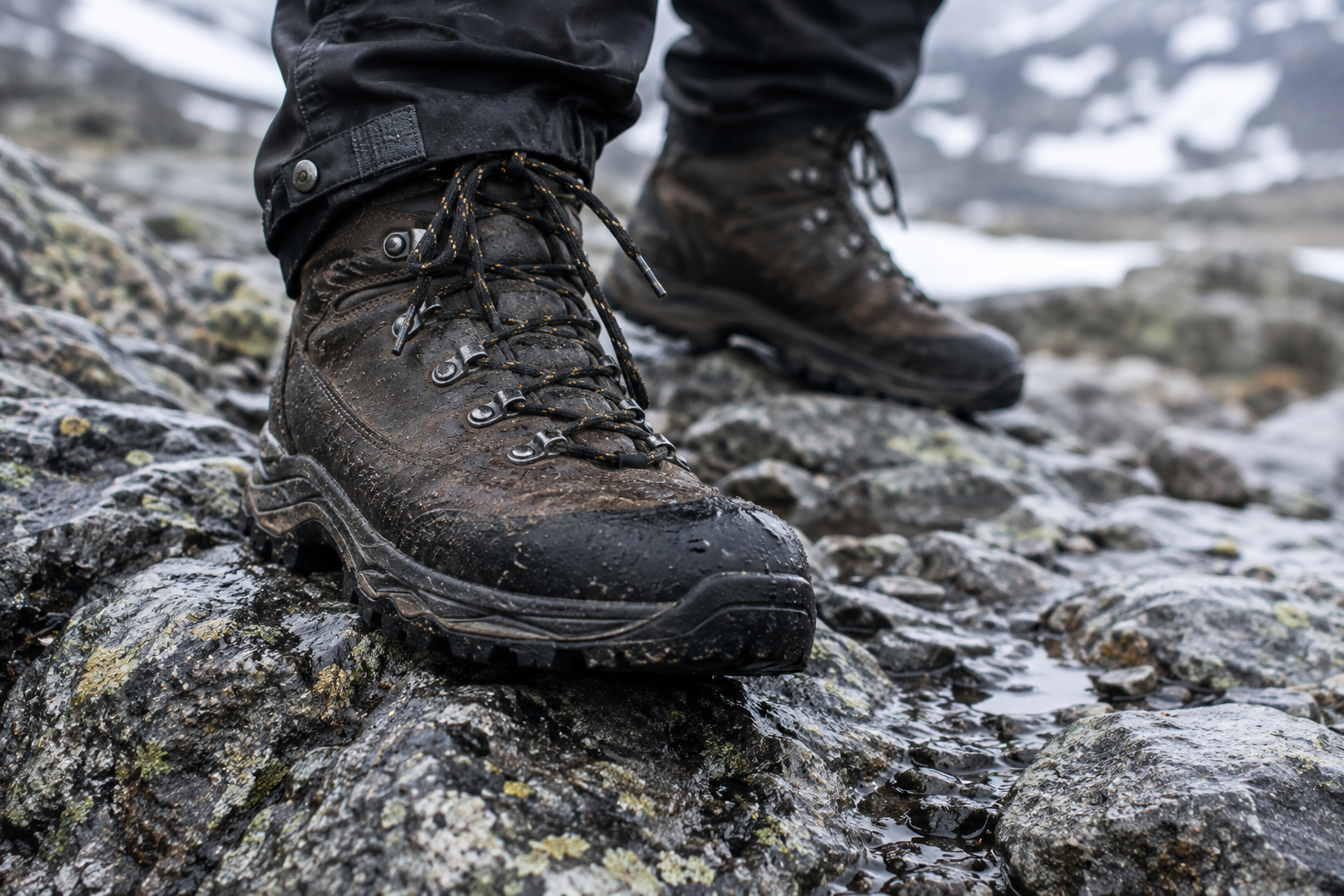
Proper hiking footwear becomes much more important when you are planning longer mountain routes, uneven terrain or hikes where wet rock and changing weather are likely. Trails in places such as Jotunheimen and Lofoten can be steep and rough, and footwear with good grip and support makes a noticeable difference. For serious hiking days, your shoes should be chosen for the terrain rather than for how they look in the rest of your travel wardrobe.
One thing I would avoid is buying a brand-new pair of hiking boots immediately before your trip and wearing them for the first time on a long trail. Whatever shoes you bring should already be comfortable enough for several hours of walking.
For most summer itineraries, two pairs are enough: comfortable everyday shoes for cities and travel days, and a second pair suited to whatever outdoor activities you are planning. If your trip is mostly urban, that second pair might simply be sandals. If you are spending several days in the mountains, it should probably be proper hiking footwear.
Final Words
Norwegian summer is difficult to reduce to one temperature, one region or one type of clothing. It can mean more than 30°C and swimming in the Oslofjord, bright evenings along the southern coast, warm hiking weather in the mountains, rain moving through the fjords or a cool, windy day in Lofoten.
That variety is part of what makes summer travel in Norway so enjoyable, but it is also what makes packing well important. You do not need to dress for cold weather all season, and you should not leave proper summer clothes at home. At the same time, a few reliable layers make it much easier to adapt when the weather changes.
The most useful summer suitcase therefore contains both sides of the season: shorts, dresses, T-shirts and swimwear for genuinely warm days, alongside a good jumper, long trousers and waterproof protection for the moments when the temperature drops or the rain arrives.
What you pack should ultimately reflect the Norway you are actually going to experience. A week in Oslo and Southern Norway will look different from a hiking trip through Jotunheimen, a road trip through the fjords or a summer voyage along the coast.
Norwegian summer is not defined by being cold. It is defined by how quickly the conditions around you can change, and by how much easier it is to enjoy them when your clothes can change with them.
More articles about Norway:
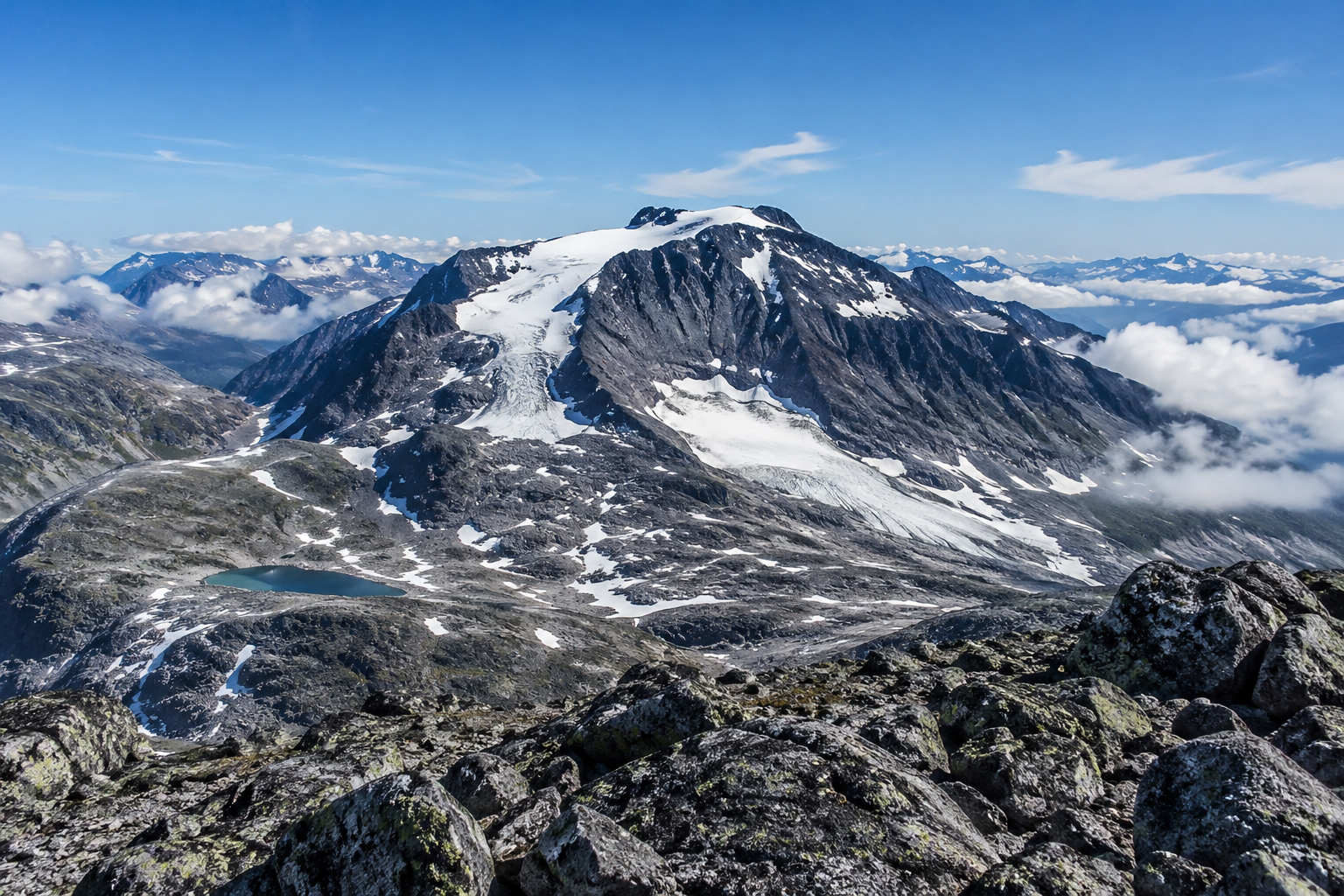


Explore Mountain Norway on a 10-day road trip through Valdres, Jotunheimen and Rondane, with scenic mountain roads, traditional summer farms, Besseggen and Galdhøpiggen along the way.