What to Pack for Norway in Winter: The Ultimate Cold-Weather Packing List
Planning what to pack for Norway in winter means preparing for cold, snow, wind, ice and very different conditions between cities, mountains and the coast. This guide explains how to layer properly, what kind of jacket, boots and accessories you actually need, and how to adapt your packing for Oslo, Bergen, Arctic Norway, ski destinations and winter coastal voyages.
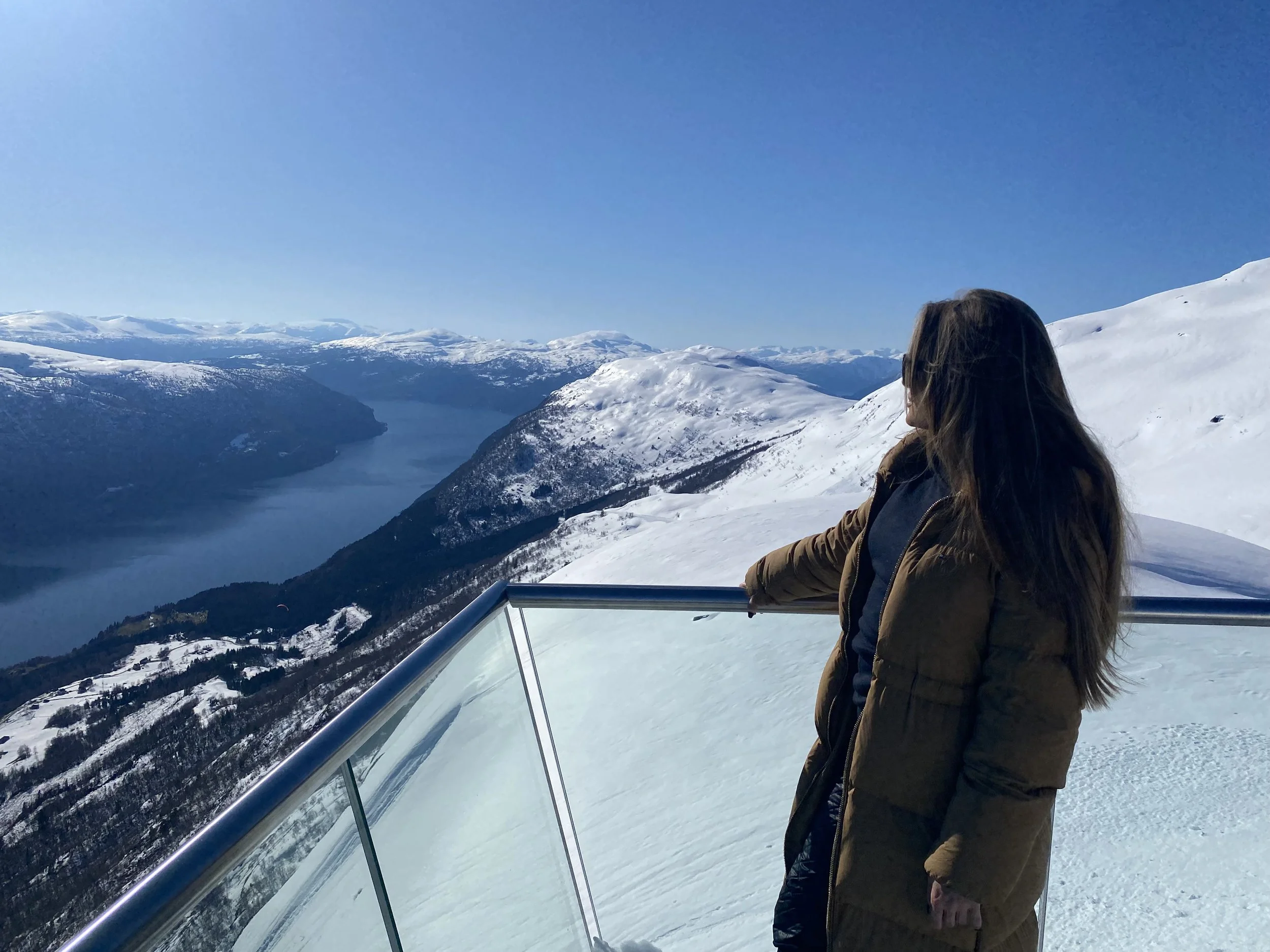
Packing for winter in Norway is less about preparing for one specific temperature and more about preparing for change. A winter trip can take you from heated museums and restaurants to icy city streets, from wet coastal weather to dry mountain snow, or from a warm ship directly onto a windy deck somewhere above the Arctic Circle.
The most useful approach is therefore not to pack the heaviest clothes you can find. It is to build a wardrobe that can be adjusted throughout the day. Wool close to the body, insulating layers above it, protection from wind and moisture on the outside, and genuinely suitable footwear will take you much further than one enormous winter coat.
What you need also depends on the kind of winter trip you are planning. A city break in Oslo, a ski holiday in the mountains, a coastal voyage and a week in Arctic Norway place very different demands on your clothing. If you are still deciding what kind of winter experience you want, Winter Travel in Norway: Where to Go and What to Expect looks at the main destinations and different ways to experience Norway during the colder months.
Winter Weather in Norway Is Not the Same Everywhere
There is no single Norwegian winter climate.
Oslo and much of inland Southern Norway can have periods of dry cold, snow and ice, but temperatures also move above freezing and create wet streets and slush. Higher mountain areas usually have more persistent snow and colder conditions, particularly at ski destinations and across exposed plateaus.
Western Norway is different. Bergen, the fjords and much of the coast are strongly influenced by the sea, which generally keeps temperatures milder but also brings rain, wind and rapidly changing weather. A waterproof outer layer can be more important here than simply adding more insulation.
Northern Norway is also much more varied than it sometimes appears in packing guides. Coastal destinations such as Tromsø and Lofoten are moderated by the sea and do not experience the same winter temperatures as inland Finnmark or the high mountains. Wind, snow, ice and long periods spent outside can nevertheless make the cold feel considerably more intense.
The month matters too. December and January bring the darkest part of the season, while February and March generally provide much more daylight and can feel very different even when snow remains deep. Best Time to Visit Norway: A Seasonal Overviewlooks more closely at how the experience changes throughout the year.
This regional variation is exactly why layering works so well in Norway.
How to Layer for Winter in Norway
A good winter outfit is usually built in three stages: something that manages moisture close to your skin, something that keeps you warm, and something that protects you from the weather. The thickness of each layer can then change according to where you are and what you are doing.
Start with Wool Next to the Skin
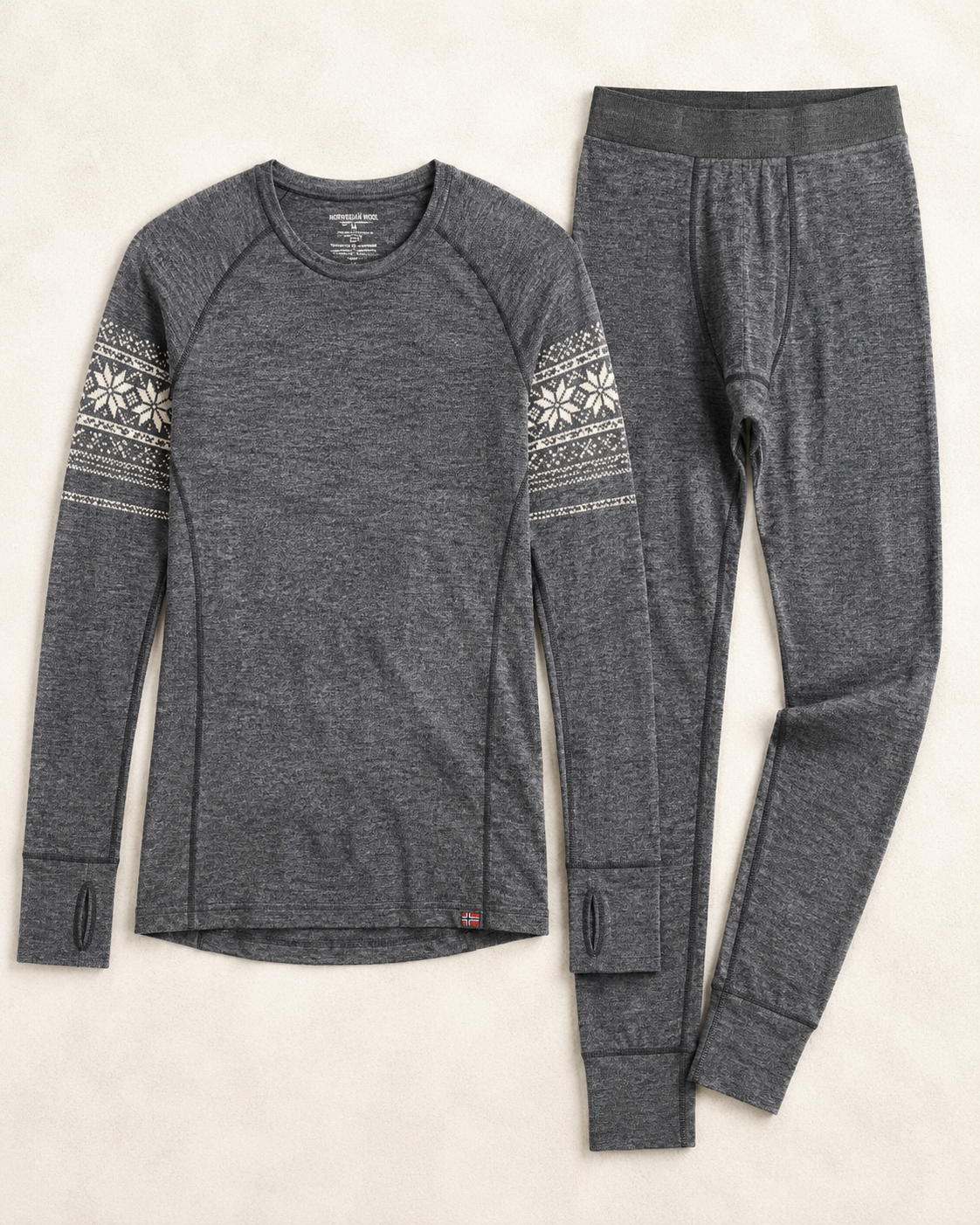
For long periods outdoors, merino wool or another wool base layer is one of the most useful things you can bring to Norway. A thin wool top and leggings provide warmth without adding much bulk, and wool continues to insulate reasonably well even when it becomes slightly damp.
This matters particularly when you are active. Walking uphill, skiing or moving quickly through the snow can make you surprisingly warm, even when the air temperature is low. Once you stop moving, moisture trapped against your body can make you cold very quickly.
This is also where the advice about avoiding cotton needs some context. Cotton is not somehow unsuitable for Norway in general. A cotton shirt or T-shirt is perfectly normal indoors or during an ordinary day in the city. It simply performs poorly as a base layer for prolonged outdoor activity in cold weather because it absorbs moisture and takes longer to dry.
For a normal week-long winter trip, two or three sets of wool base layers are usually enough, particularly if you can wash them during the journey. Wool does not need to be washed after every wear.
Add Insulation According to the Day
The second layer is responsible for warmth. A wool jumper, fleece or lightweight insulated jacket can all work, and you do not necessarily need all three at the same time.
This is where flexibility becomes useful. A day spent walking around Oslo may require a wool jumper beneath your coat, while a long Northern Lights excursion can require considerably more insulation because you may spend extended periods standing still outside at night. Skiing creates the opposite problem: you generate heat while moving and can quickly become uncomfortable if you dress too heavily.
A lightweight down jacket can also work very well as a mid-layer beneath a shell. It provides substantial warmth for relatively little weight and can be removed easily when you go indoors.

Protect Yourself from Wind, Snow and Rain
Your outer layer needs to deal with whatever Norway is putting on top of your insulation.
For some trips, an insulated winter parka is the simplest solution. This works particularly well for city travel, sightseeing and situations where you will spend substantial periods standing or walking slowly outdoors.
For more active trips, a waterproof and windproof shell over separate insulating layers often gives you more control. You can add or remove warmth without losing your protection from wind and snow.
Water resistance becomes particularly important along the western coast and during milder winter periods. Snow at minus ten degrees behaves very differently from wet snow and sleet around freezing. A beautifully warm coat that becomes saturated after an hour in Bergen rain is not especially useful.
A Warm Winter Jacket Is Essential
A proper winter jacket is essential for travelling in Norway during winter. Temperatures are cold across the country, and wind, snow, ice and damp coastal weather can make conditions feel even colder.
For ordinary winter travel, an insulated coat or parka is the most practical choice. It should be warm enough for walking through cities, waiting for public transport, sightseeing and spending extended periods outdoors without relying on movement to stay comfortable. A hood and good wind protection are especially useful.
Wool layers underneath are important, but they do not replace a warm outer jacket. A lightweight down jacket can be useful as an additional insulating layer, but for most travellers it should not be the only winter coat they bring to Norway.
The main exception is during high-intensity outdoor activity such as skiing, when a technical shell combined with insulating layers may be more comfortable because your body generates much more heat. For normal sightseeing and everyday winter travel, however, a genuinely warm winter coat should be considered essential.
What Trousers to Wear in Norway in Winter
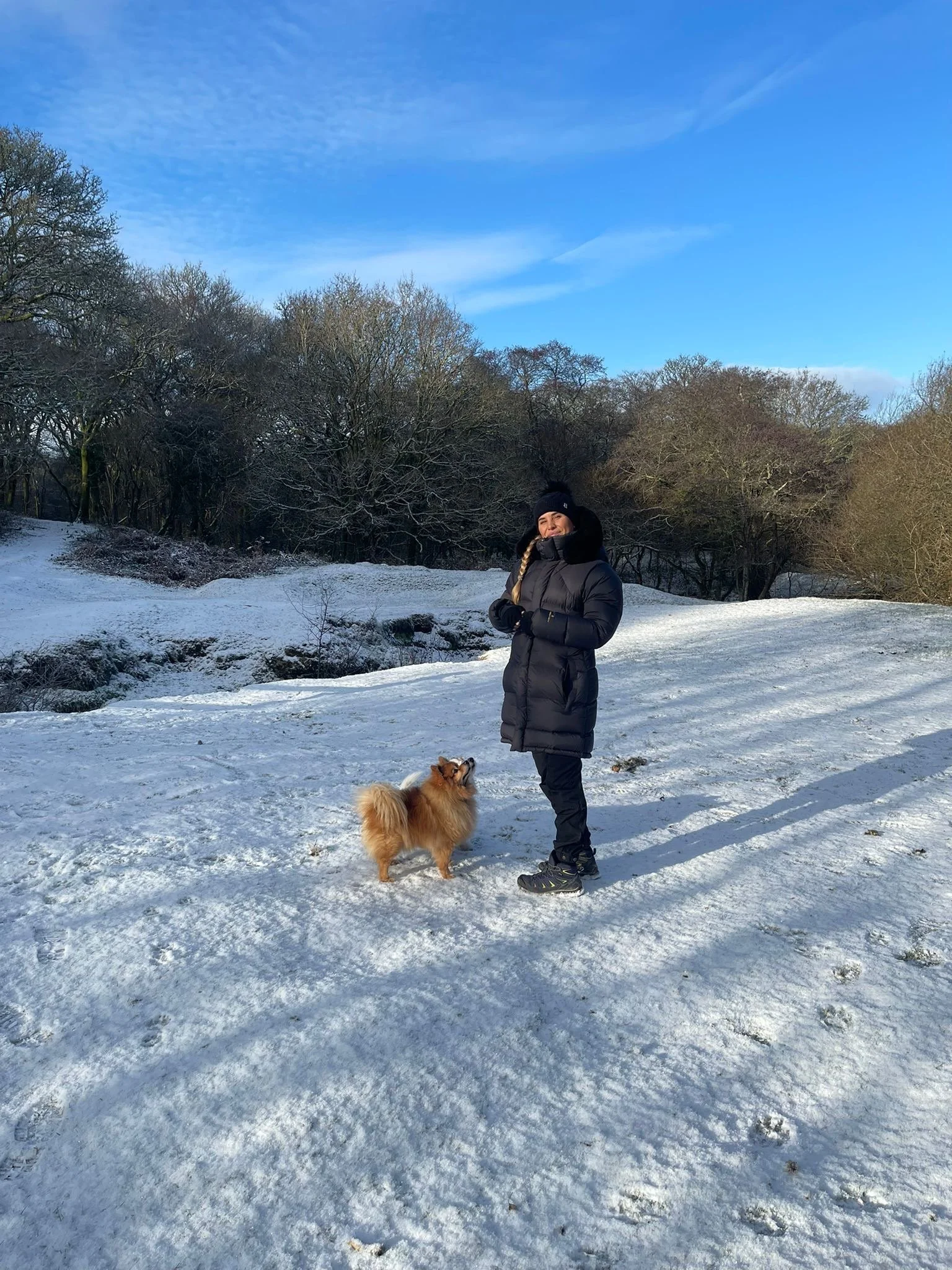
You do not need ski trousers simply because you are visiting Norway in January.
For ordinary city days, normal trousers or jeans can work perfectly well, particularly with wool leggings underneath when it is cold. If snow is falling heavily, the streets are wet with slush, or you expect to spend hours outdoors, a more weather-resistant option becomes much more comfortable.
For skiing, snowshoeing, mountain activities and longer winter excursions, proper ski trousers or waterproof shell trousers are much more appropriate. They block wind and prevent snow from soaking through when you sit, kneel or move through deeper snow.
Again, the important distinction is what you are doing. Dressing for dinner in Oslo and spending six hours outdoors in the mountains are not the same packing problem.
Winter Footwear Matters More Than Almost Anything Else
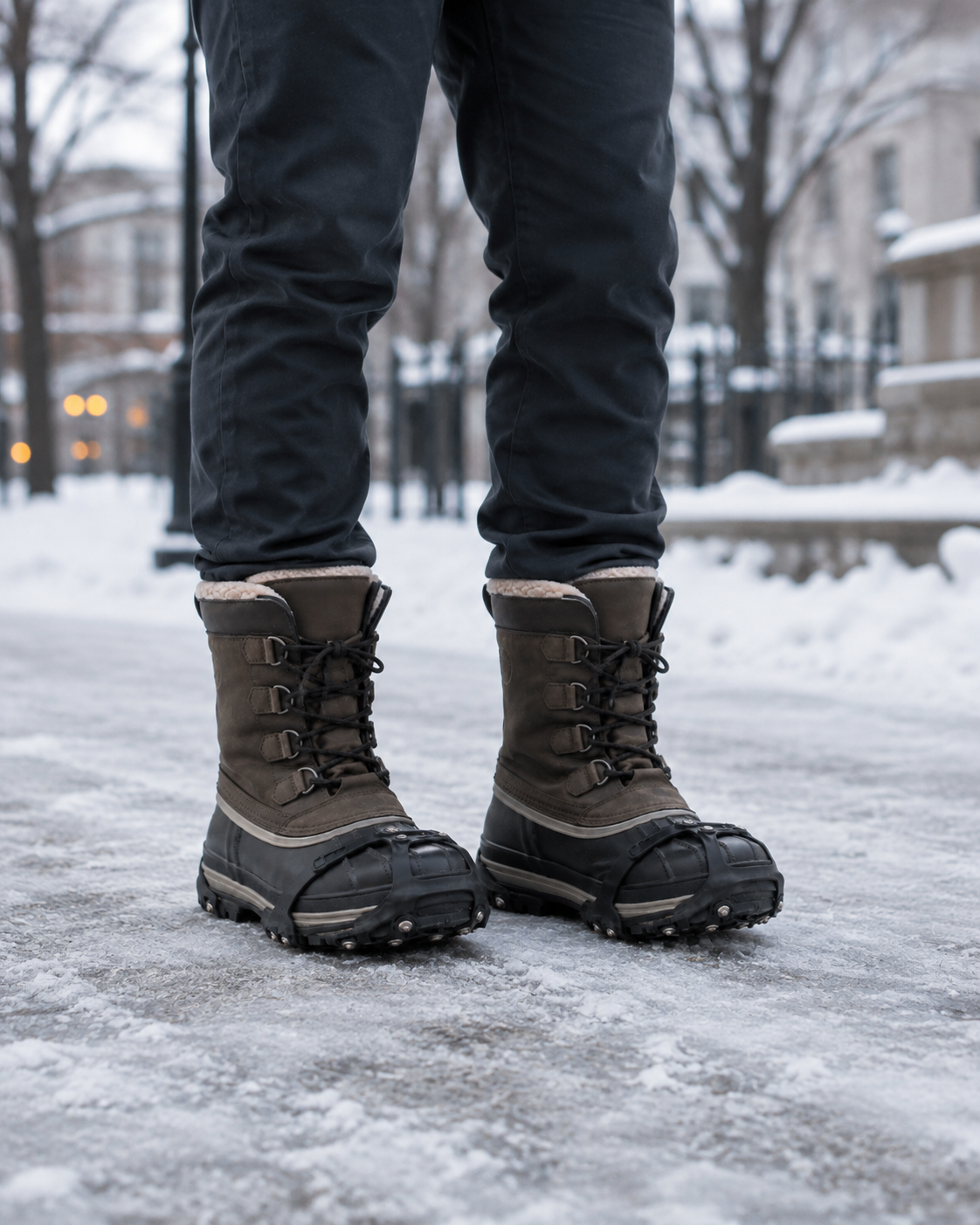
A good winter coat receives most of the attention, but unsuitable shoes can make a Norwegian winter trip miserable surprisingly quickly.
Winter boots should ideally be waterproof, warm enough for the conditions and have a sole that provides genuine traction. The combination of compacted snow, polished ice, water and slush is often more difficult than deep fresh snow.
Very soft snow boots can be warm without offering particularly good grip. Fashion boots may look suitable for winter while having almost no traction. Trainers can work on clear city streets during mild periods but are a poor choice when pavements become icy or wet.
One extremely useful Norwegian solution is brodder, removable ice grips that fit underneath your shoes or boots. They are widely used when pavements become particularly slippery and can make a considerable difference on compacted snow and ice. Remove them before walking across indoor floors or long stretches of bare pavement.
Wool Socks, Gloves and the Small Things That Matter
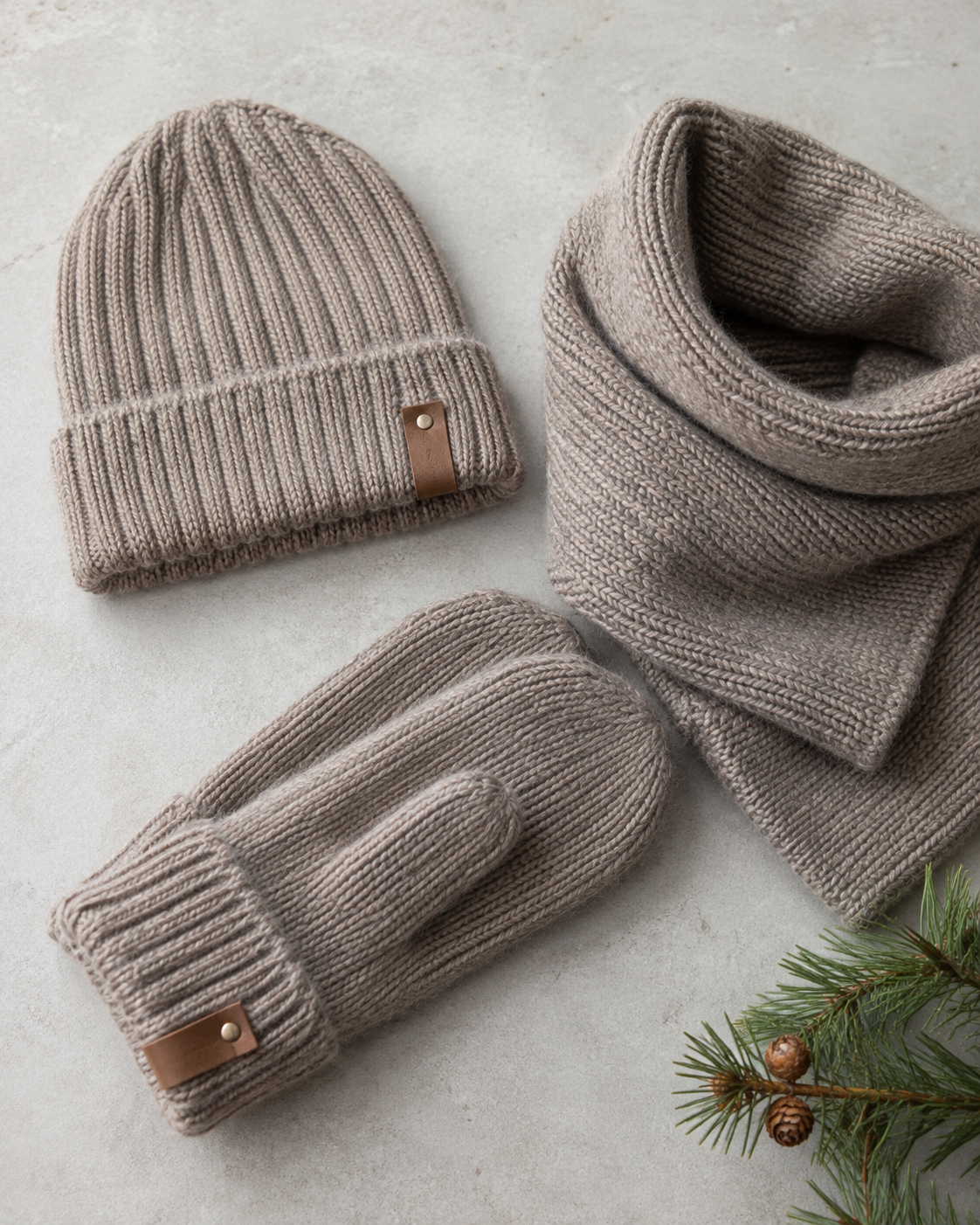
Warm feet depend on more than boots. Wool socks provide insulation while managing moisture better than many synthetic everyday socks, but avoid filling a boot with so many thick socks that there is no room for air circulation. Tight boots can actually make your feet colder.
For your hands, mittens are generally warmer than gloves because your fingers share heat. Gloves give you more dexterity, so many people prefer a thin pair of gloves combined with warmer mittens for colder days.
A wool hat and a scarf or neck gaiter make a considerable difference, particularly in wind. On very cold or exposed days, covering the neck and lower face can be more useful than simply adding another jumper beneath your jacket.
Sunglasses are easy to forget in winter. Snow reflects a great deal of light, and clear days in the mountains can be surprisingly bright. Lip balm and hand cream are also useful because cold air, wind and heated indoor environments can all dry the skin.
Cold temperatures can reduce battery performance, so keeping your phone or spare battery close to your body rather than in an exposed outer pocket helps. A power bank is particularly useful on long excursion days or Northern Lights trips.
What to Wear in Norwegian Cities in Winter
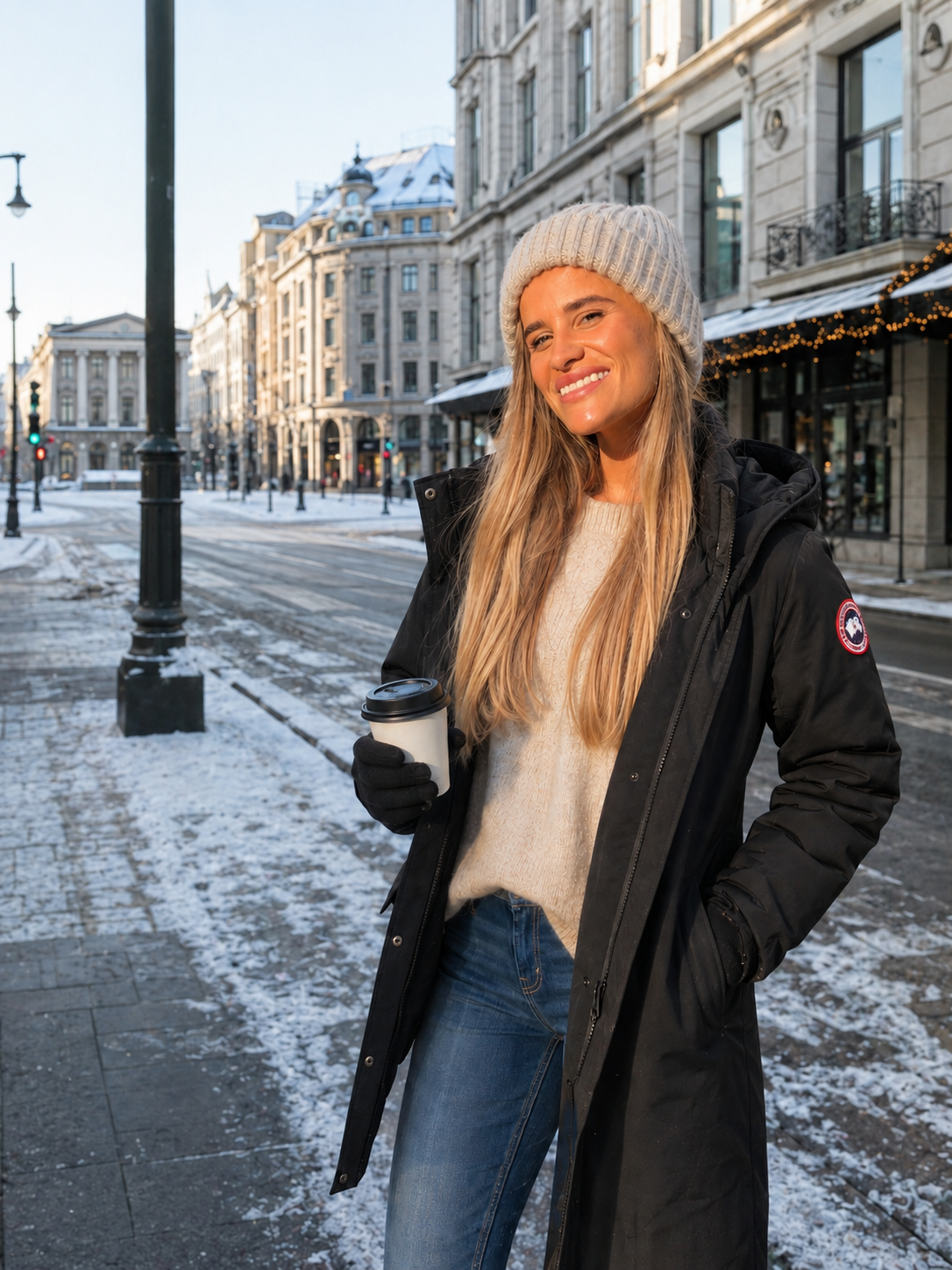
Norwegian cities do not turn into ski resorts when winter arrives.
In Oslo, Bergen, Trondheim and other urban areas, people still go to work, meet friends, eat in restaurants and go shopping in ordinary clothes. Wool jumpers, trousers, jeans and boots are common, combined with practical outerwear when the weather requires it.
You therefore do not need to spend an entire city break dressed in technical mountain clothing.
The practical challenge is moving repeatedly between very different temperatures. Shops, museums, cafés, restaurants and public transport can be warm, while the streets outside may be below freezing. Layers that can be opened or removed are much more comfortable than one outfit designed only for the coldest moment of the day.
Oslo demonstrates this particularly well because winter outdoor life sits so close to ordinary city life. You can spend the morning in a museum, take the metro to snow-covered forest trails in the afternoon and have dinner in the centre that evening. Clothing that adapts between those environments works better than dressing as though the entire day were a mountain expedition.
If Oslo is part of your trip, What to Do in Oslo in Winter: A Local Guide gives a much better idea of the mixture of city streets, forest walks, skiing and waterfront activities you may encounter during a winter stay
Packing for Bergen and the Western Coast
The biggest mistake when packing for Western Norway is concentrating exclusively on cold.
Bergen and the fjord regions can be wet, windy and relatively mild compared with inland Norway. Rain, sleet and wet snow are often more relevant than extreme temperatures, so waterproof footwear and a genuinely weather-resistant jacket become particularly important.
A shell jacket with warm layers underneath works extremely well in these conditions because you can adjust the insulation while keeping rain and wind outside.
An umbrella can be useful in the city, although strong coastal wind sometimes makes a hood far more practical.
Packing for Tromsø and Arctic Norway
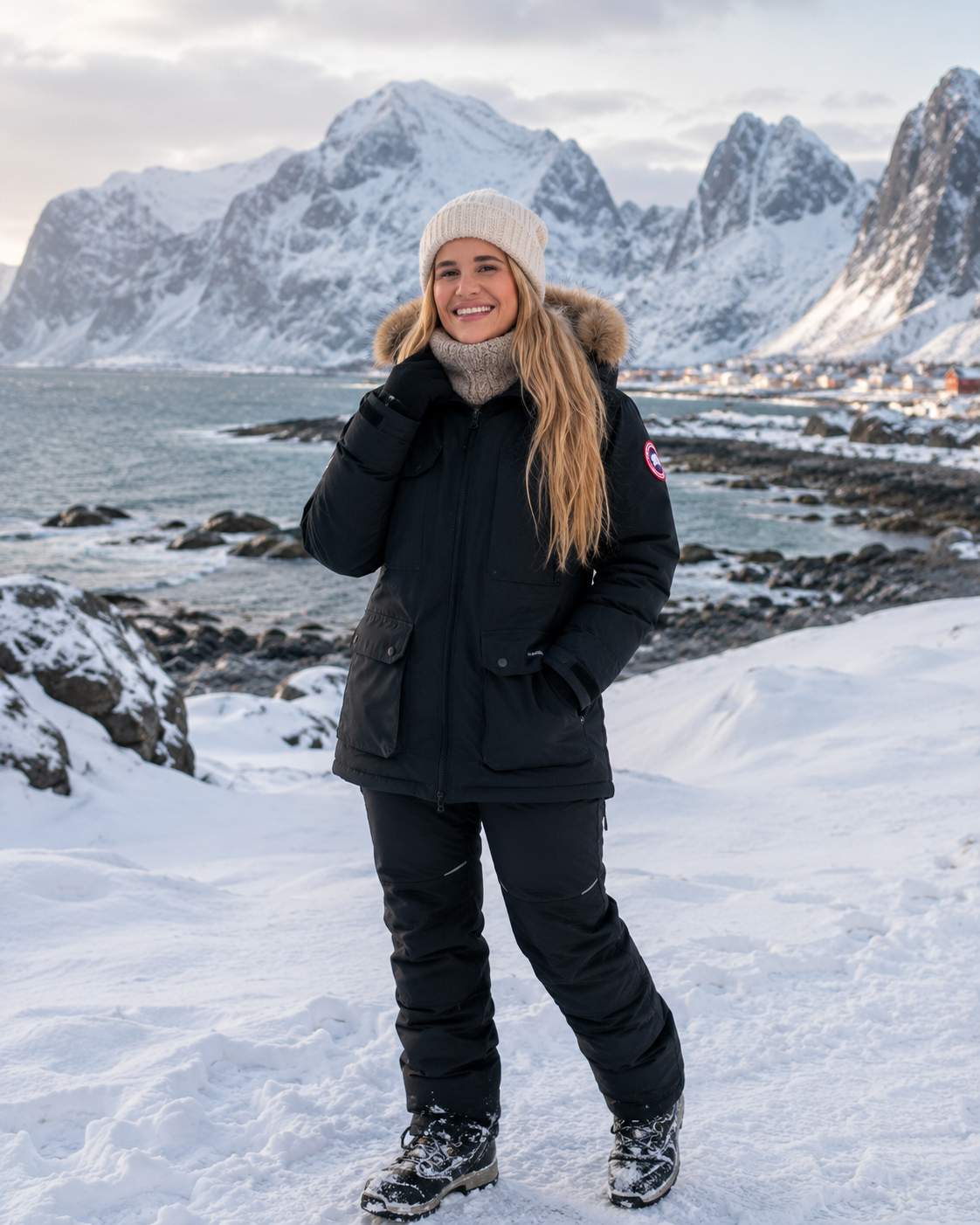
Travelling north requires more attention to both warmth and what you will actually be doing outdoors.
Tromsø itself has heated hotels, restaurants, shops and buses just like any other city. You do not need expedition clothing simply to walk through the centre. The situation changes when you spend several hours on a Northern Lights tour, dog sledding excursion or other winter activity away from the city.
Standing still while waiting for the aurora is particularly different from walking. Your body produces very little heat, and cold that seemed manageable during the first fifteen minutes can feel completely different several hours later.
Many Arctic activity providers supply additional thermal suits, winter boots or specialist equipment where necessary, but inclusions vary. Check what your operator provides before buying or packing bulky specialist gear.
If seeing the aurora is an important part of the trip, When (and Where) to See the Northern Lights in Norway explains where and when conditions tend to be strongest and what you should realistically expect from a Northern Lights journey.
Packing for the Norwegian Mountains
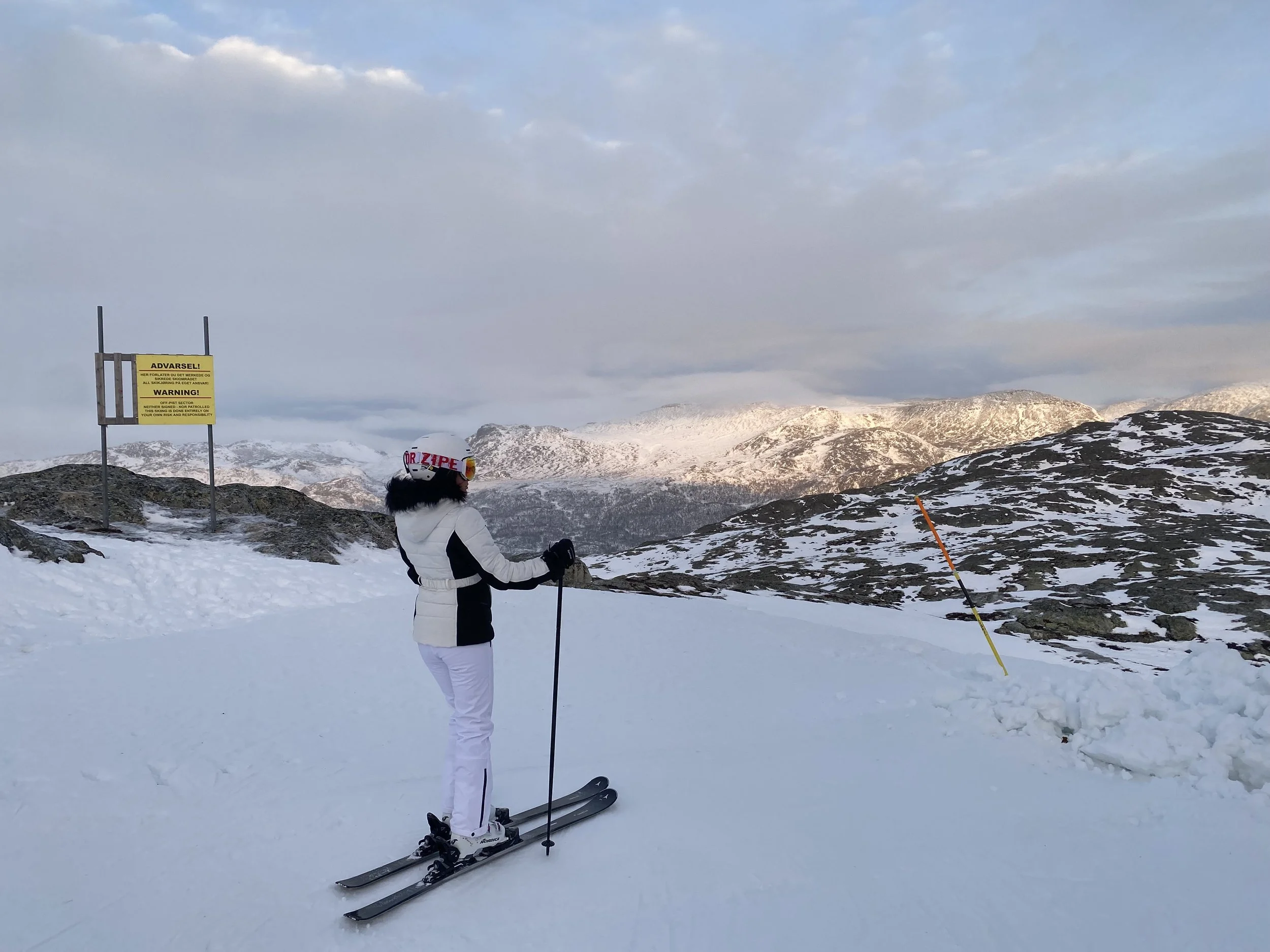
A winter trip to Trysil, Hemsedal, Geilo, Beitostølen or another mountain destination requires a more technical wardrobe than a city break.
If you are skiing, proper ski trousers, a weatherproof jacket, base layers and adjustable insulation become much more important. Mountain weather can also change quickly, and wind on exposed slopes often makes conditions feel considerably colder.
At the same time, skiing and cross-country skiing generate a surprising amount of heat. Dressing too warmly can leave your base layers wet, which becomes uncomfortable as soon as you stop. This is another reason why several lighter layers usually perform better than relying entirely on one extremely heavy coat.
Packing for Hurtigruten and Winter Coastal Voyages
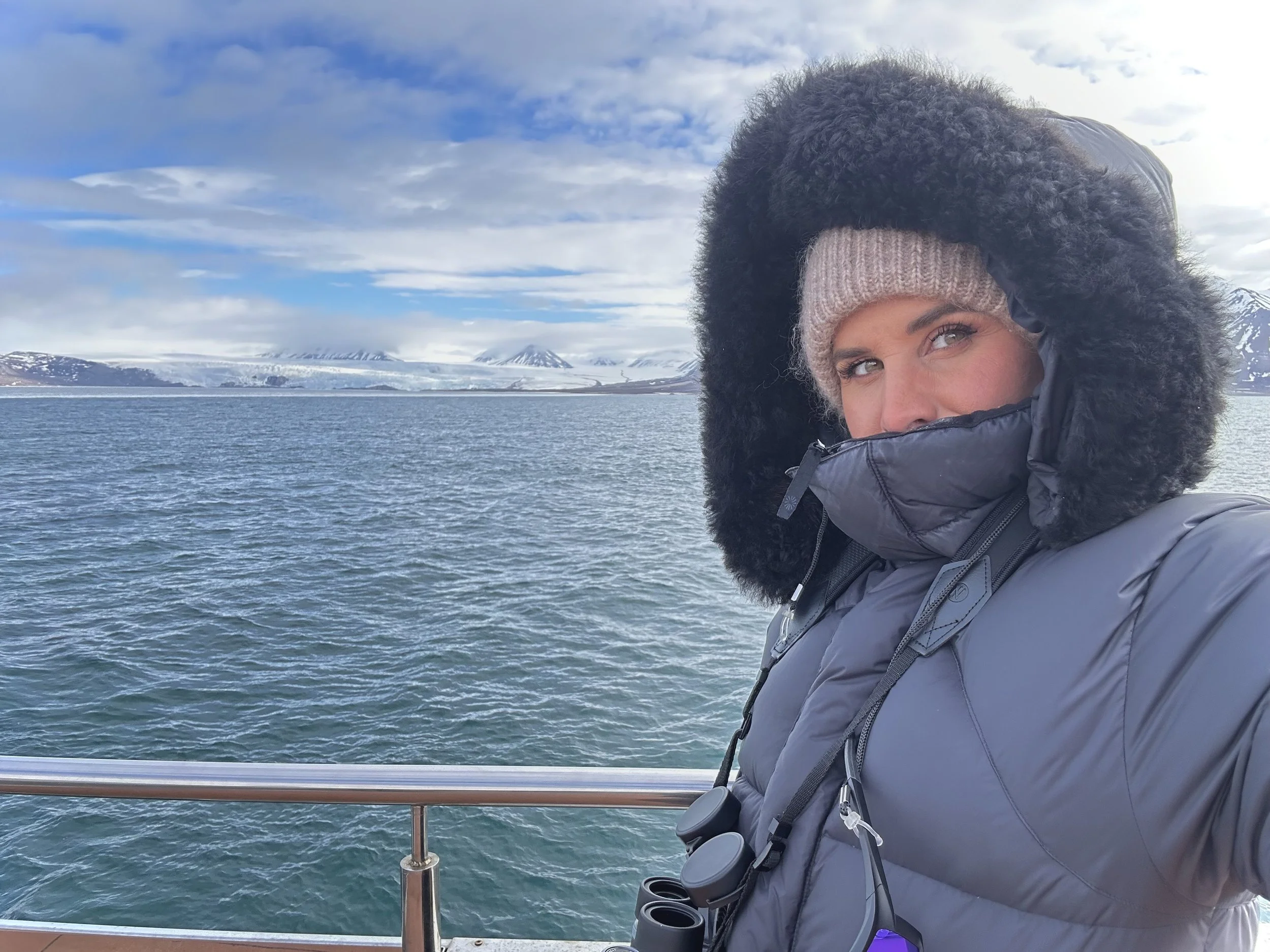
A winter voyage along the Norwegian coast creates another set of conditions entirely. Inside the ship it can be warm and comfortable, while a few minutes later you may be standing on an exposed deck in strong wind. Port visits can involve rain, snow, slush or ice depending on where you are along the coast.
That means the same principles still apply, but wind protection and clothing that is easy to add and remove become particularly important.
What to Pack for a Norway Coastal Cruise goes into much more detail about clothing for life on board, time on deck and excursions ashore. If you are still deciding between different ways of travelling along the coast, Hurtigruten vs HX in Norway: Key Differences in Winter Coastal Cruises explains how the two experiences differ.
What to Pack If You Are Driving in Norway in Winter
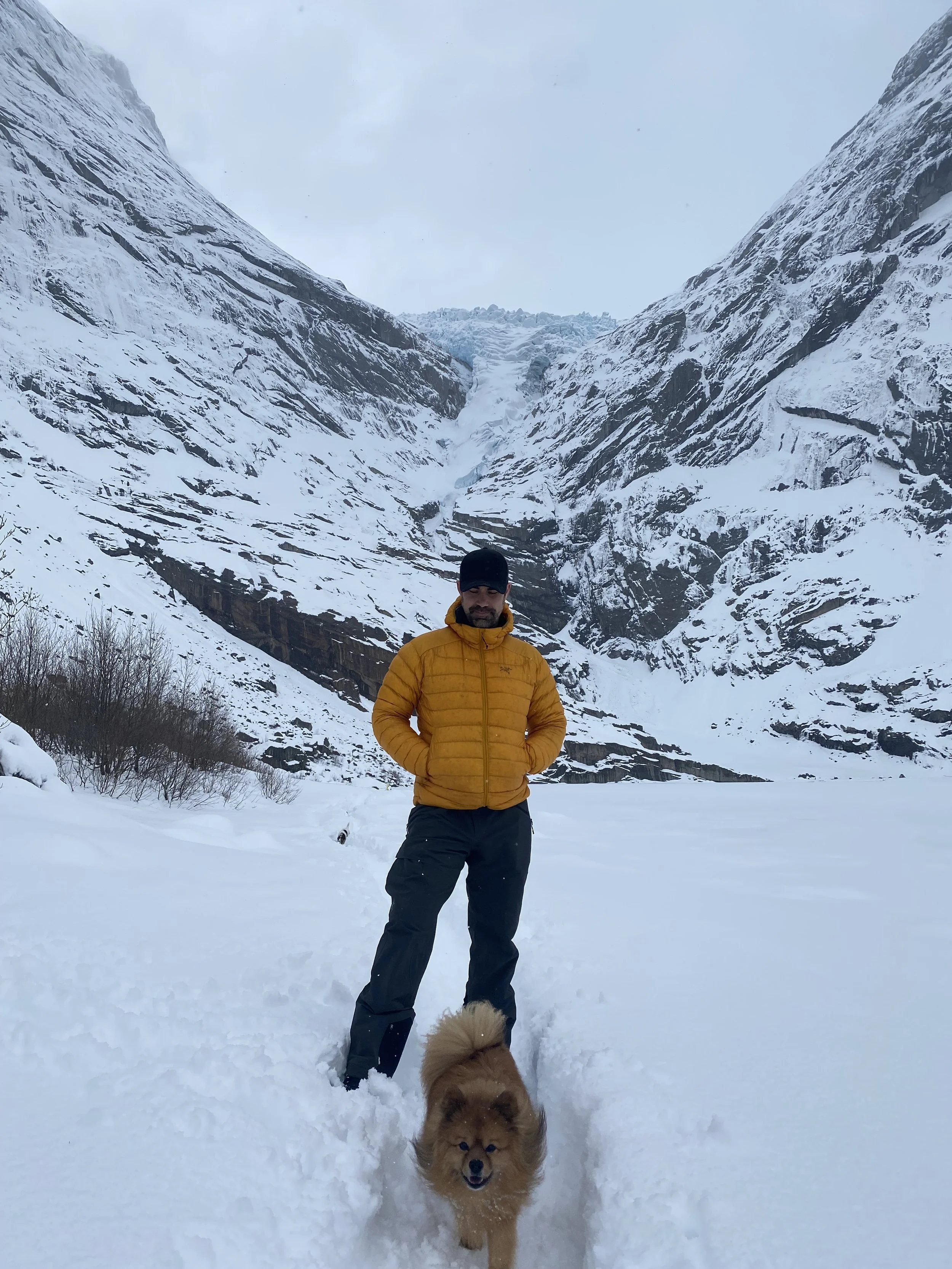
The clothes you wear do not change simply because you are travelling by car, but winter driving adds another consideration: you need to be prepared for the possibility of spending longer outside than planned.
If weather closes a road, you stop to clear snow, or you have to wait somewhere remote, having your warm layers, boots, hat and gloves easily accessible is far better than packing them underneath everything else in the boot.
You should also understand Norwegian winter driving conditions before deciding whether a car is appropriate for your itinerary. Driving in Norway in Winter: Laws, Tyres, Road Conditions and What Travellers Must Knowcovers tyres, road conditions and the practical realities of driving here during the colder months.
How Much Winter Clothing Do You Actually Need?
Winter clothing is bulky, but you do not need a completely different outfit for every day.
Base layers, mid-layers and wool jumpers can usually be worn several times, while the same jacket and trousers will naturally be repeated throughout the trip. Two or three base-layer combinations, several pairs of wool socks and a small number of interchangeable mid-layers are more useful than filling a suitcase with individual complete outfits.
The exact amount depends on the length of the trip, access to laundry and whether you are spending most of your time in cities or taking part in outdoor activities every day.
The goal is versatility rather than volume.
Common Packing Mistakes
Most packing problems in Norway come from preparing for the idea of cold rather than the conditions you will actually encounter.
A warm wool coat can work very well in cold, dry winter weather, but it is less practical during heavy rain or wet snow unless you have a waterproof outer layer. An enormous parka can be excellent for standing outdoors in Tromsø and uncomfortable during an active day of skiing. Warm boots without traction can become a problem on city ice, while heavy snow boots may be unnecessary for a mild week in Bergen.
Another common mistake is wearing too much while active. If you become sweaty underneath your clothes, you may feel colder when you stop. Starting a walk or ski slightly cool and allowing your body to warm as you move is often more comfortable than overheating immediately.
The most useful winter wardrobe is therefore the one based on what you are doing and where you are going.
Do You Need Specialist Winter Equipment?
For ordinary sightseeing, city travel and most organised excursions, no. Good winter clothing, sensible footwear and a proper layering system are usually enough.
Activities that genuinely require specialist equipment are different. Glacier travel, technical winter hiking, skiing and some Arctic excursions may require equipment that an ordinary traveller would not own. In many cases this can be rented or is provided as part of an organised activity.
Do not buy mountaineering equipment simply because you are coming to Norway in winter. Decide what you are actually planning to do first.
For clothing outside the winter season, What to Wear in Norway (All Seasons): A Practical Guide explains how the same principles change through spring, summer and autumn.
Norway Winter Packing List
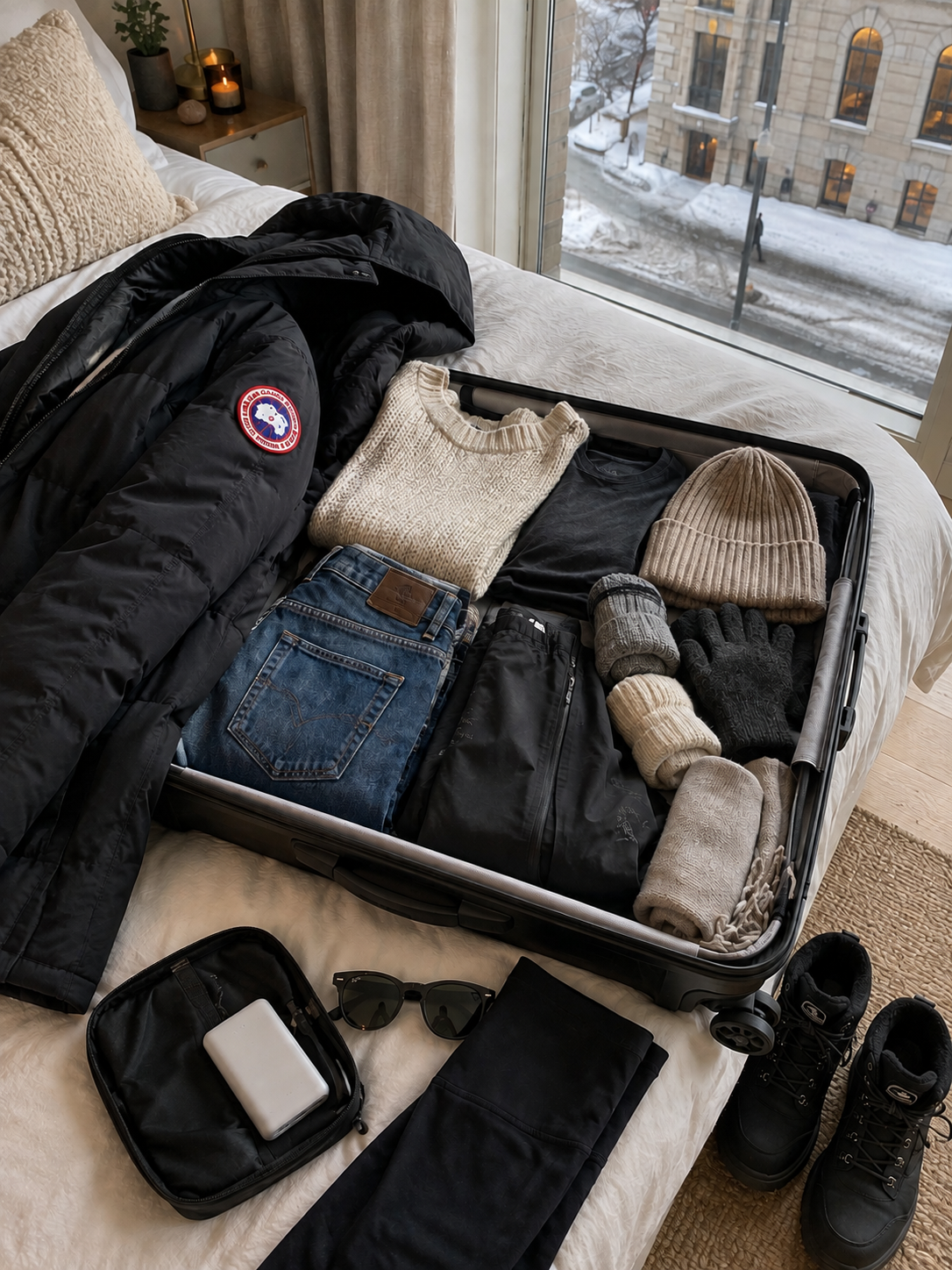
For most winter trips to Norway, a practical packing list looks something like this:
2–3 merino wool or wool-blend base layer sets
1–2 insulating mid-layers, such as wool jumpers or fleece
A warm winter jacket or waterproof shell with insulation underneath
Waterproof or weather-resistant trousers for longer outdoor days
Waterproof, insulated winter boots with good grip
Several pairs of wool socks
Warm gloves or mittens
Wool hat or beanie
Scarf or neck gaiter
Removable ice grips, or brodder, for icy pavements
Sunglasses for bright snow conditions
Lip balm and hand cream
Power bank
Small daypack for extra layers
Swimwear if you plan to use saunas, spas or hotel pools
If your trip includes skiing, long outdoor excursions, a coastal voyage or extended time in Arctic Norway, add any specialist clothing required for those activities rather than trying to make one general packing list cover every possible winter journey.
The most important thing is not how many items you bring, but whether they can be layered and combined. A small number of versatile pieces will usually be more useful than packing a separate heavy outfit for every day.
Final Words
Packing for winter in Norway is not really about finding one perfect coat or preparing for the lowest temperature you can imagine. The challenge is that Norwegian winter changes with geography, weather and what you choose to do.
A wet January afternoon in Bergen, a clear day skiing in the mountains, an icy morning in Oslo and several hours beneath the night sky outside Tromsø all require slightly different things from your clothing.
A good base layer keeps you comfortable close to the skin. Insulation provides warmth when you need it. A weatherproof outer layer protects you from the conditions around you. Good boots keep you warm, dry and upright.
Once those foundations are in place, winter in Norway becomes much easier to dress for. Instead of trying to defeat the weather with the heaviest clothing possible, you can adjust to it as it changes.