
Driving in Norway in Winter: Laws, Tyres, Road Conditions and What Travellers Must Know
Driving in Norway in winter can mean anything from wet coastal roads and icy city streets to snow-covered mountain passes, convoy driving and sudden road closures. This guide explains the tyre laws, road conditions, rental-car considerations and practical decisions that matter most, so you know what to expect before setting out and when changing your plans is the safer choice.
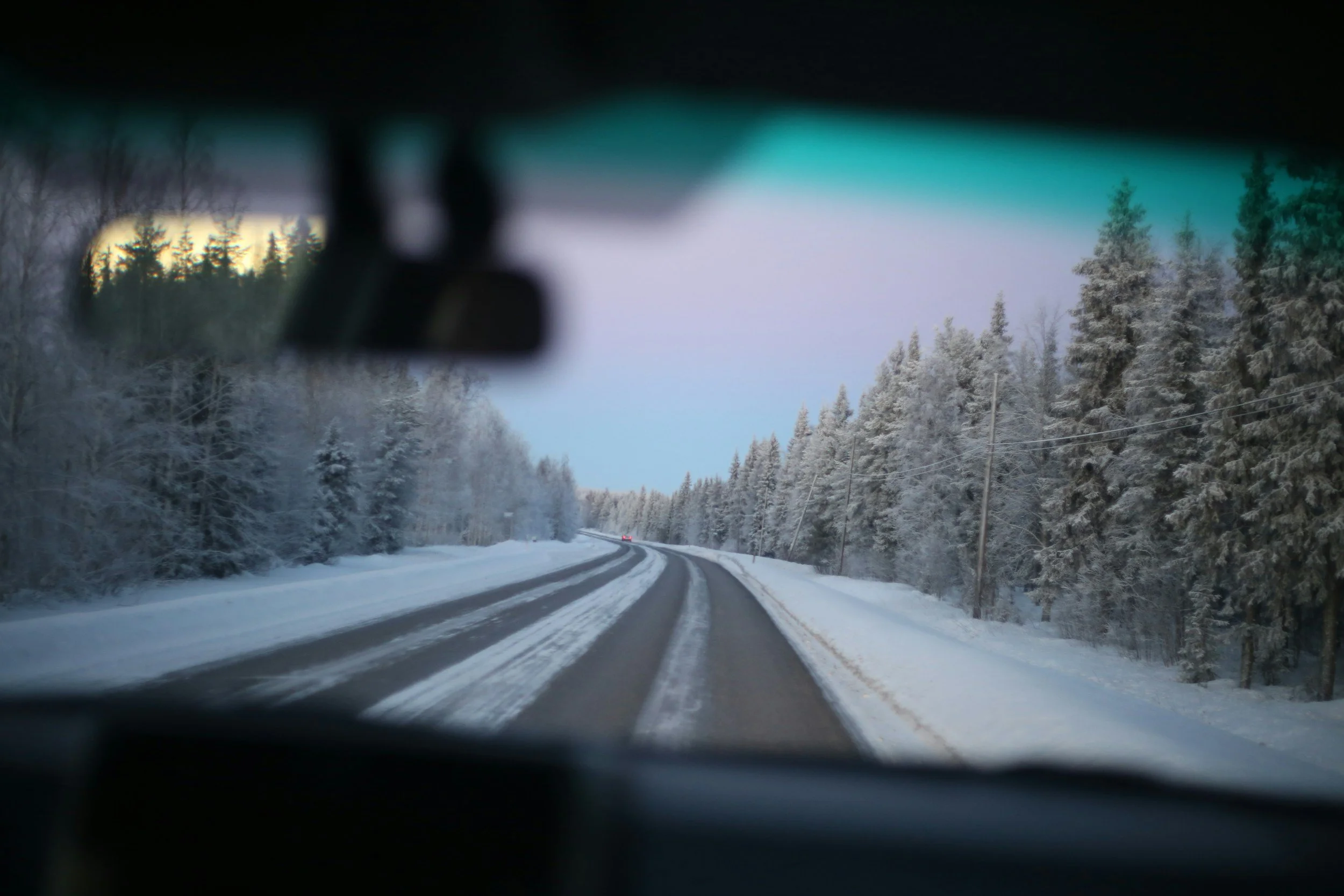
Driving in Norway in winter is not automatically dangerous, but it does require a different approach from driving in milder conditions. Snow and ice are only part of the picture. Along the coast, temperatures can move above and below freezing within the same day, turning wet roads into icy ones. In the mountains, wind and snowfall can close a pass or lead to convoy driving. Further north, darkness, exposed roads and rapidly changing weather can make an otherwise straightforward journey much more demanding.
Norwegians drive through these conditions every winter, but that does not mean we treat them casually. The car needs to be properly equipped, speed is adjusted to the road rather than the speed limit, and plans sometimes change because the conditions have changed. A journey that looked perfectly reasonable in the morning may need to be delayed, rerouted or abandoned later in the day.
For travellers, that judgement matters more than being an especially confident driver. You do not need years of experience on Norwegian roads to drive here in winter, but you do need to understand what the conditions can look like, how winter tyres and road regulations work, where to check reliable road information and when continuing simply is not worth it.
This guide covers the practical side of winter driving in Norway, from tyre requirements and rental cars to snow-covered roads, mountain passes, darkness and road closures. It also looks at the regional differences that can make a winter drive around Oslo very different from crossing the mountains or travelling through Northern Norway, and how to decide whether a car is actually the best choice for your trip.
If you are also looking for the general rules of the road, including tolls, ferries, road signs and everyday driving in Norway, Driving in Norway: Everything You Need to Know covers those separately. Here, the focus is specifically on what changes once winter conditions become part of the journey.
Winter Tyres and the Law in Norway
Norwegian tyre law is slightly different from the simple rule that “winter tyres are compulsory from a certain date”. For ordinary passenger cars, the fundamental requirement is that the vehicle must have sufficient grip for the conditions at all times. In practice, if you are driving on snow or ice, that means the car needs tyres suitable for winter conditions. Summer tyres do not provide sufficient grip on winter roads and cannot legally be used simply because the calendar still happens to fall outside the normal winter period.
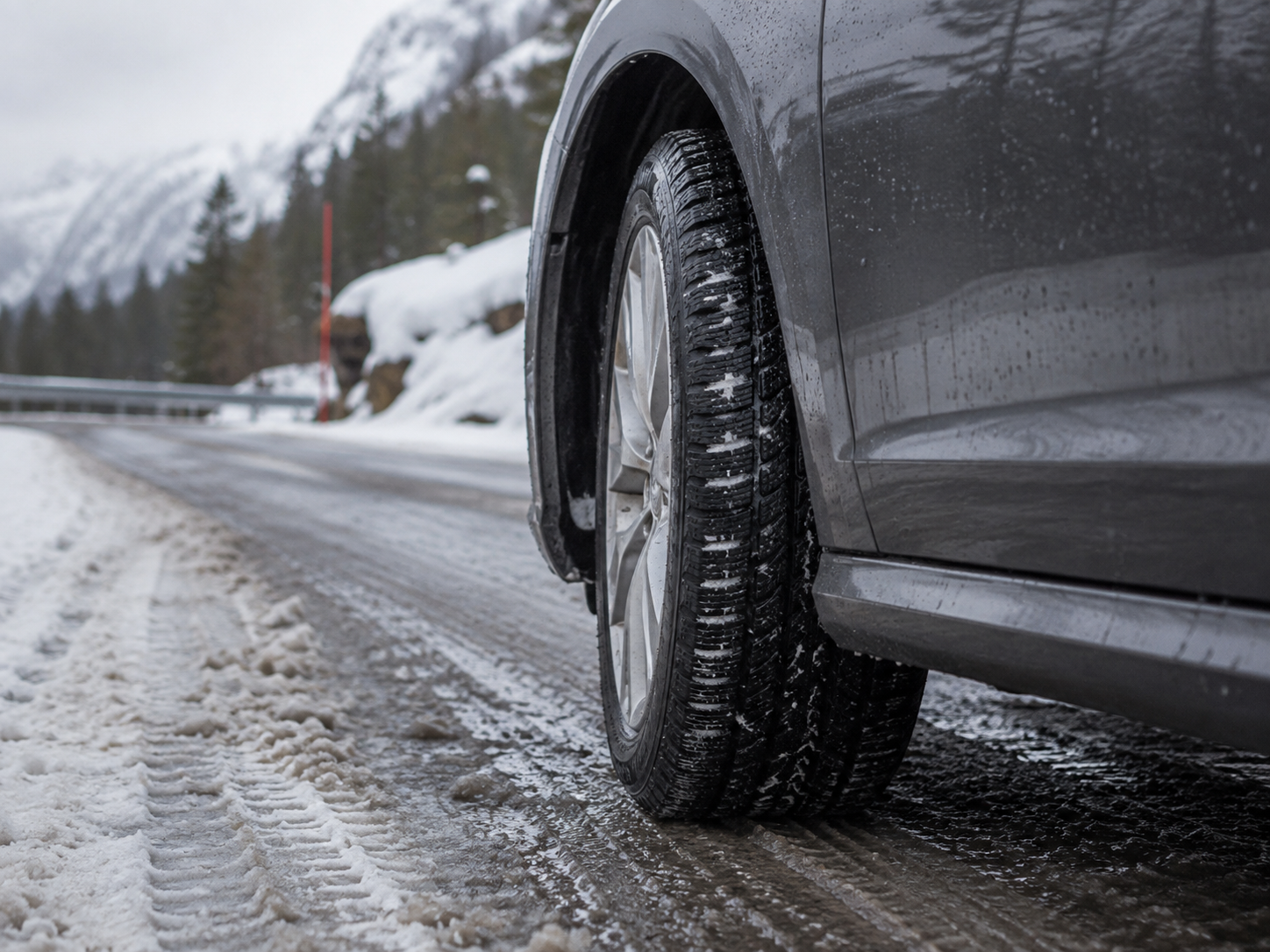
There are, however, specific winter requirements for tread depth. From 1 November until the first Sunday after Easter Monday, tyres on passenger cars must have a tread depth of at least 3 mm. In the northern counties of Nordland, Troms and Finnmark, where winter generally arrives earlier and lasts longer, the 3 mm requirement applies from 16 October until 30 April. These dates should not be treated as a definition of when winter begins or ends. If snow or ice arrives outside them, the vehicle must still be equipped for the actual road conditions.
This distinction matters for travellers because Norwegian roads can experience winter conditions well beyond what you might expect from the season. Snow can arrive early in the mountains, while high roads can remain wintry well into spring. The responsibility sits with the driver, not with the weather forecast or the date on the calendar. Meeting the minimum tread depth is also not enough on its own if the tyres still fail to provide adequate grip for the road you are driving on.
Studded or Non-Studded Winter Tyres?
Both studded and non-studded winter tyres are widely used in Norway. Studded tyres provide particularly good grip on ice and can be useful in places where hard-packed snow and icy roads are common. Non-studded winter tyres, often called friction tyres, are also extremely common and are designed to remain flexible in low temperatures while providing grip on snow and cold road surfaces.
For most travellers, the important question is not whether one type is universally better, but whether the tyres are appropriate for the route and conditions. A car spending most of its time on cleared roads around a city may be equipped differently from one regularly travelling through colder inland areas or across exposed mountain routes.
Studded tyres are normally permitted from 1 November until the first Sunday after Easter Monday. In Nordland, Troms and Finnmark, they may be used from 16 October until 30 April. If the weather or road conditions make studs necessary, they can also be used outside these dates. A car using studded tyres must have them fitted to all wheels. Non-studded winter tyres can be used throughout the year.
You may also encounter tyres marketed as all-season tyres outside Norway. The name itself tells you very little about whether they are suitable for a Norwegian winter. What matters is the actual tyre, its condition and whether it provides sufficient grip in the conditions you are driving through. For a winter road trip involving snow, ice or mountain areas, this is not something to compromise on.
If you are renting a car, you should expect it to be equipped for the season and location in which it is being rented, but it is still worth checking the tyres before leaving the rental station. Norwegian law places responsibility for sufficient road grip on the driver. A rental agreement does not remove that responsibility.
Winter tyres are therefore not simply another item on a Norway packing list. They are part of the basic preparation that makes winter driving possible. The right tyres will not make an icy road behave like dry asphalt, but without adequate tyres, careful driving alone cannot compensate for the lack of grip.
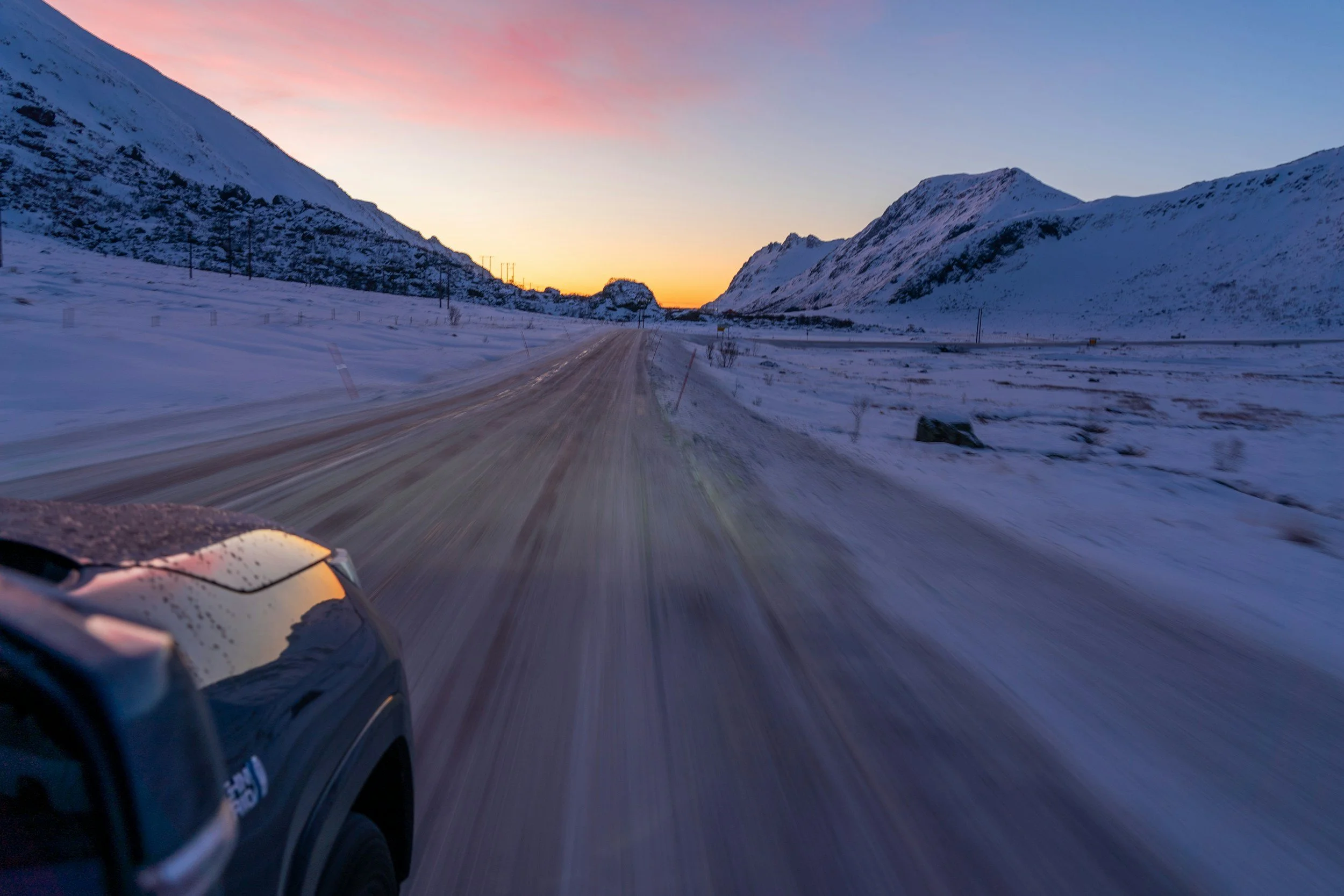
What Norwegian Winter Roads Actually Look Like
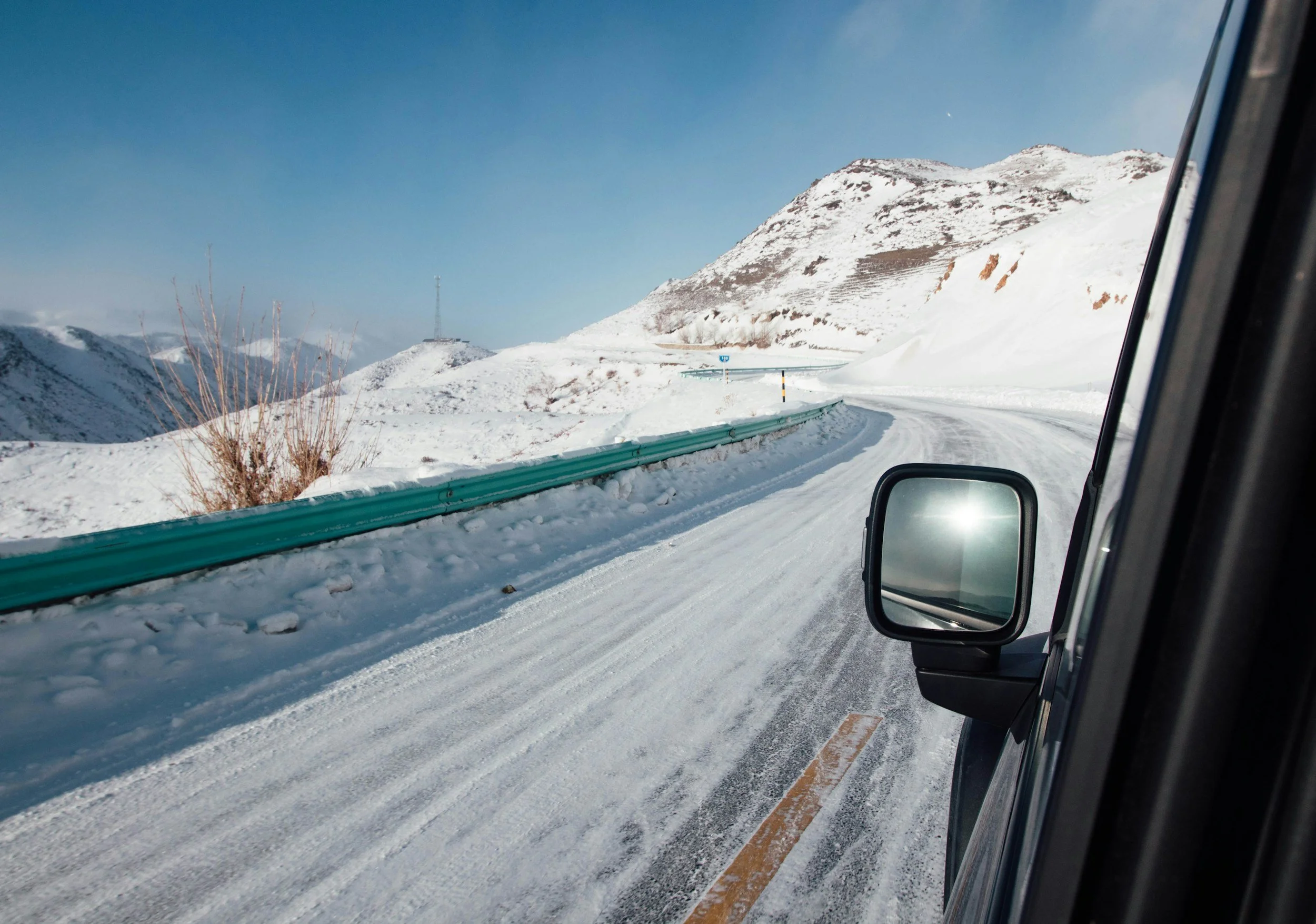
One of the easiest mistakes to make when planning a winter road trip in Norway is to imagine that there is one typical kind of winter road. Conditions vary enormously depending on where you are, the elevation, the weather and even the time of day. A road can be wet and completely clear in one valley, covered in compacted snow twenty minutes later and icy again once the temperature drops after sunset.
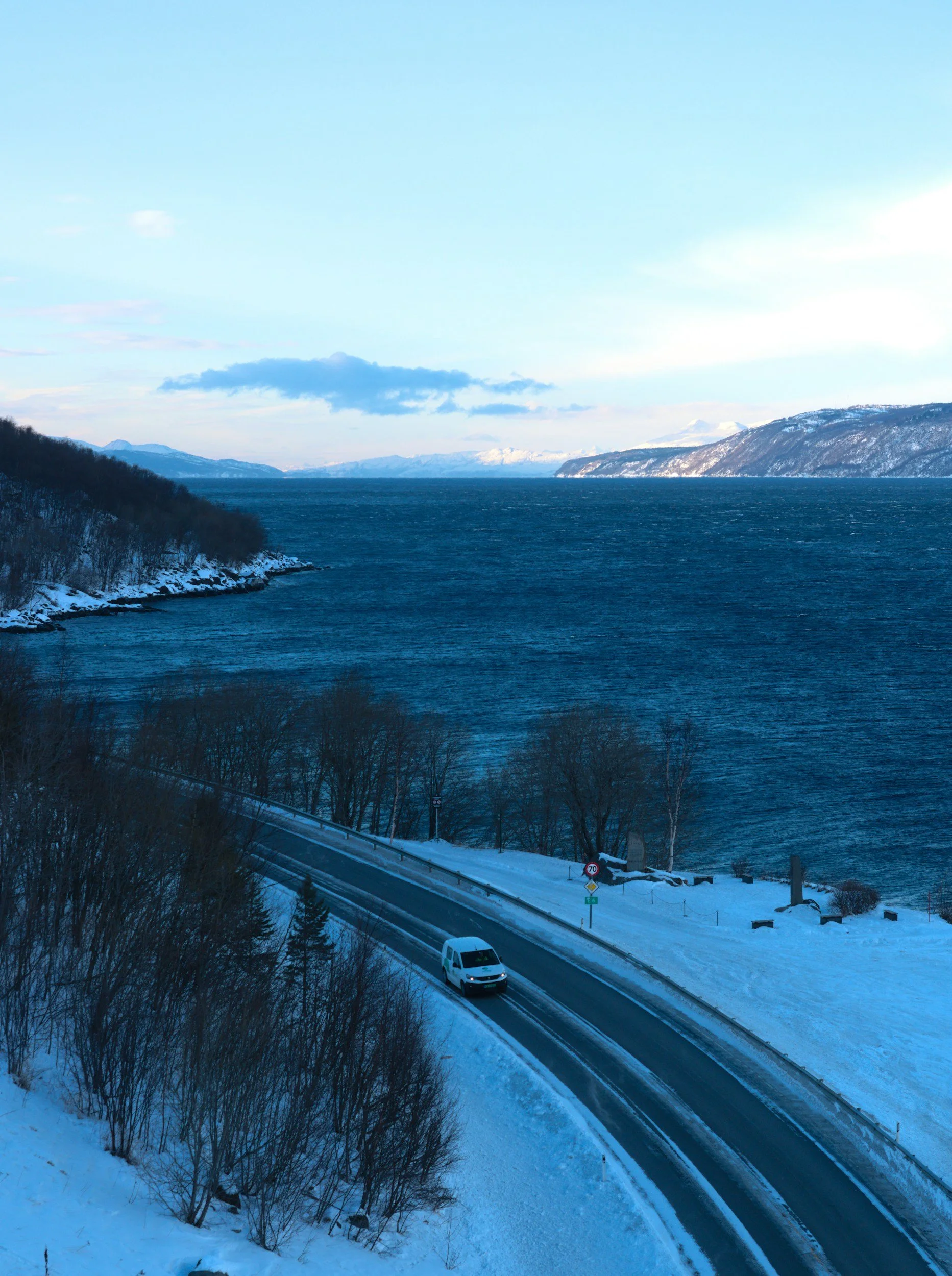
Around Oslo and on many major roads in southern Norway, you may spend much of a winter journey driving on ordinary asphalt. Roads are ploughed and maintained throughout the season, and periods of snow are often followed by cleared, wet or slushy surfaces. That does not mean the driving is always straightforward. Temperatures close to freezing can create some of the most deceptive conditions, particularly when water freezes overnight or shaded sections remain icy after the rest of the road has thawed.
Along Western Norway and much of the coast, winter can be surprisingly mild compared with the inland mountains. Bergen and the fjord regions often experience rain, sleet and temperatures moving repeatedly above and below freezing. This can create a very different challenge from driving through deep snow. Roads may appear wet while patches of ice remain in shaded areas, on bridges or at higher elevations, and conditions can change considerably as you move inland or climb away from sea level.
The geography of the fjord regions is part of what makes these changes so noticeable. A journey may take you beside a relatively mild fjord, through a tunnel and then upwards towards a much colder mountain road within a short distance. If you are planning a winter road trip through this part of the country, The Different Fjord Regions of Norway gives a useful overview of how the landscapes and regions fit together before you begin planning individual routes.
Inland Norway generally has a more stable winter climate. Areas such as Valdres, Gudbrandsdalen and the mountain regions around Jotunheimen and Rondane can remain below freezing for long periods, so roads are more likely to stay snow-covered rather than repeatedly thawing and freezing. This can look more dramatic to visitors, but a properly maintained snow-packed road with suitable winter tyres can sometimes provide more predictable grip than a seemingly clear road covered with a thin layer of ice.
Mountain roads bring another level of exposure. Elevation, wind and snowfall can make conditions considerably harsher than those in the valleys below. Visibility can deteriorate quickly, drifting snow may cover the road, and some mountain crossings can close altogether when the weather becomes too severe. A forecast for the nearest town therefore does not necessarily tell you what conditions will be like on the road you actually intend to drive.
Northern Norway adds both longer winter conditions and much greater variation in daylight. Roads around larger towns can be well cleared and straightforward, while more exposed stretches may experience snow, ice, strong winds and rapidly changing visibility. During the darkest part of winter, particularly north of the Arctic Circle, you may also spend a significant part of the journey driving without conventional daylight. Northern Norway Travel Guide is useful if you are still deciding where in the north you want to travel, as conditions and geography differ considerably between destinations.
This is why photographs of Norwegian winter roads can be slightly misleading. A white road does not automatically mean a dangerous road, just as visible asphalt does not guarantee good grip. The surface beneath the tyres, the temperature, recent weather and what lies ahead on the route matter far more than whether the road looks snowy.
The practical lesson is to expect conditions to change during the journey. You may begin on bare asphalt, encounter slush as you gain elevation, cross a section of compacted snow and arrive somewhere completely dry. Winter driving in Norway becomes much easier once you stop expecting the road to remain the same from departure to arrival.
Mountain Passes, Road Closures and Convoy Driving
Mountain crossings are one of the parts of winter driving in Norway that visitors need to plan for rather than simply react to once they arrive. Roads connecting different parts of the country often cross high, exposed terrain, and conditions on the mountain can be completely different from those in the valleys on either side. Strong wind, drifting snow and poor visibility can lead to temporary restrictions even when the weather at your departure point seems manageable.
Norway tries to keep the main mountain passes open throughout the year, but this is not always possible. When conditions become too difficult for unrestricted traffic, a road may switch to kolonnekjøring, or convoy driving. Instead of allowing cars to cross individually, vehicles are gathered into a group and escorted across the exposed section behind a snowplough or lead vehicle, with another vehicle following at the rear. If the weather deteriorates further, the pass may close completely until it is safe to reopen.
This is particularly relevant on routes such as Hardangervidda, Haukelifjell, Hemsedalsfjellet, Strynefjellet and several of the major crossings in Northern Norway. A route that appears perfectly straightforward on a map can therefore become subject to waiting times, convoy restrictions or closure during bad weather. If you are building a longer winter itinerary around the country, Norway Road Trip Planning can help you look at the route as a whole rather than treating each drive as an isolated journey.
Convoy driving also requires some preparation. Statens vegvesen recommends beginning with a full fuel tank or a fully charged battery, because there are no fuel or charging facilities while you are on the convoy section. Warm clothing, winter footwear, food and a hot drink should be accessible in the car rather than buried at the bottom of your luggage. A torch, tow rope and snow shovel are also recommended. In particularly difficult conditions, the road crew can refuse a vehicle entry to the convoy if they believe the car, tyres or occupants are not adequately prepared for the crossing.
Once you are in the convoy, it is important to follow the instructions of the road crew. Vehicles travel together through conditions that may include blowing snow and very limited visibility, so this is not the moment to stop for photographs, increase the gap dramatically or attempt to leave the group. If the convoy stops, remain with the car unless instructed otherwise.
A full road closure should be treated just as literally. Barriers are there because conditions higher on the mountain may be far worse than they appear from where you are waiting. A calm valley or clear sky at the roadblock does not mean the exposed section ahead is safe. Crews may still be working beyond the barrier to clear snow and prepare the road for reopening.
For travellers, the most useful habit is to check the road before leaving rather than relying solely on a navigation app. Vegvesen Trafikk, operated by the Norwegian Public Roads Administration, provides current traffic information, mountain-pass status, alerts for weather-exposed roads and live road cameras. Those cameras can be particularly useful in winter because they allow you to see what conditions actually look like along the route rather than relying only on a weather symbol.
It is also worth checking again during the journey if the weather is deteriorating. Mountain-pass status can change, and busy travel periods may bring long waits for convoy crossings. A sensible winter itinerary therefore needs some flexibility. If a crossing closes, the alternative may be a lengthy detour, a delayed departure or simply staying where you are until the road reopens.
This is also where Norwegian driving distances can become deceptive. A journey that looks manageable in kilometres may involve slow winter conditions, ferries, mountain roads or an unexpected wait at a closed pass. Driving Distances in Norway explains why estimated journey times here often need more margin than visitors initially expect, and in winter that extra margin becomes even more important.
The aim is not to avoid mountain roads altogether. They can be some of the most beautiful drives in Norway during winter. The important part is accepting that the road, not the itinerary, has the final say.
Driving on Snow, Ice and in Darkness
Winter driving becomes much easier once you stop treating snow, ice and darkness as separate problems. In Norway they often overlap, and the conditions can change within the same journey. A road that feels secure on compacted snow may become much more slippery where the surface has polished into ice, while a wet stretch of asphalt can become hazardous when the temperature falls below freezing.
The most important adjustment is speed. The posted speed limit is a maximum, not a target, and winter conditions often require driving considerably below it. Braking distances increase on snow and ice, so leave more space between you and the vehicle ahead and begin slowing down earlier than you would on dry roads. Statens vegvesen specifically advises drivers to adapt their speed to the conditions and maintain good distance from the vehicle in front during winter.
Smoothness matters as much as speed. Heavy braking, sudden acceleration and abrupt steering can all unsettle the car when grip is limited. Reduce your speed before entering a bend rather than waiting until you are already in it, and make steering and braking inputs gradually. If the road feels worse than expected, slowing down further is usually more useful than trying to compensate with confidence or experience.
Ice can be more difficult to judge than snow. Fresh snow is obvious, but a thin frozen layer on dark asphalt can be much harder to see. Particular care is worthwhile around freezing temperatures, especially on shaded roads, bridges and stretches where meltwater may have refrozen. Conditions can also differ between one side of a valley and another, or between exposed and sheltered sections of the same road.
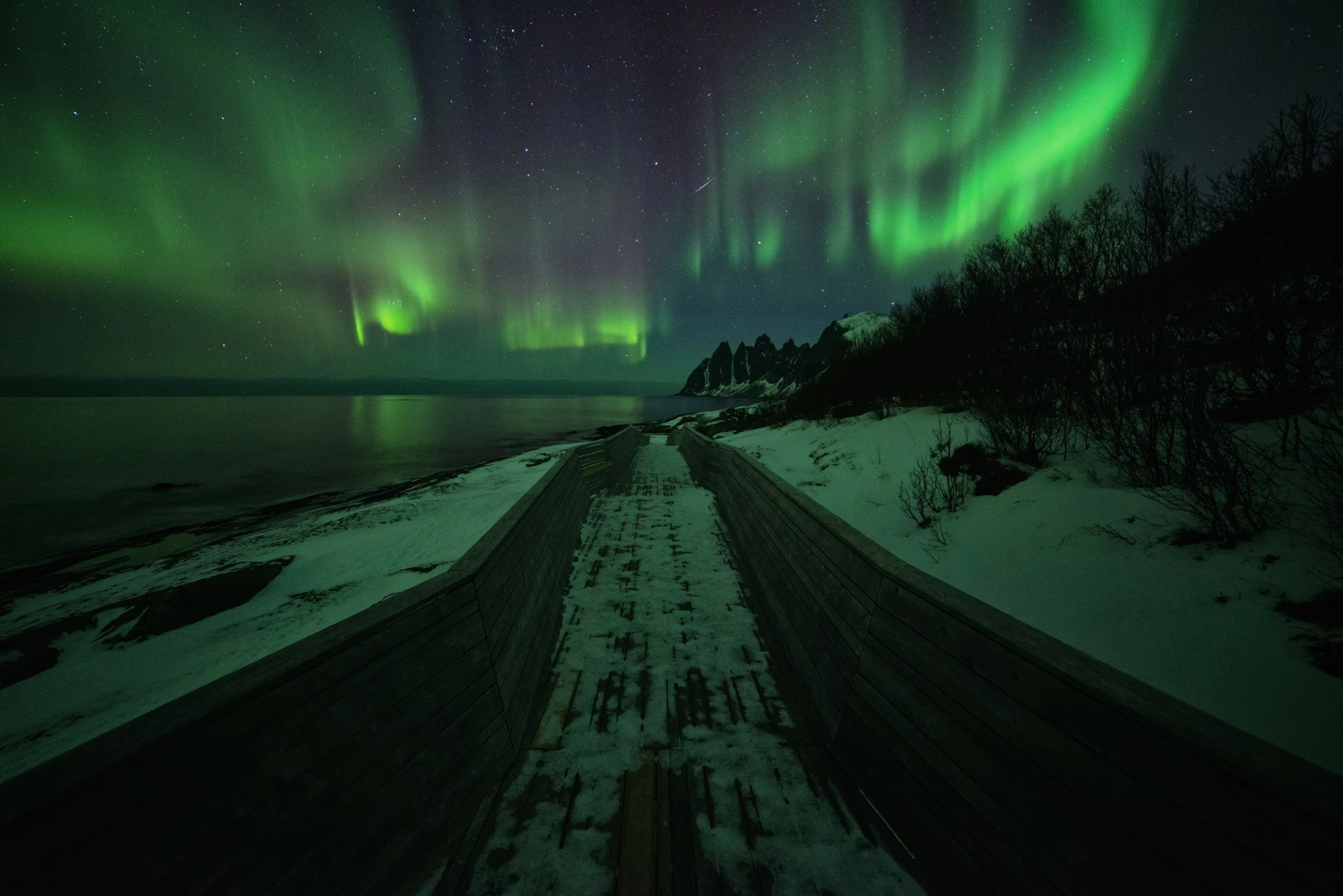
Darkness adds another layer, particularly in Northern Norway. During the darkest part of winter, journeys that would normally happen in daylight may take place almost entirely in darkness or twilight. Snow can help reflect available light, but poor weather, blowing snow and rain can reduce visibility quickly. You should therefore plan winter journeys around realistic daylight and driving time rather than assuming that a four-hour route in summer will feel the same in January.
Using the correct lights is also important. Norwegian rules require drivers to use appropriate lighting for the current visibility conditions. Daytime running lights may be sufficient in good daylight, but the driver is responsible for switching to the correct lights when conditions change, including situations where rear lights need to be illuminated. Statens vegvesen specifically notes that rear lights must be on when entering a tunnel.
Full-beam headlights are useful on dark rural roads when there is no oncoming traffic, but they can reflect strongly from falling snow or fog. In those conditions, more light is not always better. What matters is being able to see the road ahead clearly without dazzling other drivers or creating additional glare for yourself.
Another common concern is pressure from local traffic. Someone who drives the same road every day may be more familiar with its bends, gradients and typical winter conditions than you are. That does not mean you should match their speed. Drive at a pace that allows you to remain in control, and where possible use a safe lay-by or suitable stopping place to allow faster vehicles to pass. Do not pull over somewhere unsafe simply because a car is following closely behind you.
The same principle applies when visibility becomes poor. If snowfall intensifies, wind begins blowing snow across the road or you can no longer comfortably see where the road continues, the correct response is not to press on simply because the destination is close. Slow down, reassess the situation and use a safe stopping place if necessary. Winter driving is partly about recognising when conditions have moved beyond what you are comfortable handling.
For visitors, this is probably the most useful mindset to adopt. Norwegian winter roads do not require aggressive driving skills or a special ability to control a sliding car. They reward drivers who leave more space, make fewer sudden movements, watch the conditions ahead and are willing to change their pace when the road changes.
Renting a Car in Norway in Winter
Renting a car can be one of the easiest ways to travel through Norway in winter, particularly if you are visiting smaller towns, rural areas or places where public transport is limited. But the fact that a vehicle comes from a rental company does not mean you should leave every winter-driving decision to them.
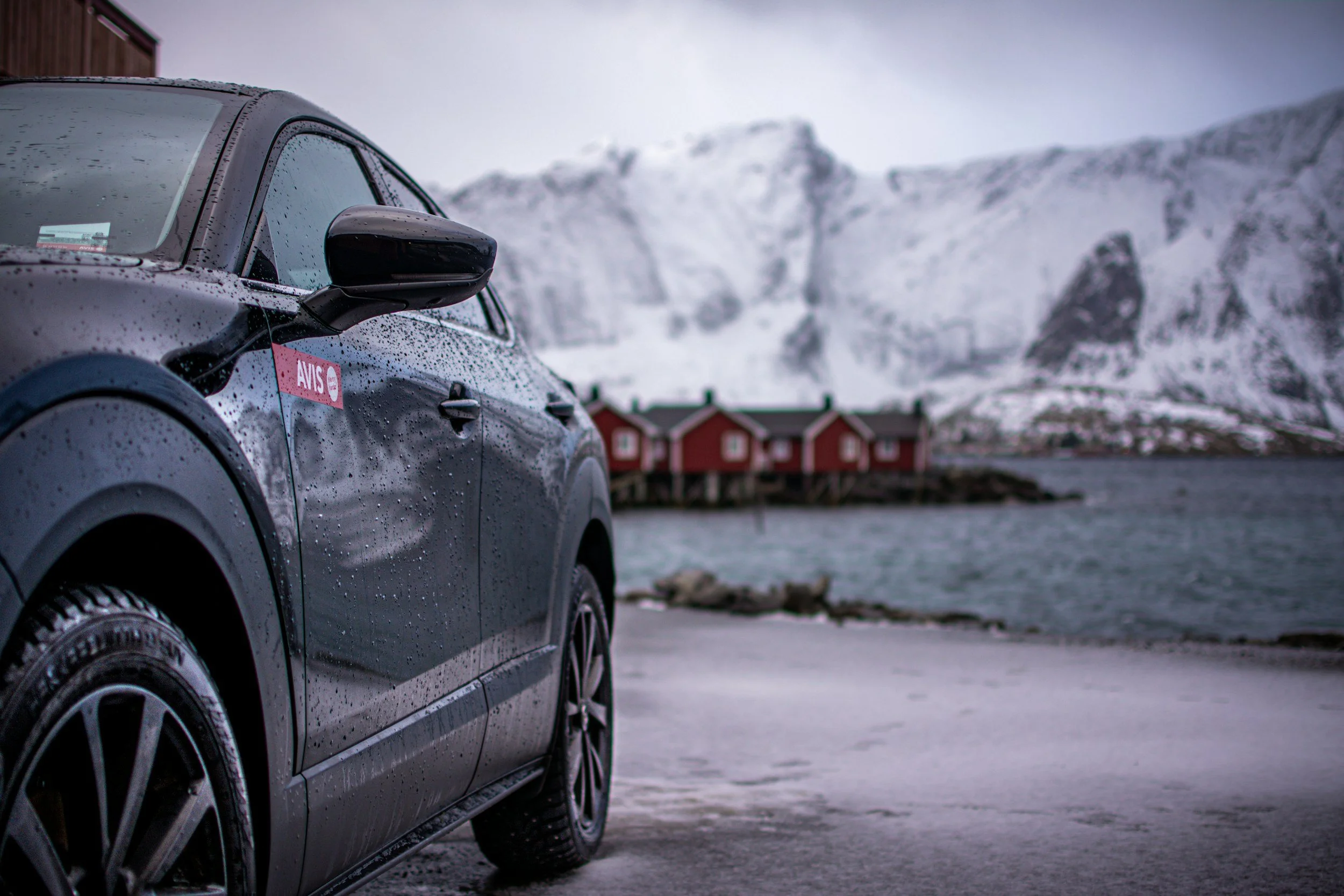
The first thing to check is the tyres. A rental car being used in winter conditions should be equipped appropriately for the roads you are likely to encounter, but the legal responsibility for sufficient grip still sits with the driver. Statens vegvesen states clearly that the driver is responsible for ensuring that the vehicle has adequate road grip throughout the year.
If you are collecting the car in winter, ask whether it has studded or non-studded winter tyres and take a quick look at their condition before leaving. You do not need to become a tyre expert at the rental desk, but the tyres should not look excessively worn or damaged. If you are planning to drive into colder inland areas, across mountain passes or through Northern Norway, it is worth telling the rental company where you intend to travel so they can confirm that the vehicle is suitable for the route and season.
You should also check what winter equipment is already in the car. An ice scraper and snow brush are basic necessities after an overnight snowfall or a cold morning, and you do not want to discover they are missing when the windscreen is covered in ice. If your route includes exposed mountain roads, it is sensible to ask whether any additional equipment is provided or recommended for that particular journey.
Four-wheel drive can be useful, especially on steep roads or in deeper snow, but it is not a substitute for suitable tyres. A front- or rear-wheel-drive car with good winter tyres may be perfectly adequate for many Norwegian winter journeys, while a four-wheel-drive vehicle on poor tyres can still have very little grip when braking or cornering. For most visitors, tyre quality and careful driving matter more than simply choosing the largest SUV available.
Vehicle size is worth considering for another reason. Norwegian roads can be narrow, particularly in rural and fjord regions, and winter can make them feel narrower still when snowbanks build up along the edges. A very large vehicle may provide extra luggage space and ground clearance, but it can also be less comfortable on small roads, in tight parking areas and when meeting traffic. Bigger is not automatically better.
If you rent an electric car, winter temperatures can reduce the range available between charges. Heating the cabin, cold batteries, low temperatures and winter road conditions all influence consumption, so a route that looks easy based on the car's summer range may need more charging margin in winter. This does not make electric cars impractical in Norway, where charging infrastructure is extensive, but it does make advance planning more important on longer or more remote routes.
Whatever car you choose, familiarise yourself with it before leaving the rental area. Find the controls for headlights, windscreen demisting, heated windows and wipers, and make sure you know how to change the driving mode if the car has one. Doing this in a well-lit car park is much easier than trying to work it out for the first time on a dark mountain road in falling snow.
It is also worth understanding what happens if the weather disrupts your route. A closed mountain pass can mean waiting for several hours, changing to another road or staying somewhere overnight. Before beginning a longer winter drive, check whether your rental agreement includes roadside assistance and keep the rental company's contact details somewhere easily accessible.
The aim is not to inspect a rental car as though you were buying it. A few simple checks before departure can tell you whether the car is properly prepared and prevent small problems from becoming much larger once you are already on the road.
Should You Drive in Norway in Winter?
A car can give you enormous freedom in Norway during winter, but it is not automatically the best way to travel. Whether driving makes sense depends less on the country as a whole and more on the particular trip you are planning.
For a city break in Oslo, Bergen or Trondheim, a car is often unnecessary. Public transport is good, parking can be inconvenient, and many of the places visitors want to see are easier to reach without driving. The same is true for some mountain destinations. Geilo, for example, sits on the railway between Oslo and Bergen, making it possible to reach a proper winter landscape without renting a car at all. If your itinerary follows places that are already well connected by rail, Norway Train Travel Guideis worth reading before assuming that a road trip will give you a better experience.
Driving becomes much more useful when the journey itself is part of the trip. Rural areas, small villages, scattered trailheads and remote accommodation are often easier to reach by car, and having your own vehicle can make it possible to stop when the landscape changes or spend more time in places that would otherwise be awkward to connect by public transport.
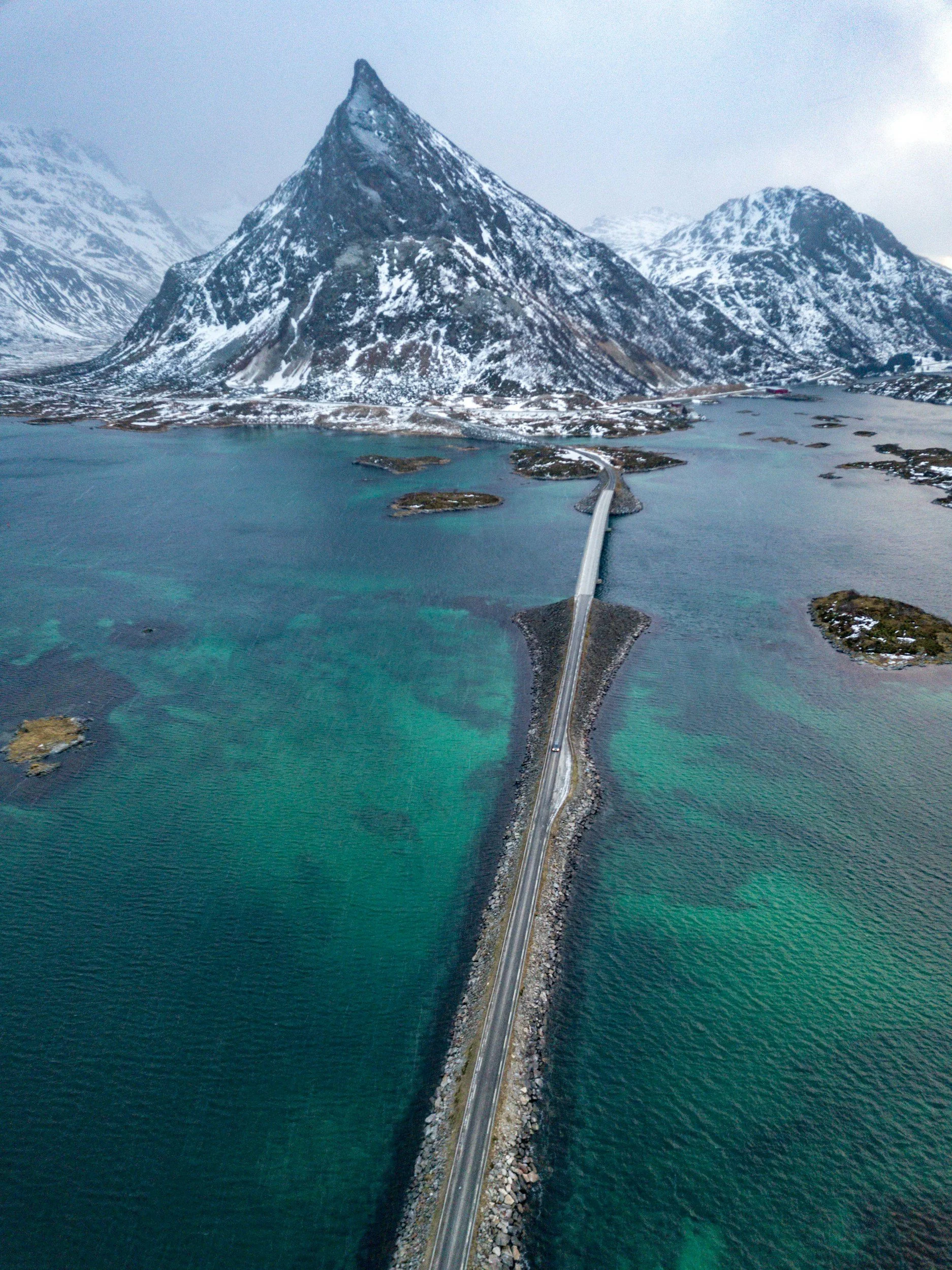
This is particularly true in parts of Northern Norway, where distances between smaller communities can be substantial and public transport may not fit neatly around a sightseeing itinerary. A car can make destinations such as Lofoten far easier to explore independently, but that freedom comes with more exposure to winter weather, darkness, narrow roads and sudden changes in conditions. The fact that a car is useful does not necessarily mean the driving itself will be easy.
Mountain itineraries require a similar calculation. Driving between valleys and mountain regions can give you access to places that would otherwise be difficult to combine, but winter also removes some of the flexibility you have in summer. A mountain pass may close, a journey may take much longer than expected, and a route that seemed efficient when you planned it may no longer be the sensible choice on the day.
Your own experience matters too. You do not need to have grown up driving on snow to rent a car in Norway in winter, but your first encounter with icy roads should probably not be an ambitious itinerary involving long days, exposed mountain crossings and fixed hotel bookings at the other end. If you are already uncomfortable with darkness, slippery surfaces or rapidly changing weather, building an entire winter holiday around daily driving can make the trip more stressful than it needs to be.
It is also worth thinking about how much of the holiday you actually want to spend concentrating on the road. A four-hour drive through beautiful scenery can sound appealing when planning from home, but in difficult winter conditions the driver may spend far more time watching the road surface, visibility and traffic than looking at the landscape. Travelling by train or arranging a transfer can sometimes allow both travellers to experience more of the journey.
None of this means visitors should avoid driving in Norway during winter. Thousands of ordinary journeys take place every day, and with a properly equipped car, realistic distances and sensible decisions, a winter road trip can be one of the best ways to see the country. The important question is not simply whether winter driving is safe, but whether driving improves the particular trip you want to take.
If you are still deciding where to travel and what kind of winter experience you want, Winter Travel in Norway: Where to Go and What to Expect looks at the differences between the Arctic, the mountains, Norwegian cities and other winter destinations. Choosing the destination first often makes the transport decision much easier.
The best winter itinerary is not necessarily the one that covers the greatest distance. Sometimes having a car creates freedom. Sometimes leaving it behind creates more.
What to Keep in the Car During Winter
What you carry in the car matters more in winter because even a routine journey can involve an unexpected wait. A mountain pass may close, a ferry can be delayed by weather, traffic may stop after an accident, or you may simply need to wait for conditions to improve before continuing. On longer journeys, especially through mountain areas, it is sensible to pack on the assumption that you could spend considerably more time in the car than originally planned.
Warm clothing should therefore remain accessible rather than packed underneath everything else. Even if you are comfortable driving in ordinary clothes with the heating on, keep a proper winter jacket, hat and winter footwear where you can reach them easily. If you need to leave the vehicle, wait through a prolonged closure or deal with a problem outside, the temperature inside a stationary car can fall quickly. For mountain journeys and convoy driving, Statens vegvesen specifically recommends bringing warm clothing and winter shoes, as well as food and a hot drink.
This is one reason your clothing for the journey should be treated differently from what is packed for the rest of the holiday. What to Pack for Norway in Winter: The Ultimate Cold-Weather Packing List covers the wider wardrobe you may need for a winter trip, but the warmest essentials should not be buried in a suitcase that is difficult to reach from inside the car.
Food and water are also worth carrying on longer drives. You do not need to turn the boot into an emergency store for every journey, but a bottle of water, something to eat and, when crossing exposed mountain areas, a flask with a warm drink can make an unexpected delay considerably easier. Statens vegvesen advises drivers heading across the mountains to carry extra food, drink and warm clothing because road closures and convoy waiting times can occur at short notice.
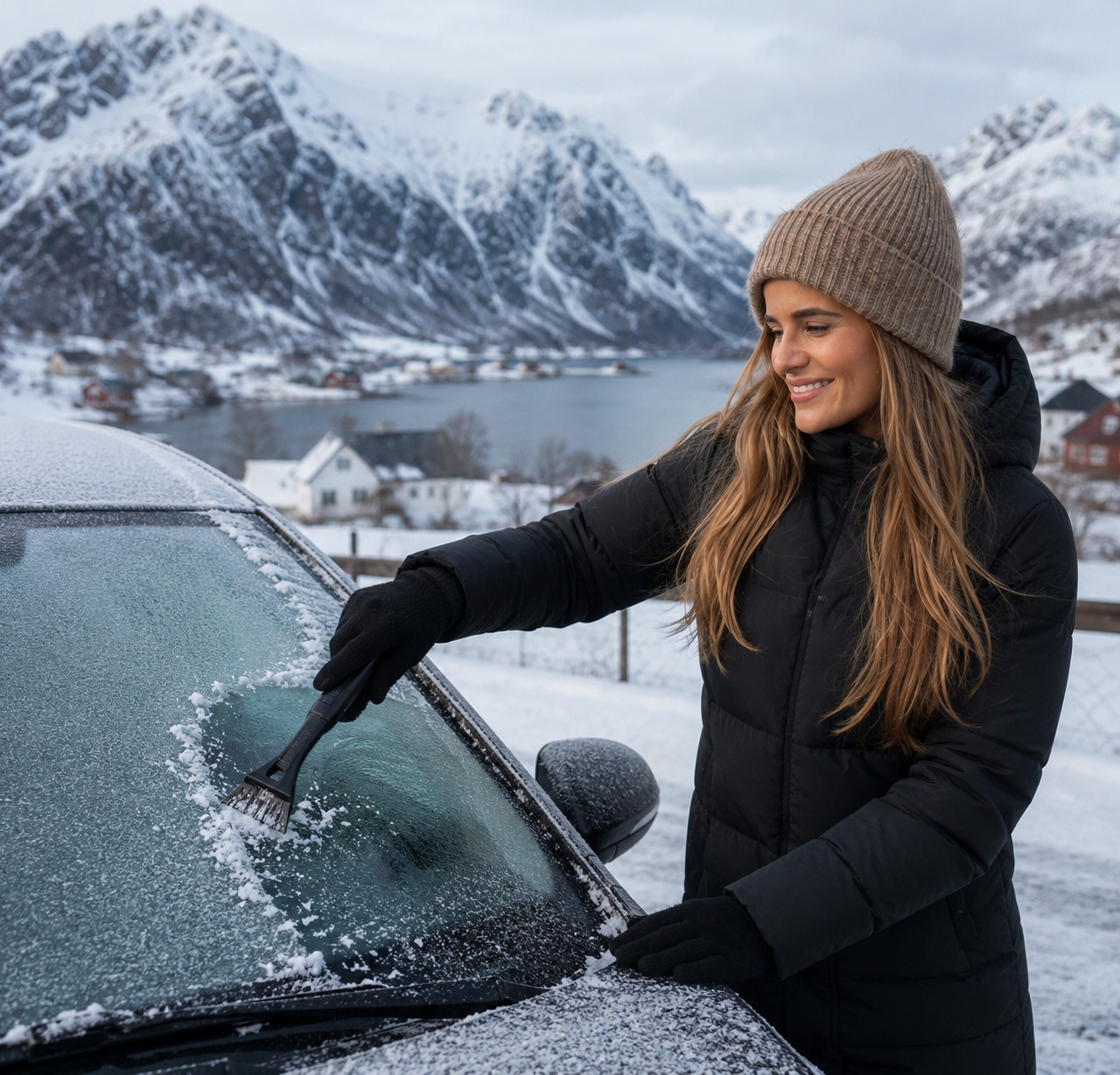
An ice scraper and snow brush are basic winter equipment. Overnight snow can cover far more than the windscreen, and the roof, lights and windows should be cleared before setting off rather than allowing snow to blow from the car once you are moving. A phone charging cable or power bank is also useful, particularly if you are relying on your phone for navigation, traffic information or contacting the rental company.
For journeys involving mountain passes, it is sensible to be slightly better prepared. Statens vegvesen recommends keeping a torch, tow rope and snow shovel easily accessible when preparing for convoy driving, alongside a full fuel tank or fully charged battery. You may never use any of them, but this is precisely the sort of equipment that becomes valuable when a straightforward winter journey stops being straightforward.
Fuel and battery level deserve particular attention before entering remote or exposed stretches. Do not wait until you are approaching empty before thinking about the next petrol station or charger. If a road closes and you need to wait with the heating running, having plenty of fuel or battery gives you considerably more margin. This is especially important before convoy-controlled mountain crossings, where there are no fuel or charging facilities along the restricted section.
None of this requires travelling with an elaborate survival kit. For most visitors, the useful preparation is quite ordinary: enough warmth to be comfortable outside the car, food and drink for an unexpected wait, a charged phone, basic snow-clearing equipment and sufficient fuel or battery to cope with delays. The point is simply to make sure that a change in the weather does not immediately become a problem.
Before You Set Off: A Winter Driving Checklist
A few minutes of preparation before leaving can make a much bigger difference in winter than it does during the rest of the year. The weather at your hotel or rental-car office tells you very little about what conditions may be like several hours later, particularly if the route crosses mountains, climbs significantly in elevation or passes through several different regions.
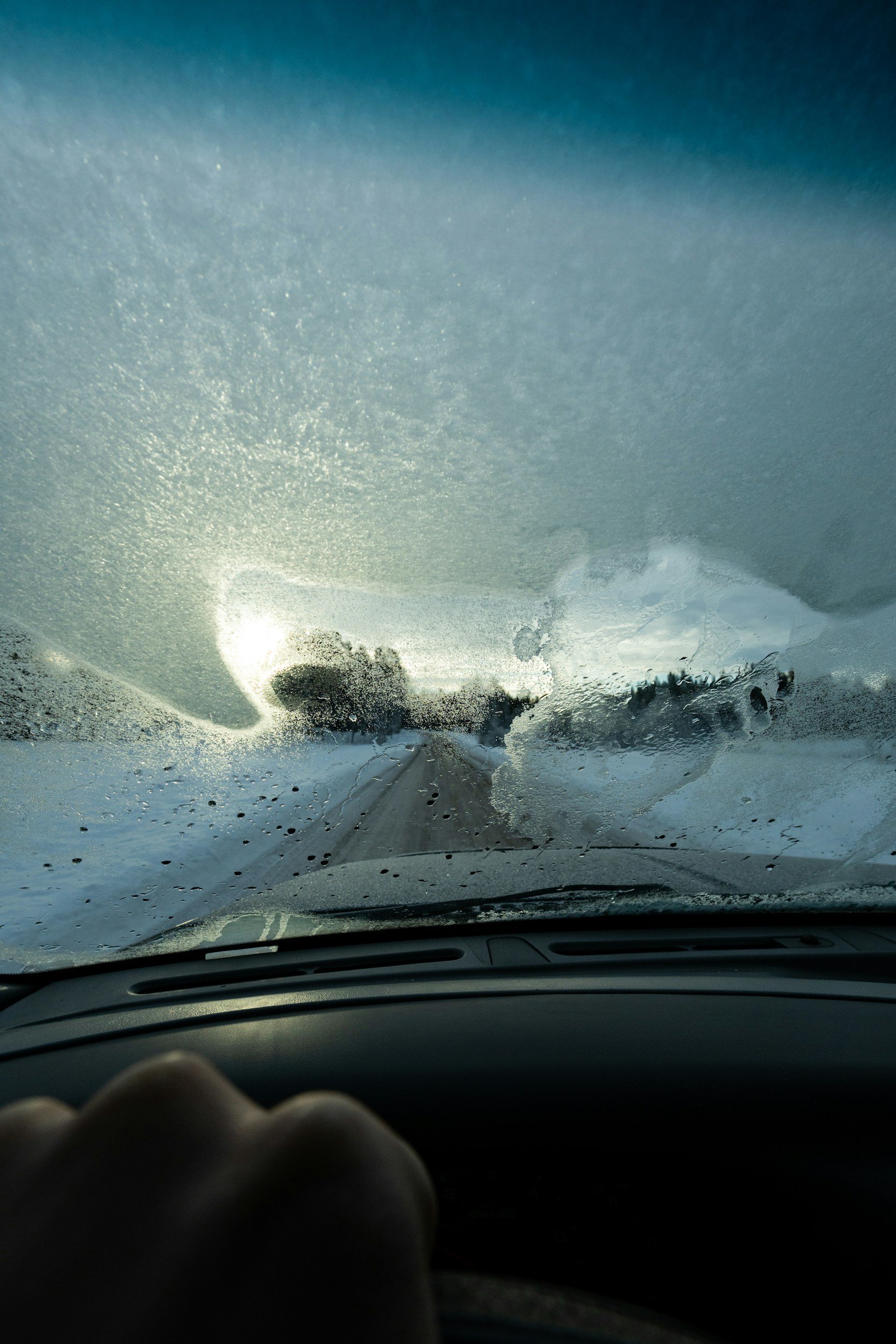
For a short drive around a city, most of these checks will take less than a minute. For a longer road trip, they should become part of the routine before each major journey.
Check the road conditions, not only the weather forecast. Use Vegvesen Trafikk to look for closures, convoy driving, warnings and other traffic information along your actual route. If you are crossing a mountain pass, check its status specifically.
Look at the road cameras when conditions are uncertain. They can give you a much better impression of snow cover, visibility and road conditions than a general weather forecast for the nearest town.
Check the forecast for the entire route. Conditions at your destination may be completely different from those on a mountain crossing or exposed coastal section along the way.
Make sure the tyres are suitable for the conditions. If you are in a rental car, check this before beginning the journey rather than assuming that every vehicle is equipped identically.
Start with enough fuel or battery. On remote routes and mountain crossings, leave yourself considerably more margin than you would in summer. If you are driving an electric car, remember that cold temperatures can reduce range.
Keep warm clothing accessible. A winter jacket, hat and suitable footwear are much more useful inside the car than buried beneath several suitcases if you are unexpectedly delayed.
Carry food, water and a charged phone on longer journeys. For mountain crossings, a warm drink is also worth having with you.
Clear the entire car before driving. Remove snow and ice from the windows, lights and roof rather than simply creating a small clear area on the windscreen.
Consider how much daylight you actually have. In Northern Norway especially, a large part of the journey may take place in darkness during midwinter. If you are not comfortable driving at night on unfamiliar winter roads, plan accordingly.
Allow more time than the navigation estimate suggests. Snow, reduced speed, ferries, convoy waiting times and road closures can all extend a journey. Avoid building an itinerary where arriving late creates another problem.
Know your alternative. Before crossing a mountain or beginning a remote stretch, look at what you would do if the road closes. The answer may be another route, but it may just as easily be waiting until the following morning.
Recheck conditions before committing to the next section of the journey. A route that was open when you left may not remain open all day, particularly during severe weather.
The final check is less technical: ask yourself whether you would still choose to make the drive if you were not trying to keep to the original itinerary. If the forecast has deteriorated, a pass has become uncertain or the journey will now take place almost entirely in difficult conditions, changing the plan is not a failure of preparation. It is part of winter travel in Norway.
The most useful winter-driving habit is therefore not learning how to push through bad conditions. It is learning to check what lies ahead before the road makes the decision for you.
Final Words
Driving in Norway in winter is rarely about proving that you can handle difficult conditions. The real skill is recognising that the road may demand something different from what you planned.
A route can be perfectly manageable in the morning and less sensible a few hours later. Snow can turn to ice, a mountain pass can close, visibility can deteriorate, or a journey can simply take much longer than expected. Good winter driving means leaving enough time, checking conditions before you commit to the next stretch and being willing to change the plan when the weather changes first.
With suitable tyres, a properly equipped car and realistic expectations, winter driving can open up parts of Norway that are difficult to experience in any other way. It can give you the freedom to move between small communities, mountain regions, fjords and Arctic landscapes at your own pace.
But that freedom works best when it is paired with flexibility.
The safest winter road trip is not the one where every kilometre of the original itinerary is completed. It is the one where you know when to continue, when to wait and when another route, another day or another form of transport makes more sense.
More articles about Norway:




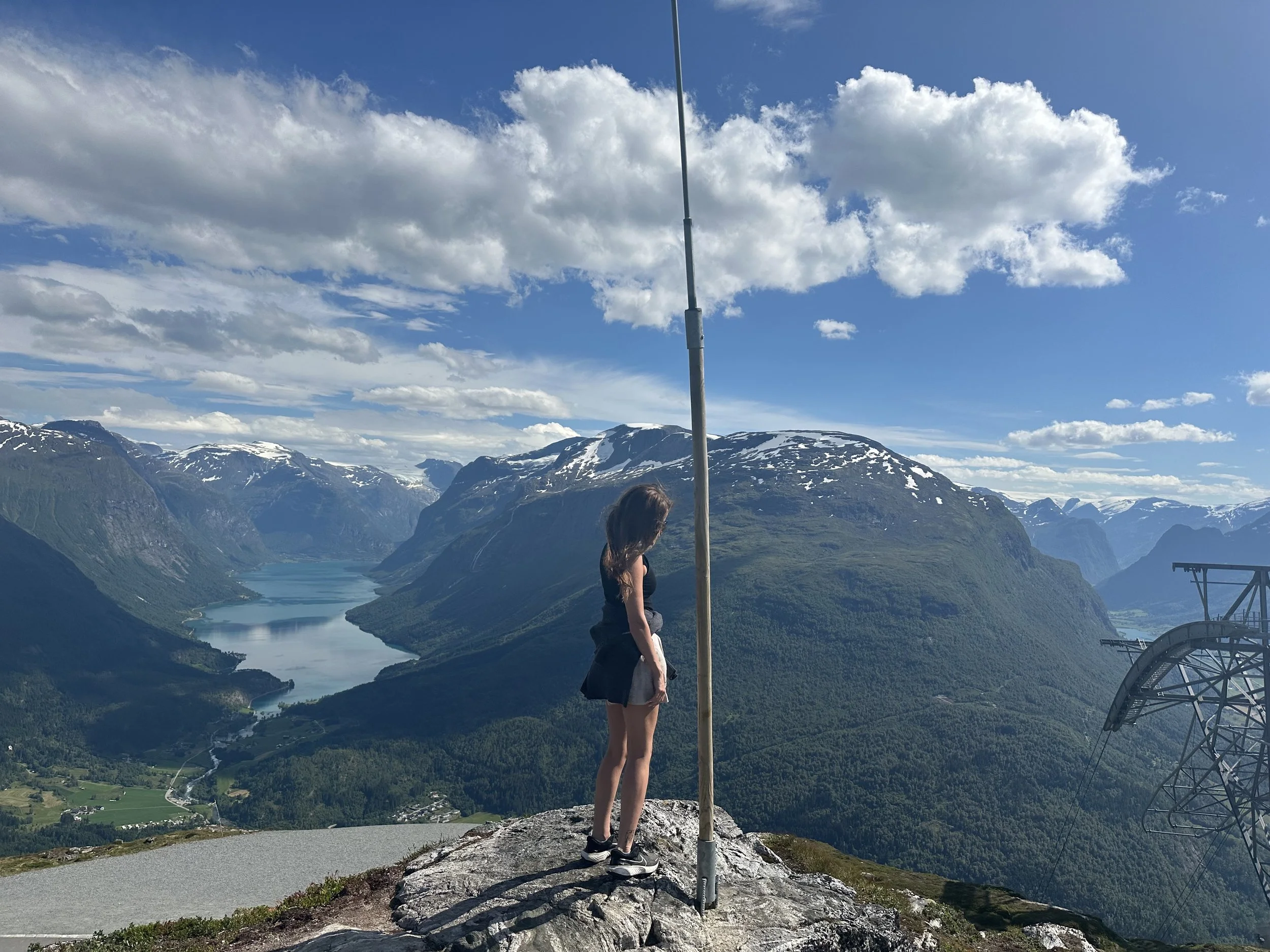
Explore Mountain Norway on a 10-day road trip through Valdres, Jotunheimen and Rondane, with scenic mountain roads, traditional summer farms, Besseggen and Galdhøpiggen along the way.