
Antarctica Wildlife: What Animals You’ll See and When
There’s something magical about seeing wildlife in Antarctica.
Here, nature rules completely, with no cities, no fences, just endless ice, glittering seas, and creatures so extraordinary they seem to belong to another world.
If you’re travelling on an expedition cruise between October and March, each month brings its own wildlife highlights. Here’s what you can expect to see, and when.
For a broader overview of polar destinations, expedition travel and preparation, see the Polar Travel guide.
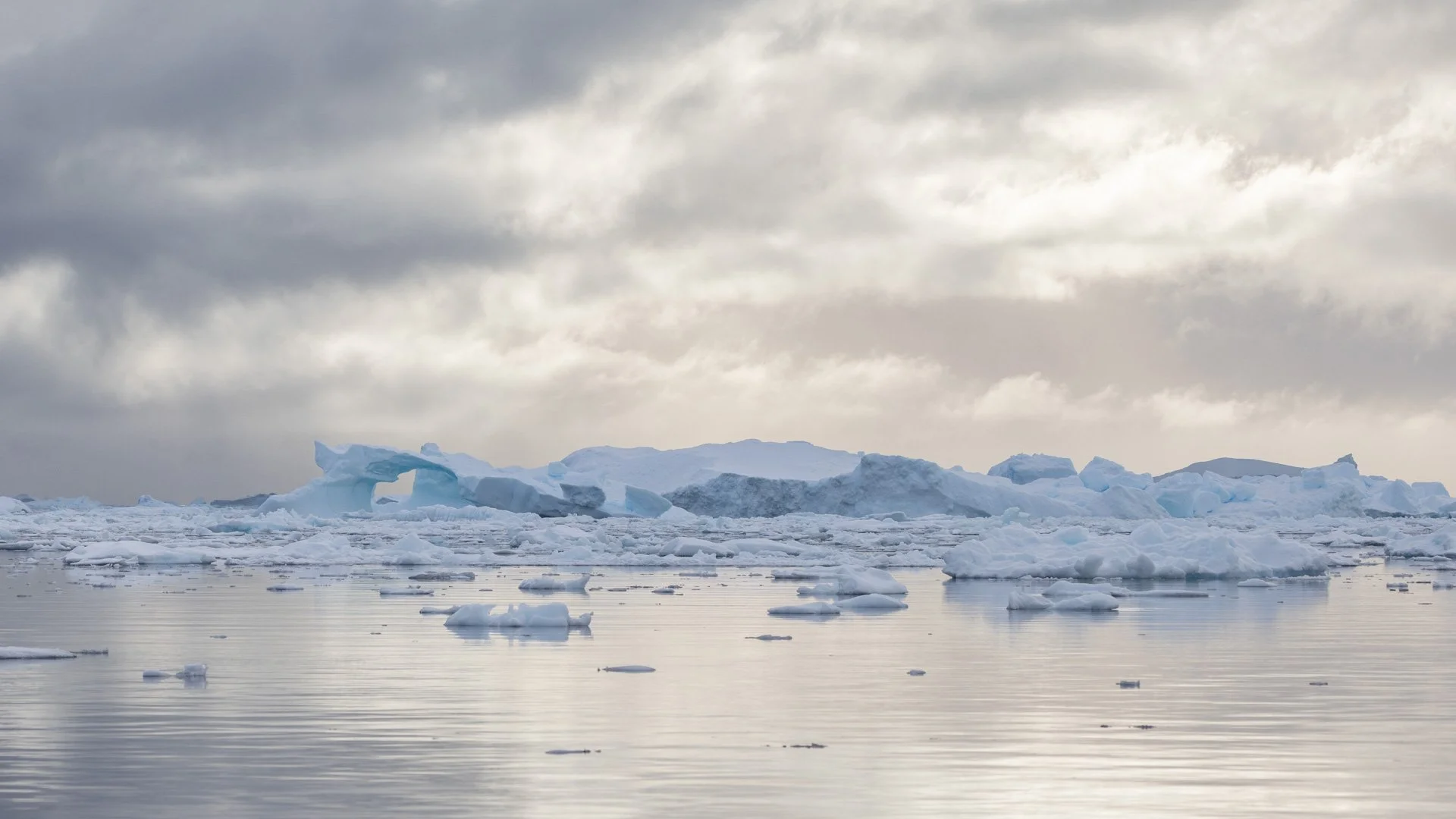
October: The Awakening
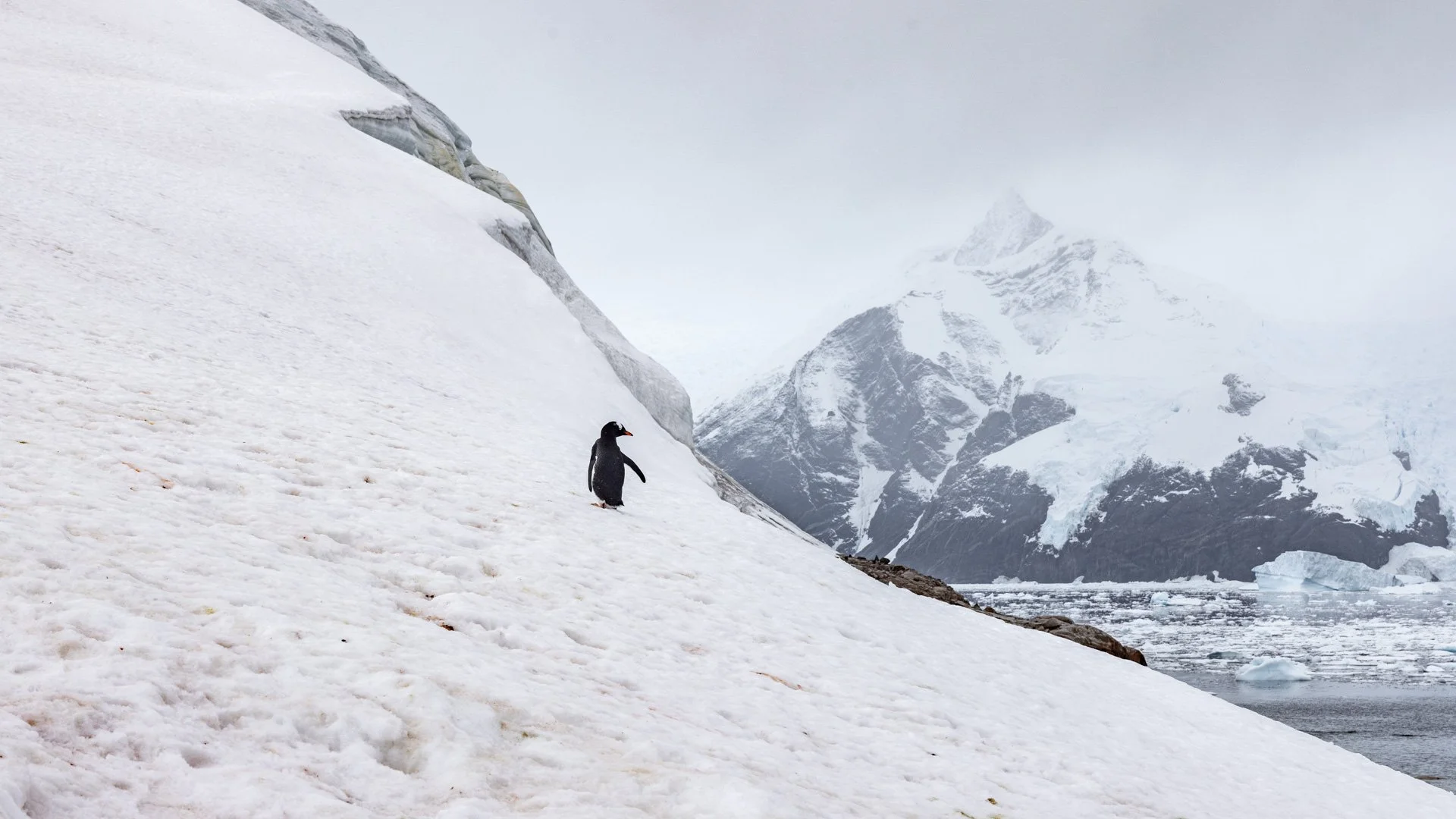
As the long winter loosens its grip, Antarctica begins to stir. Snow still covers much of the landscape, and the sea ice is breaking apart. This is when the first Adélie and Gentoo penguins return to their colonies to start nest-building.
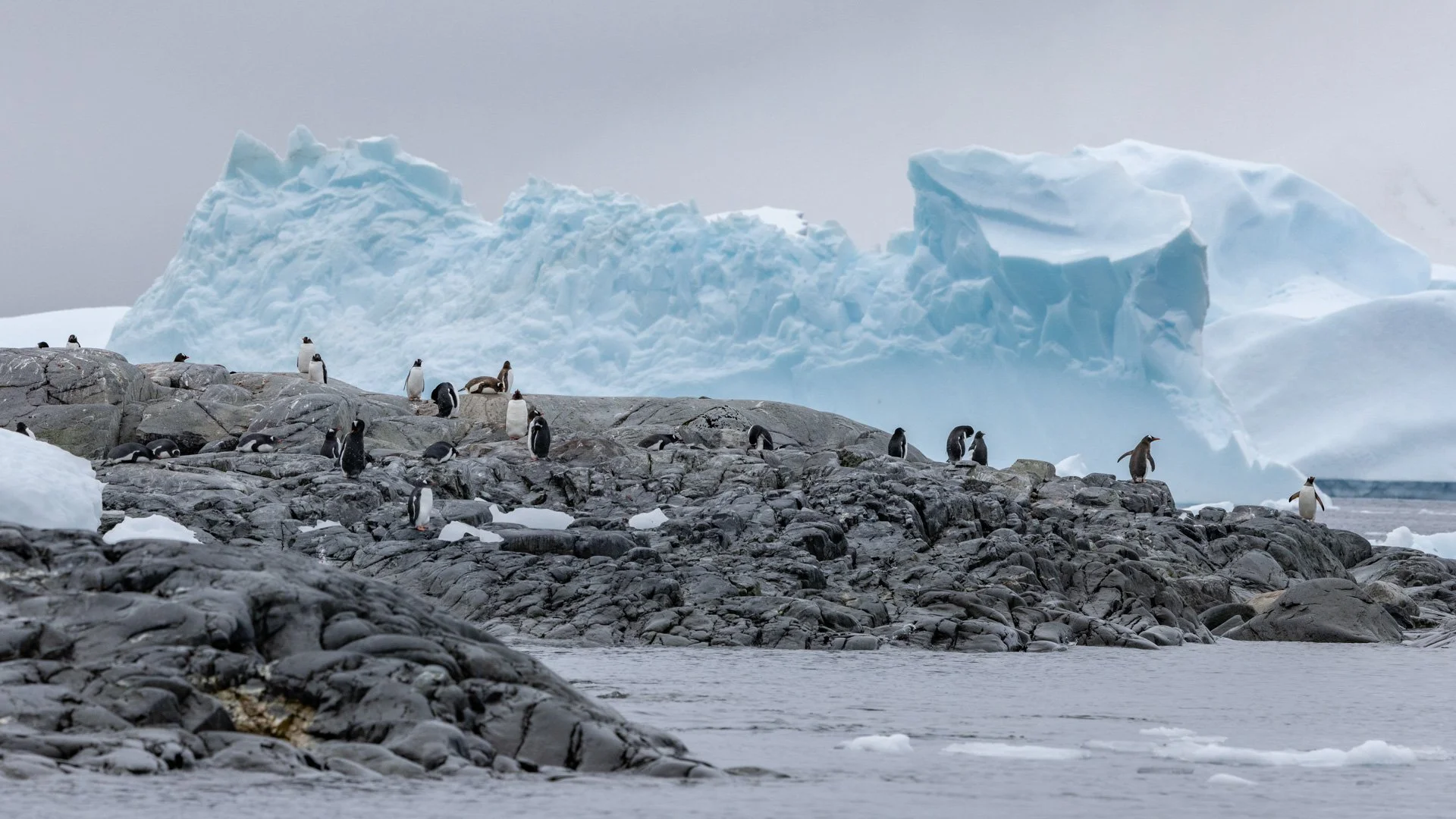
Penguins: Adélies and Gentoos begin their courtship rituals, offering pebbles and calling to each other.
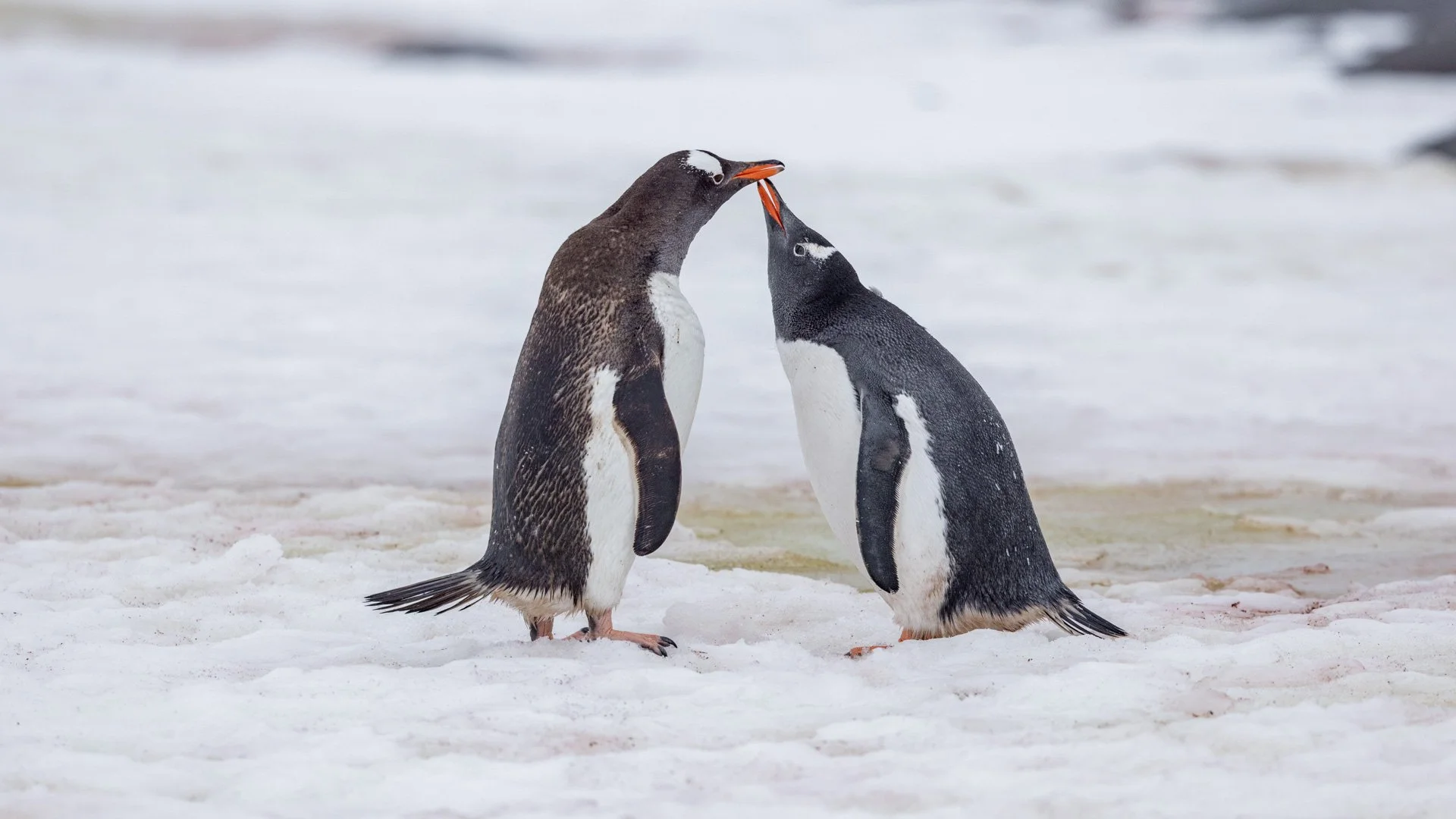
Seals: Weddell seals can be seen resting on the fast ice, giving birth to pups. Crabeater seals can also be seen hauled out on pack ice, following the retreating sea ice as they search for krill.
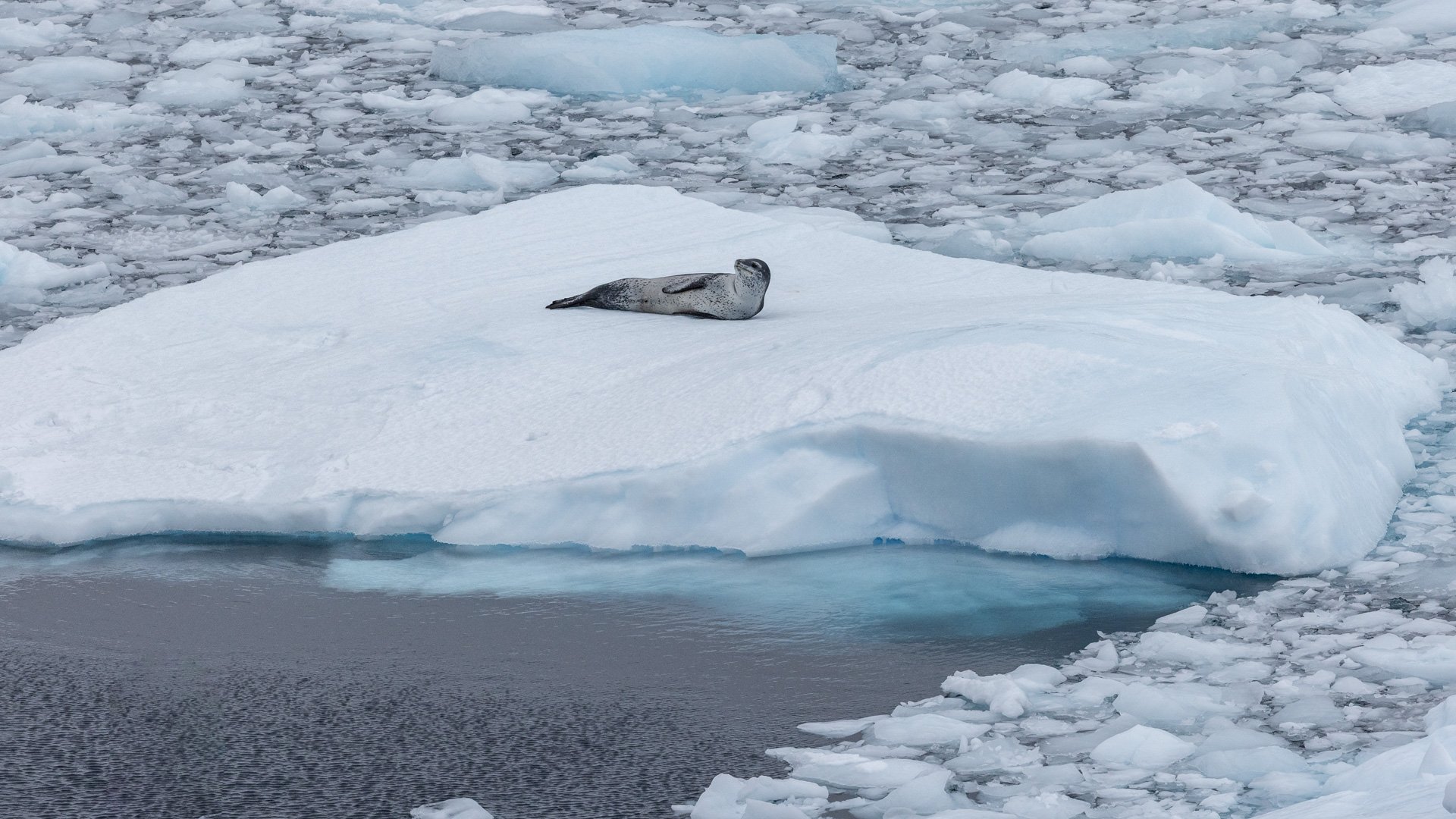
Whales: A few early whales may start to appear towards the end of the month, usually Antarctic minkes or the occasional orca pod, but most species arrive later in November as the krill blooms strengthen.
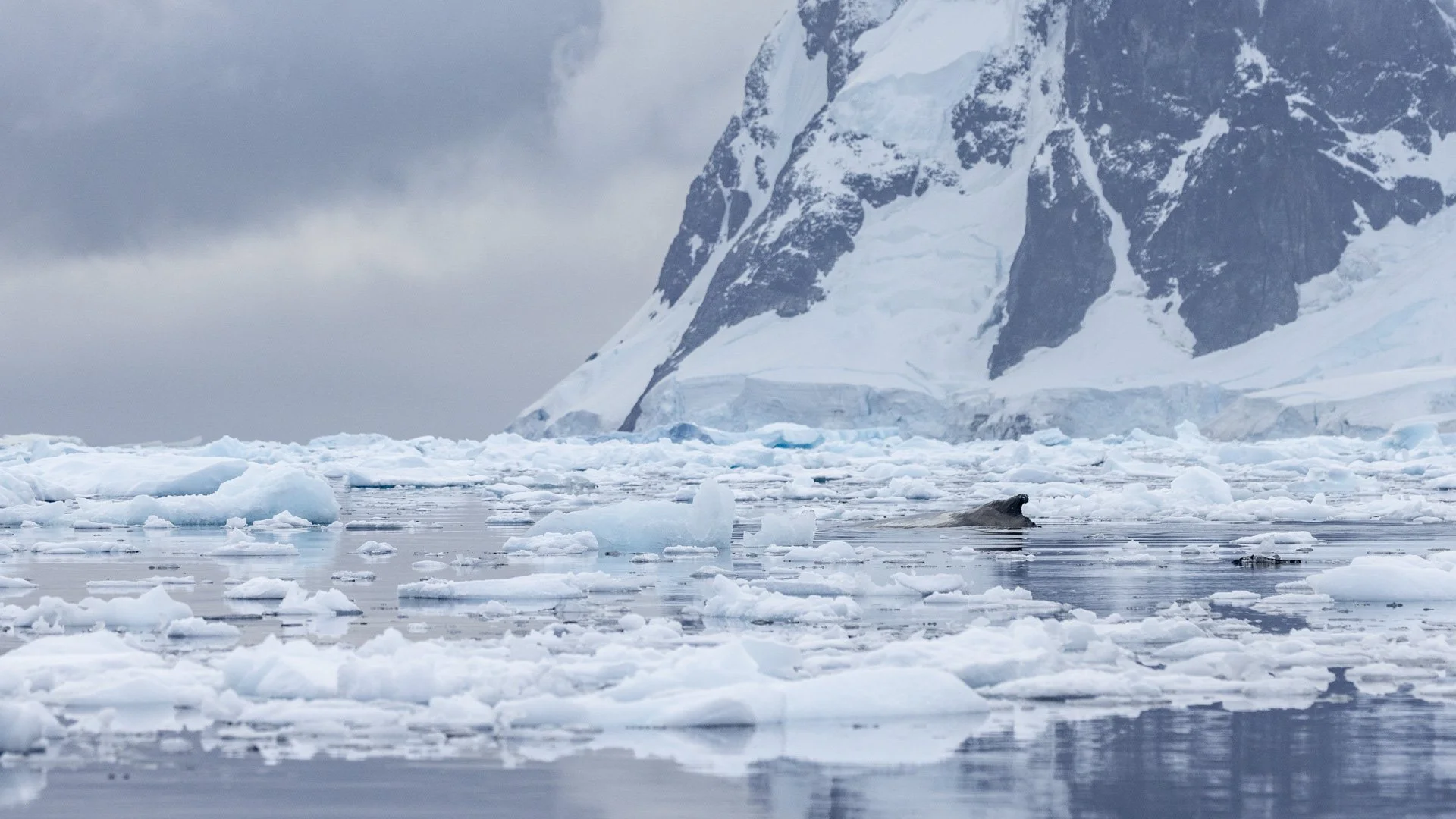
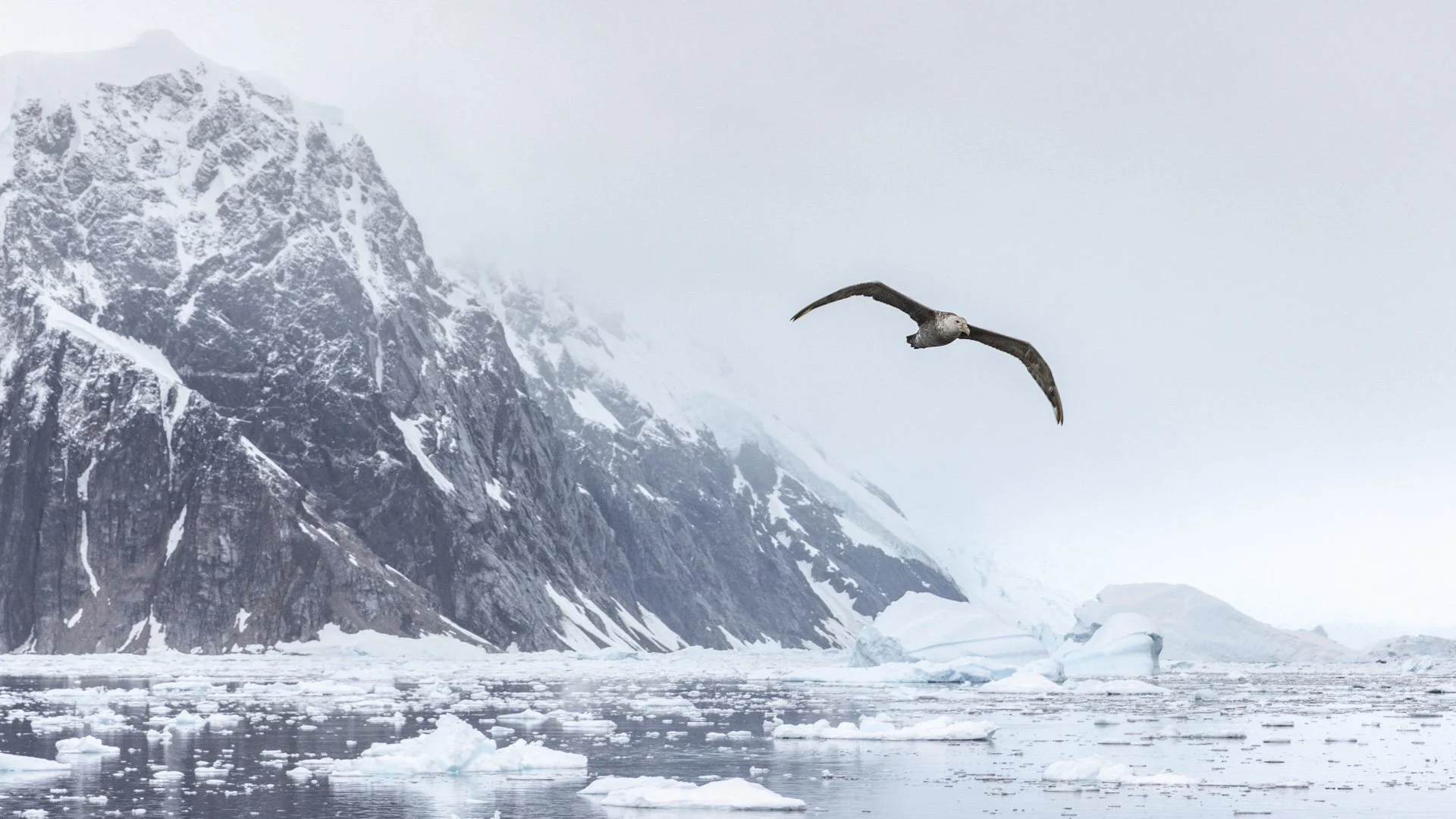
Birds: Snow petrels, the pure white birds that seem carved from ice, return to the coast. Cape petrels begin appearing around ships.
Fun fact: Weddell seals can dive over 600 metres deep and stay underwater for up to 80 minutes, among the best divers in the animal kingdom.
November: Love and Nesting Season
November is one of the most exciting months for penguin lovers. Colonies are buzzing with activity as courtship displays, nest building, and egg-laying take over the shores.
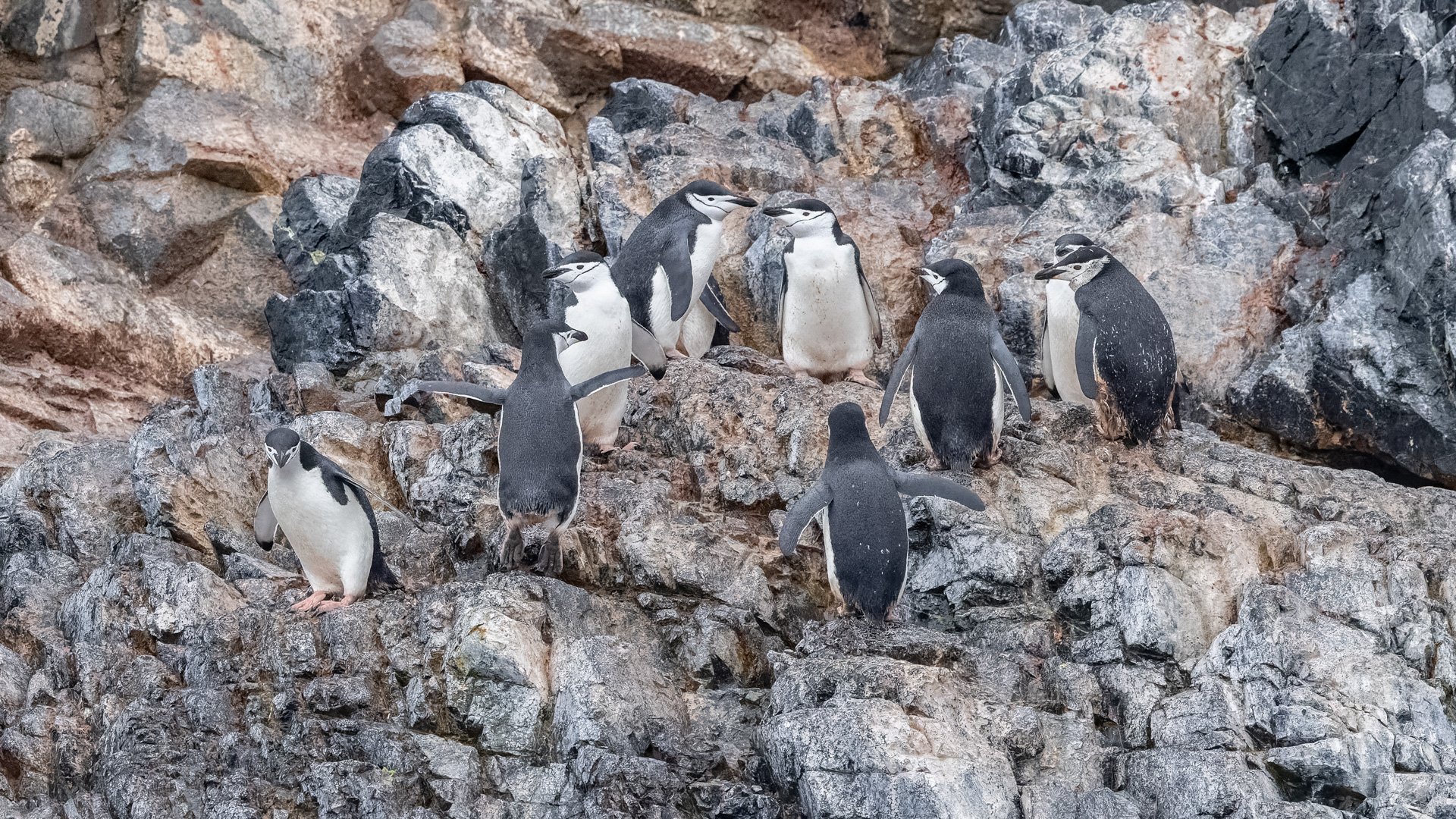
Penguins: Gentoo, Chinstrap, and Adélie penguins are busy finding mates and defending their nests.
Seals: Elephant seals gather on sub-Antarctic islands like South Georgia for their dramatic breeding season. Males can weigh up to four tonnes. Weddell and crabeater seals rest on drifting floats, and leopard seals begin patrolling the beaches.
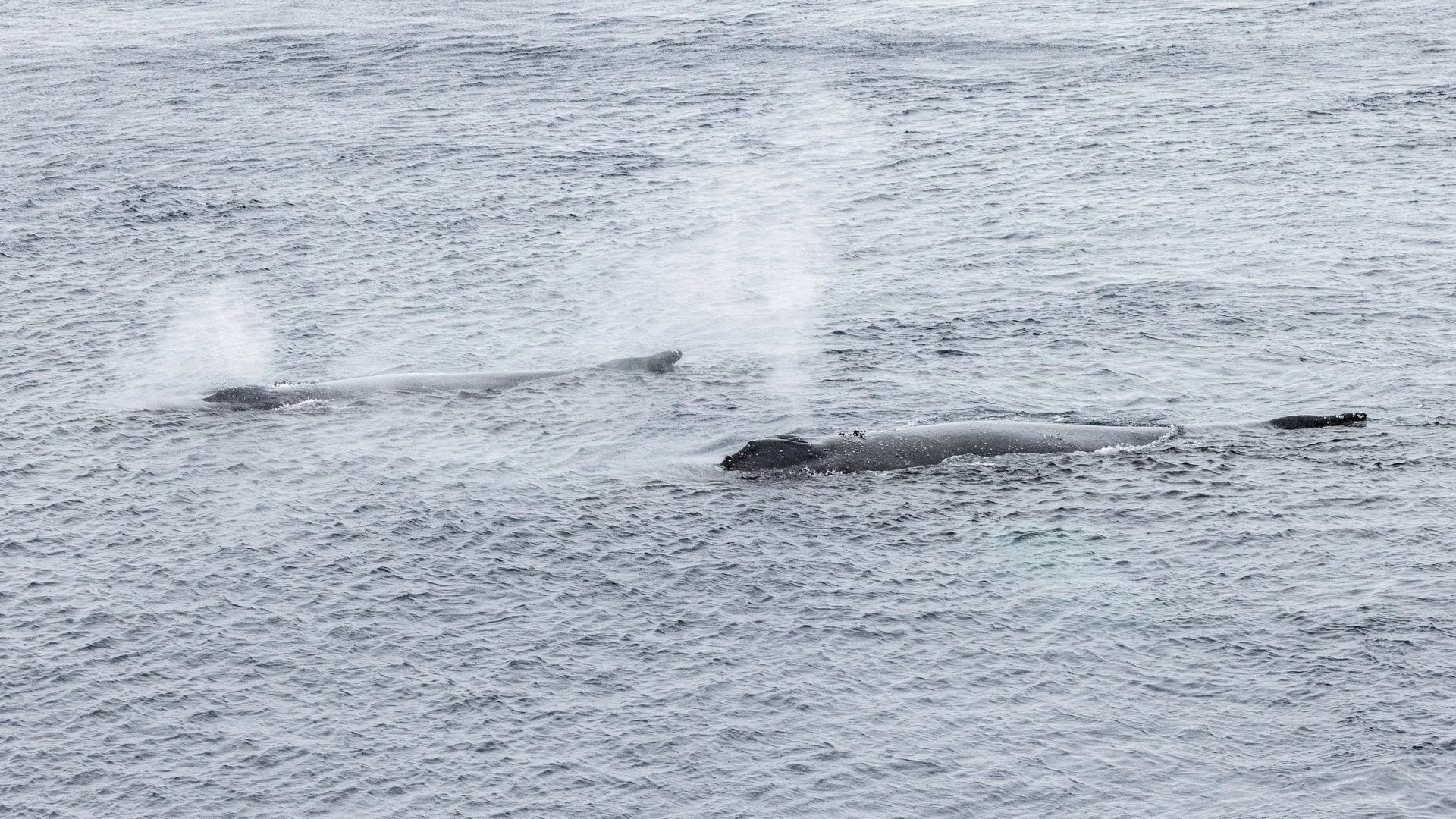
Whales: Early humpbacks and minke whales begin arriving as krill becomes more abundant.
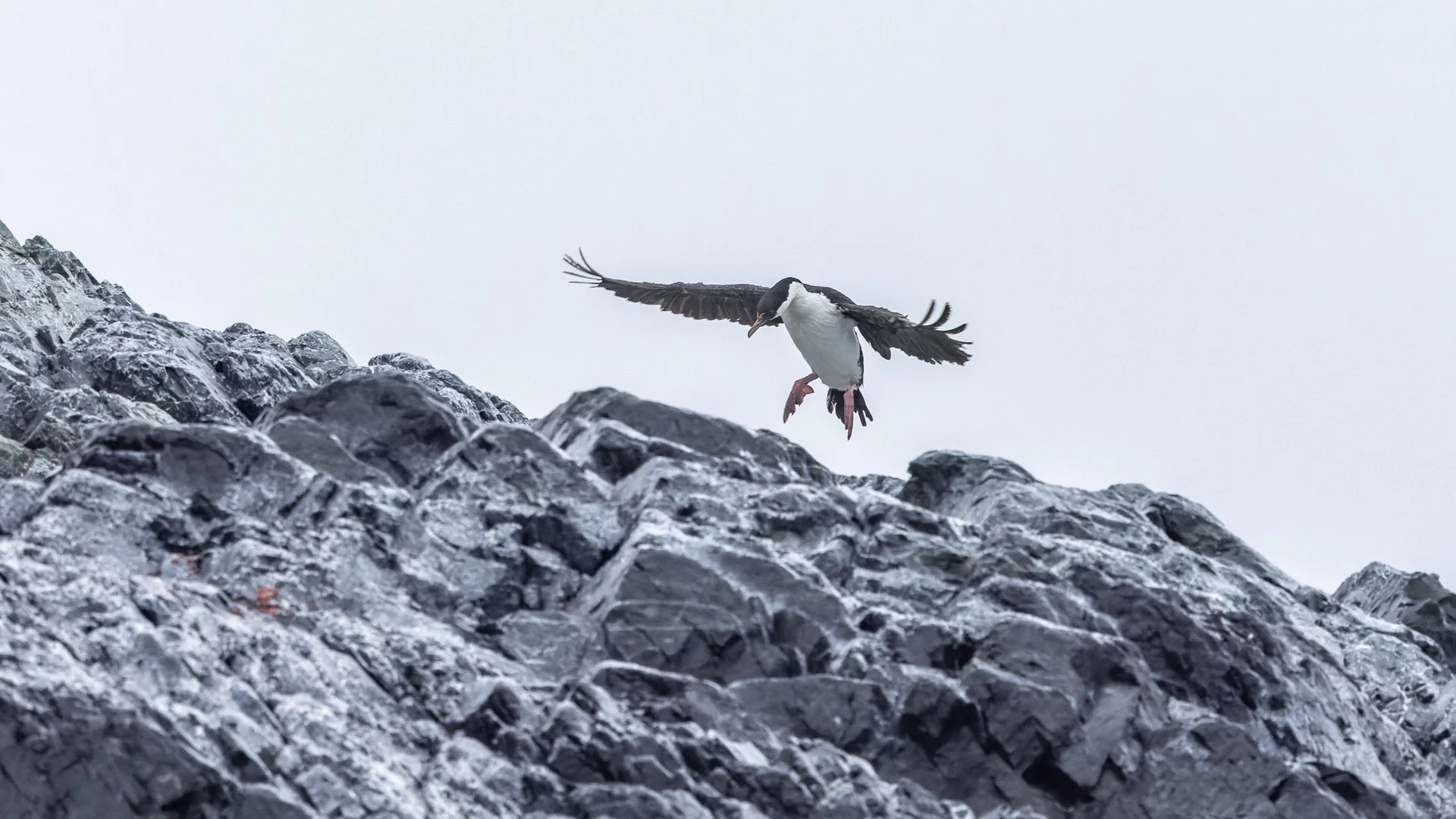
Birds: Antarctic shags (blue-eyed cormorants start nesting on rocky cliffs. Wilson’s storm petrels dance over the waves, feeding on tiny plankton.
December: Life Explodes
This is the height of the Antarctic summer. The days are long and bright, and wildlife activity peaks.
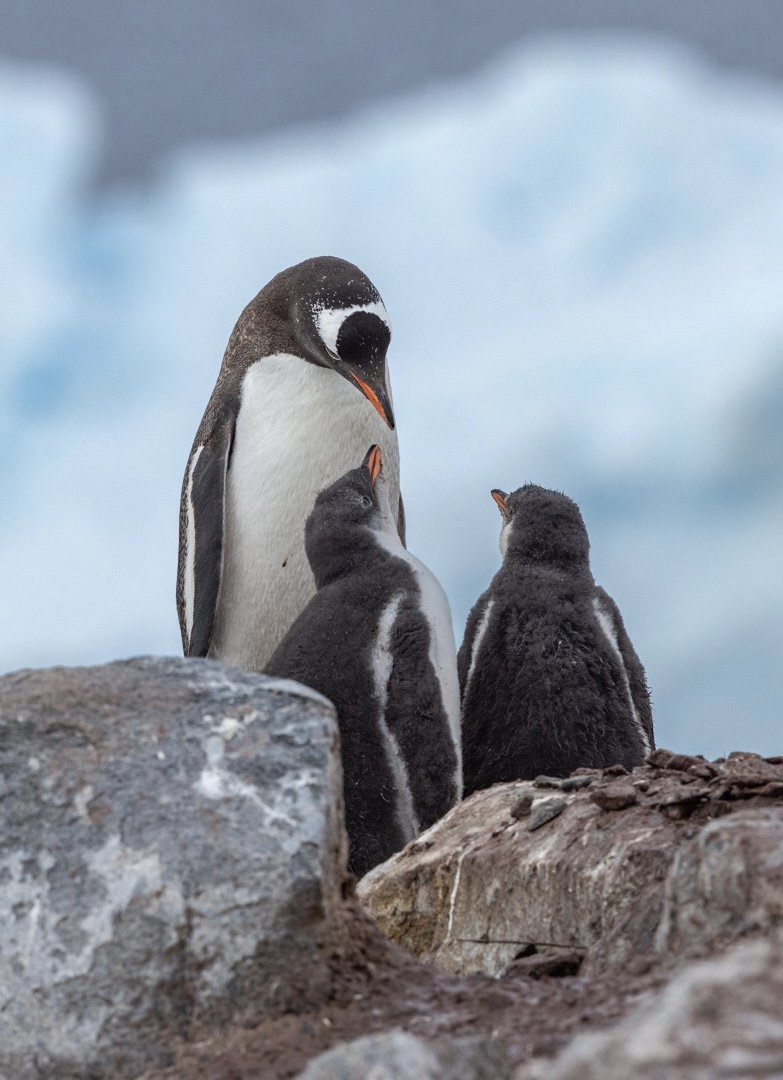
Penguin chicks start hatching. Parents take turns guarding and feeding their young.
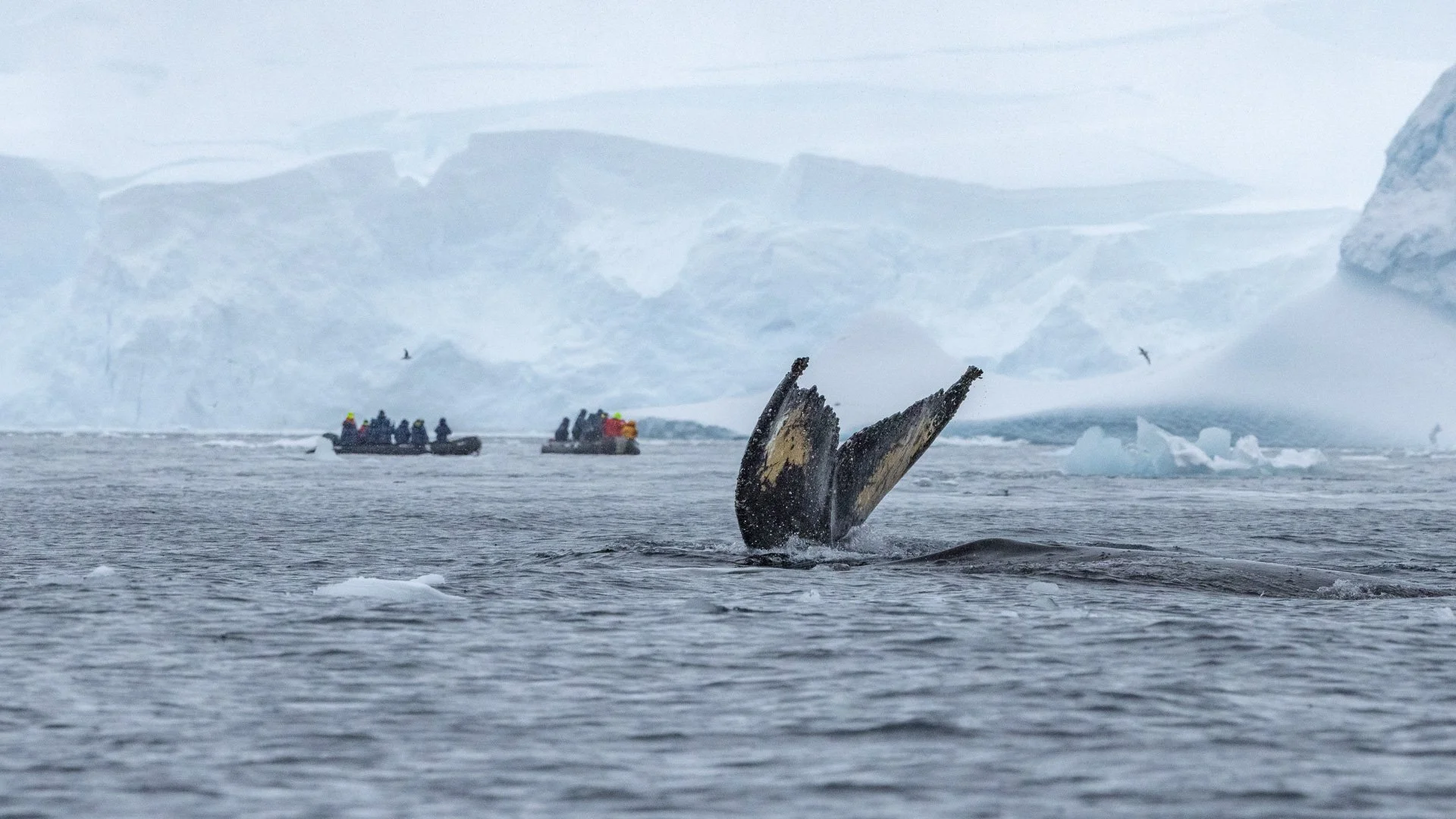
Whales: More humpbacks and minkes arrive, often breaching near zodiacs.
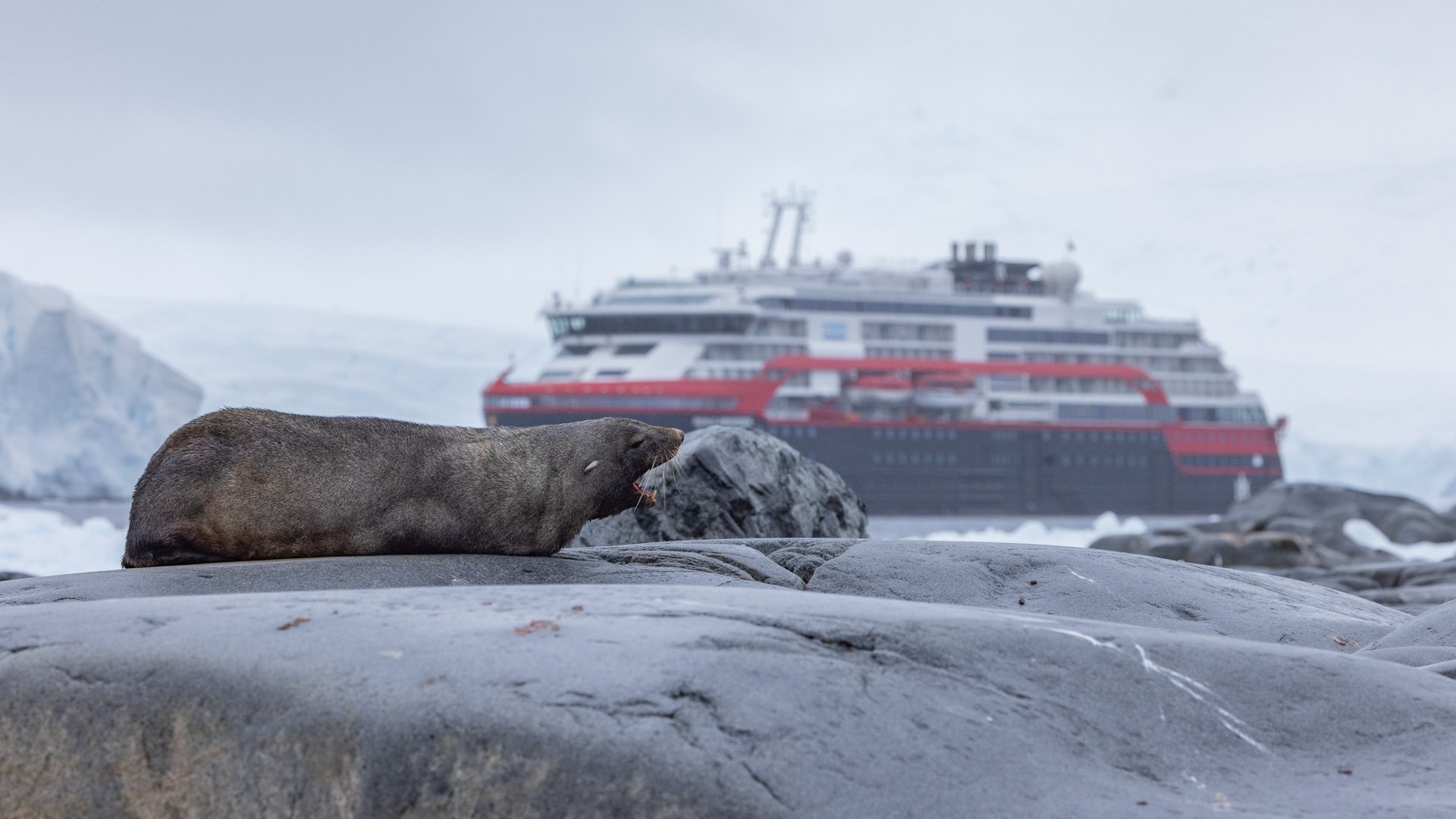
Seals: Leopard seals patrol the shores, looking for penguin chicks that stray too close to the water, while crabeater seals haul out on icebergs between feeding sessions. Fur seals become more common along the Peninsula.
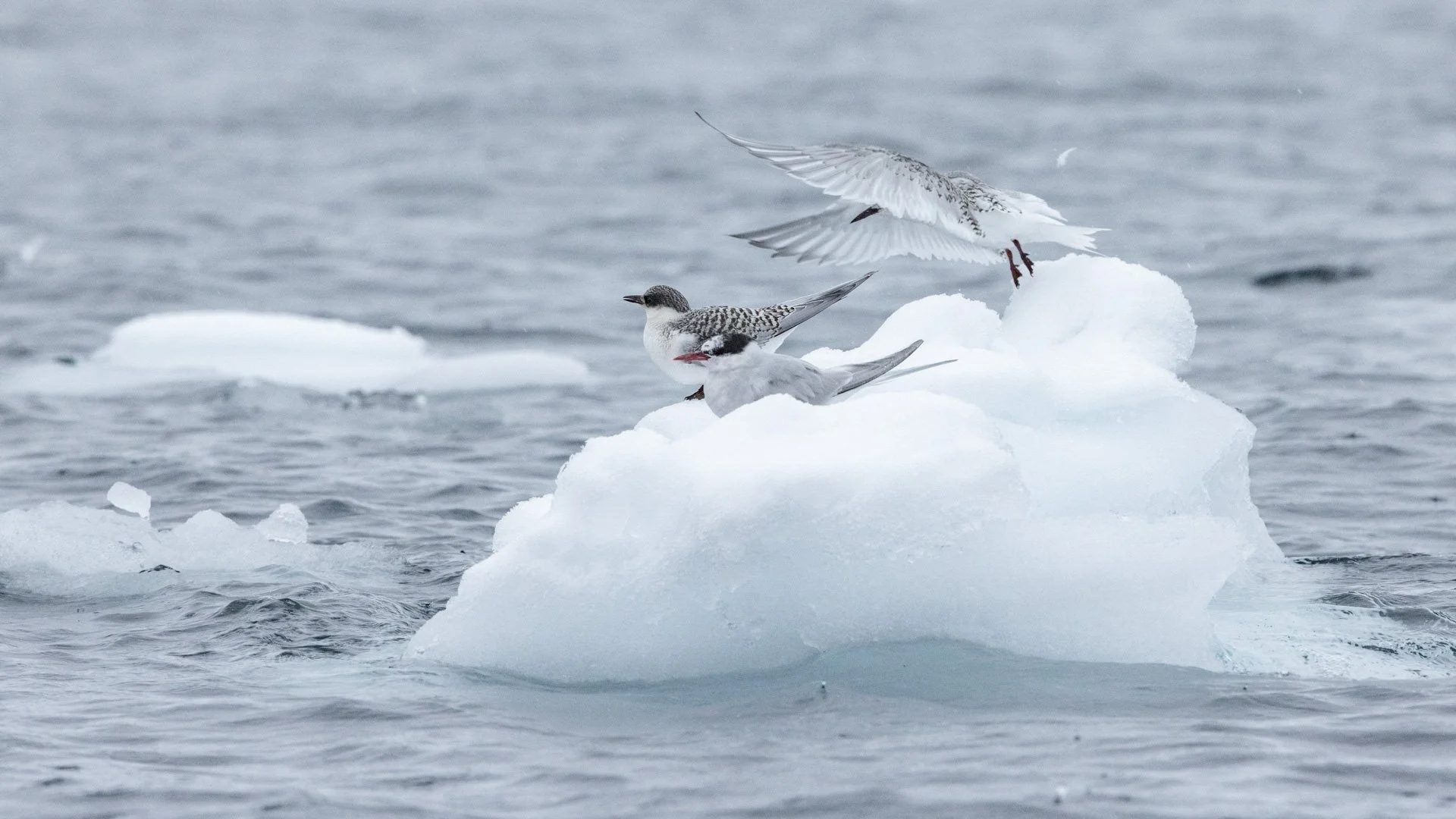
Birds: Skua and sheathbills swoop overhead, opportunistic and bold; Cape petrels swirl around the ship; snow petrels appear ghostlike against ice, and both Arctic terns and Antarctic terns rest on ice floes between feeding flights.
Did you know? Leopard seals have a haunting, almost “sci-fi” call that can be heard even through the ice. Scientists have recorded them using a kind of underwater song to communicate.
January: Peak Wildlife and Perfect Light
By January, colonies are in full swing. Chicks grow rapidly, fluffy and endlessly curious, while whales are at their most visible.
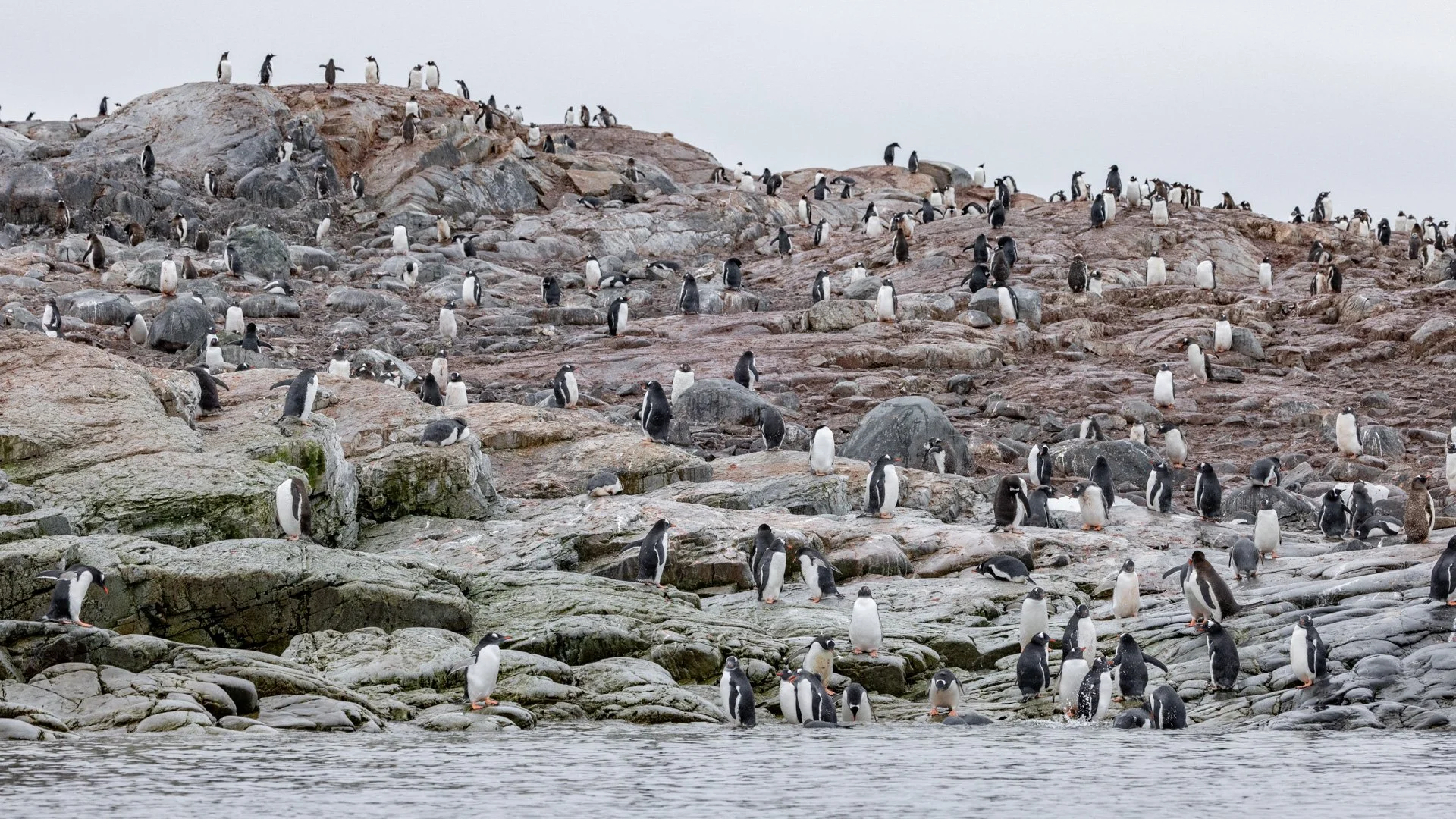
Penguins: Chicks gather in crèches while adults head to sea to feed.
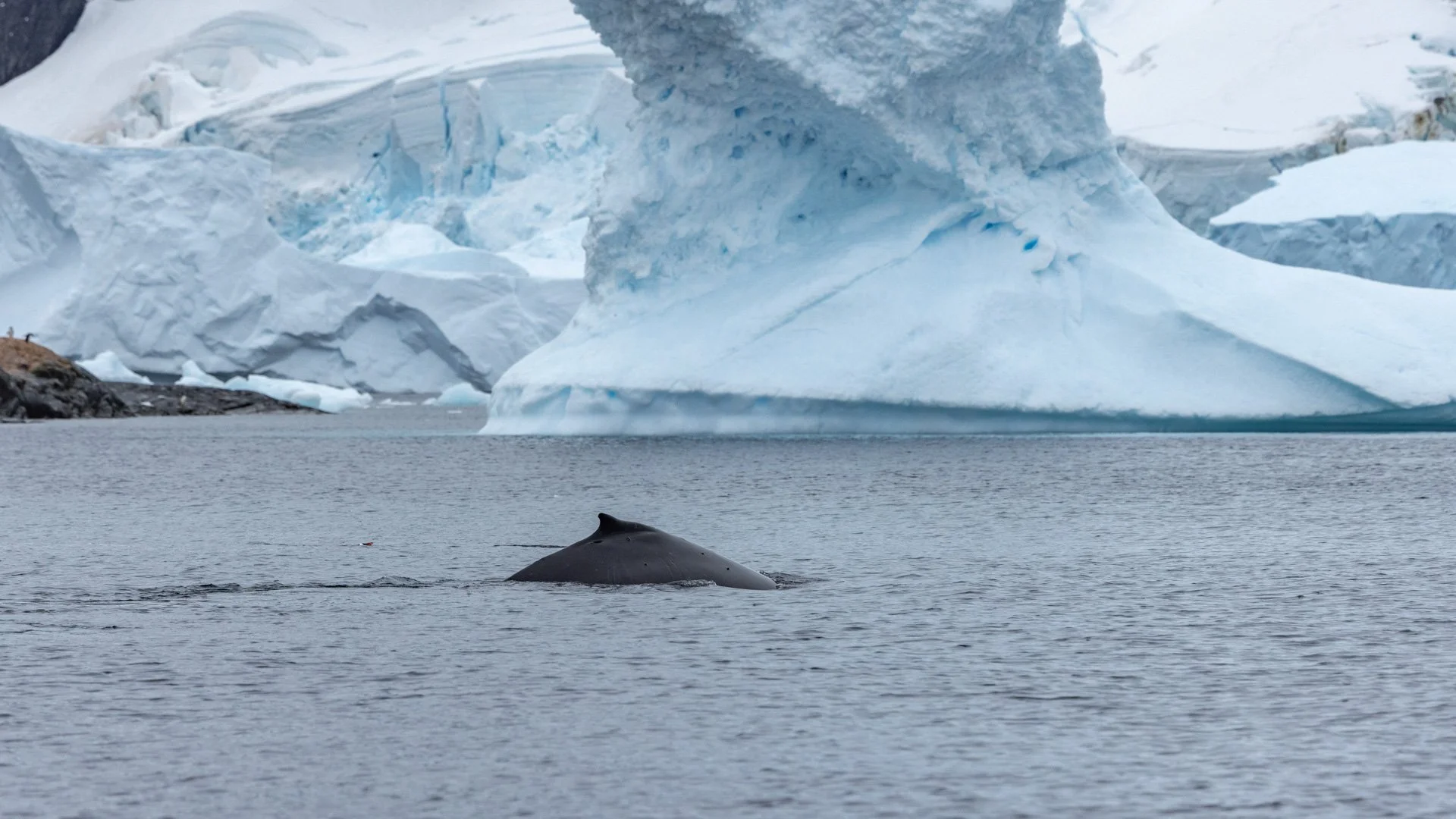
Whales: Humpbacks, orcas, and even fin whales can often be seen feeding in rich waters. Minke whales, especially Antarctic minke whales, are often curious and approach zodiacs.
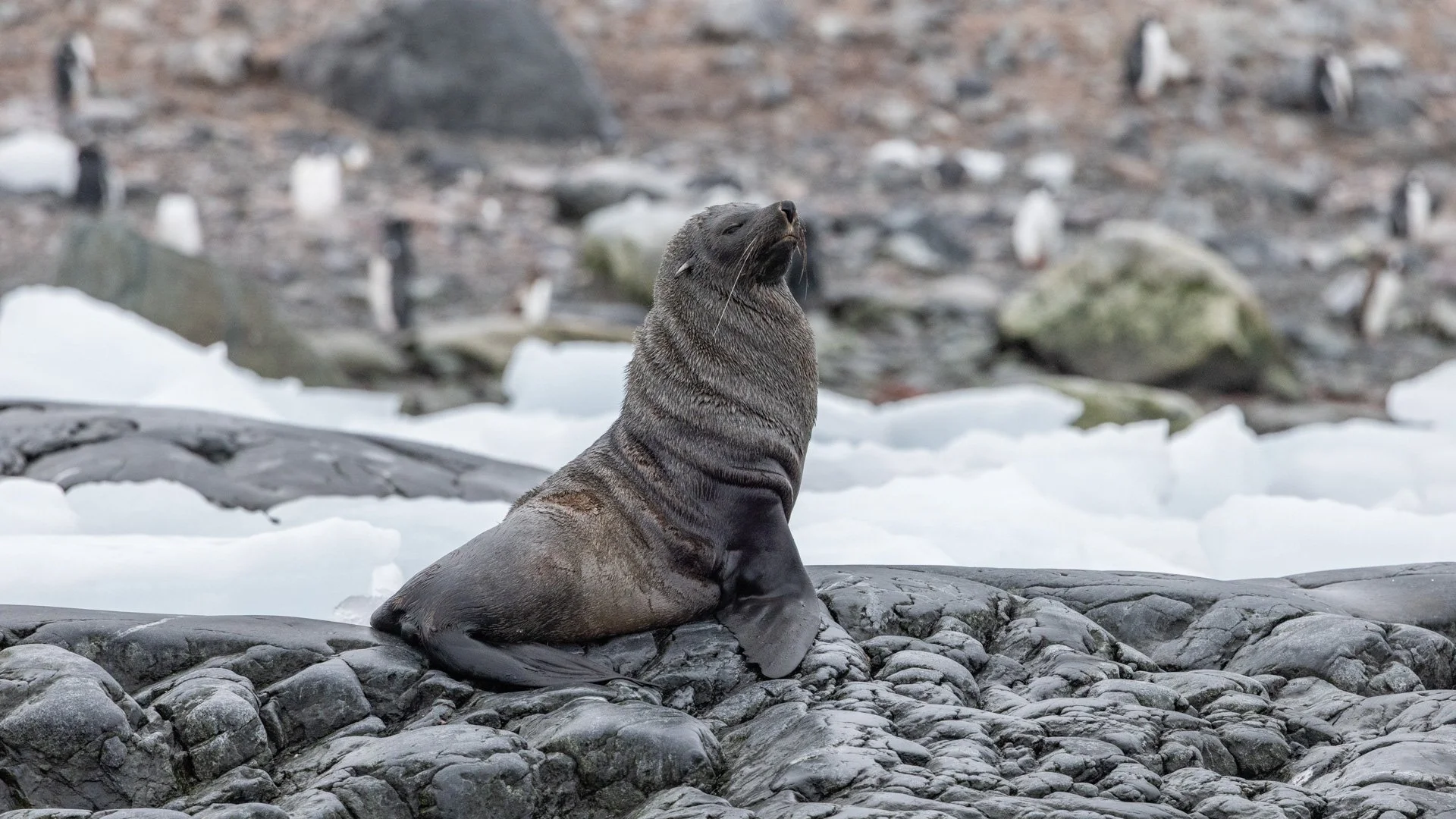
Seals: Leopard seals remain common, and fur seals increase around the Antarctic Peninsula, and crabeater seals rest in groups on ice floes.
Birds: Brown skuas patrol the penguin colonies, while kelp gulls follow the ships in search of easy meals.
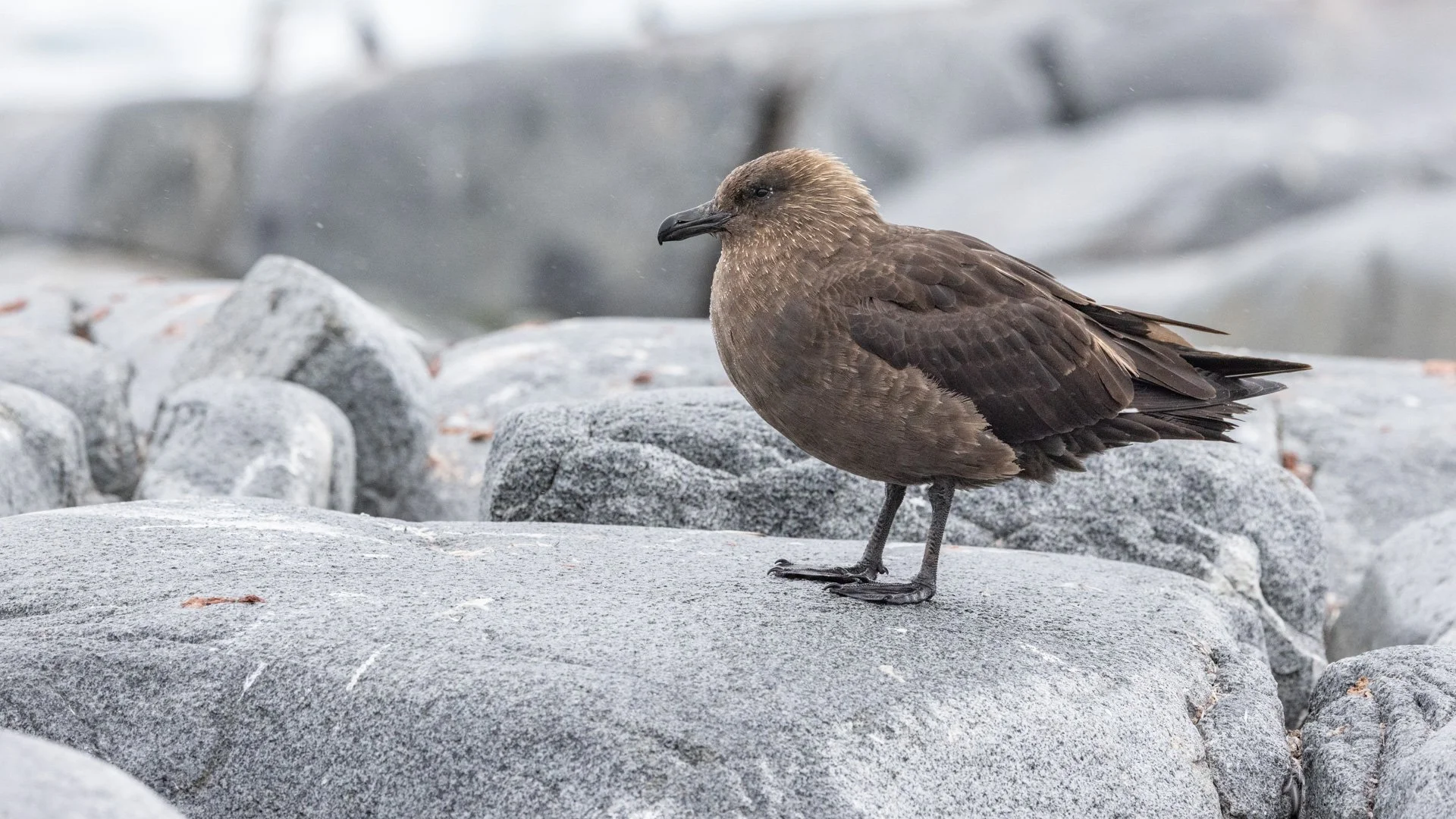
Photography tip: The soft evening light on the icebergs is simply breathtaking in January, perfect for golden-hour shots of wildlife.
February: Whale Encounters
This is the best month for whale watching. The ice has receded, allowing ships to reach further south, and krill blooms attract massive feeding groups.
Whales: Expect to see humpbacks in large numbers, often bubble-net feeding. Orcas patrol the waters in family pods. Fin whales and minkes are commonly seen.
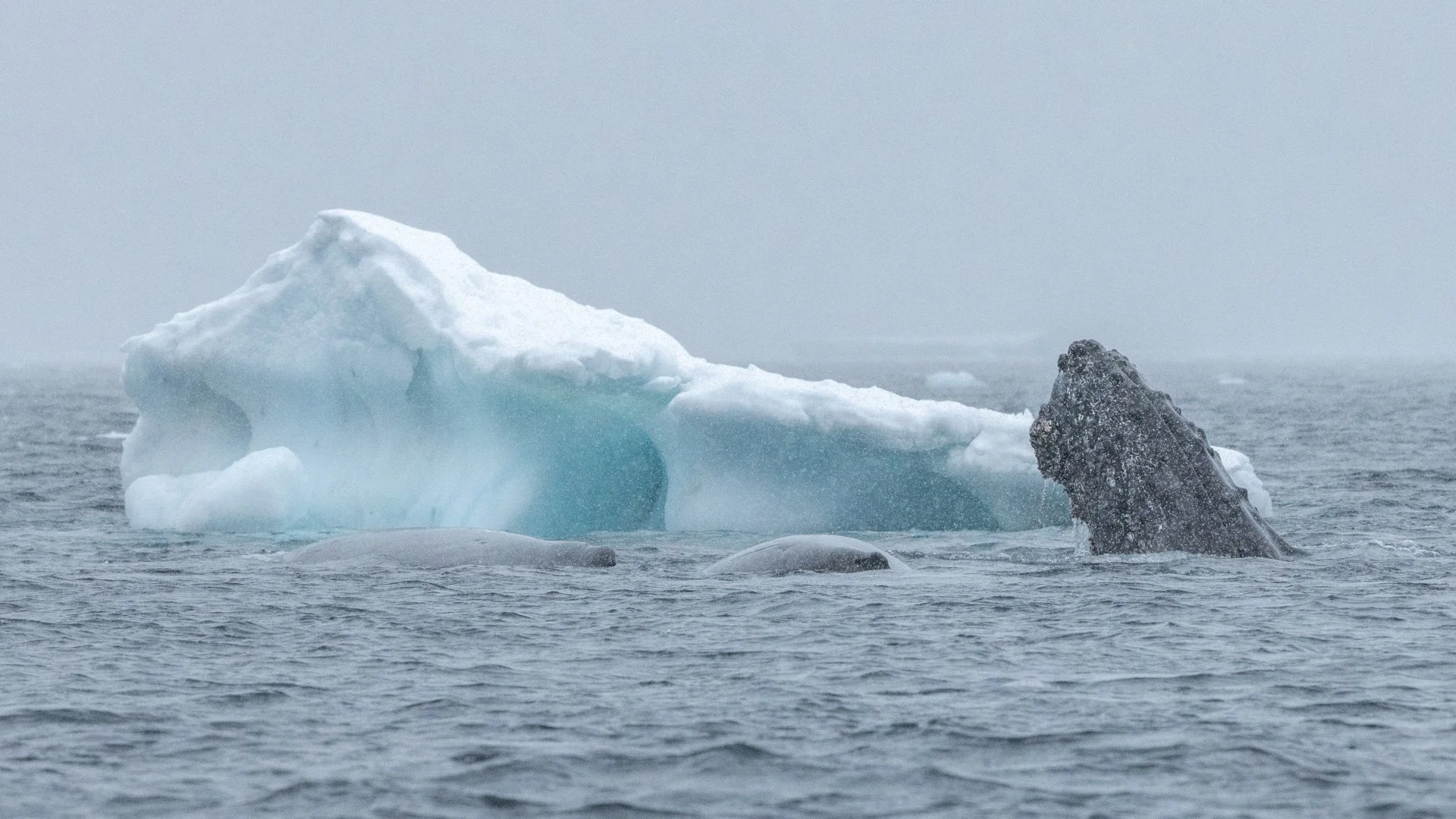
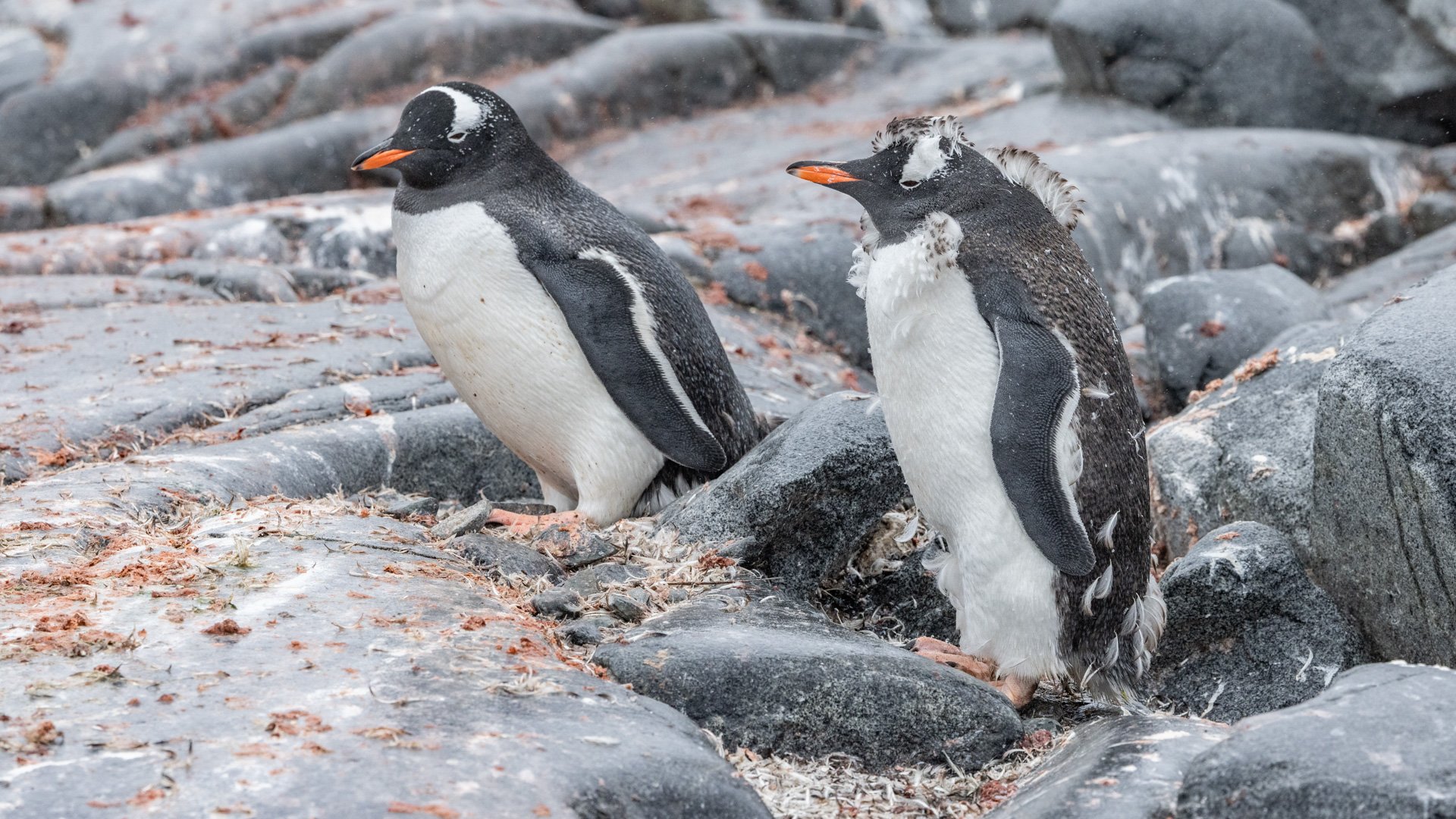
Penguins: Chicks start to moult, losing their down before heading to sea.
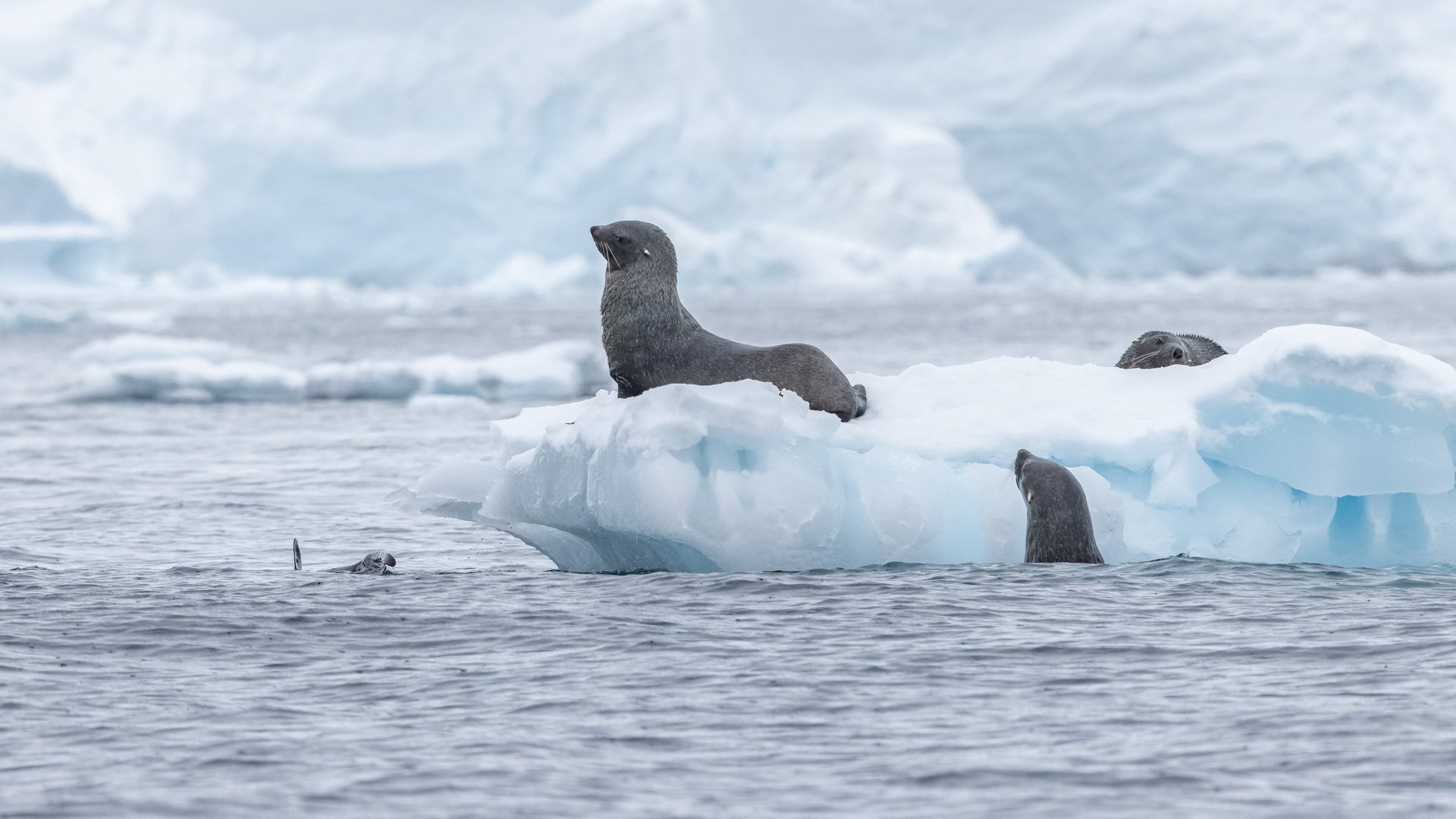
Seals: Fur seals are now plentiful, crabeater seals remain widespread, and leopard seals hunt along the coast.
Fun fact: Humpback whales travel over 8,000 km from tropical breeding grounds to feed in Antarctic waters, one of the longest migrations on Earth.
March: The Farewell
As the season ends, temperatures drop, and the wildlife prepares to depart. This is a quieter, more reflective time, perfect for travellers who love serene landscapes and fewer visitors.
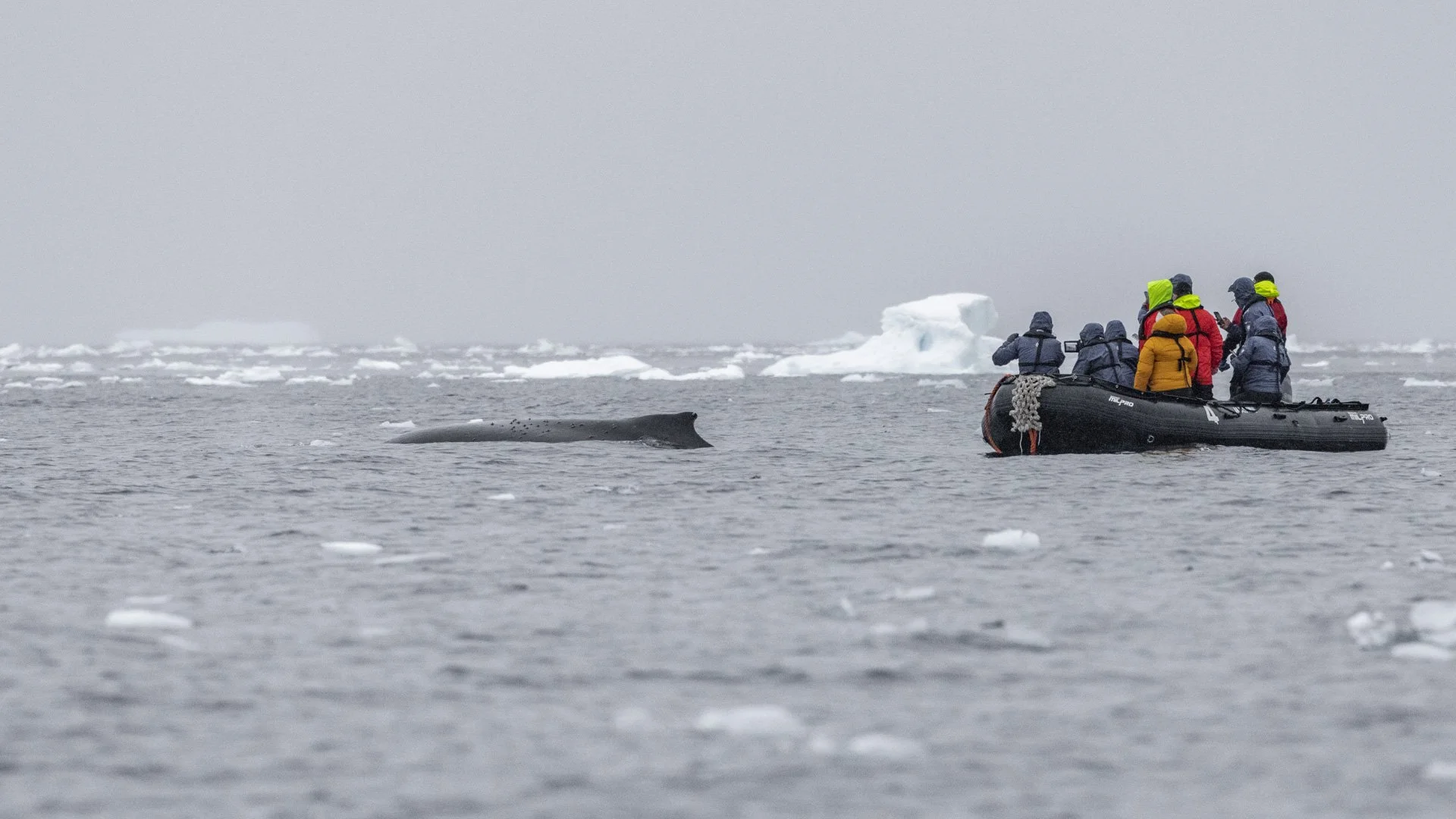
Whales: Still plentiful, often relaxed and curious around zodiacs.
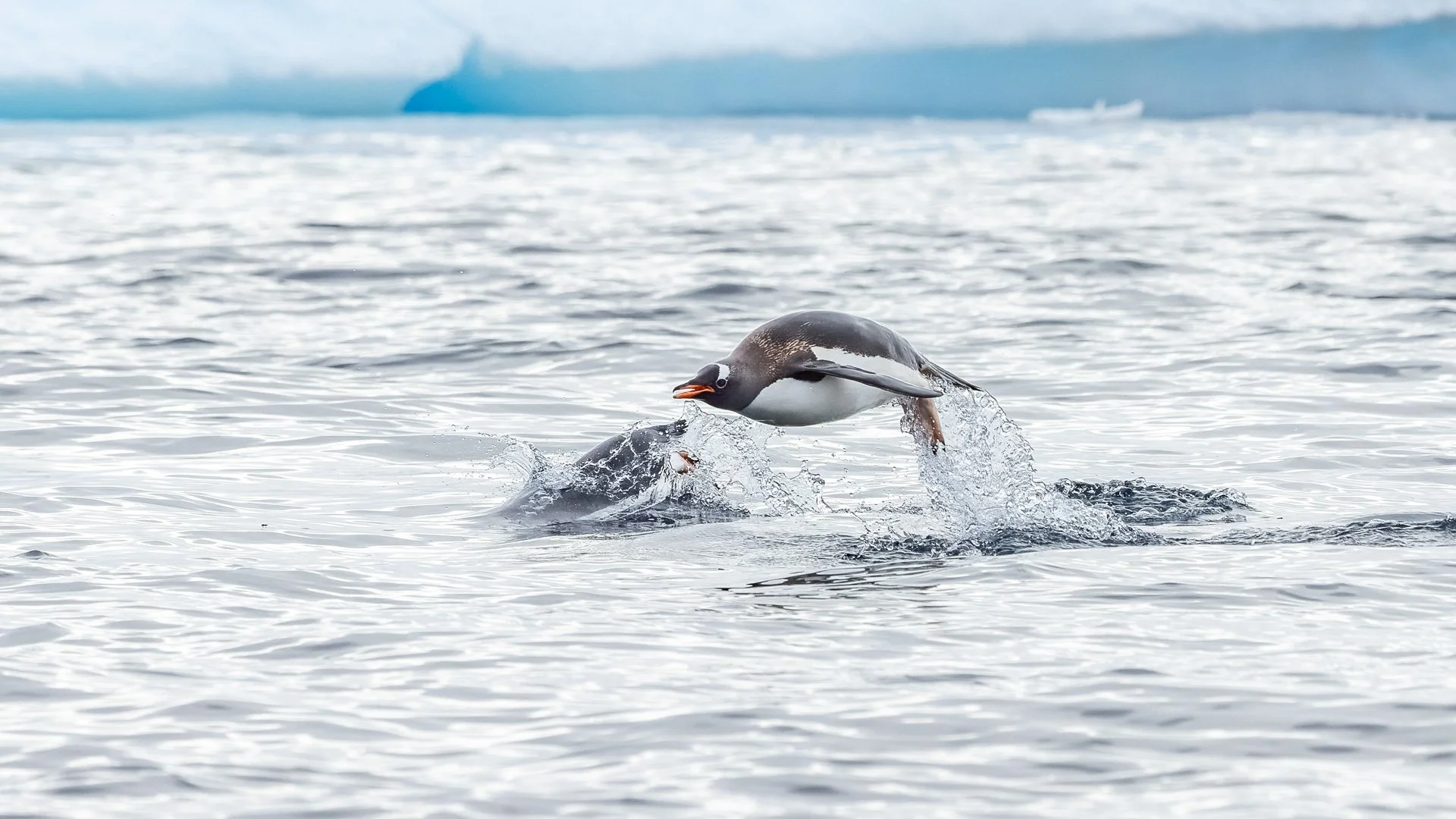
Penguins: Colonies begin to thin out as adults and fledglings head to sea, but there is still plenty of activity. Many chicks are still present, practising their first steps towards independence, and you can often see groups of fluffy youngsters gathering near the water’s edge before taking the plunge.
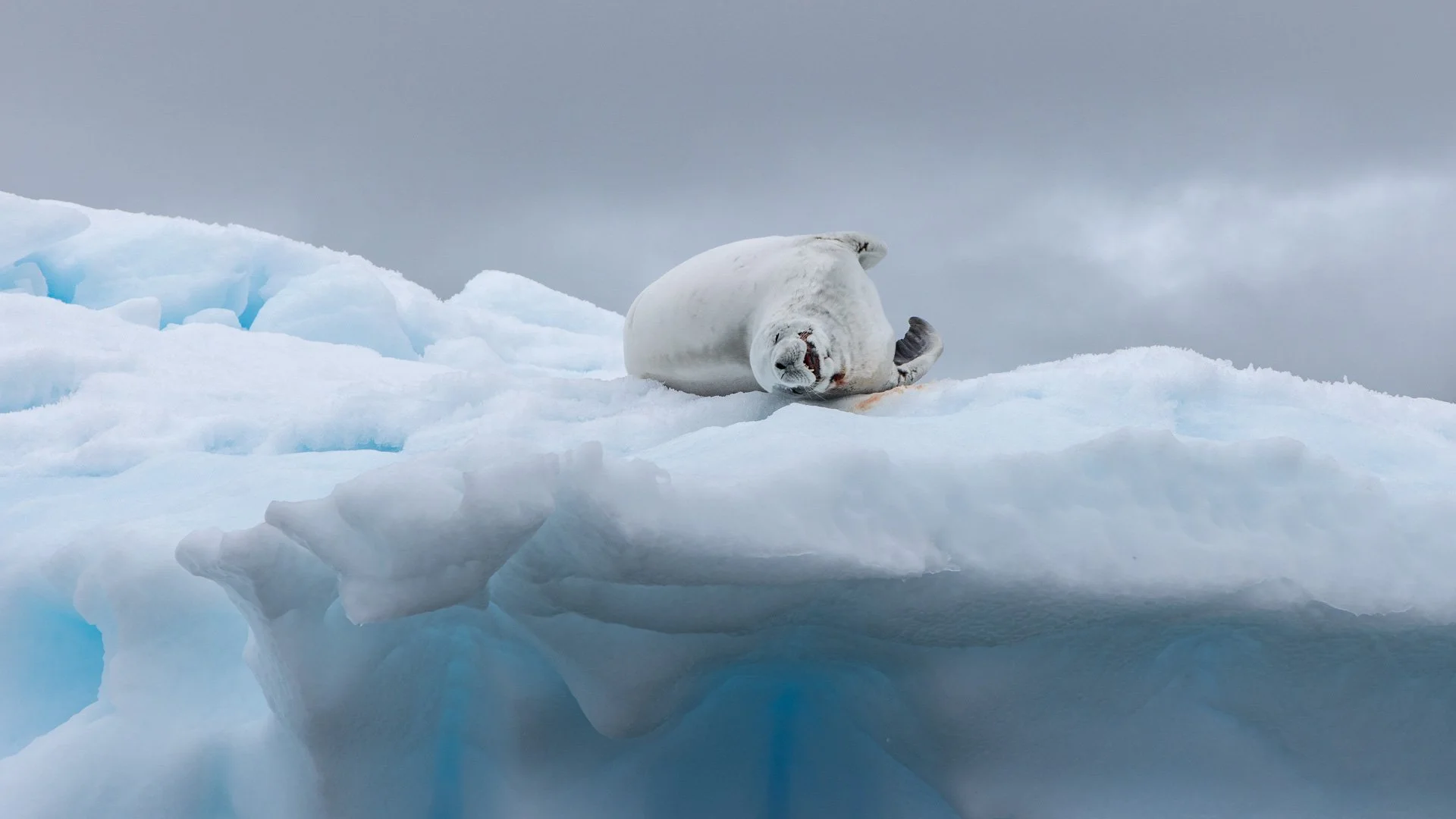
Seals: Leopard seals dominate the beaches, growing fat on the last of the penguin chicks. Crabeater seals follow the sea ice northwards.
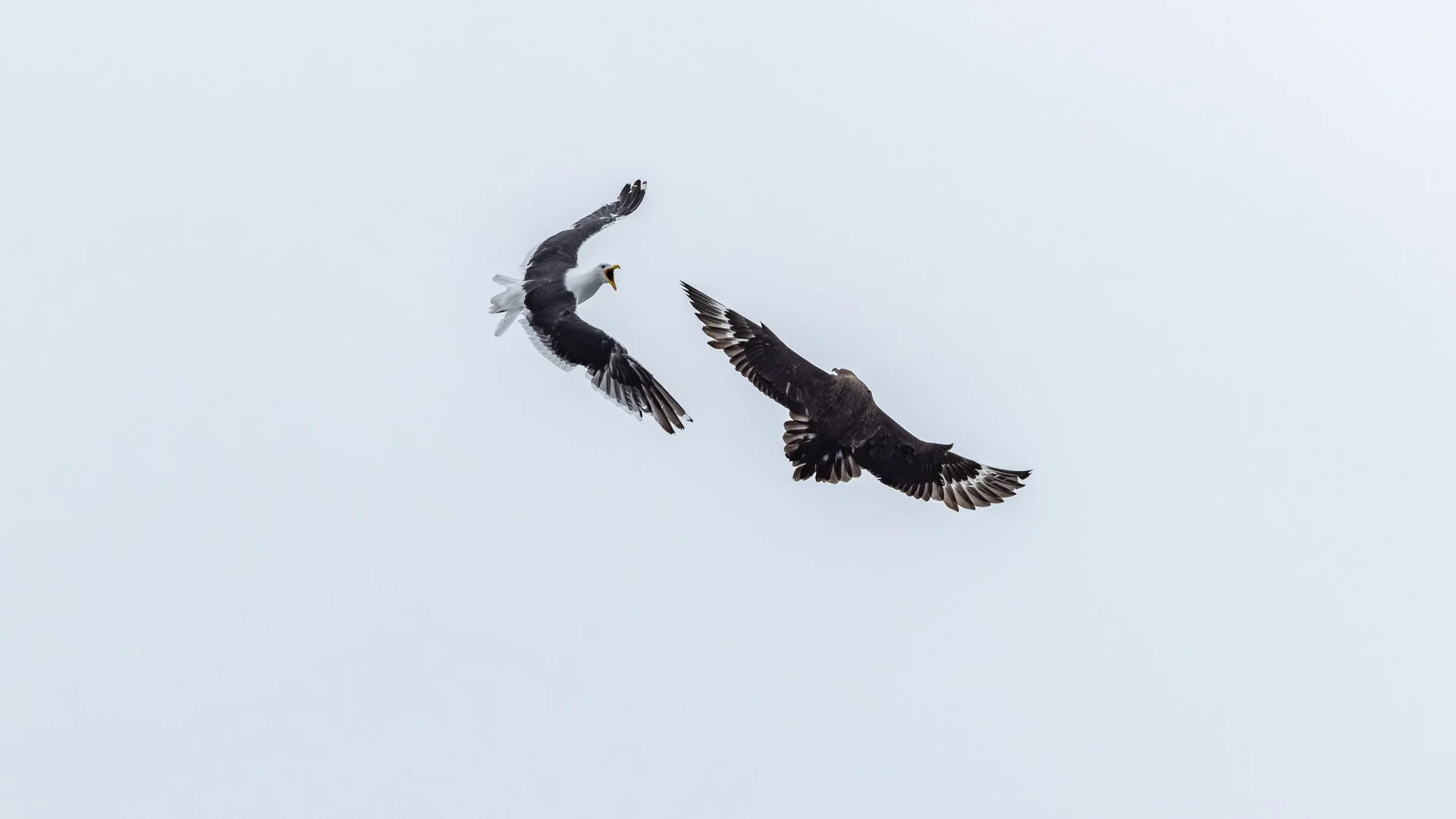
Birds: While many seabirds move offshore, you can still witness dramatic moments in the skies, like brown skuas chasing kelp gulls, a striking reminder of the harsh realities of Antarctic life.
Light: The sunsets become spectacular as the low sun paints the ice in gold and pink.
Final Thoughts
No two Antarctic journeys are ever the same. The weather, the ice, and the wildlife all have their own rhythm.
Whether you go in the early spring to witness new life or in late summer to see whales at their most active, Antarctica offers something truly timeless: a glimpse of nature as it was meant to be: raw, wild, and utterly unforgettable.
You May Also Like
→ What to Pack for Antarctica: A Practical Guide for Your HX Expedition
→ What It’s Like to Travel to Antarctica with HX: My Experience on MS Roald Amundsen.
→ Penguins of Antarctica: A Complete Guide to the Species You’ll See
→ Whales of Antarctica: A Complete Guide to the Species You’ll See
→ Seals of Antarctica: A Complete Guide to the Species You’ll see
→ Svalbard: The Ultimate Guide to the Arctic Frontier
→ What to Pack for Svalbard: The Complete Arctic Packing Guide
→ When Travel Goes Wrong: The Psychology of Traumatic Travel Experiences