
Seals of Antarctica: A complete Guide to the Species You’ll see
Antarctica is home to some of the most unique and fascinating seals on Earth, animals perfectly adapted to life in one of the harshest environments imaginable. Whether you're travelling on an expedition cruise or simply curious about the wildlife of the White Continent, this guide walks you through every seal species you may encounter, how to recognise them, and when you’re most likely to see them.
Unlike penguins, seals can be a little trickier to identify at first glance. But once you know the differences in size, face shape, colouring and behaviour, each species becomes unmistakable.
Below is your complete, traveller-friendly guide to Antarctica’s seals.
For a broader overview of Antarctic wildlife and polar travel, explore the Polar Travel guide.
How Many Seal Species Live in Antarctica?
There are six seal species found in and around Antarctica, including the sub-Antarctic islands and the Southern Ocean:
Weddell seal
Leopard seal
Crabeater seal
Ross seal
Southern elephant seal
Antarctic fur seal
Not all are equally common on expedition routes, and some are rarely seen, but several species are spotted regularly throughout the travel season.
1. Weddell Seal (Leptonychotes weddellii)
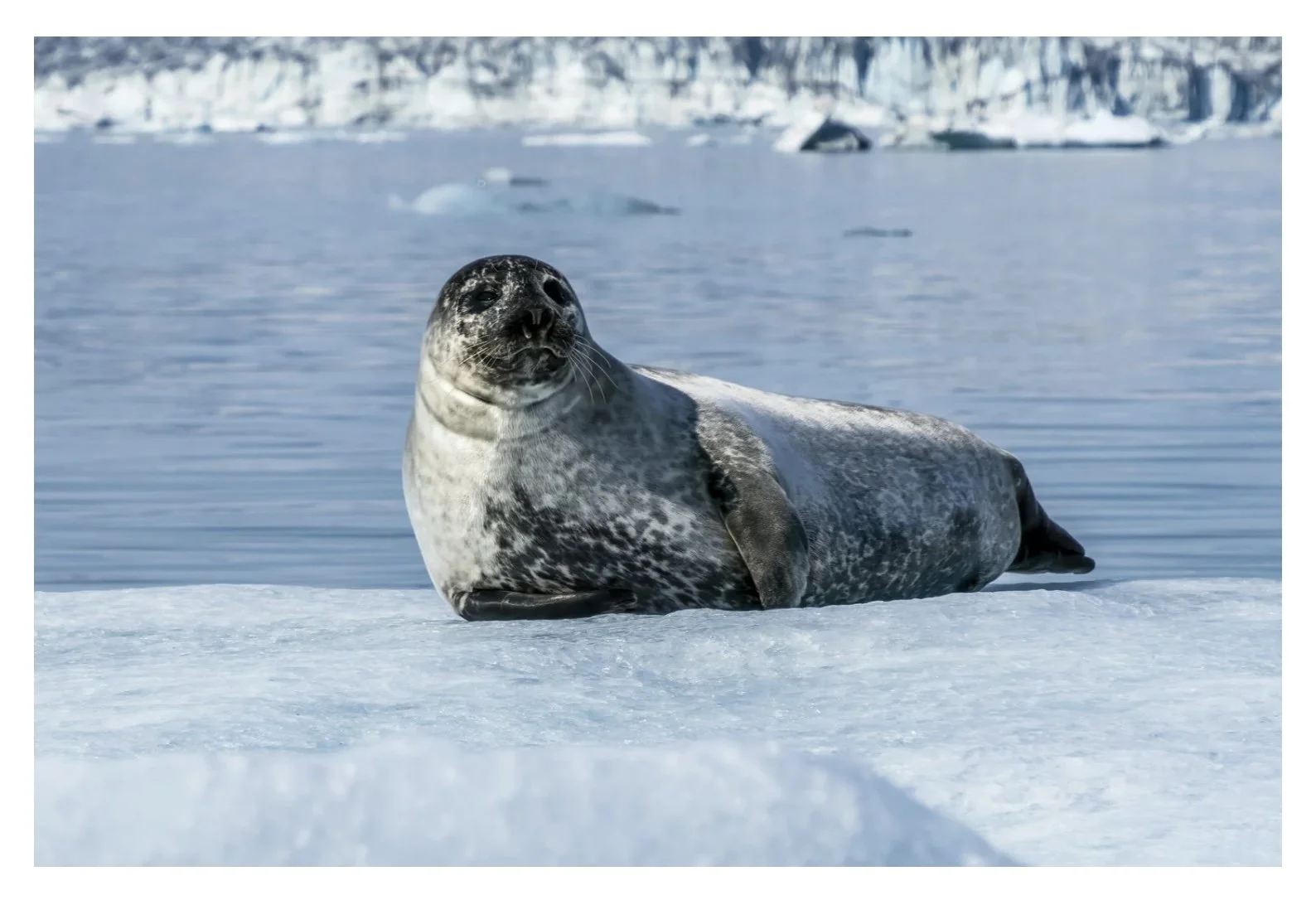
The Weddell seal is one of the most iconic seals of Antarctica and often the easiest to observe up close. They are known for their gentle nature and for being extremely tolerant of human presence, often resting peacefully on the ice while expedition guests pass nearby at a respectful distance.
How to recognise a Weddell seal
Large, rounded body
Pale grey to dark mottled fur
Cat-like face with big, dark eyes
Often lying on fast ice close to shore
Where you’ll see them
Common around the Antarctic Peninsula, especially near landing sites, bays and ice floes.
When to see them
Weddell seals are present year-round. During the expedition season (November–March), you’ll often see them resting on the ice or surfacing through holes they maintain in the sea ice.
Fun fact
Weddell seals can dive deeper than 600 metres and hold their breath for over an hour.
2. Leopard Seal (Hydrurga leptonyx)
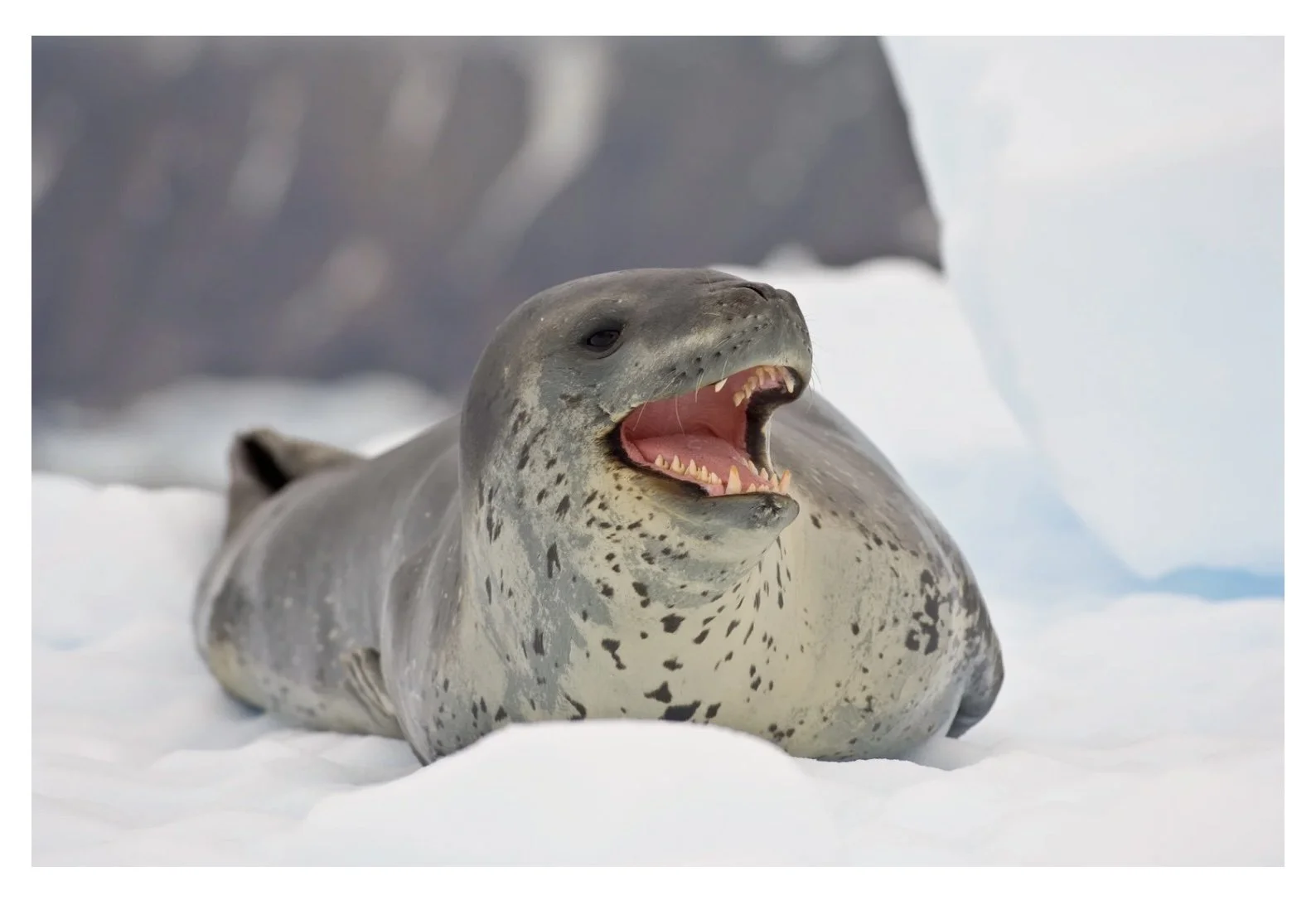
The leopard seal is the top predator among Antarctic seals and one of the most striking animals you can encounter. They are sleek, powerful and unmistakable, with a reptilian head and a long, muscular body. As one of Antarctica’s apex predators (the other one is the killer whale), the leopard seal plays a key role in the ecosystem.
How to recognise a leopard seal
Long, torpedo-shaped body
Large head with a wide, reptile-like mouth
Spotted pattern along the sides
Strong jawline and distinctive profile
Where you’ll see them
Usually found near the ice edge or patrolling penguin colonies. They may also rest on ice floes.
When to see them
They’re present throughout the travel season, but sightings peak from December to February, when penguin chicks begin to fledge — prime hunting season.
Fun fact
Leopard seals are curious and often approach Zodiacs, offering incredible (but safe and regulated) viewing opportunities.
3. Crabeater Seal (Lobodon carcinophaga)
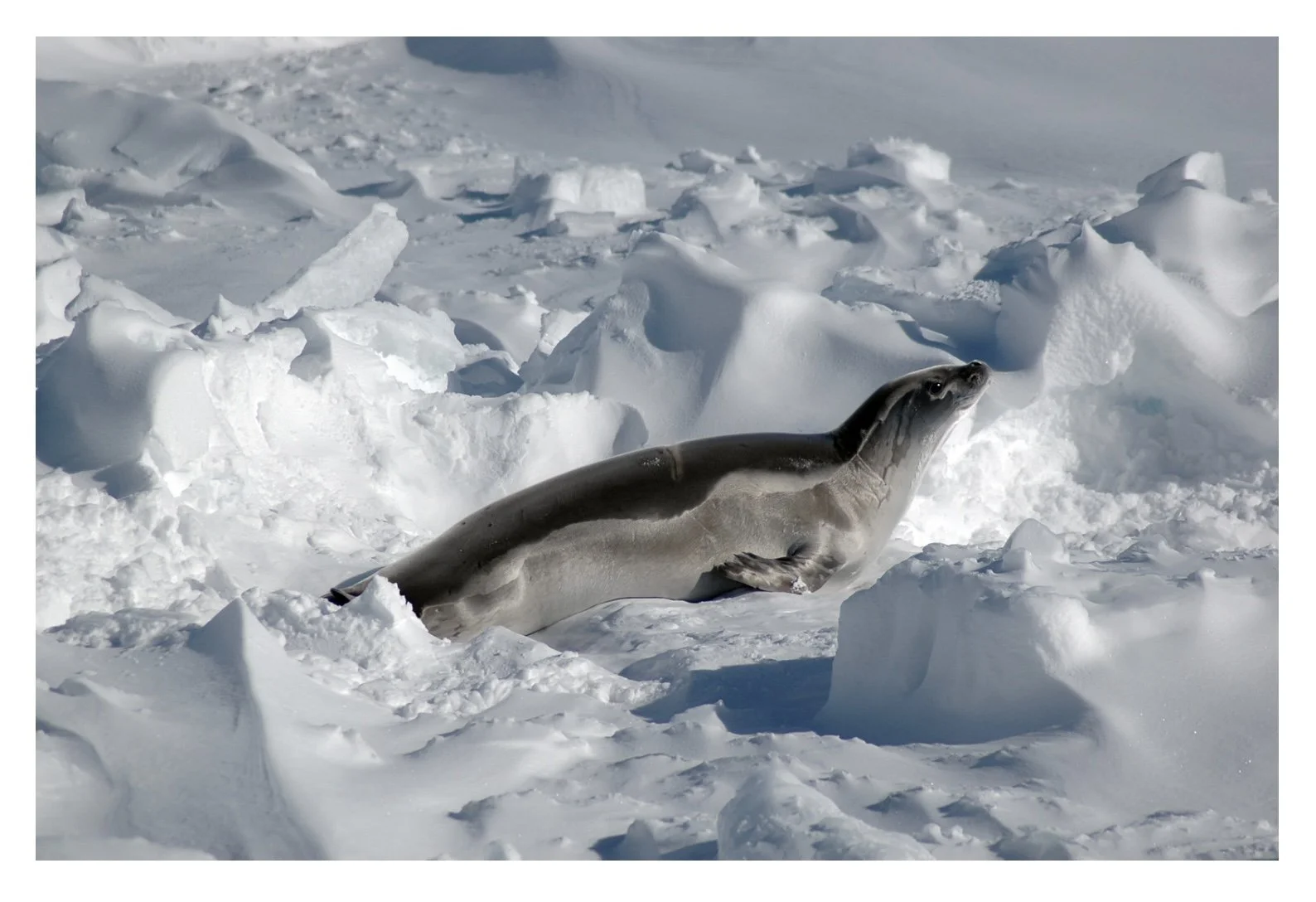
Despite the name, crabeater seals don’t eat crabs at all; they feed almost exclusively on Antarctic krill. The name comes from early explorers who mistakenly believed Antarctic krill were a type of tiny crab. They are actually one of the most abundant large mammals on Earth.
How to recognise a crabeater seal
Long body with a pale, creamy coat
Slender, dog-like face
Often lying in groups on pack ice
Distinctive scars from encounters with leopard seals
Where you’ll see them
Common along the ice edge and drifting pack ice. They are more often seen offshore than directly at landing sites.
When to see them
Present all season, but easiest to see in December–February when the pack ice opens up.
Fun fact
Their teeth have a unique sieve-like structure that filters krill from the water, specialised like a whale but on a much smaller scale.
4. Ross Seal (Ommatophoca rossii)
The Ross seal is the rarest and most elusive seal species in Antarctica. They reside deep in the pack ice and are rarely seen on expedition voyages.
How to recognise a Ross seal
Short, wide face
Large eyes
Dark back with lighter belly
Compact, somewhat chunky appearance
Where you’ll see them
Far into the dense pack ice, sightings are unusual and considered special.
When to see them
Occasional sightings happen between December and February, but only when conditions allow access to heavier ice.
Fun fact
Ross seals make eerie, almost sci-fi sounding vocalisations underwater, one of the most unique sounds in the Southern Ocean.
5. Southern Elephant Seal (Mirounga leonina)
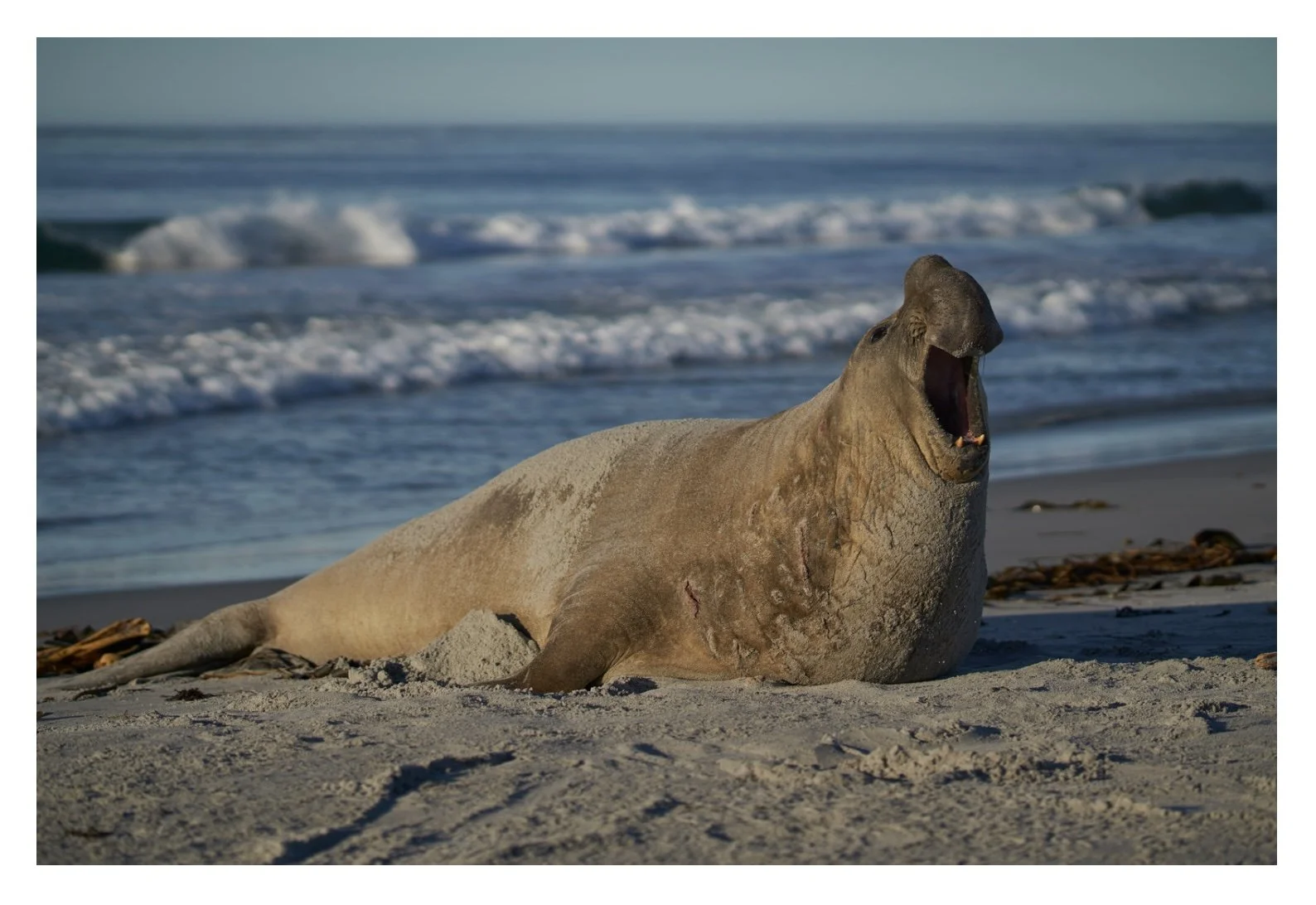
The southern elephant seal is the largest seal in the world and one of the most impressive animals to encounter. Males can reach up to four tonnes and have a distinctive trunk-like nose.
How to recognise an elephant seal
Enormous size
Soft, wrinkled skin
Males have a large, inflatable proboscis
Often found in harems during breeding season
Where you’ll see them
Mostly on sub-Antarctic islands such as South Georgia, but small numbers can be found along the Antarctic Peninsula.
When to see them
Breeding season peaks in October–November, though moulting animals may be spotted later in the season.
Fun fact
Their dives can reach depths of over 2,000 metres, among the deepest of any marine mammal.
6. Antarctic Fur Seal (Arctocephalus gazella)
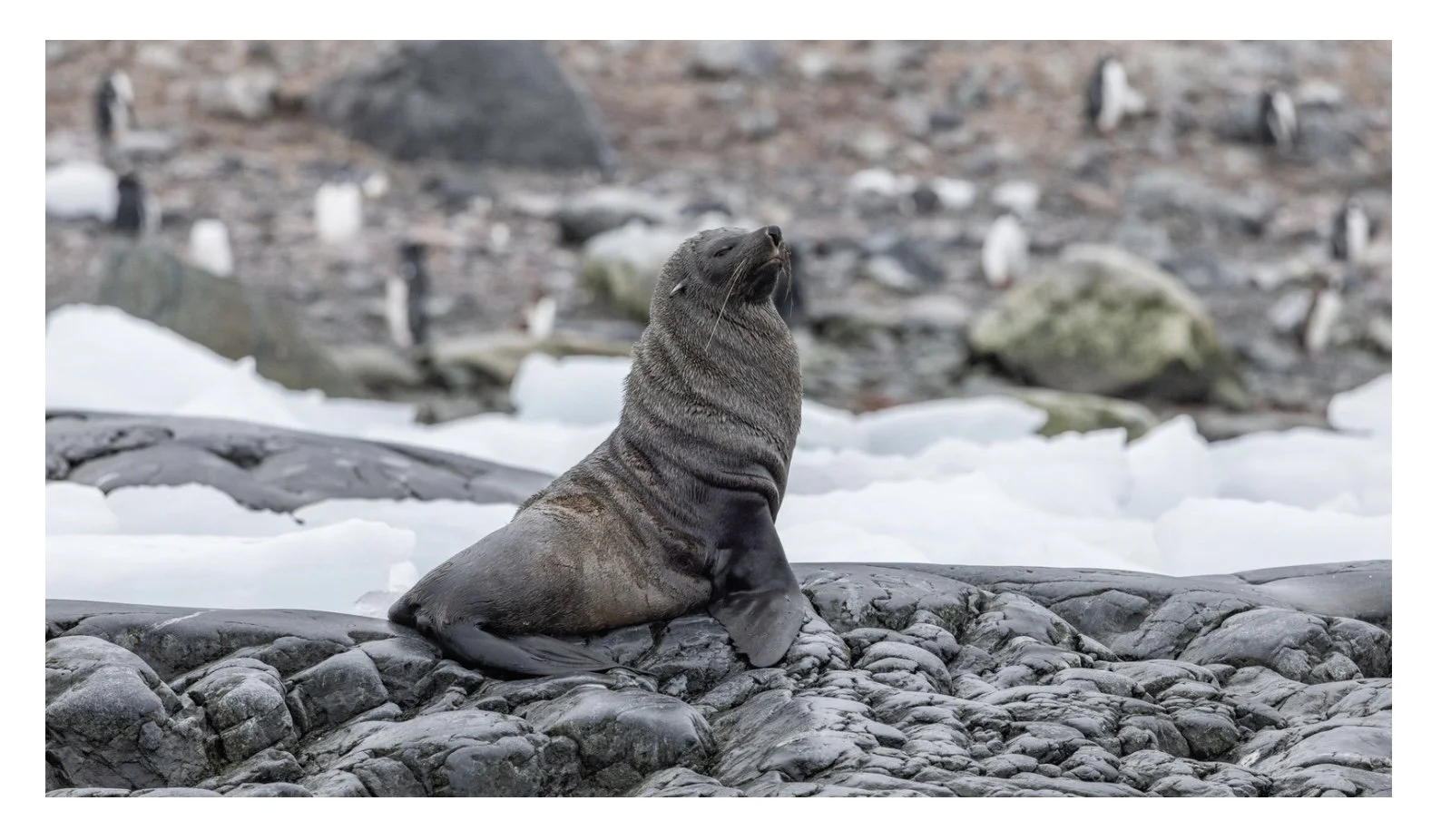
Although they are called seals, Antarctic fur seals are more like sea lions. They have small visible ears, and they can stand and walk on all fours, something true seals cannot do. So when you see them moving confidently on land, that’s the sealion part of their family tree showing through.
How to recognise a fur seal
Thick, dense fur
Visible external ears
Walks on all fours (can rotate their hind flippers)
Dog-like face and expressive eyes
Where you’ll see them
Extremely common in South Georgia and the sub-Antarctic islands, but also found in smaller numbers around the Antarctic Peninsula.
When to see them
January–March is prime viewing season.
Fun fact
They were once hunted to near extinction for their fur. Their comeback is one of the great conservation success stories.
When Is the Best Time to See Seals in Antarctica?
You can see seals throughout the entire Antarctic travel season (November–March), but different months have different highlights:
November
Elephant seals in breeding season
Weddell seals on ice
Fur seals are beginning to appear
December
High chance of crabeater and leopard seals
Weddell seals are abundant
Pack ice still attracts species that prefer ice edges
January
Peak leopard seal activity
Plenty of crabeater seals
Fur seals are very common
February
Great month for leopard seals
Crabeater seals on pack ice
Excellent viewing from Zodiacs
March
Many seals are still present, especially leopard and Weddell
Deeper ice areas begin to be less accessible
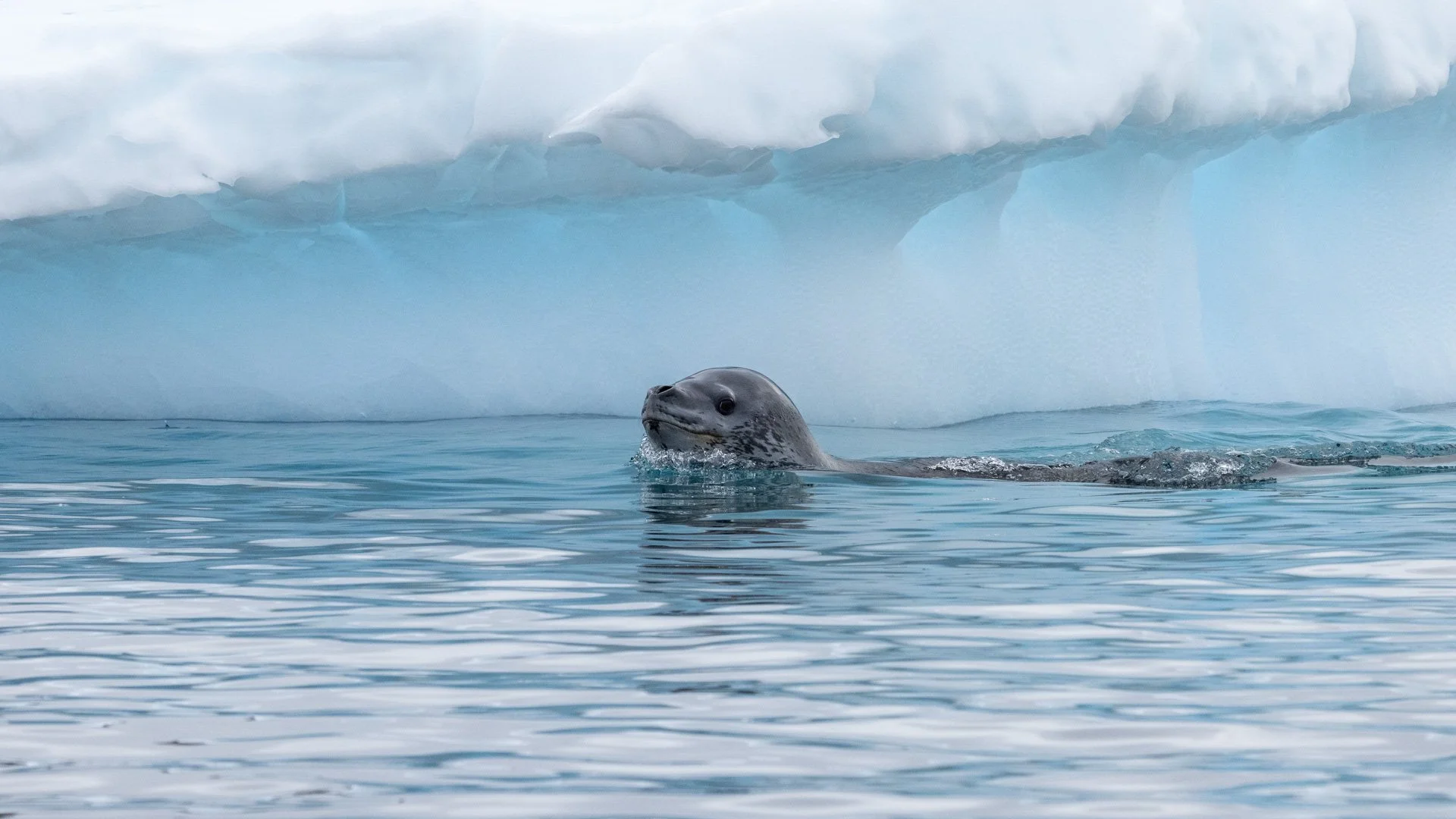
A leopard seal is patrolling the water for penguins.
Final Thoughts
Seeing seals in Antarctica is one of the most memorable parts of an expedition cruise. Each species has its own personality, from the calm, gentle Weddell seal to the sleek and powerful leopard seal. With a bit of patience and a keen eye, you’re almost guaranteed to spot some of these extraordinary animals during your journey.
Whether you’re a wildlife enthusiast, photographer or simply curious about the polar world, these encounters are a beautiful reminder of how wild, ancient and untouched Antarctica truly is.
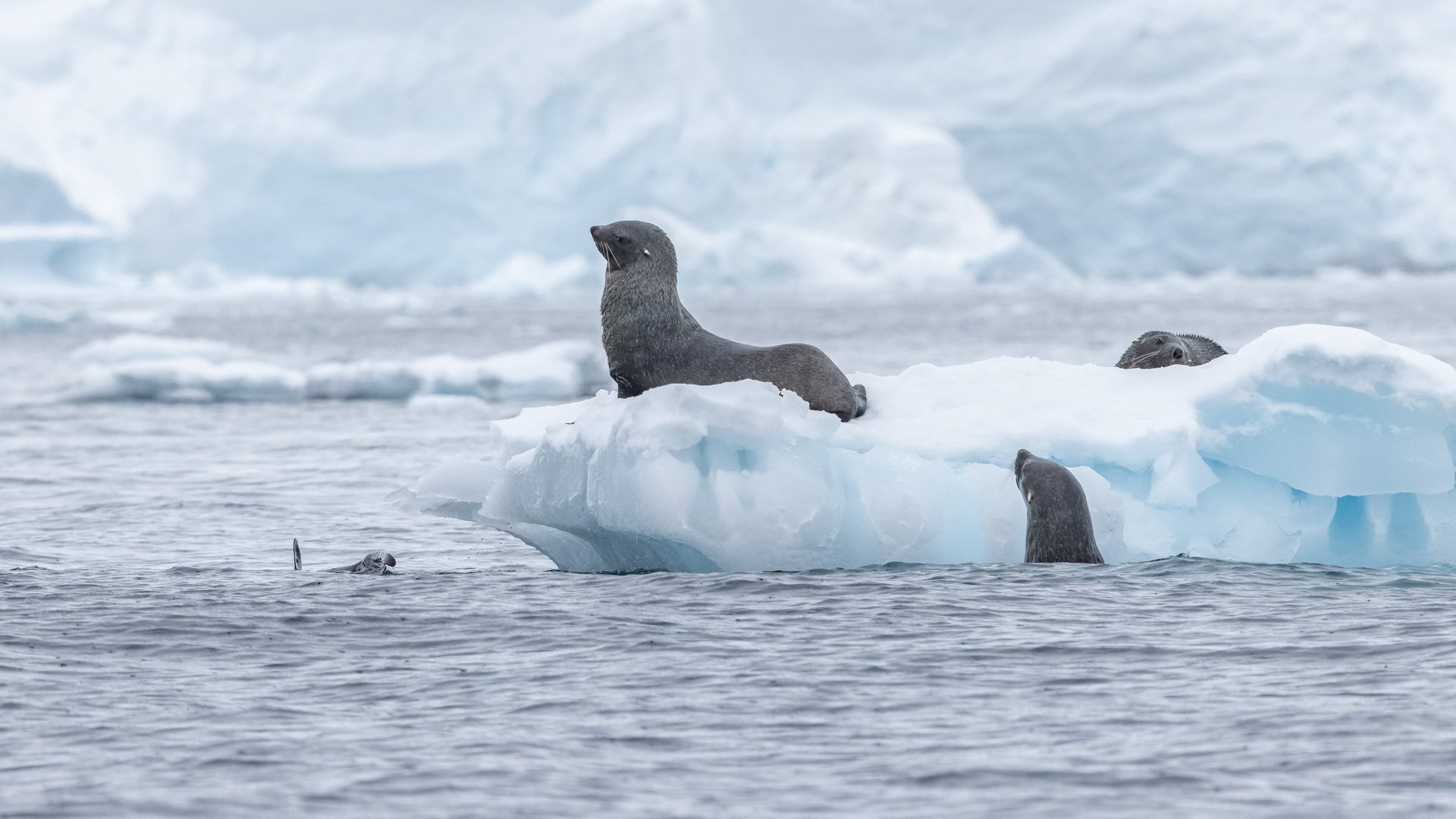
A group of Antarctic Fur seals.