Svalbard in Winter vs Summer: What to Expect
Svalbard is often spoken about as a single, extreme destination, but your experience there is defined almost entirely by when you go. Winter and summer are not simply seasonal variations of the same journey. They are fundamentally different Arctic environments shaped by light, weather, accessibility and regulations.
This guide explores how Svalbard changes through the year, what that actually means for travel, and how to choose the season that best matches your expectations.
Winter in Svalbard
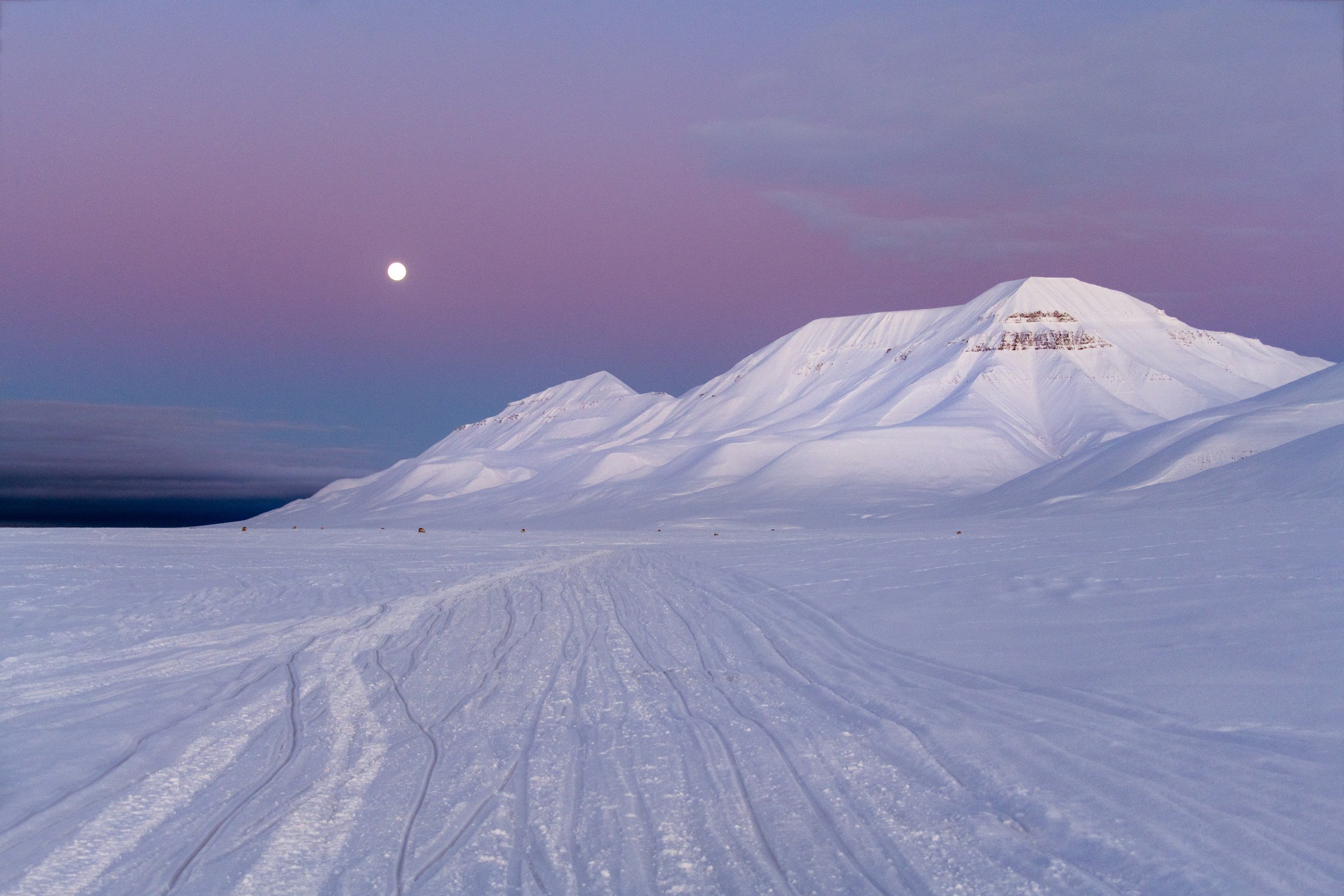
Winter in Svalbard broadly covers the period from late October to around April. The most dramatic part of winter is the polar night, which lasts from late October to mid February, when the sun never rises above the horizon. During this period the landscape is experienced through twilight, moonlight, starlight and artificial light rather than daylight, which creates an atmospheric, otherworldly and deeply immersive experience. From February to April light slowly returns, bringing long blue twilight and brighter days, while snow and ice conditions remain excellent.
Temperatures are often well below freezing, but the cold is generally dry rather than damp, which many travellers find more manageable than expected. Snow and ice conditions are usually stable, and most winter movement happens by snowmobile, with carefully planned logistics and strong safety procedures. This gives winter travel a more structured feel, shaped by distances, weather conditions and polar bear safety requirements.
Wildlife is present all year, including winter, but is often less visible than in summer and sightings typically require travel further away from settlements. The settlements are quieter, there are fewer visitors and winter gives Svalbard a strong sense of rawness, remoteness and intimacy. Winter suits travellers who want darkness or limited daylight, snow covered landscapes, a sense of isolation and the feeling of true Arctic winter.
Summer in Svalbard
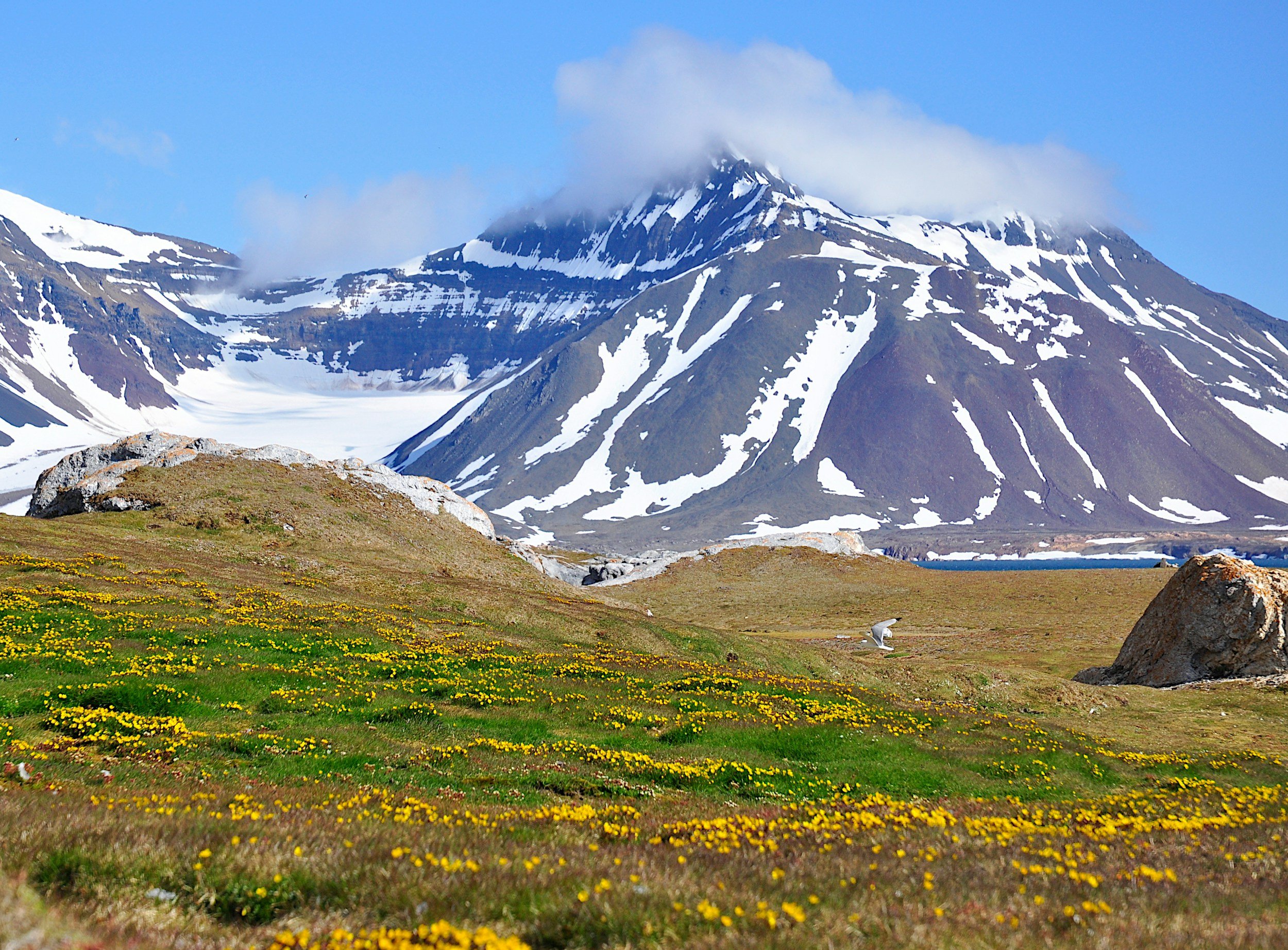
Summer in Svalbard is generally considered to span from late April to late August. This is dominated by the midnight sun period, when the sun never sets and Svalbard has continuous daylight. Instead of darkness, travellers experience constant soft Arctic light. The landscape opens visually, with valleys, mountains, glaciers and coastlines fully visible, and Svalbard feels brighter, wider and more expansive.
Temperatures usually sit just above freezing rather than becoming warm. While snow can still be present in places, the terrain becomes softer and more fragile, so movement changes. Travel shifts from snowmobiles to boats and walking. As sea ice retreats, fjords and coastlines become accessible, allowing boat trips to glacier fronts, remote bays and dramatic bird cliffs that cannot be reached in winter. Inland movement is more restricted due to environmental protection.
Summer is also the richest wildlife period. Seabirds return in large numbers, marine mammals are frequently seen on boat trips and reindeer are commonly visible near settlements. It is the busier visitor season with more cruise traffic and activity, although it still feels quiet compared to most destinations in the world. Summer suits travellers who want daylight, open scenery, boat based exploration, visible wildlife and a softer, more observational Arctic experience.
Summary
Winter in Svalbard runs roughly from late October to April and is defined by polar night, snow, structured logistics, raw atmosphere and a strong sense of isolation.
Summer runs from late April to late August and is defined by midnight sun, open landscapes, boat exploration, richer wildlife experiences and a livelier atmosphere.
In simple terms, winter feels controlled, intimate and deeply immersive, while summer feels open, alive and exploratory. There is no better season, only the one that best matches what you want Svalbard to feel like.
You may also like
What to Pack for Svalbard: The Complete Arctic Packing Guide
What It’s Like to Travel to Antarctica with HX: My Experience on MS Roald Amundsen.
Polar bears are present in Svalbard year-round, including during summer. However, summer sightings are typically less predictable and usually occur in remote coastal areas or from boats rather than near settlements.