
Polar Bears vs Penguins: Why They Never Meet
Polar bears and penguins are often treated as visual shorthand for the polar regions. They appear together in illustrations, advertisements, and popular culture, creating the impression that they belong to the same frozen world.
In reality, they are separated by the entire planet.
Polar bears and penguins never meet, not by coincidence, but by biology, geography, and evolutionary history. Understanding why reveals much about how life adapts to extreme environments.
For more in-depth guides to both regions, including wildlife, ecosystems and what to expect as a traveller, explore the full Polar Travel hub.
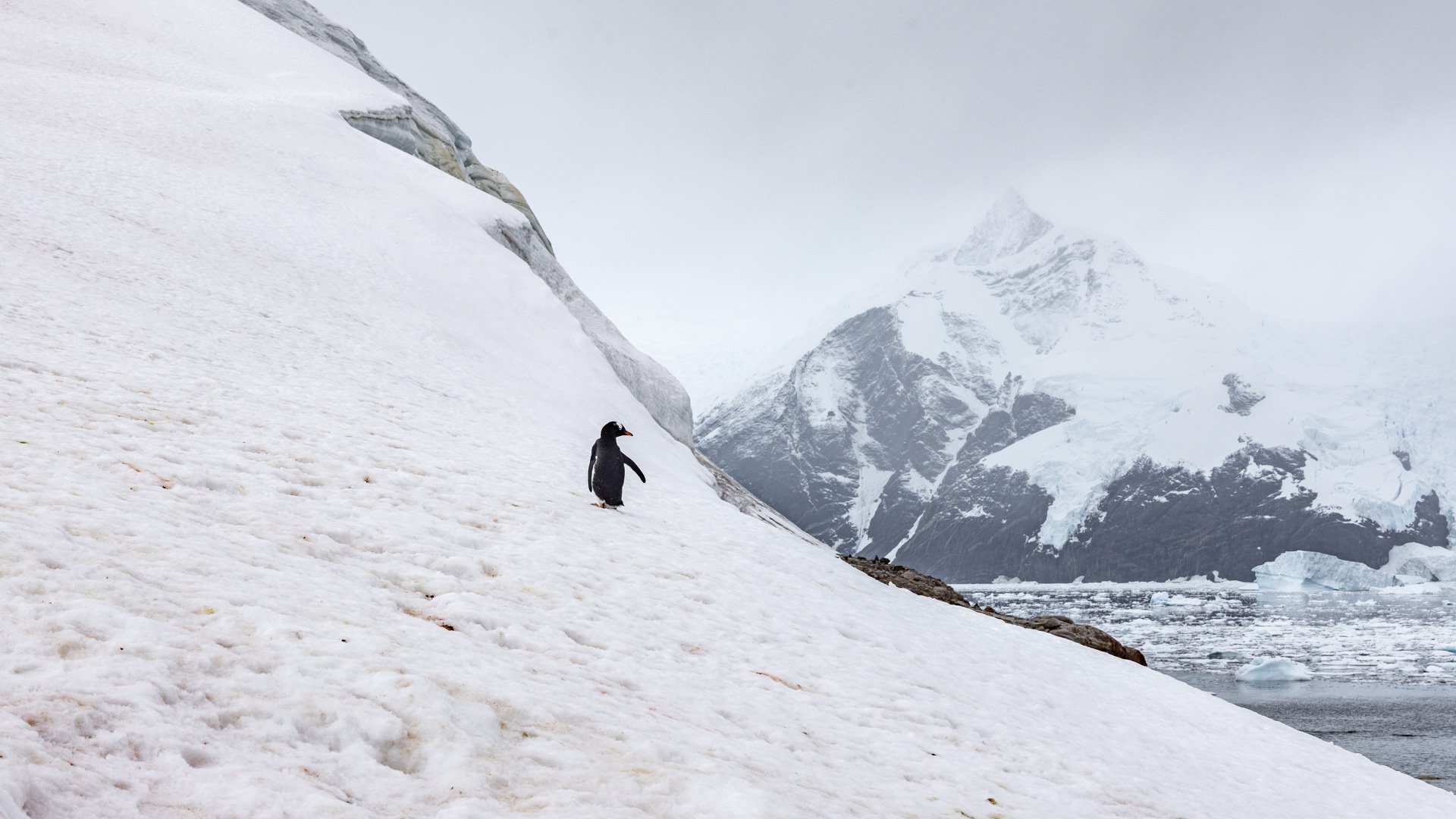
A solo Gentoo penguin in Antarctica.
Opposite ends of the Earth
Penguins live exclusively in the Southern Hemisphere. Polar bears live exclusively in the Northern Hemisphere.
Penguins evolved around Antarctica and the surrounding Southern Ocean. Polar bears evolved in the Arctic, closely tied to sea ice across the Arctic Ocean.
Between them lies the equator, warm oceans, and ecosystems entirely unsuitable for either species. Neither could survive the conditions required to reach the other.
For a broader comparison of geography, landscape and human presence in the two polar regions, read Antarctica vs the Arctic: What’s the Real Difference?
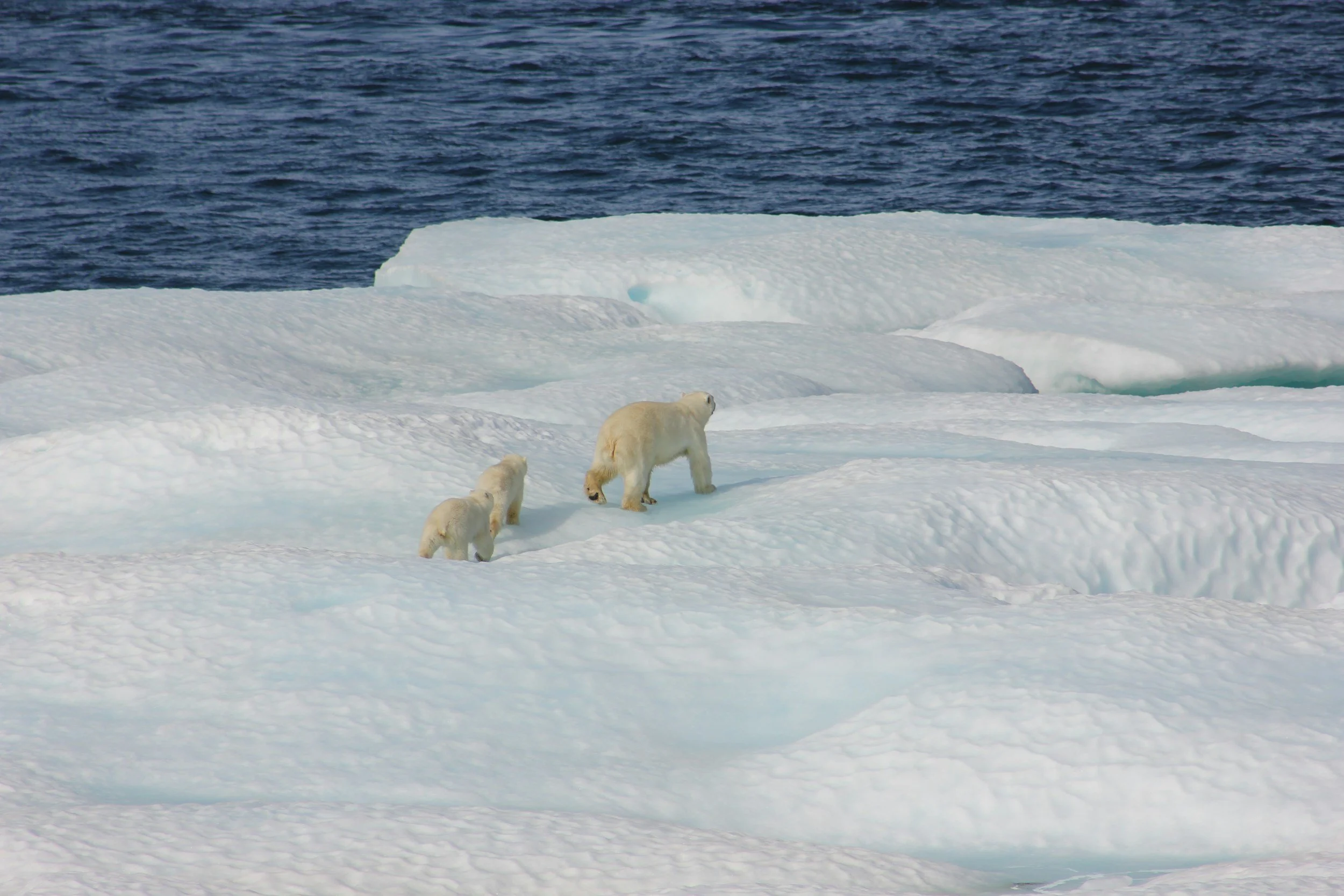
A polar bear mother moves steadily across Arctic sea ice, her two cubs following closely behind. This is the High Arctic, a frozen ecosystem shaped by sea ice, long winters and marine hunting grounds. Thousands of miles away, in the Southern Hemisphere, a completely different polar world exists.
Evolution shaped by isolation
Antarctica has been isolated for tens of millions of years. When it drifted south and became encircled by the Southern Ocean, it effectively cut itself off from land-based predators.
Penguins evolved in this predator-free environment. Their adaptations prioritise swimming efficiency, group nesting, and energy conservation rather than vigilance or flight responses. This is why penguins often appear calm and indifferent in the presence of humans. For a detailed overview of the species you are most likely to encounter, see Penguins of Antarctica: A Complete Guide to the Species You’ll See.
The Arctic developed very differently. It remained connected to surrounding continents, allowing mammals to migrate, adapt, and evolve alongside predators. Polar bears emerged as apex predators, dependent on sea ice for hunting seals. Survival in the Arctic requires constant awareness and behavioural flexibility.
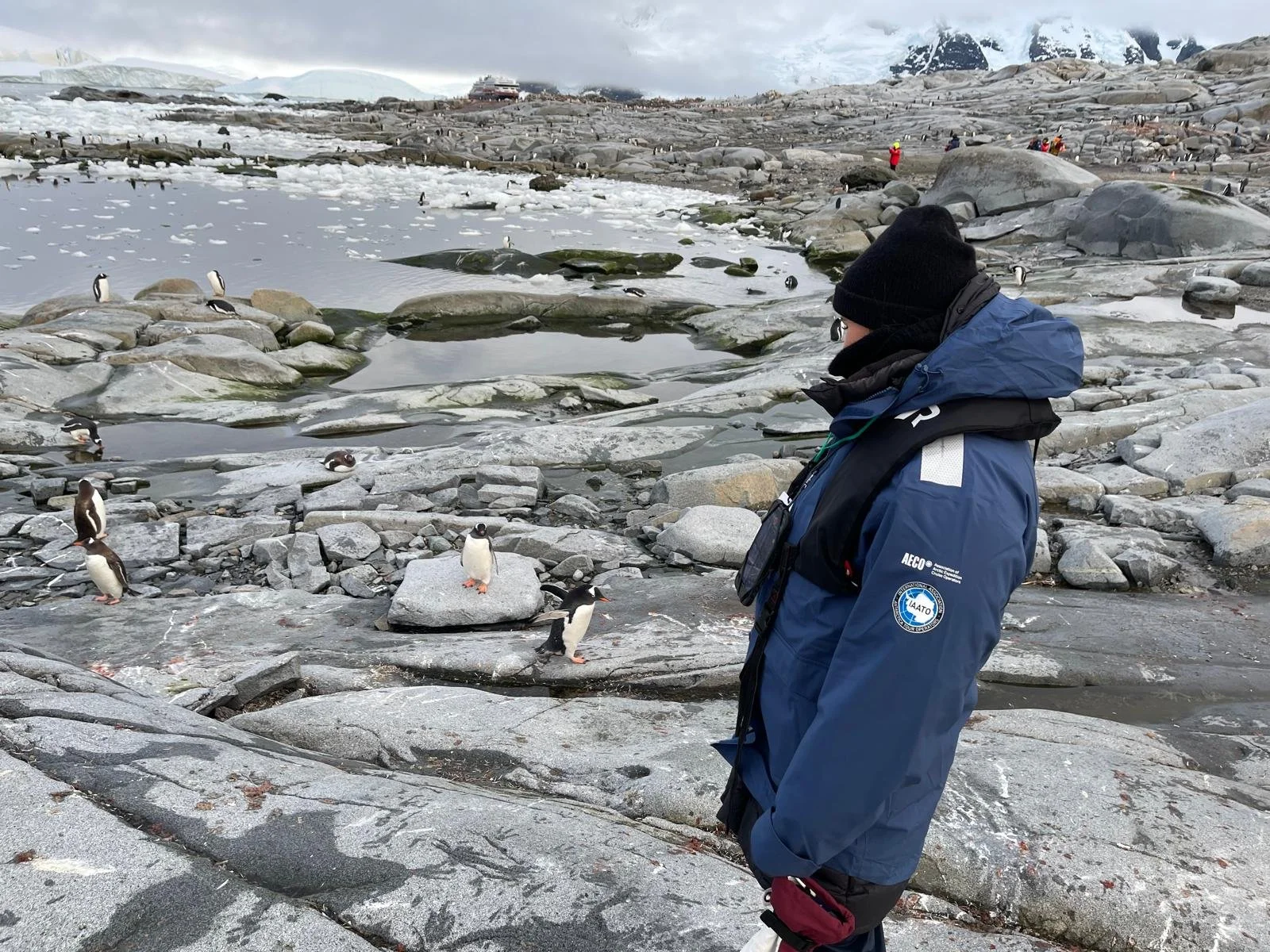
In Antarctica, penguins have no natural predators on land. As a result, they show little fear and will often walk straight towards you, curious, observant, entirely at ease in a landscape without terrestrial threats.
Predators and prey
The absence of land predators in Antarctica shaped the entire ecosystem.
Penguins sit relatively high in the Antarctic food web. Their main threats come from the sea, such as leopard seals and orcas, not from the land. This creates a wildlife dynamic where breeding colonies can exist openly on beaches and ice.
In the Arctic, polar bears sit at the top of the food chain. Their presence influences the behaviour of nearly all other animals, including humans. Arctic wildlife encounters are governed by caution, distance, and respect for risk.
This difference explains why Antarctic wildlife experiences often feel intimate, while Arctic encounters feel alert and controlled.
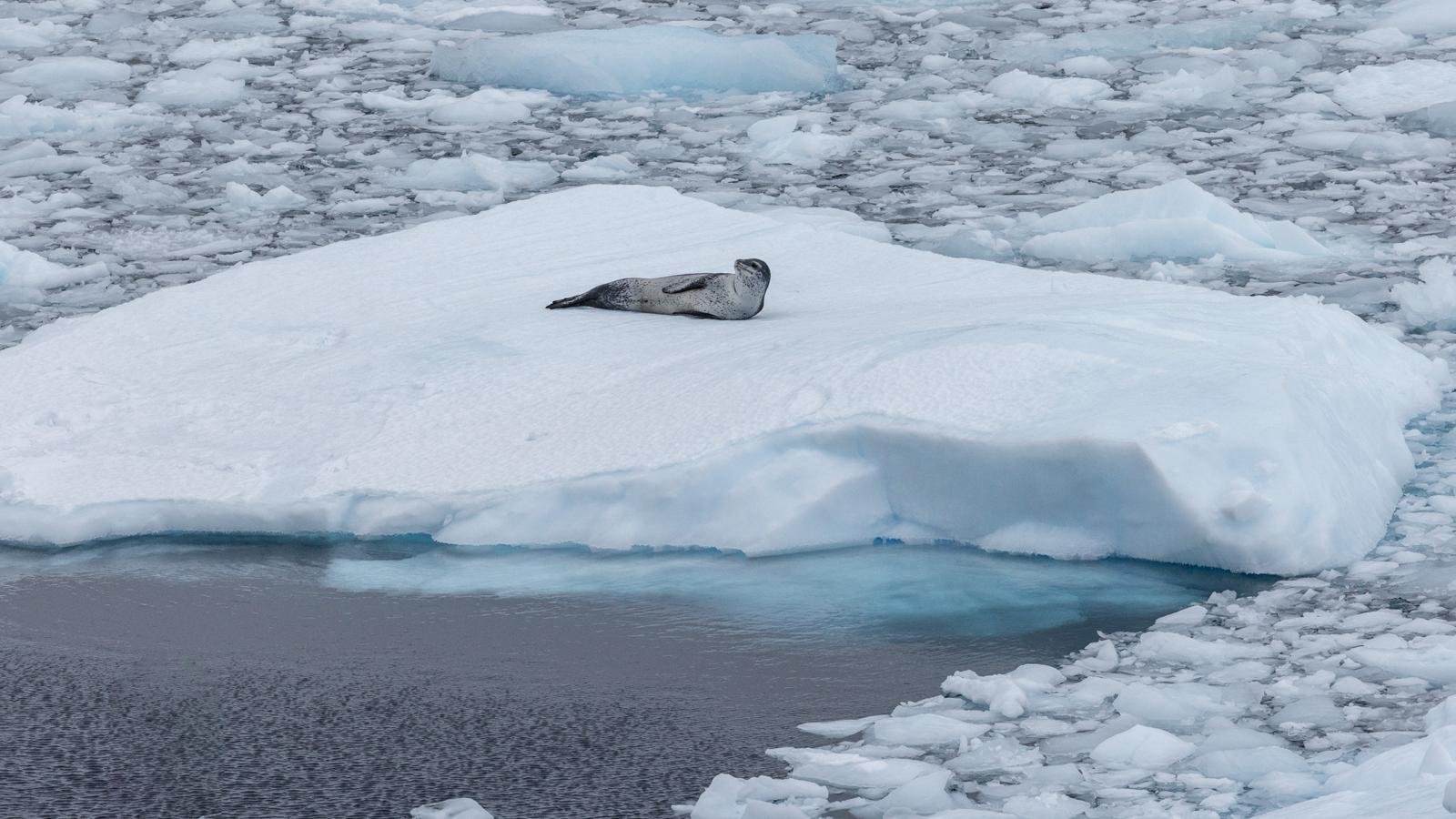
A Leopard seal resting on Antarctic sea ice. Unlike on land, where penguins have no natural predators, the surrounding waters hold real danger. Leopard seals (and occasionally Orca) hunt beneath the surface, making the ocean the most vulnerable place in a penguin’s life cycle
Climate is not the deciding factor
It is tempting to assume that temperature alone determines where animals live. In reality, climate is only part of the equation.
Penguins tolerate extreme cold but rely on cold ocean currents rich in krill and fish. Polar bears tolerate similar cold but depend on sea ice platforms to hunt seals.
If penguins were introduced to the Arctic, they would face predators they are not adapted to avoid. If polar bears were introduced to Antarctica, they would disrupt ecosystems that evolved without land predators. Their separation protects both systems.
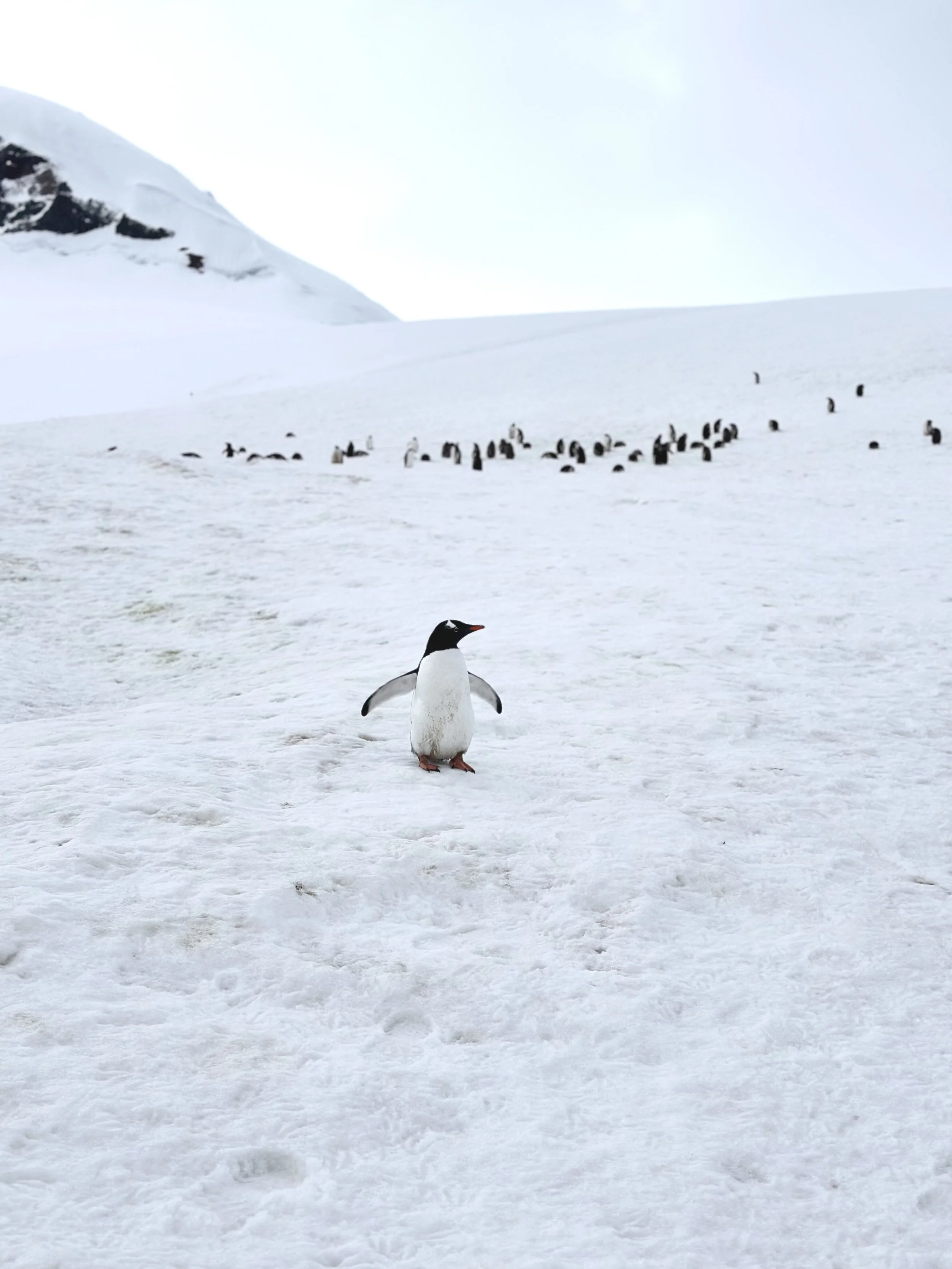
A Gentoo penguin stands at the edge of a breeding colony, with hundreds more spread across the rocky Antarctic shoreline behind it. Their survival depends not simply on cold temperatures, but on nutrient-rich Southern Ocean currents, seasonal breeding grounds, and ecosystems that evolved without land predators.
Misleading images
The idea of penguins and polar bears sharing a landscape is harmless in illustration, but misleading in reality.
It flattens the ecological differences between the Arctic and Antarctica and encourages the idea that polar regions are interchangeable. They are not. Each represents a distinct evolutionary experiment shaped by isolation, geography, and time. Understanding this difference deepens respect for both.
What this means for travellers
For travellers, this distinction shapes expectations.
Antarctica offers wildlife encounters characterised by proximity, density, and calm behaviour. The absence of land predators allows animals to exist visibly and openly.
The Arctic offers wildlife encounters shaped by coexistence with predators. Sightings are often rarer, more distant, and governed by safety considerations. Neither experience is more authentic. They simply tell different ecological stories.
For a deeper comparison of wildlife density, seasonality and encounter style in both regions, read Wildlife in Antarctica vs the Arctic.
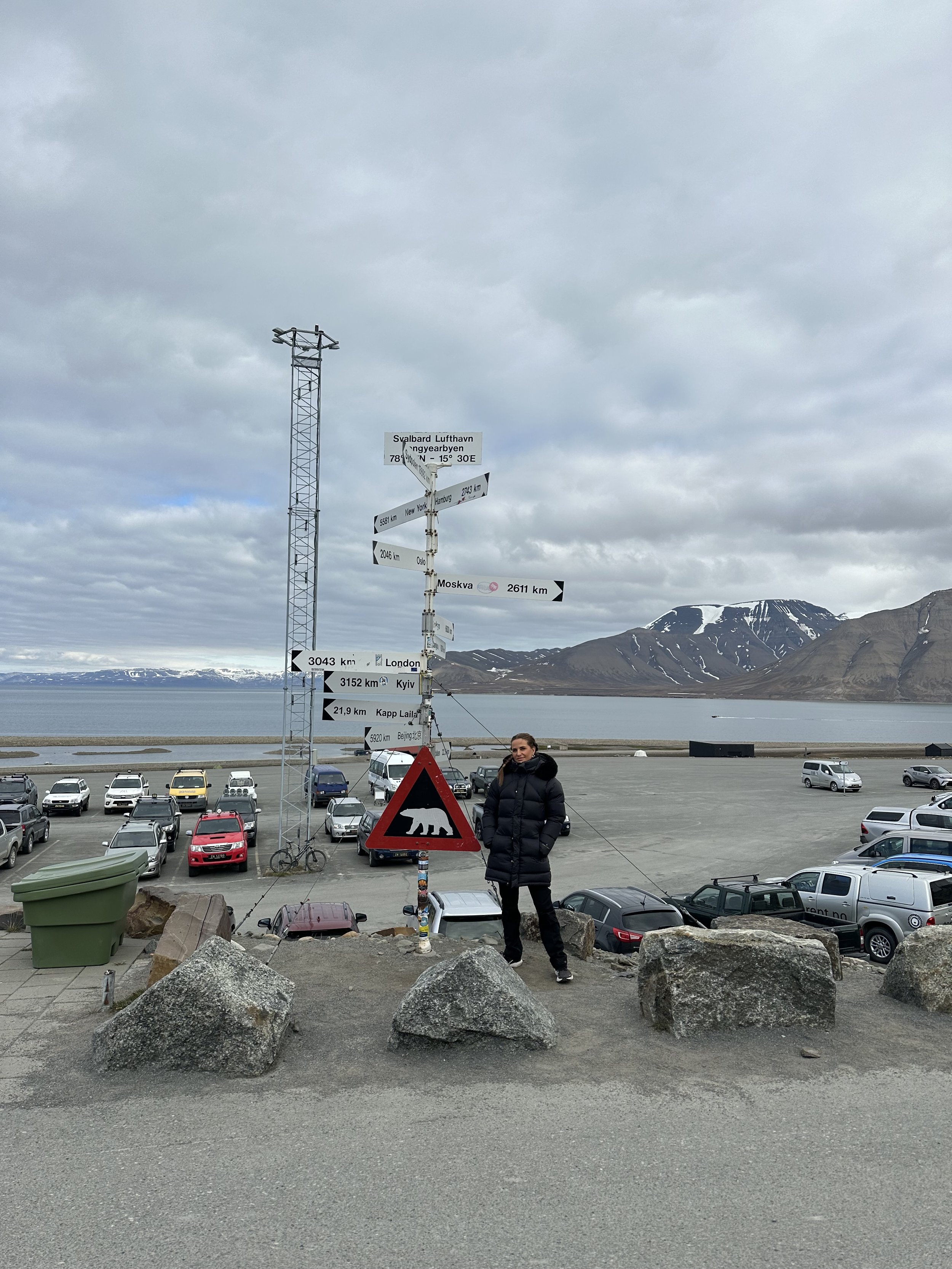
Standing beside the polar bear warning sign in Svalbard, where leaving settlements requires awareness of wildlife risk. In the Arctic, travel is shaped by coexistence with predators; sightings are rarer, distances greater, and safety is always part of the experience.
If you’re interested in polar travel, these guides may also inspire you:
• Antarctica Travel Journal — A personal account of an Antarctic expedition, from landscapes to wildlife moments.
• Expedition Cruising: Antarctica vs the Arctic — A comparison of polar expedition cruise styles and experiences in both regions.
• Svalbard Travel Guide — Practical planning advice for travel in Svalbard, from logistics to wildlife awareness.
• Svalbard in Winter vs Summer — A seasonal comparison to help you choose the right time to visit.