
What Is Afternoon Tea? A Complete Guide to the British Tradition
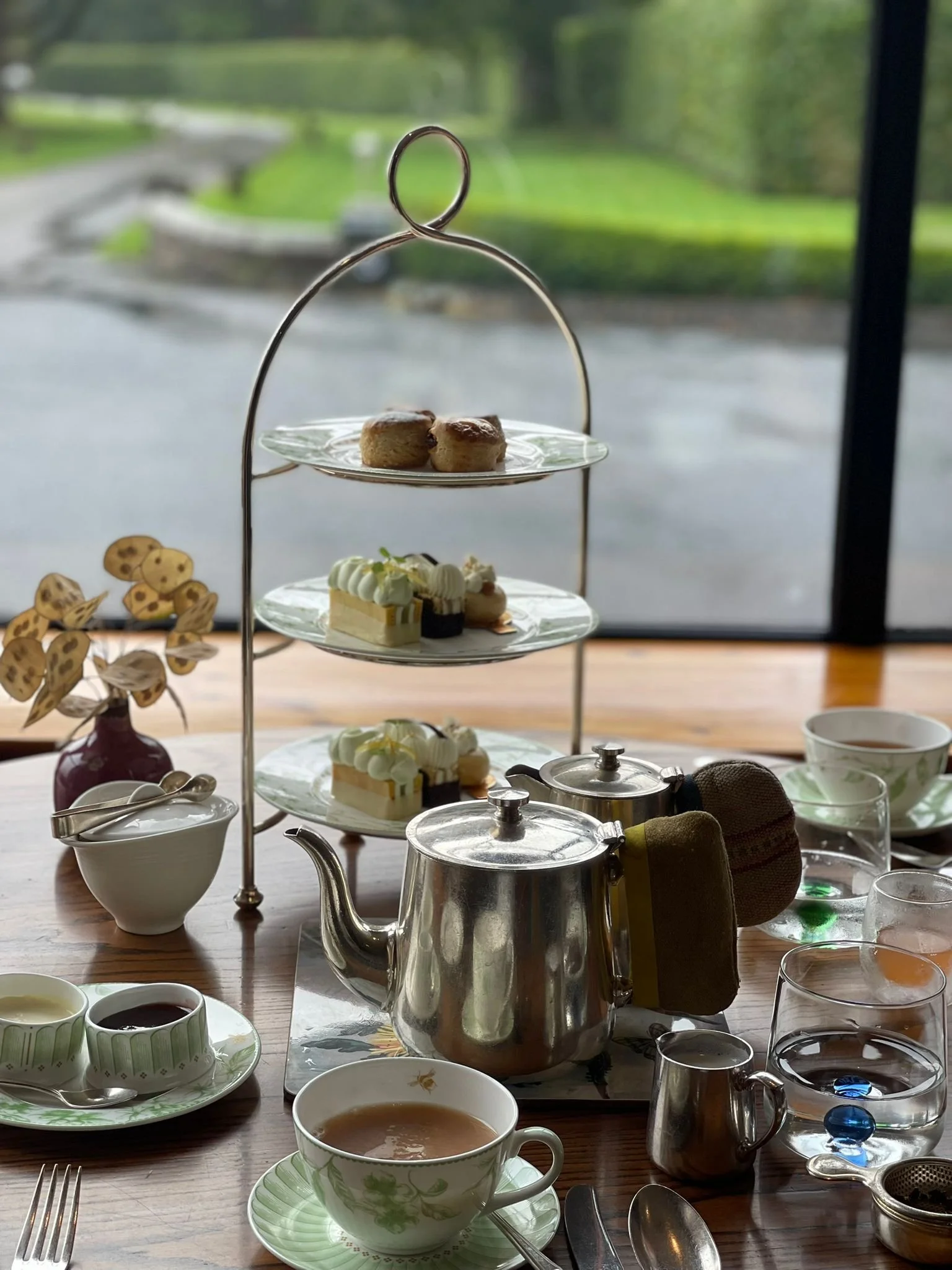
Traditional afternoon tea setting wth silver teapot, teacup and cake stand, reflecting classic British tea service.
Afternoon tea is a well-established part of British culture, commonly encountered in hotels, country houses, and tearooms across England. While many visitors take part in the experience, its origins, structure, and purpose are sometimes overlooked.
At its core, afternoon tea is a ritual shaped by history, timing, and social custom, closely connected to Britain’s long relationship with tea and hospitality.
This guide explains what afternoon tea is, where it comes from, how it is traditionally structured, and why it remains a meaningful part of British culture today.
For curated afternoon tea experiences across the UK, explore the Afternoon Tea guide.
Tea and Britain: The Historical Context
Tea arrived in Britain in the 17th century through maritime trade with Asia, driven by the expansion of the East India Company and elite demand for luxury goods. It arrived in very limited quantities and was extremely expensive; in today’s terms, high-quality tea would have cost several thousand pounds per kilo, making it a clear status symbol rather than an everyday drink.
Its wider acceptance is closely linked to Catherine of Braganza, who married King Charles II in 1662. Tea was already familiar among the Portuguese elite due to Portugal’s early maritime trade routes to Asia, which brought Asian luxury goods, including tea, into court life well before they became common in England. Coming from this background, Catherine’s preference for tea made it fashionable and socially legitimate at the English court. Because royal habits strongly influenced aristocratic behaviour, tea gradually spread into elite domestic life and, over time, into broader society, establishing tea not only as a beverage but as a social practice.
As tea became more widely embedded in daily life, it began to take on a role beyond status and display. By the early 19th century, tea had become part of domestic routines, served at specific times and associated with moments of pause rather than ceremony alone. This shift from luxury item to habitual practice created the conditions for what would later become afternoon tea.
anna, duchess of bedford, and the origins of afternoon tea
Afternoon tea is most closely associated with Anna Maria Russell, the 7th Duchess of Bedford, in the early 19th century. At the time, it was customary for the main evening meal to be served relatively late, often leaving a long gap between lunch and dinner. This structure did not suit everyone, particularly during long afternoons spent indoors.
The Duchess is believed to have begun taking tea, accompanied by light refreshments, in the mid-afternoon to bridge this gap. What started as a private habit soon became a regular practice. She later began inviting friends to join her, turning a personal solution into a shared social routine.
Importantly, this was not conceived as a formal occasion. It was informal, practical, and repeatable. Its success lay in its simplicity: a predictable pause in the day that offered refreshment without excess.
As the practice spread among the upper classes, it gradually took on more structure and ceremony. Over time, afternoon tea moved from private drawing rooms into public spaces such as hotels and tearooms, becoming more widely accessible while retaining its association with leisure, conversation, and unhurried time.
The origins of afternoon tea are therefore less about indulgence and more about adapting daily life to human rhythm. The Duchess’s habit addressed a practical need, and its longevity reflects how well it continues to do so.
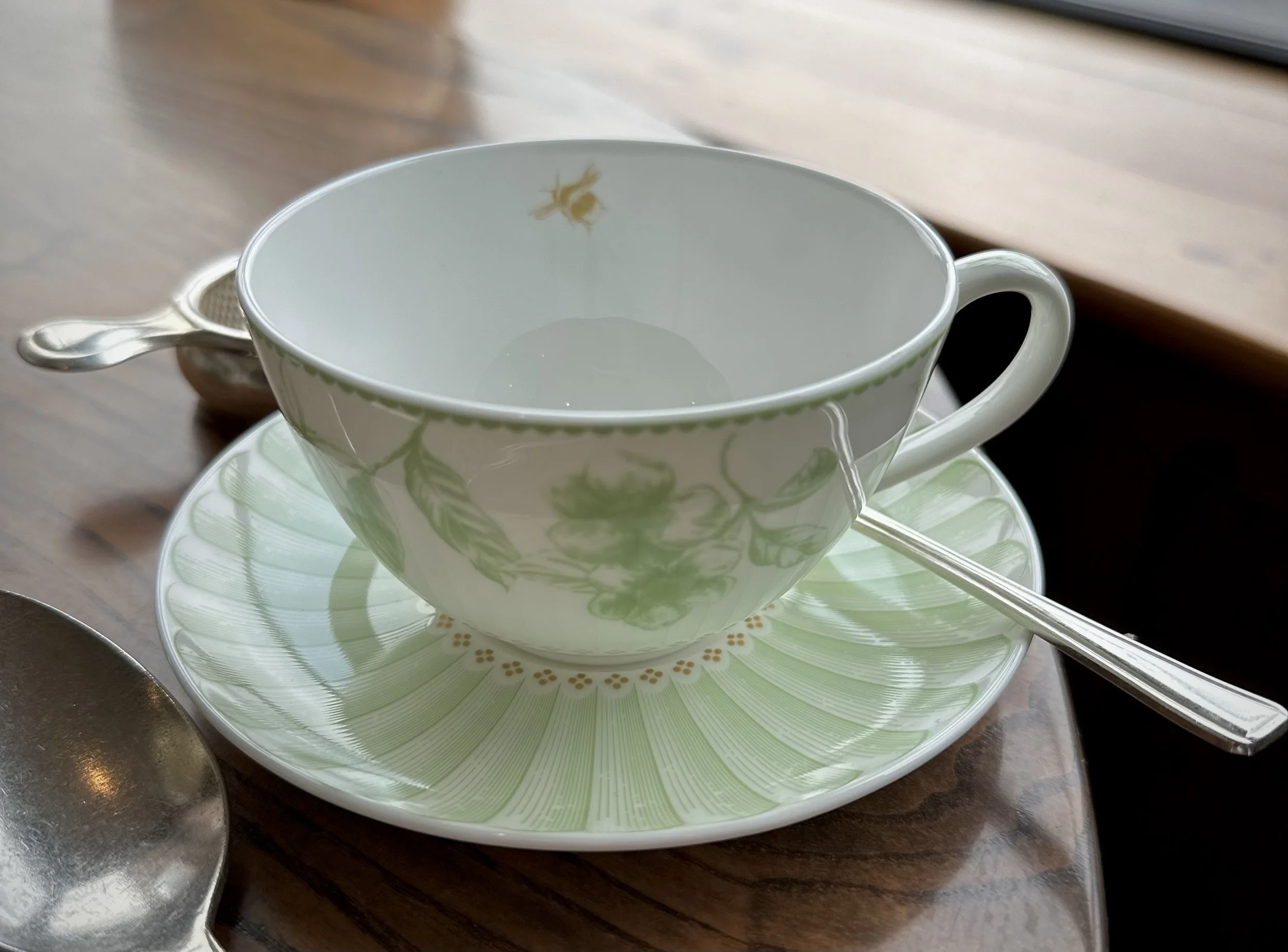
Vintage teacup and saucer used for traditional British afternoon tea, featuring classic floral china and simple table setting.
The Role of the Monarchy
Afternoon tea has long been associated with the British monarchy, which has helped reinforce its cultural status.
Queen Elizabeth II was known to keep a regular afternoon tea routine throughout her life. While details were rarely publicised, it is well documented that she preferred a simple and consistent tea taken daily, often with finger sandwiches and cakes.
This continuity was significant. The monarchy’s quiet adherence to the ritual reinforced afternoon tea as a marker of tradition, a stable daily rhythm, and a practice grounded in continuity rather than novelty. At royal residences, afternoon tea was not treated as a spectacle, but as an ordinary part of the daily structure.
The Traditional Structure of Afternoon Tea
Although presentation varies, traditional afternoon tea follows a clear structure.
Tea
Typically, black teas such as Assam, Darjeeling, or Earl Grey, though variations are now common. Tea is central, not optional.
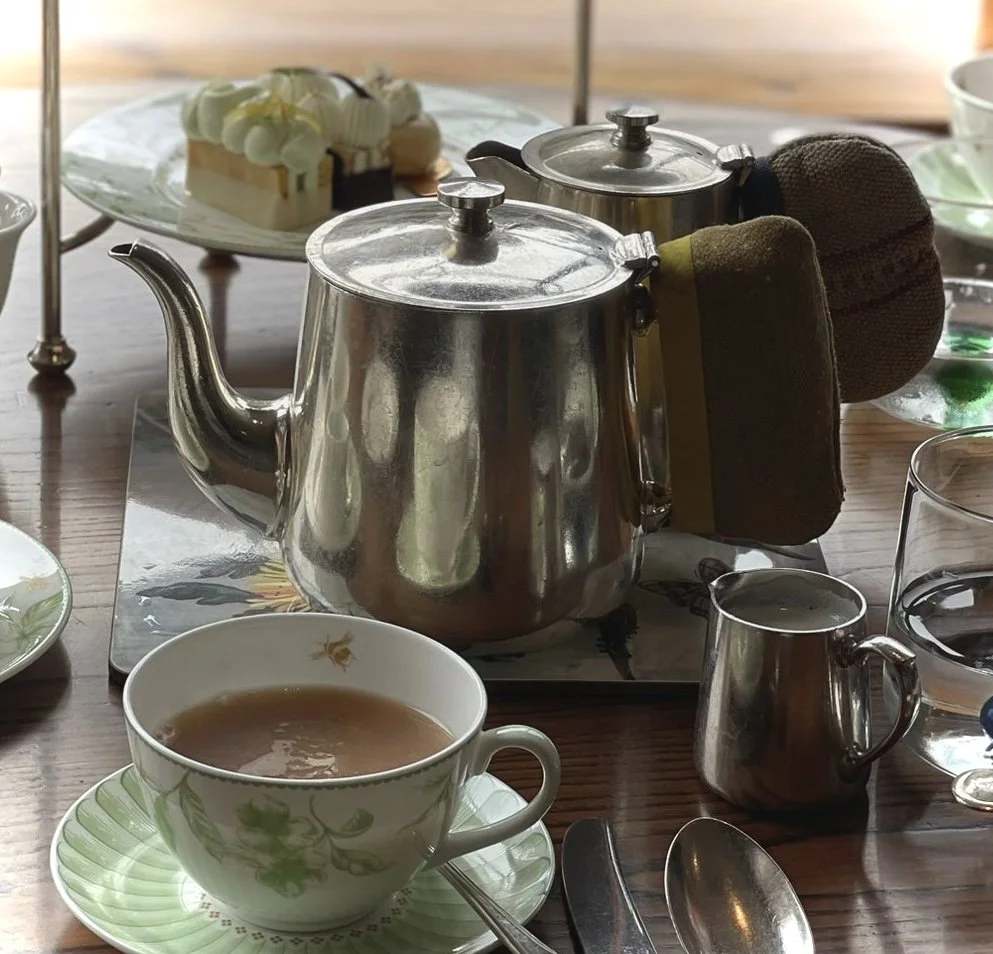
Savoury Items
The savoury course usually begins with finger sandwiches, traditionally filled with ingredients such as cucumber, smoked salmon, egg and cress, or ham. Many afternoon teas also include additional savoury items, such as mini quiches, small tarts, vol-au-vents, or other light pastry-based dishes.
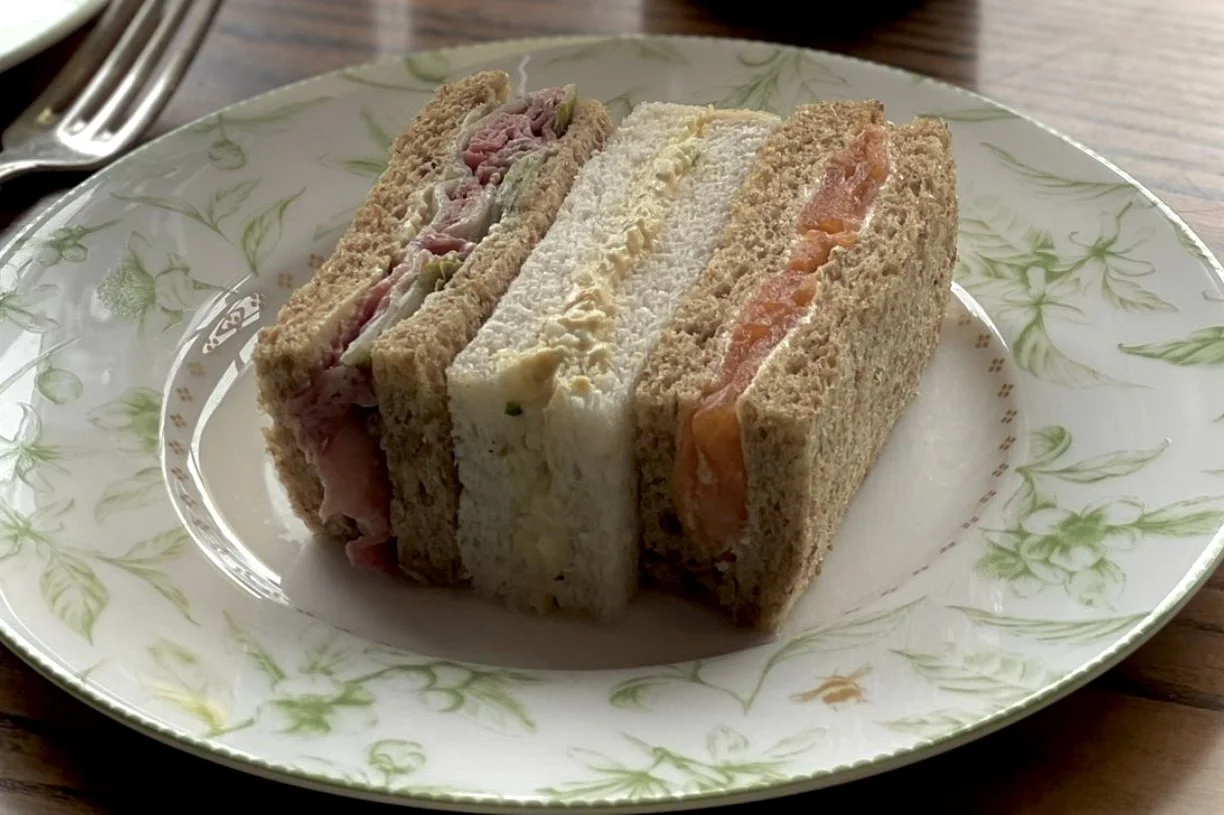
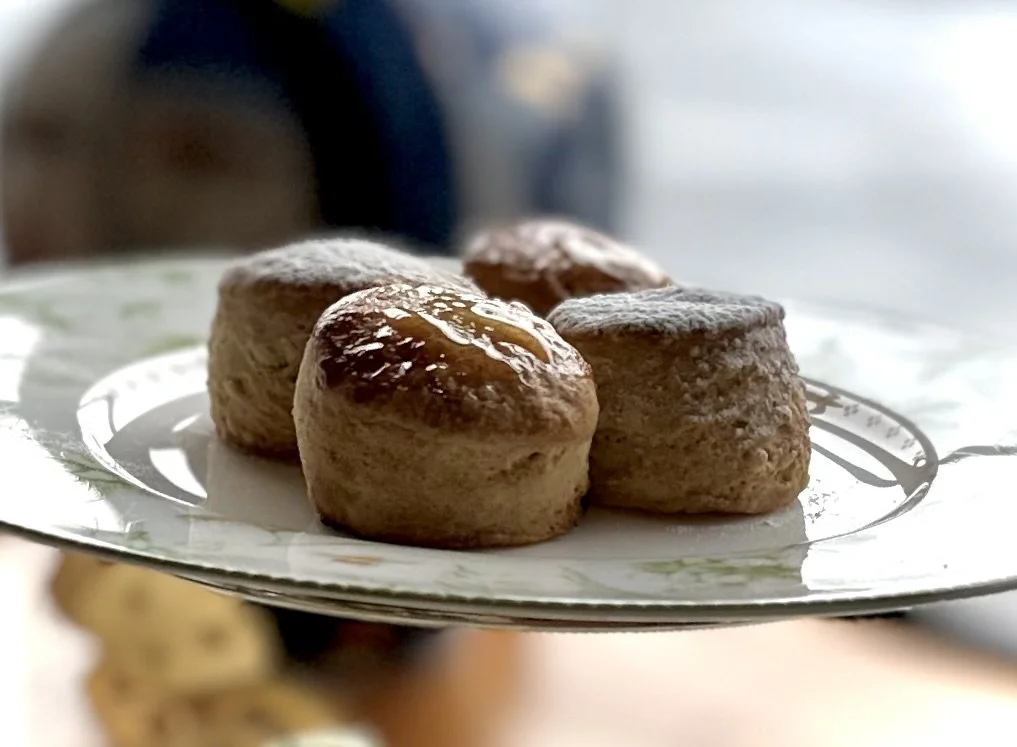
Scones
Freshly baked scones served warm as part of a traditional afternoon tea, typically accompanied by clotted cream and jam. Scones form the midpoint of the ritual.
Sweet Items
Small cakes or pastries, designed to be eaten slowly rather than in excess.
Portion sizes are intentional. Afternoon tea emphasises pace over quantity.
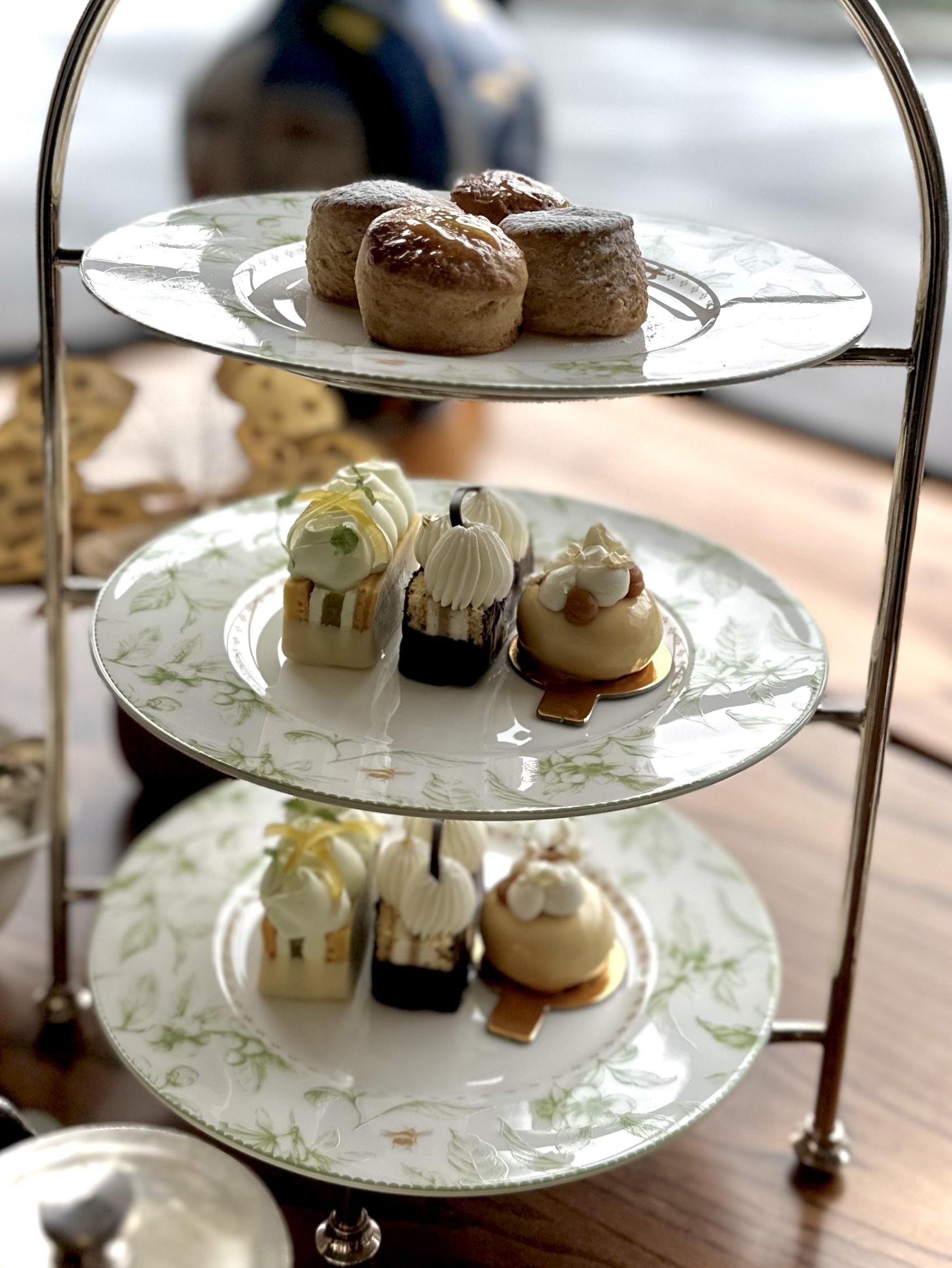
Selection of small cakes and pastries arranged on a tiered stand, representing the sweet course of a classic afternoon tea.
Timing and Rhythm
Afternoon tea is traditionally served between 2.30 and 4.30 pm. Placed between lunch and dinner, it creates a natural pause in the day. The timing allows people to stop, sit down, and eat without rushing. This time window is essential to what afternoon tea is and how it functions.
Afternoon Tea as Cultural Continuity
Afternoon tea persists not simply because of nostalgia, but because it still serves a clear purpose. It creates a planned pause that people recognise as a social occasion. People dress up, go out to a specific place, sit together, and take time over food and drink, often including champagne.
When travelling, afternoon tea becomes a way of engaging with local customs, settings, and service traditions, offering a direct experience of place through a familiar format.
Final thoughts
For travellers to England, afternoon tea is a beautiful way to slow down and enjoy each other’s company while taking part in a long-standing cultural tradition. It is an opportunity to sit together, talk, and be present, without any need to rush on to the next activity.
There is something distinctly British about the experience: the careful presentation, warm scones with clotted cream and jam, fine china, and the option of a glass of champagne alongside tea. Whether taken in a grand hotel or a quiet countryside setting, afternoon tea carries a sense of occasion without feeling excessive.
Experienced as intended, afternoon tea becomes more than something to eat or drink. It is a moment of shared time, shaped by tradition, hospitality, and a way of enjoying the day that feels both timeless and unmistakably British